

Beyond the Postcard: A Weekend in Dalian
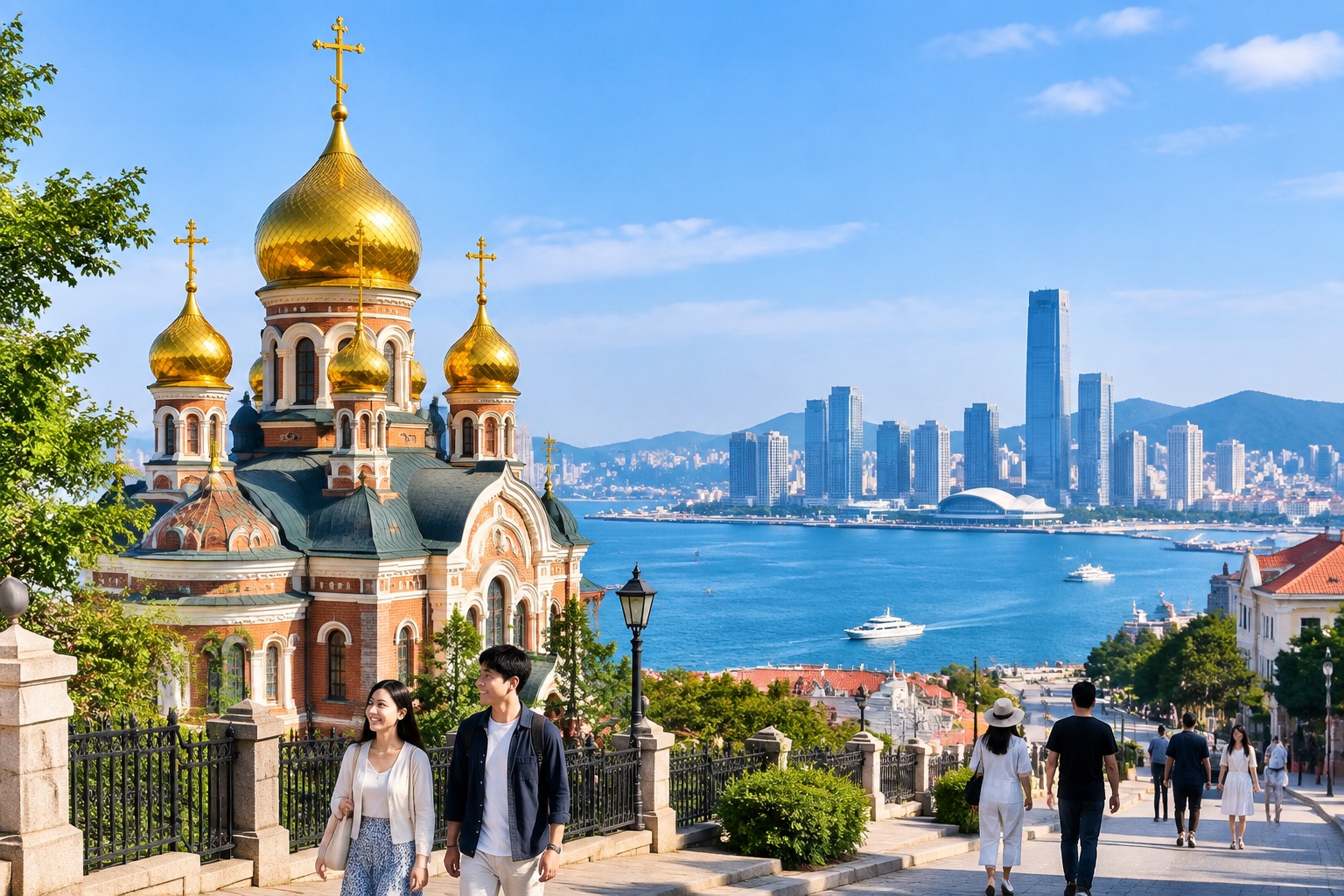
You might expect a weekend in China to mean high-speed trains and neon-lit futuristic skylines. But if you head north to Dalian, on the tip of the Liaodong Peninsula, you step into a city that feels like a time traveler’s secret base. Here, European boulevards meet the Yellow Sea, and the smell of grilling seafood mixes with the scent of old Russian bread.
Where History Meets the Harbor
Dalian wasn’t always just a modern Chinese port. For over forty years, from the late 19th century until 1945, it was under Japanese and later Soviet influence, leaving behind a unique architectural DNA that you won’t find in Beijing or Shanghai.
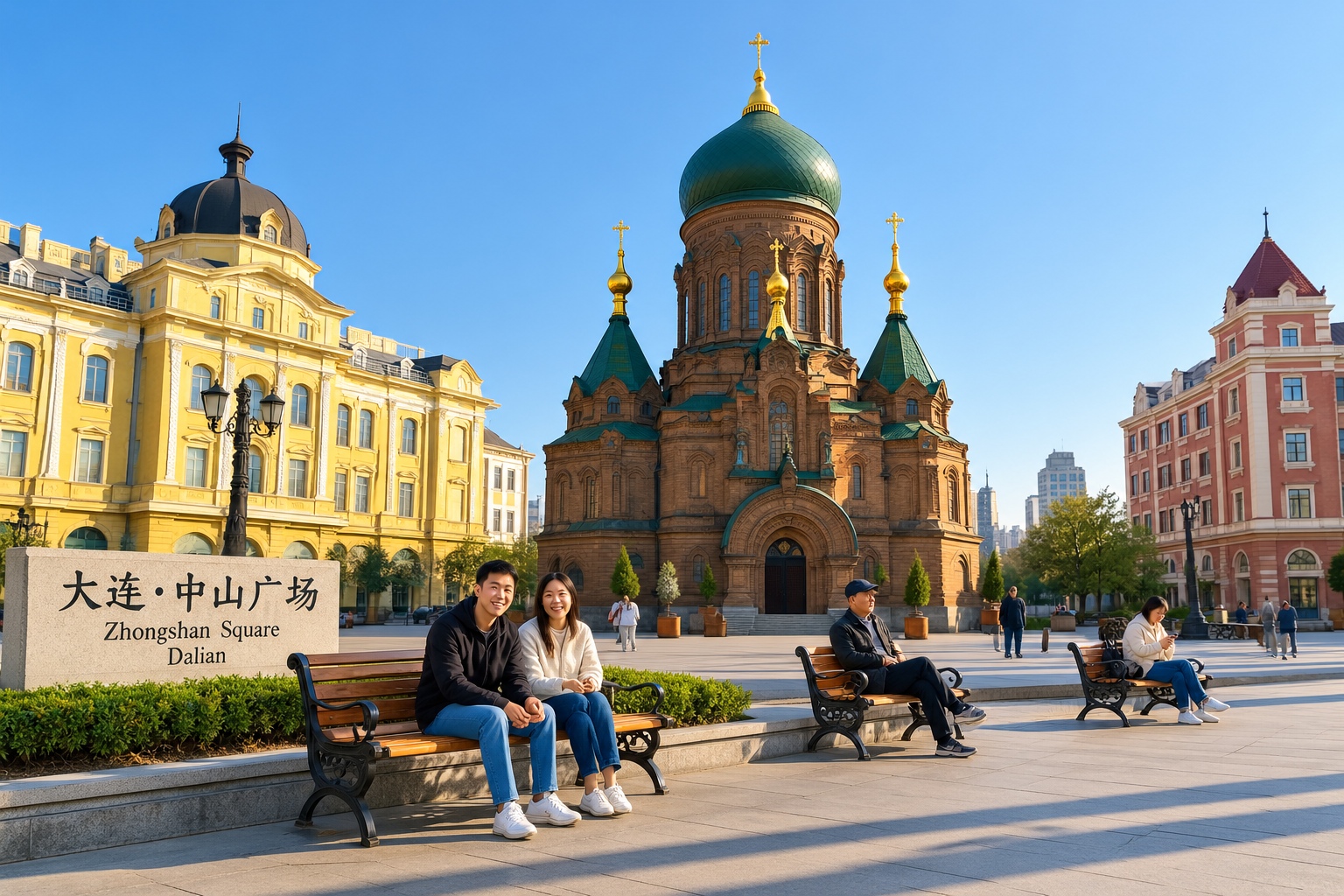
Start your walk at Zhongshan Square. Unlike the rigid symmetry of many Chinese city centers, this roundabout is dominated by a grand Russian Orthodox church with its golden onion domes, surrounded by yellow and red buildings from the early 1900s. It feels less like a tourist trap and more like an open-air museum where life still goes on.
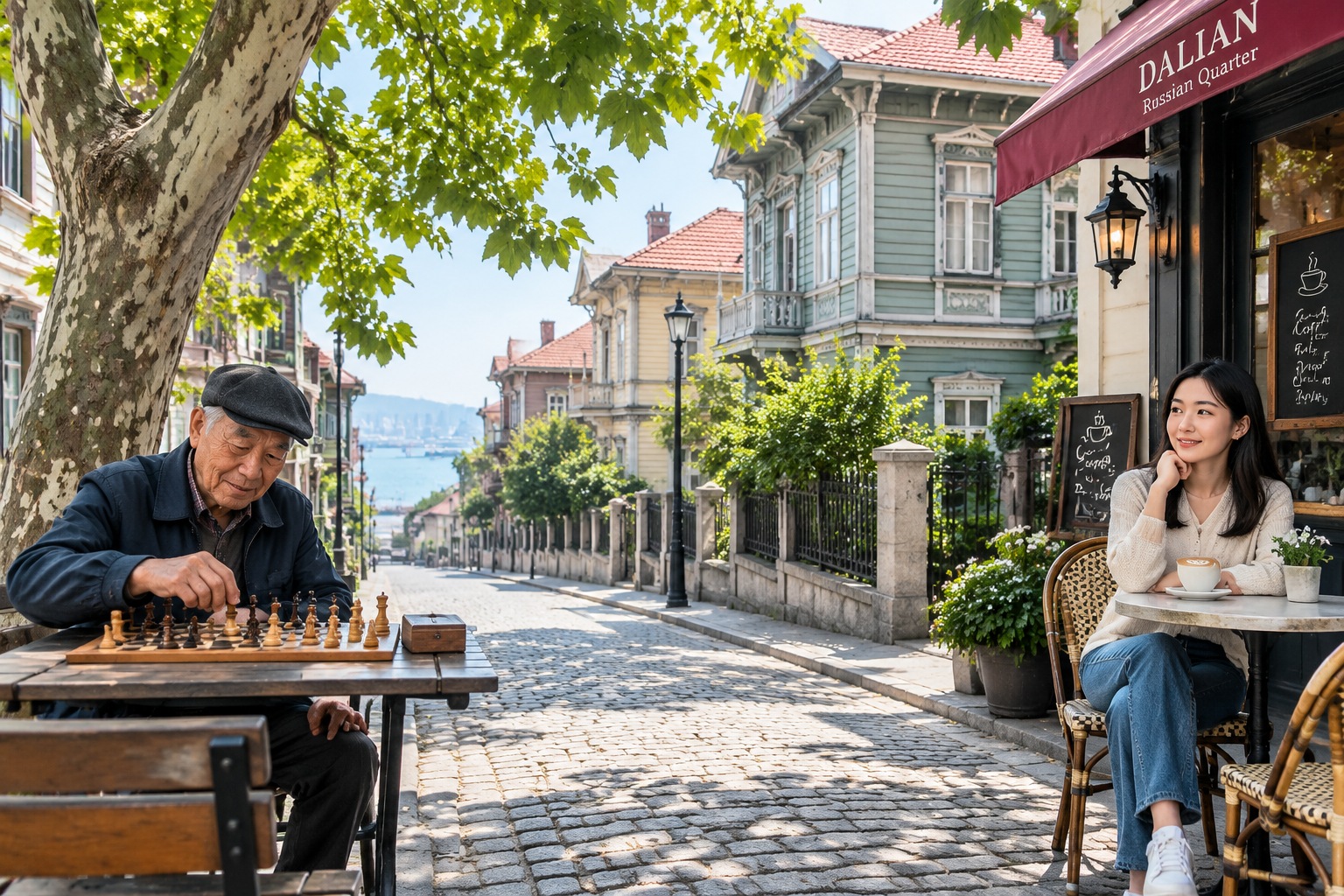
Walk east along Renmin Road, past the former railway station, and you’ll see narrow cobblestone streets lined with wooden villas. Locals call this area the “Old Russian Quarter.” Here, old men play chess under plane trees, and young people in trendy cafes sip lattes that look exactly like those in St. Petersburg.
The Real Feast: Seafood at Local Markets
While tourists flock to fancy restaurants with ocean views, the real Dalian experience happens in the chaotic, vibrant seafood markets. Head to the Xinghai Square area or the local wet markets early on a Saturday morning.
You’ll see piles of live crabs, shrimp, and abalone being haggled over in rapid dialect. This isn’t a staged performance; it’s how families feed themselves for centuries. The key is simple: buy fresh, go to the nearby cooking stall (often just a table with two gas burners), and watch them steam or grill your catch right there.

I once sat next to a retired fisherman who showed me how to pick the sweetest scallops. He didn’t speak English, but he handed me a grilled prawn and laughed when I tried to pay with my phone instead of cash. In Dalian, digital payment is universal, but the warmth of sharing food remains an old-world tradition.
Hidden Gems: Coffee, Books, and Quiet Corners
After the noise of the market, find your way back toward the coastal cliffs. Tucked away in small alleyways near the Russian Quarter are independent bookstores and specialty coffee shops that have no English menus but offer a quiet escape.
One such spot is a tiny café with floor-to-ceiling windows overlooking the sea. Locals come here to read or work, surrounded by the sound of waves. It’s a stark contrast to the bustling malls nearby, yet it fits perfectly into Dalian’s rhythm—a city that honors its past while sprinting toward the future.
Practical Tips for Your Weekend
Dalian is walkable and bike-friendly. Download a translation app like Pleco or Baidu Translate, but be prepared to use gestures; everyone here is used to interacting with foreigners. For transport, Dalian’s subway system is clean, efficient, and connects major spots easily.
Don’t miss the sunset at Xinghai Bay Bridge. It’s free, open to everyone, and offers a view that bridges the gap between the city’s industrial past and its bright future. Whether you’re here for the Russian architecture, the seafood, or just the vibe, Dalian proves that China is not one story—it’s many.
Start the discussion at forum.chinacomes.com