

The Day the Interview Changed Everything
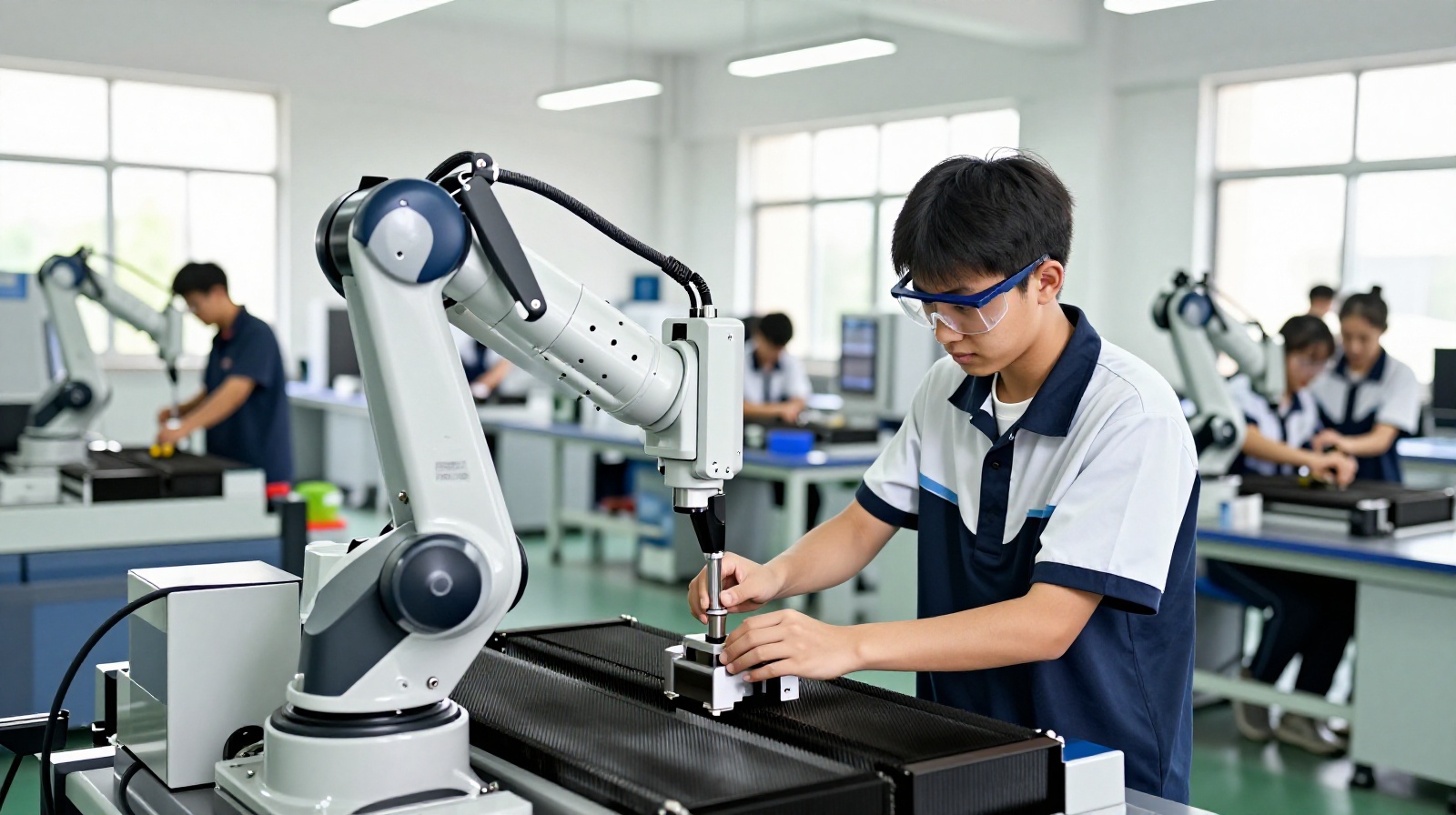
When I first arrived in the industrial park on the outskirts of Suzhou, I expected to see rows of uniformed workers following instructions. Instead, I found a young man named Li Wei, 21, adjusting the interface on a six-axis robotic arm with the focus of a surgeon.
Liu (Li) isn’t an outlier; he is the face of a massive shift happening across China. He didn’t attend a traditional four-year university. Instead, after high school, he enrolled in a specialized vocational college focused on intelligent manufacturing. Today, he earns nearly double the starting salary of many fresh graduates from local universities.
More Than Just “Manual Labor”
In Western media, Chinese education is often reduced to the “Gaokao” (college entrance exam) narrative: a single high-stakes test that determines one’s entire fate. The pressure is real, but it paints an incomplete picture of what happens next.
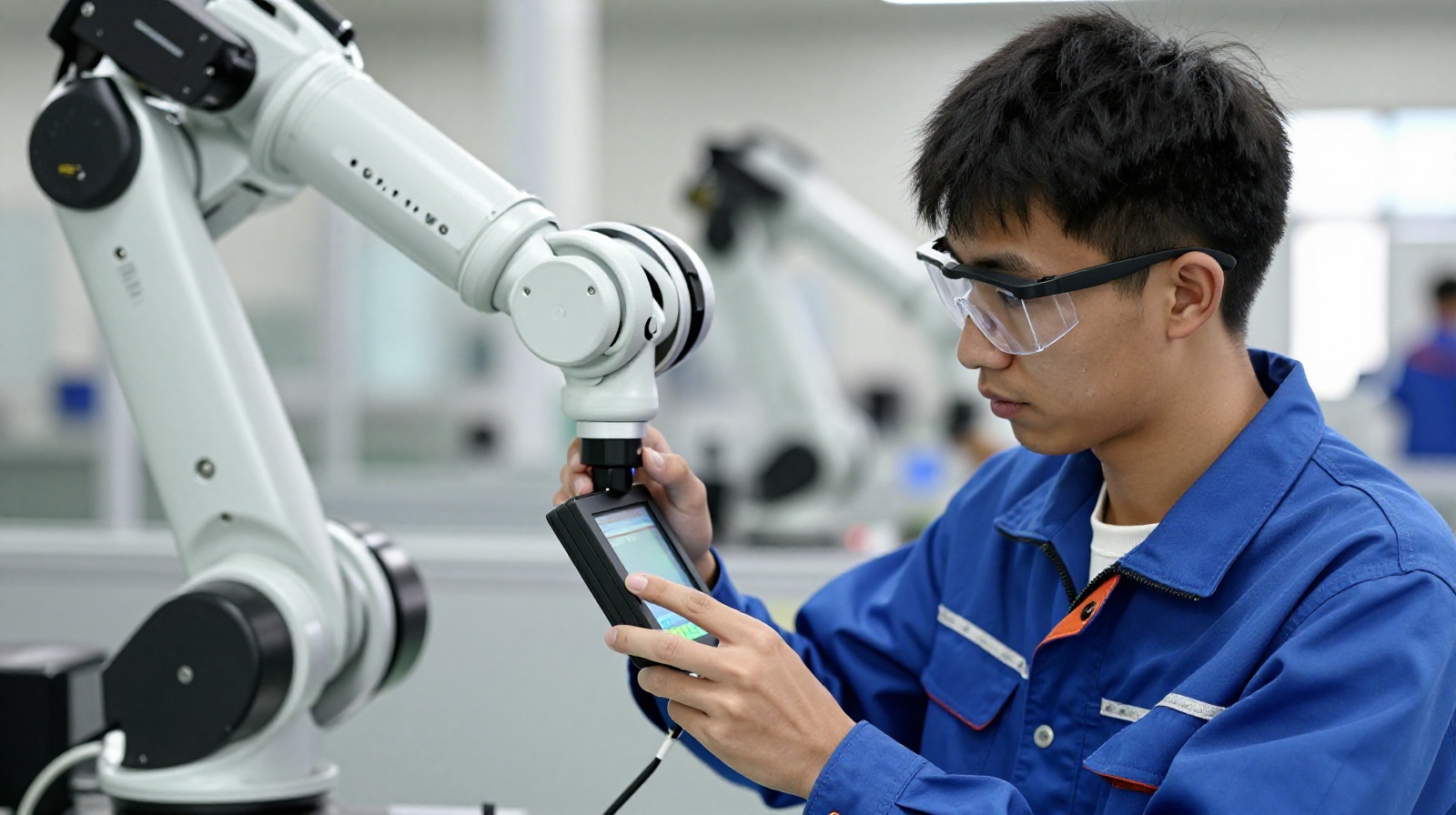
About 50% of Chinese students now enter vocational pathways after secondary school. These aren’t remedial schools for struggling students; they are high-tech training centers designed to feed the country’s most ambitious industrial goals: smart manufacturing, digital logistics, and new energy services.
The curriculum is rigorous. Students spend half their time in workshops operating actual industrial machinery—CNC lathes, automated assembly lines, and drone systems—and the other half mastering the underlying theory of coding, mechanics, and data analysis.
Where the Jobs Are: A Look at the Curriculum
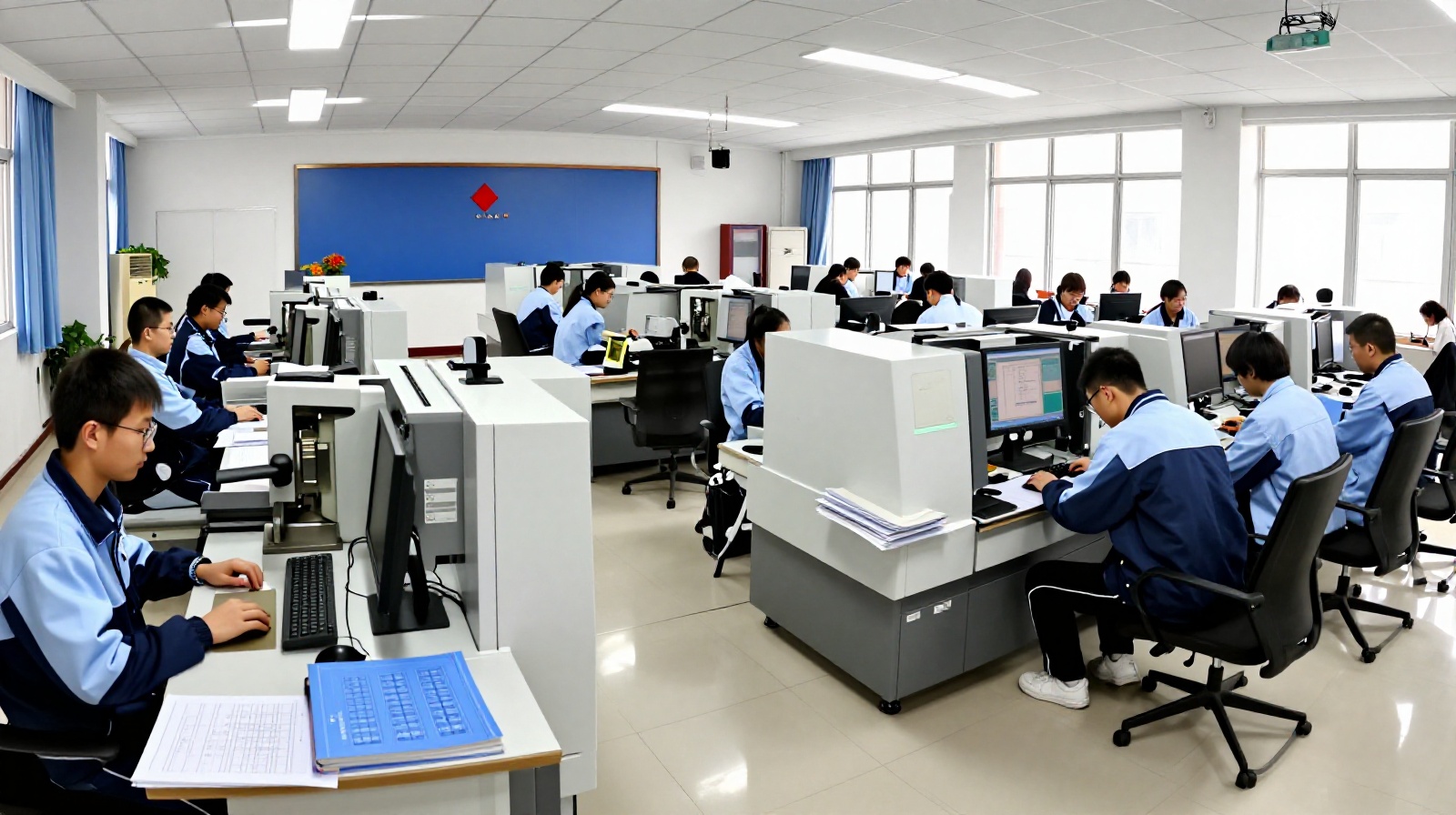
The most striking change is the alignment between what students learn and what factories actually need. In Li Wei’s hometown, a local vocational college recently partnered with a major robotics company to co-design its engineering program.
“We don’t just teach theory,” says Professor Zhang, who teaches mechatronics at the school. “If you can’t program the robot or troubleshoot a sensor failure within an hour, you aren’t ready for the factory floor.”
This model is scaling rapidly. In cities like Shenzhen and Chengdu, vocational graduates are filling critical gaps in sectors like e-commerce logistics (managing automated warehouse robots) and green energy (installing solar thermal systems). The demand is so high that companies often recruit directly from campuses, offering signing bonuses before graduation.
Success Stories That Defy Stereotypes
The narrative of vocational education is shifting from “second choice” to “smart choice.” Take Mei Lin, a 23-year-old graduate who studied culinary arts and hotel management. While her friends in university were struggling with entry-level office jobs paying low wages, Mei Lin used her certification to open a boutique food truck.
She didn’t just cook; she applied lean management principles learned in class to optimize her supply chain and digital marketing. Within two years, she employed five people and is now franchising her concept.

Policy Driving the Change
This transformation isn’t accidental. It’s fueled by a national strategy that has doubled down on “industry-education integration.” The government now mandates that vocational schools must have deep ties with local enterprises, ensuring curricula evolve as fast as technology does.
Tax incentives are offered to companies that hire graduates from these programs, and subsidies help schools upgrade their equipment to match the latest industry standards. The goal is clear: to create a skilled workforce that can sustain China’s transition from “Made in China” to “Created in China.”
Reimagining Success for the Next Generation
The biggest hurdle today isn’t the curriculum; it’s the mindset. For decades, the cultural preference has been clear: university is the only path to dignity. But that is changing.
I spoke with a mother in Wuhan whose son had just failed the Gaokao cutoff for top universities. Initially heartbroken, she toured the local vocational college and saw her son’s peers building 3D-printed prototypes and coding automation scripts. She told me, “If he can build a machine that saves people money and time, isn’t that a real success?”

For millions of young Chinese, the road to a fulfilling career no longer looks like a single narrow bridge. It is a network of specialized tracks, each leading to stability, innovation, and respect. They are learning that in today’s economy, being a master of a craft is just as powerful as holding a degree.