

The Night Shift
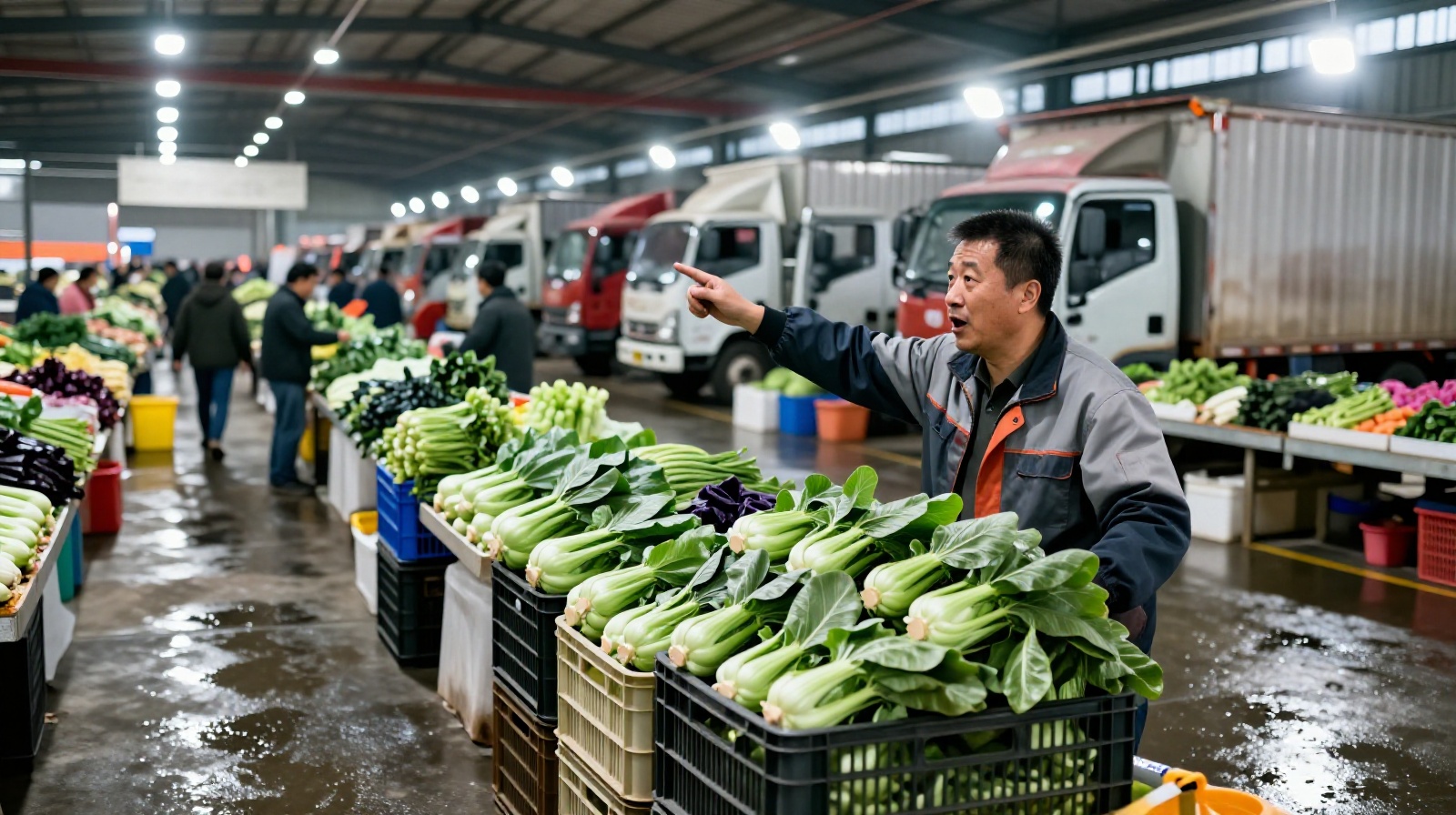
At 3:00 AM, the air in a major wholesale market outside Beijing is thick with the smell of damp earth and crisp cabbage. It is dark, but the floodlights turn the concrete floor into a blindingly bright stage. Here, the city hasn’t woken up yet, but its stomach has.
Li Wei, a third-generation vegetable distributor, is already shouting orders over the roar of diesel engines. His hands are stained green from handling thousands of kilograms of spinach and bok choy arriving from Hebei province. For Li, this isn’t just logistics; it’s a high-stakes auction. Every minute counts because wilted vegetables lose value by the hour.
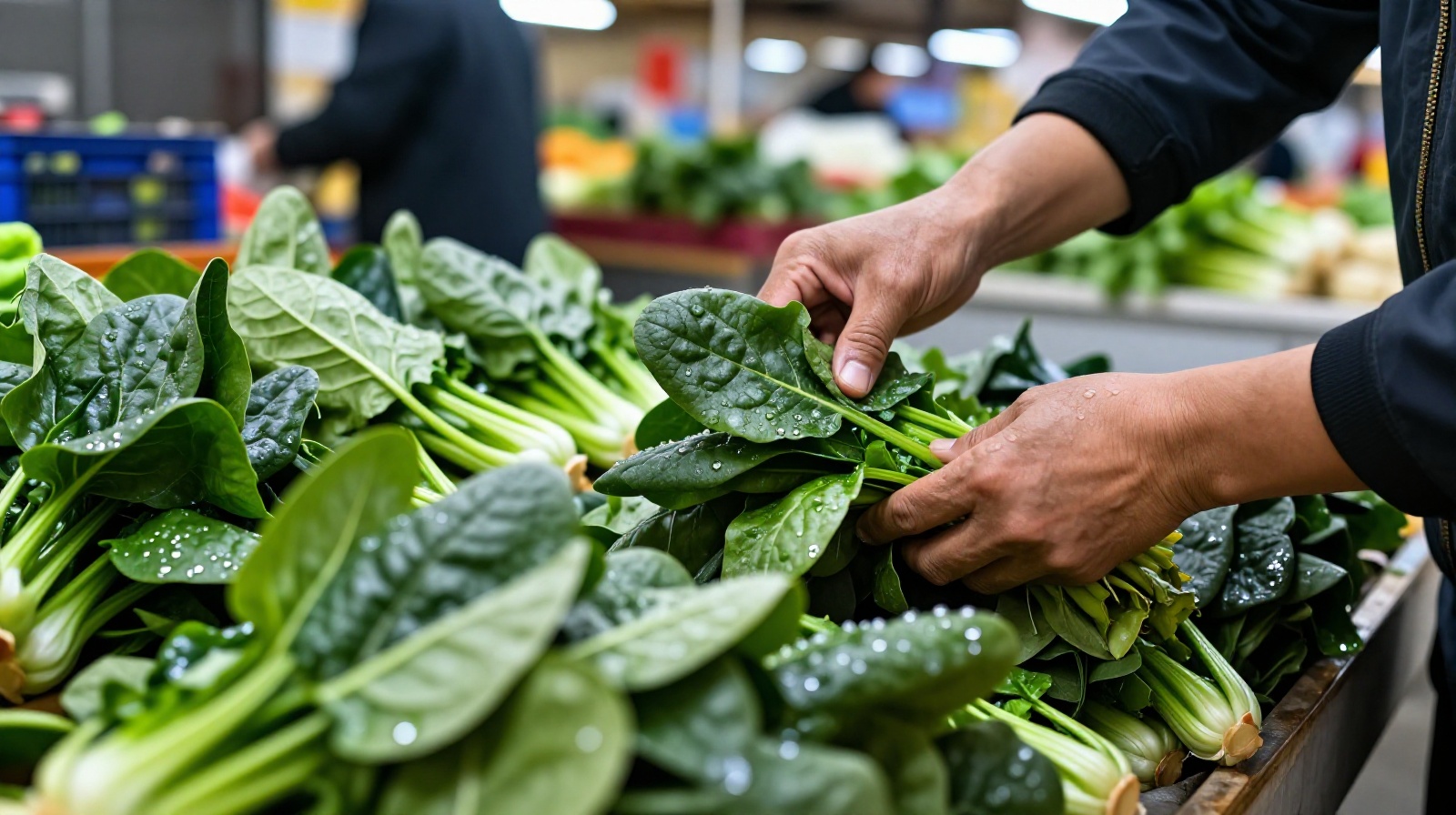
For outsiders, China’s food system often seems like an abstract concept—a matter of policy papers or macroeconomic data. But standing in this wet market at dawn, you realize it is deeply human. It is built on the backs of drivers who sleep in their trucks, farmers who risk weather uncertainties, and distributors like Li who negotiate prices before most people have had their morning coffee.
From Farm to App
Fifteen years ago, vegetables traveled through a maze of middlemen. A cabbage might change hands five or six times before reaching a consumer’s kitchen, with each stop adding cost and waste. Today, smartphones have flattened this pyramid.
In rural Shandong, the country’s largest vegetable-producing province, farmers no longer wait for buyers to drive up dirt roads. They use apps to connect directly with wholesale markets in cities hundreds of miles away. Real-time data tells them exactly what is needed: Is it cold? Are people buying more radishes or more leafy greens?
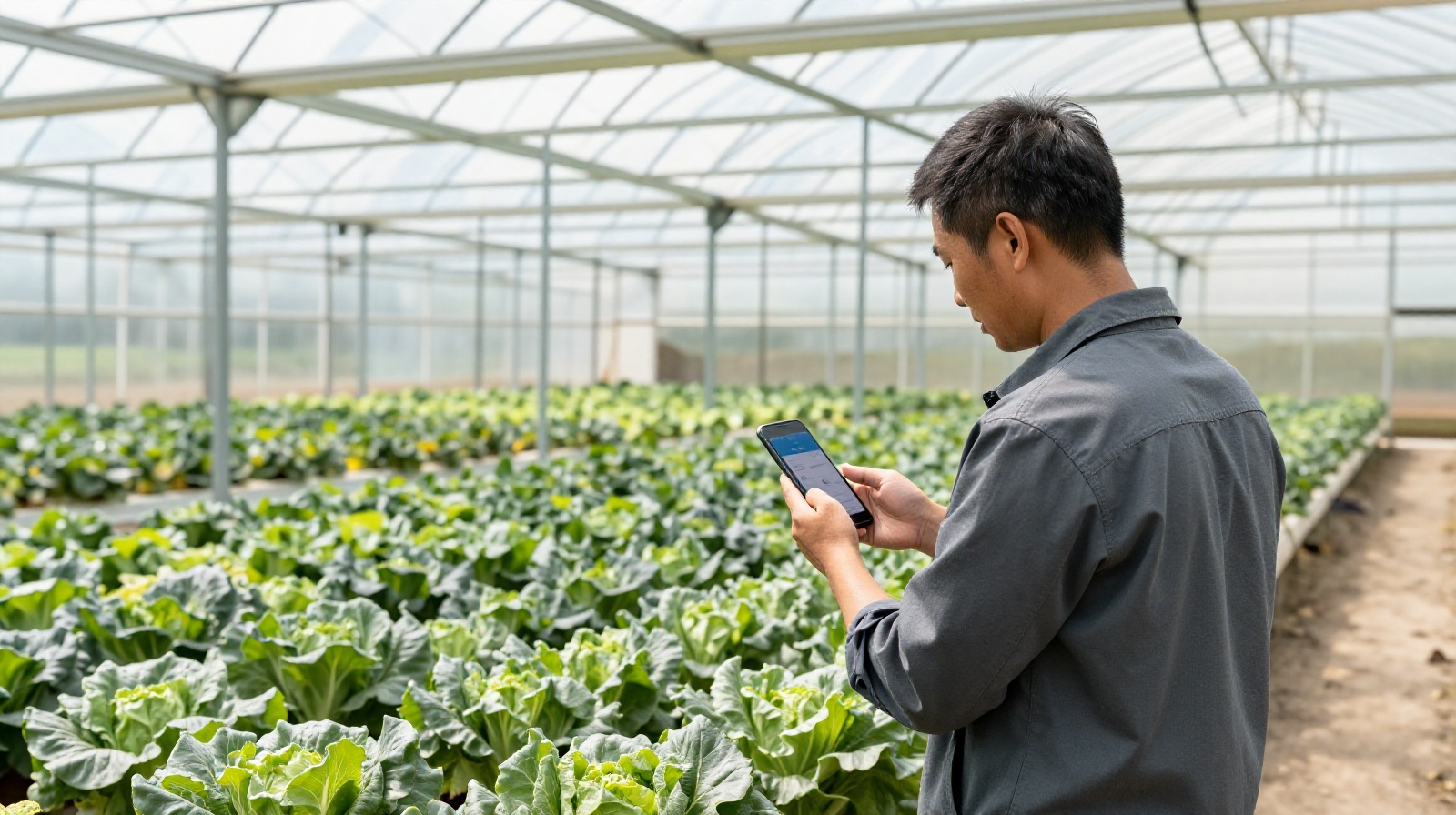
This digital shift has drastically reduced the “middleman tax.” While traditional supply chains can lose up to 30% of produce to spoilage, direct-to-market models cut that figure significantly. For the average Chinese family, this means fresher vegetables at lower prices. The technology doesn’t replace the human element; it empowers the smallholder farmer who previously had no voice in the market.
The Cold Chain Revolution
Keeping lettuce crisp from Qingdao to Chengdu—over 1,000 kilometers apart—is not magic. It is a triumph of infrastructure known as the “cold chain.” China has built one of the world’s most extensive refrigerated transport networks.
At a distribution hub in Zhengzhou, I watched drivers load pallets of tomatoes into containers kept at precisely 4°C. These trucks are moving nodes in a national grid that ensures perishable goods reach inland cities within 24 hours. This isn’t just about luxury; it’s about nutrition and stability.
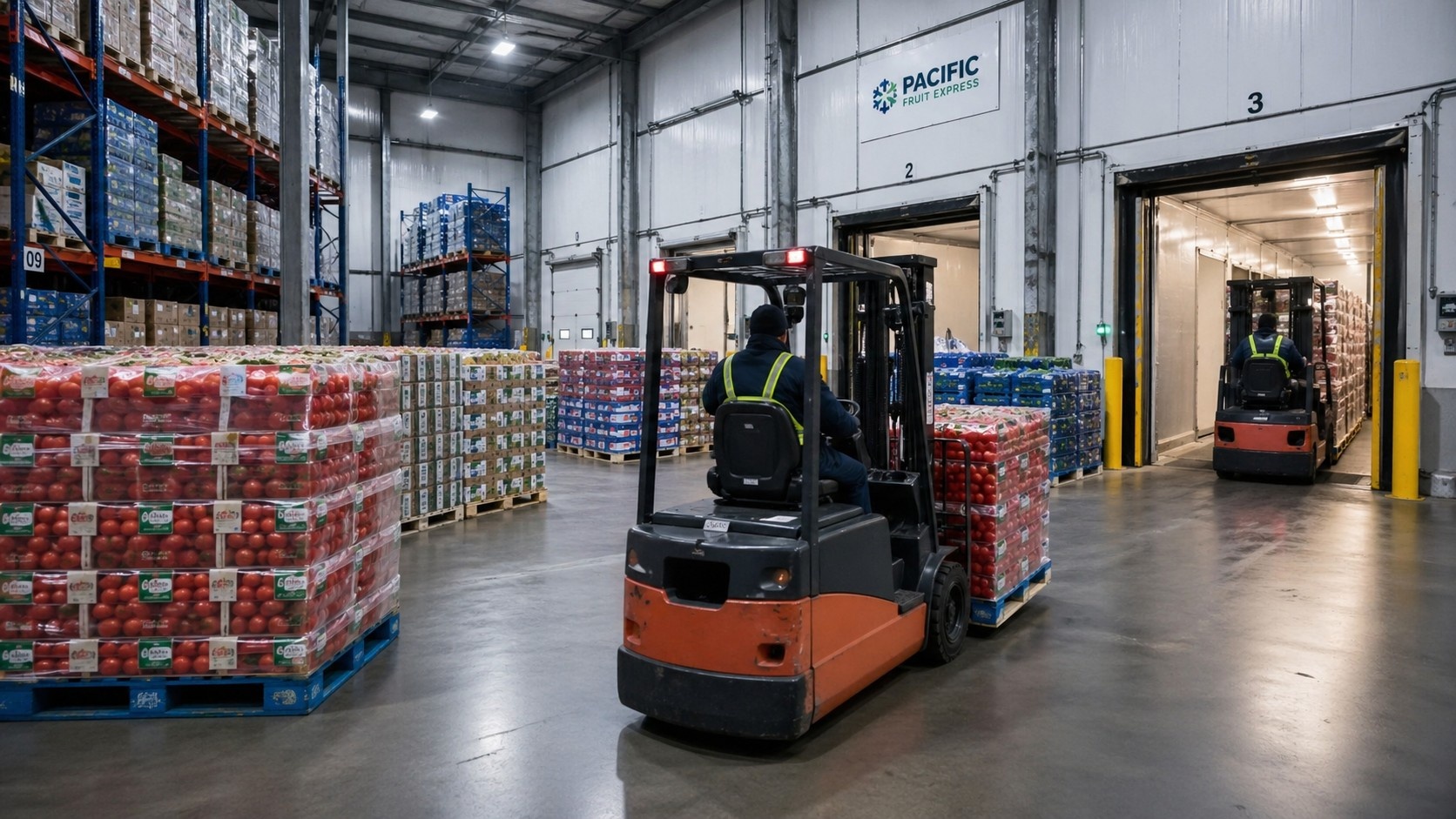
The government has invested heavily in this infrastructure, recognizing that food security is national security. By reducing post-harvest losses, the cold chain acts as a buffer against seasonal shortages. When winter hits northern China, vegetables grown in Hainan or Yunnan can be on dinner tables in Beijing within two days.
Price Stability in Practice
In an era of global inflation, where grocery bills have become a source of anxiety for many, China has managed to keep vegetable prices remarkably stable. This isn’t accidental. It is the result of the “Vegetable Basket Project,” a long-standing initiative that combines market mechanisms with strategic reserves.
During harvest seasons, when prices naturally drop, government agencies purchase surplus produce and store it in cold storage facilities. When supply tightens—due to bad weather or holidays—they release these stocks back into the market. This “see-saw” mechanism prevents price spikes from hurting low-income families.
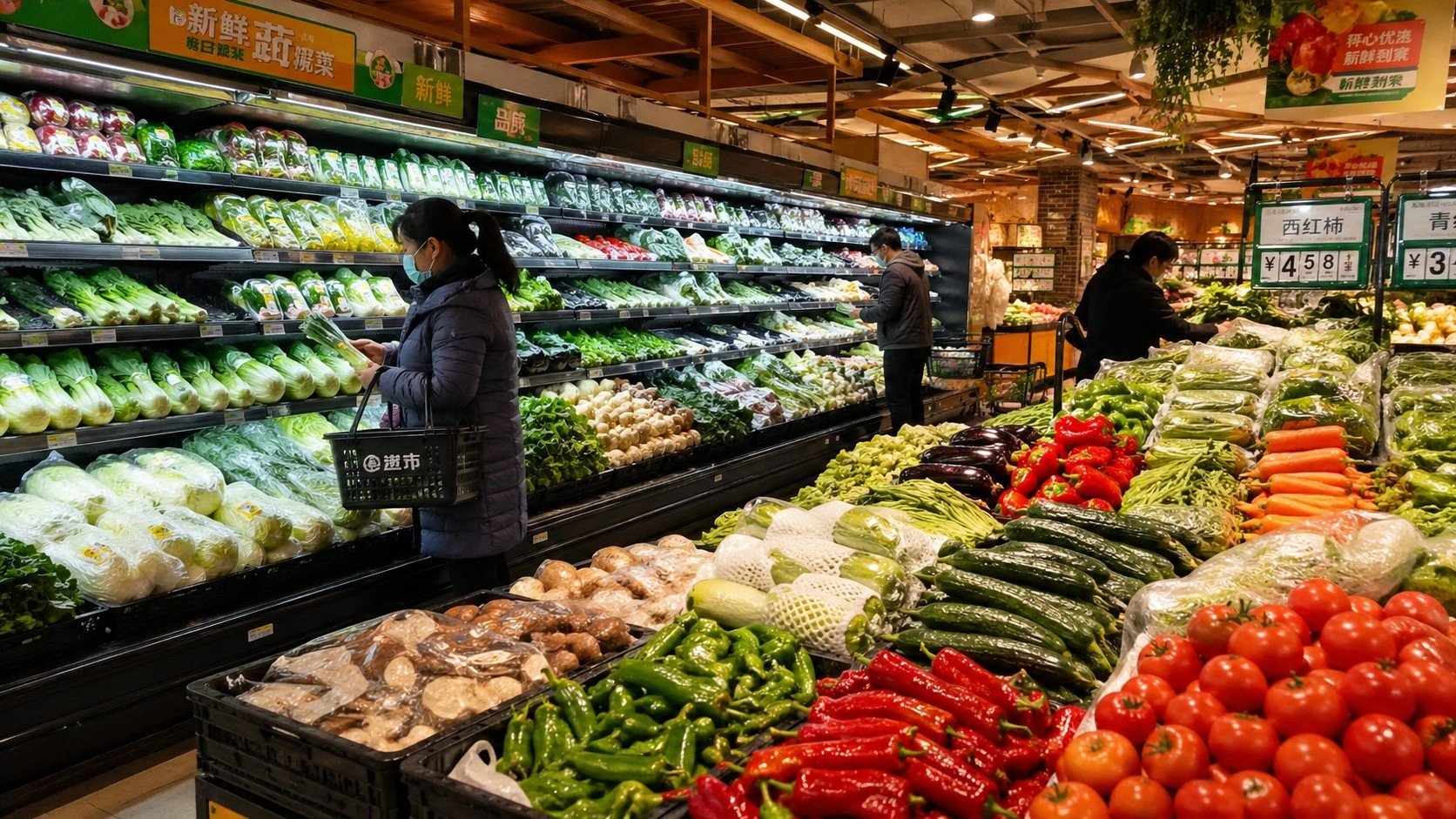
Furthermore, intense competition among private logistics companies keeps transport costs down. While Western readers might be used to paying premium prices for off-season produce, Chinese consumers routinely buy fresh, locally sourced vegetables year-round. The system prioritizes volume and speed over high margins, ensuring that food remains accessible.
The Unseen Network
By 6:00 AM, the wholesale market is slowing down. Li Wei packs up his notes, exhausted but satisfied. The trucks are gone, replaced by street vendors setting up stalls in residential neighborhoods and supermarket staff stocking shelves.
This invisible network—connecting farms to apps, trucks to fridges, and distributors to dinner tables—is as vital to modern Chinese life as electricity or internet access. It doesn’t make headlines for its beauty, but it makes life possible for billions.
For the 1.4 billion people in China, “food security” isn’t a political slogan. It is the simple, quiet reality that tonight’s stir-fry will be fresh, affordable, and available. In a world facing climate uncertainty and supply chain disruptions, this ordinary miracle deserves our attention.