
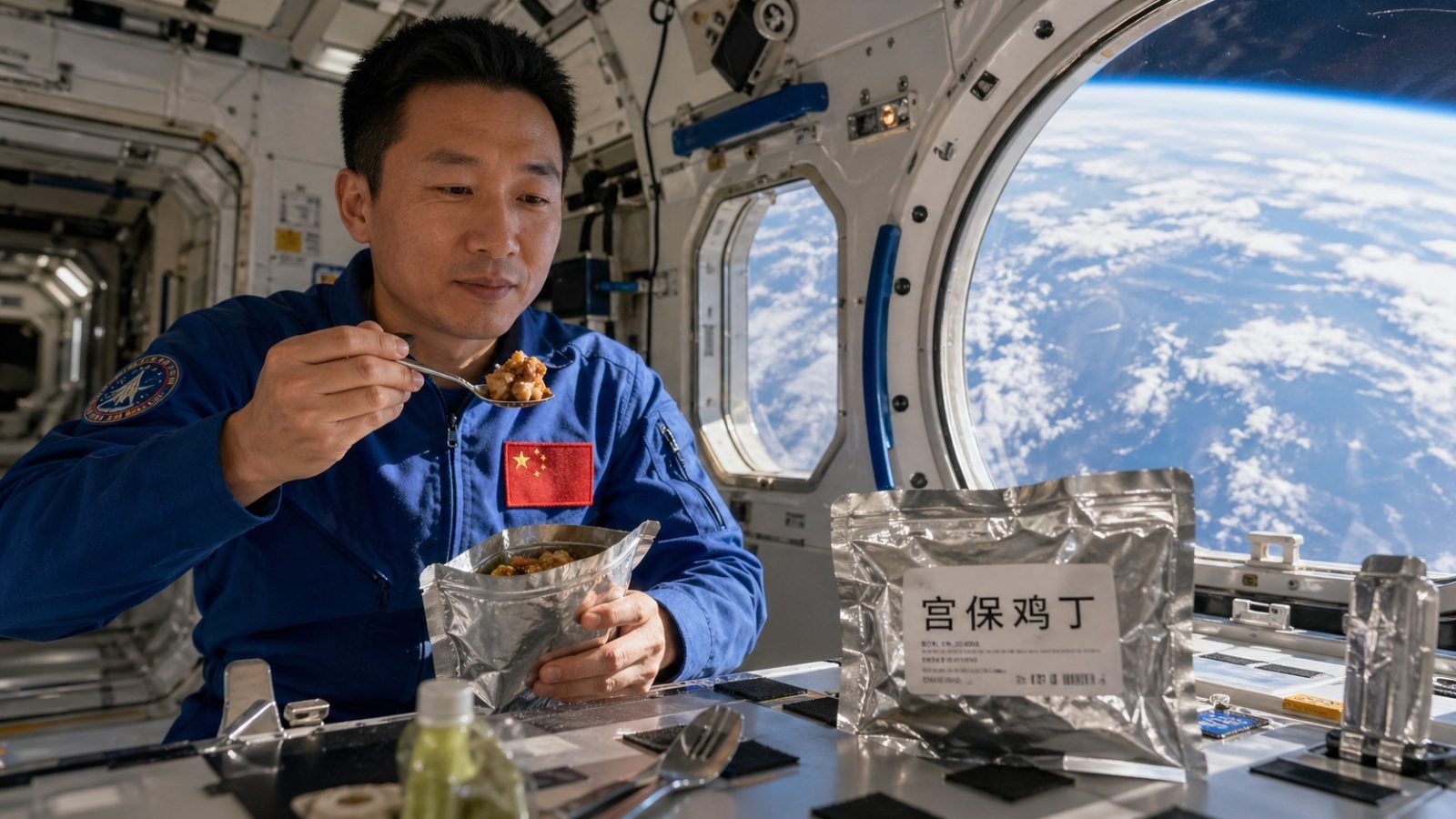

A Taste of Home, 400 Kilometers Up
If you’ve ever flown in an airplane, you know that water doesn’t behave the same way at cruising altitude. In space, however, it’s not just about straws and sealed pouches. Inside China’s Tiangong space station, floating 400 kilometers above Earth, a different kind of culinary magic is happening.
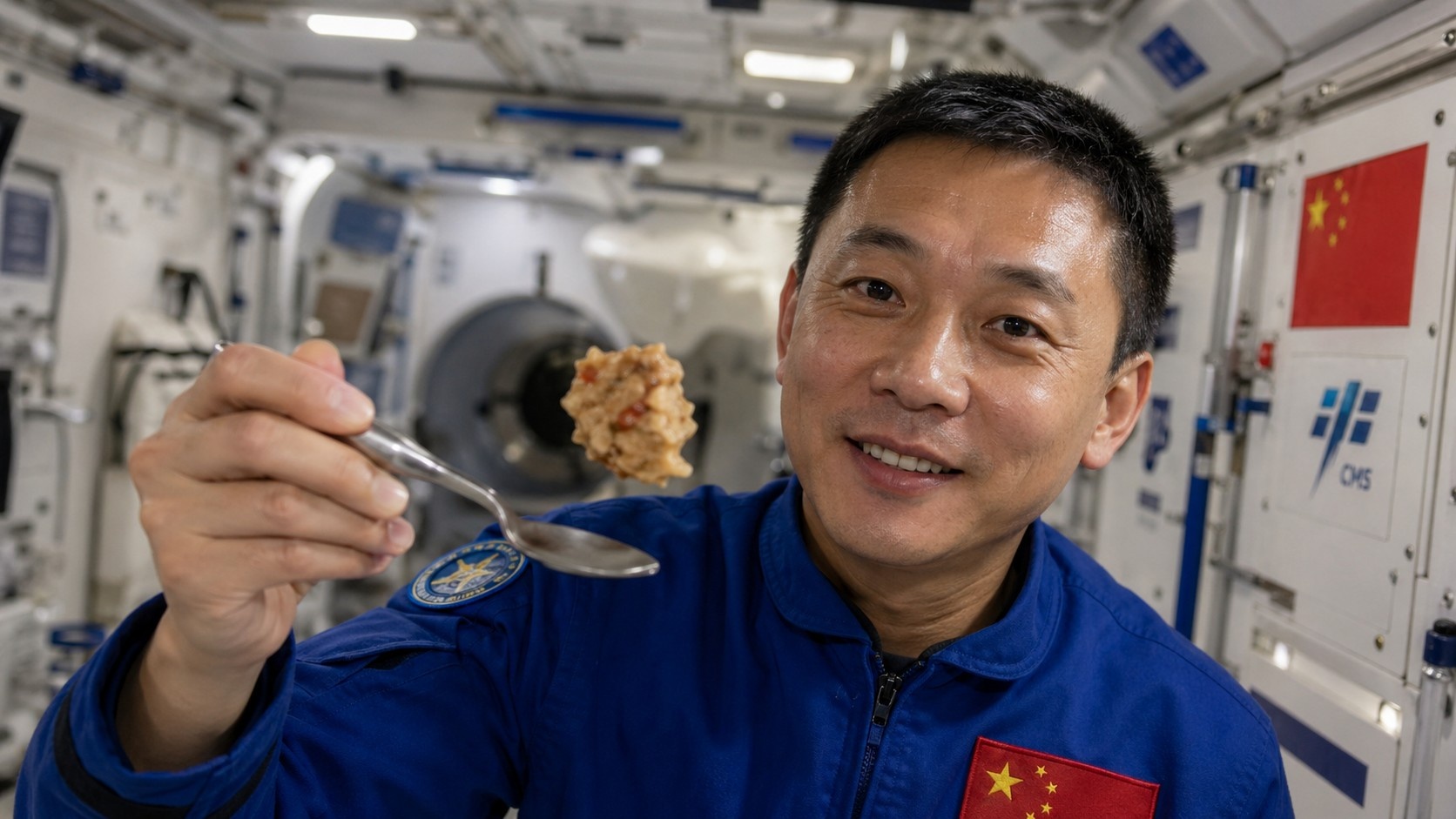
When taikonauts sit down for a meal, they aren’t just consuming calories to survive; they are engaging in a ritual that bridges the gap between high-tech engineering and ancient Chinese culinary tradition. For many astronauts, especially those on long-duration missions, food is more than fuel—it’s a piece of home.
The Menu: Kung Pao Chicken in Orbit
Unlike early space programs where meals were mostly tasteless tubes of paste or freeze-dried ice cream packets, today’s Chinese space station offers a surprisingly diverse menu. The centerpiece? Familiar dishes you’d recognize from a restaurant on Earth.
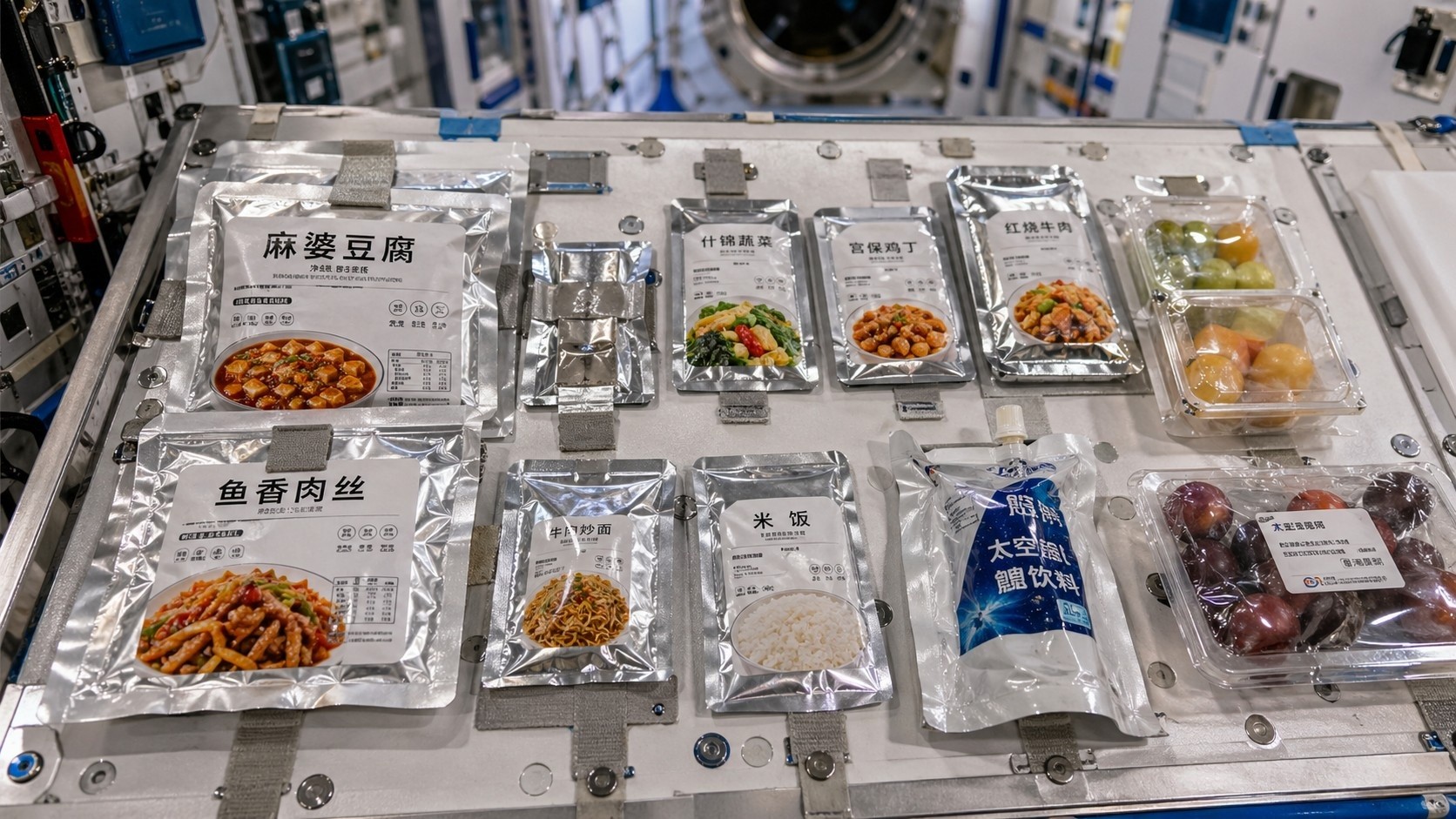
Yes, there is Kung Pao Chicken (Gong Bao Ji Ding). There is also Mapo Tofu, Yuxiang Shredded Pork (fish-fragrant pork), and even spicy sausage. The challenge isn’t just cooking; it’s adapting these flavors for microgravity without creating crumbs that could damage sensitive equipment or float into eyes and lungs.
How Spicy Food Survives Microgravity
You might wonder: how do you eat spicy food in space? In zero gravity, fluids shift towards the head, often causing congestion. This is why many Western astronauts find their sense of taste duller up there—it’s the same reason your food tastes bland when you have a cold on Earth.
Chinese taikonauts handle this by leaning into strong flavors. The use of vinegar, garlic, and chili in dishes like Kung Pao Chicken isn’t just for cultural preference; it’s a physiological necessity to stimulate appetite. Ground support teams work closely with food scientists to ensure these spices enhance flavor without causing discomfort or excessive fluid retention.
The Science Behind the Spoon
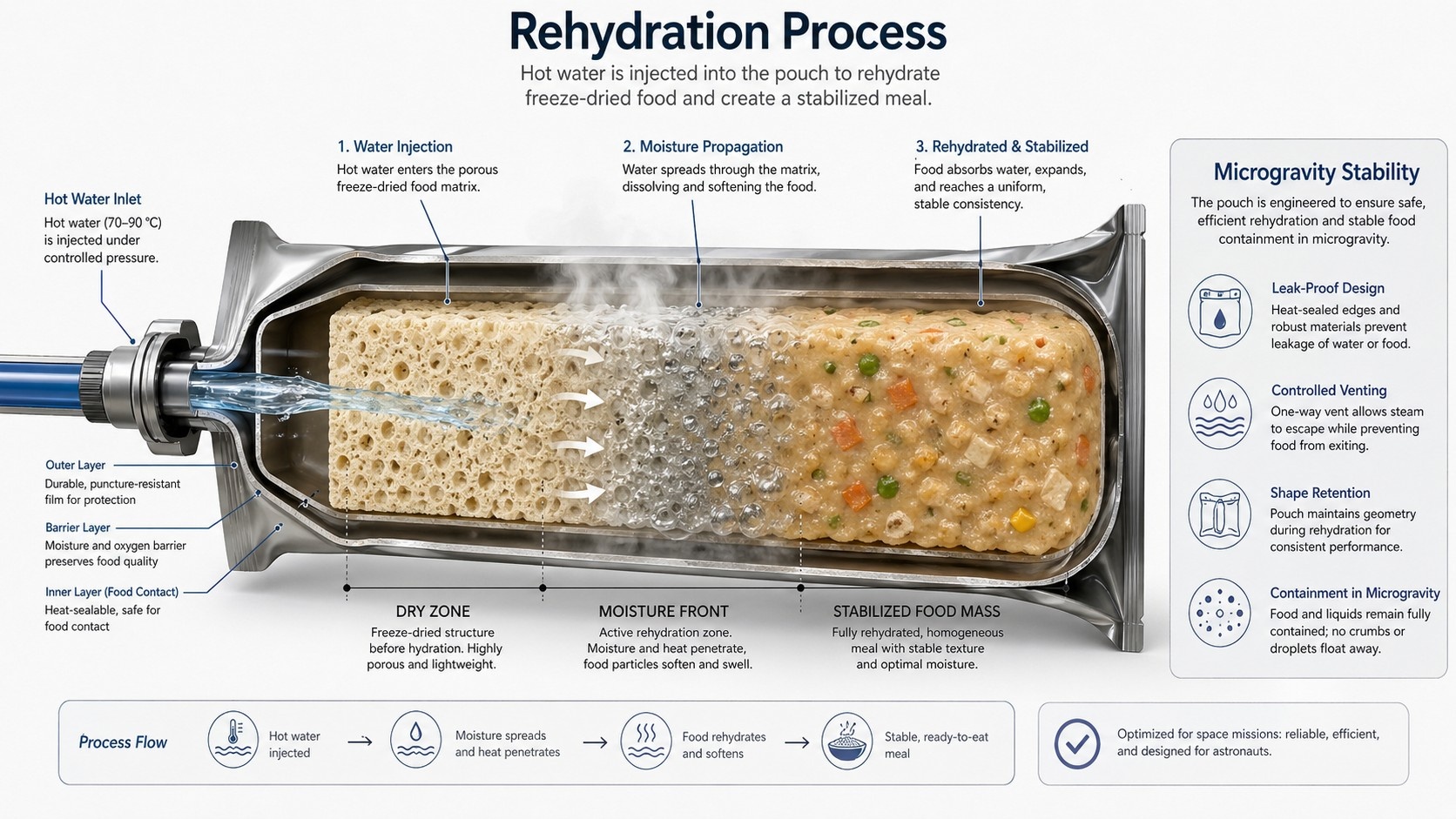
Preparing these meals requires advanced technology. Most Chinese space food uses one of two methods: rehydration or freeze-drying.
– Rehydration: A tray has a small hole. You insert a nozzle from a hot water dispenser, wait about 90 seconds, and stir. The food expands back to its original texture.
– Freeze-Drying: Used for items like fruits or crunchy snacks. It removes almost all moisture while keeping the shape intact.
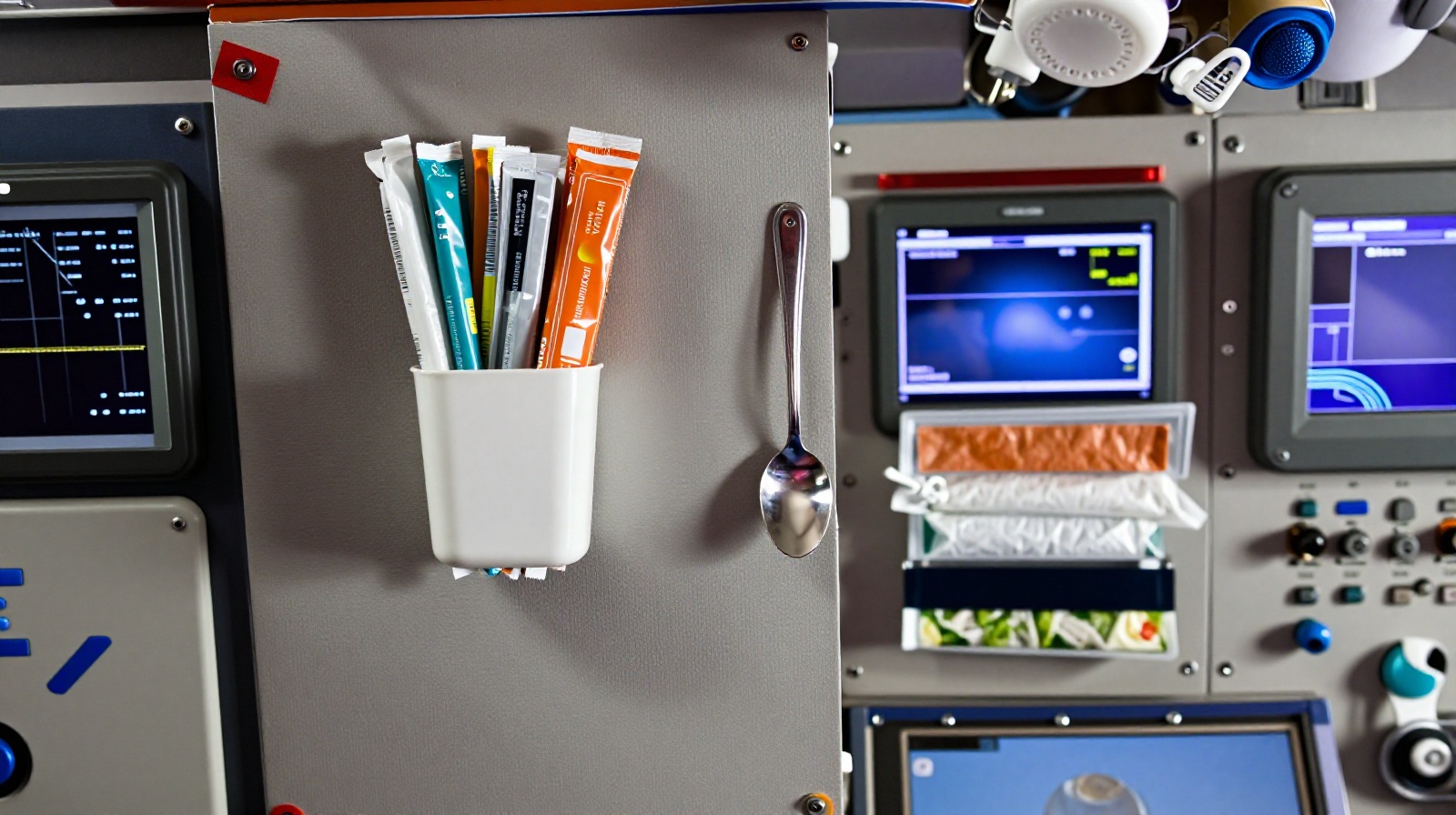
The packaging is equally innovative. Foil pouches are designed to be torn open with a single pull, and magnetic utensils keep spoons and forks from drifting away. Every wrapper has a velcro backing to stick it to the table or wall, turning the dining area into an organized workspace.
Cultural Differences in Space Dining
Comparing Chinese and American space food reveals different philosophical approaches. The US menu often emphasizes variety through condiments—lots of sauces, spices, and powders that astronauts mix themselves to customize taste. This reflects a culture of individual choice.
The Chinese approach is more about pre-prepared completeness. Meals are fully cooked and seasoned by ground teams, ensuring consistent nutritional balance and familiar flavors. It’s less about DIY mixing and more about delivering a complete, comforting dish.
Beyond Orbit: Food for Deep Space
As China plans for lunar bases and future Mars missions, the food challenge changes again. On the Moon or Mars, resupply is impossible. Scientists are now testing hydroponic gardens where taikonauts can grow fresh vegetables like lettuce and radishes. Imagine a salad grown in zero gravity—crisp, cold, and smelling of Earth.
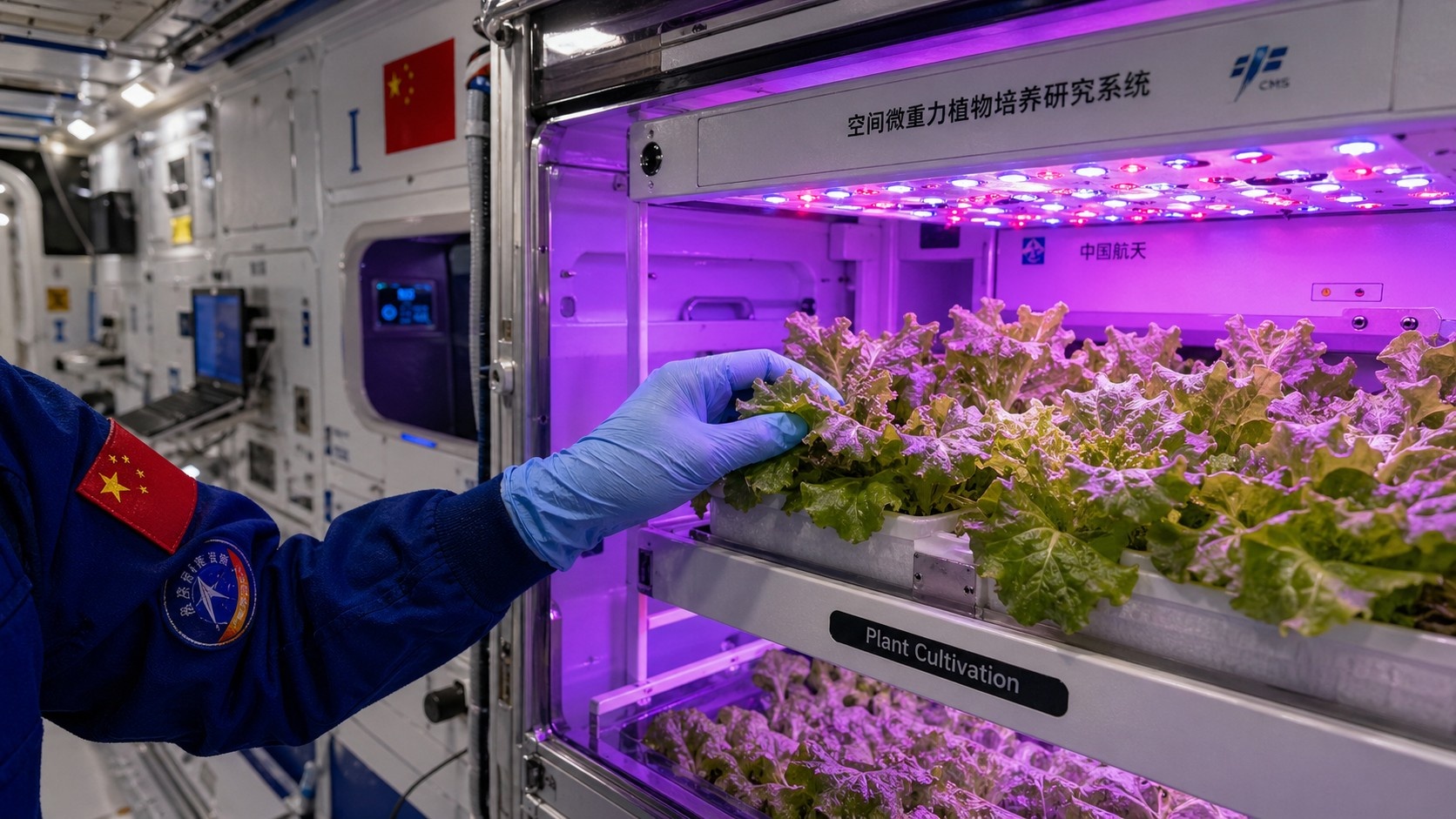
Ultimately, what taikonauts eat tells us about who they are. It’s not just about surviving the void; it’s about bringing a bit of warmth, flavor, and humanity to one of the coldest places imaginable. So next time you enjoy a bowl of spicy noodles at home, remember: somewhere above the clouds, someone is enjoying the same taste, floating among the stars.