

Shantou, China
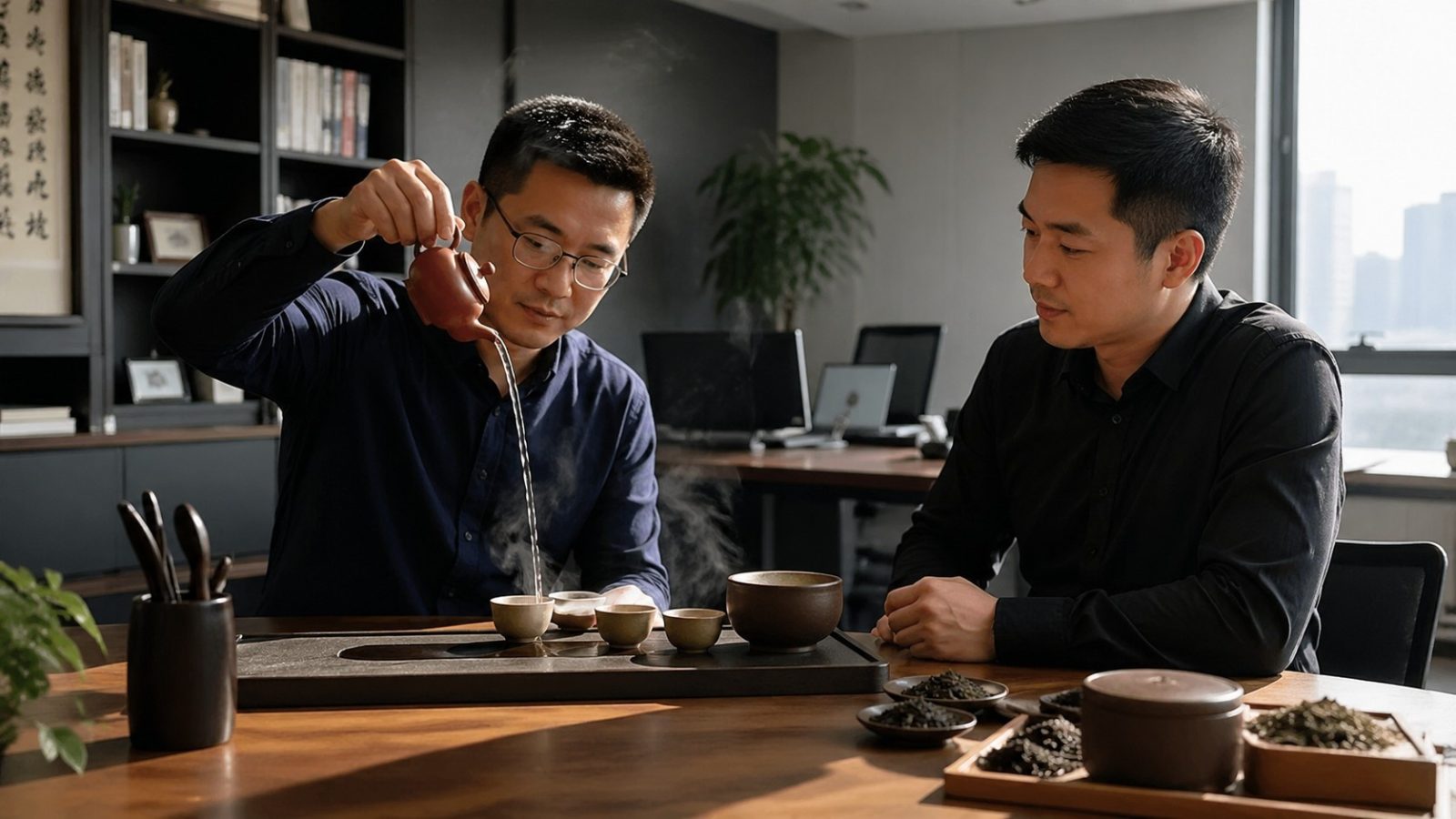
The air in the shop is thick with the scent of roasted oolong. It is 9:00 AM on a Tuesday. Inside a modest trading office in Shantou, Guangdong province, three men sit around a low wooden table. There are no laptops open, no projectors humming, and no slides being presented.
Instead, there is a small clay teapot, three thimble-sized cups, and the rhythmic sound of boiling water. One man pours tea from a height, creating a frothy crown on each cup—a technique known as “pouring high.” Then, he pushes one tiny cup toward his guest.
“Drink,” says Li Wei, a hardware manufacturer who has been in business for twenty years. “This is Tieguanyin. It changes the flavor every time you brew it.”
To an outsider, this might look like simple hospitality. To a Chaoshan local, however, this is the opening move of a negotiation. In Chaoshan, one of China’s most commercially dynamic regions, business is rarely sealed with a handshake alone. It is sealed over tea.
The Ritual as a Filter
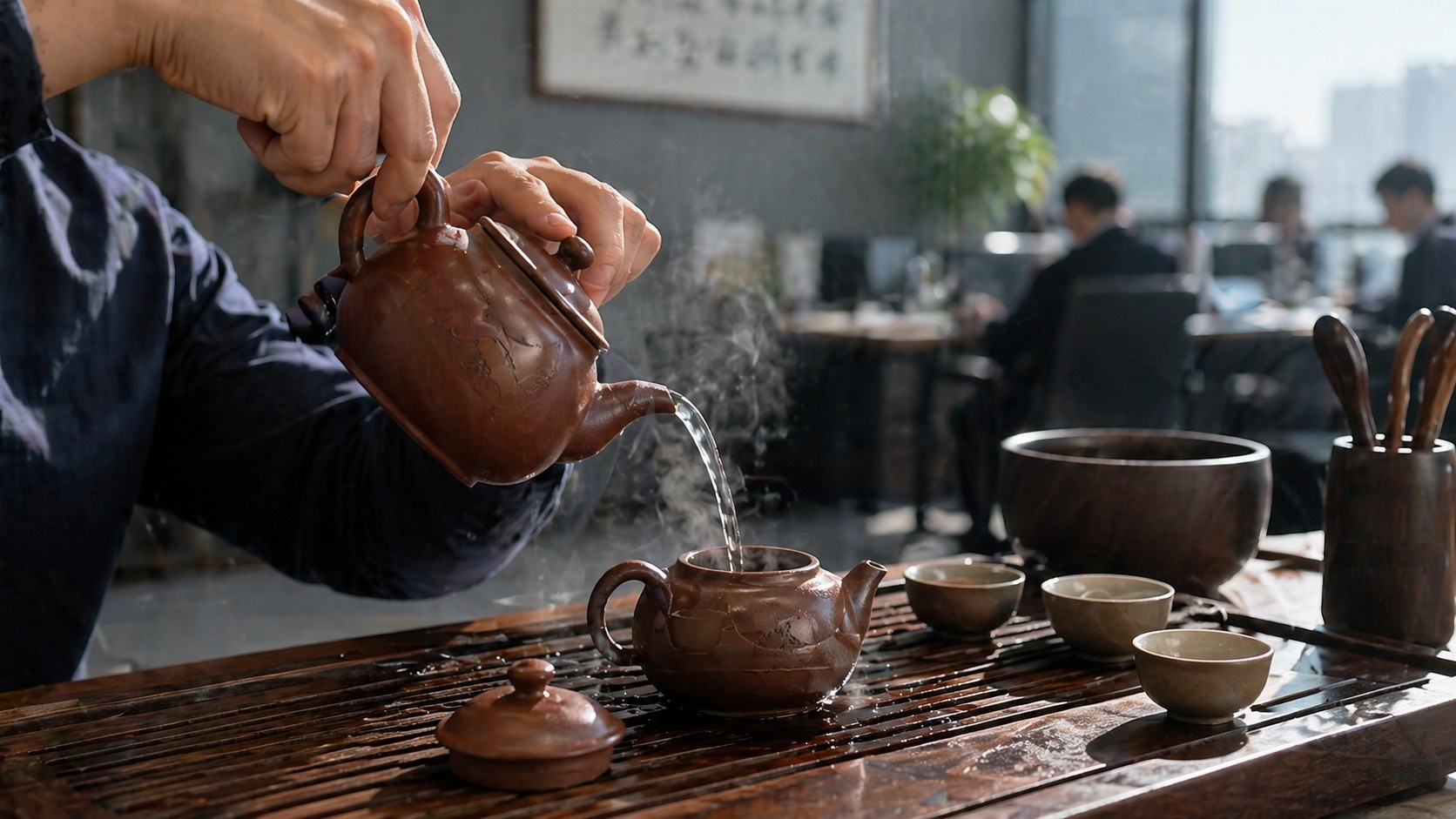
Chaoshan Gongfu tea (often just called “Gongfu tea”) is not merely a beverage; it is a social operating system. The word “Gongfu” here does not refer to martial arts, but to the skill and effort required to master the brewing process.
The setup is intricate: a Yixing clay pot, a fairness pitcher (gongdao bei), and cups so small they fit in the palm of one’s hand. The water must be at a rolling boil—usually 100°C—to release the full aroma of the oolong leaves. The brew time is short, often just seconds.
Why such complexity? For Chaoshan businesspeople, the ritual serves as a filter. It tests patience, attention to detail, and respect for tradition. If you rush the tea, if you drink too quickly, or if you fail to appreciate the subtle shift in flavor between the first and third infusion, you signal that you are not ready for long-term partnership.
“In Chaoshan, we say ‘tea is like water,'” Li Wei explains. “It flows everywhere. If you can sit still and enjoy a cup of tea with me, I know you have patience for the complexities of our industry.”
The Psychology of “Three Cups, Four People”
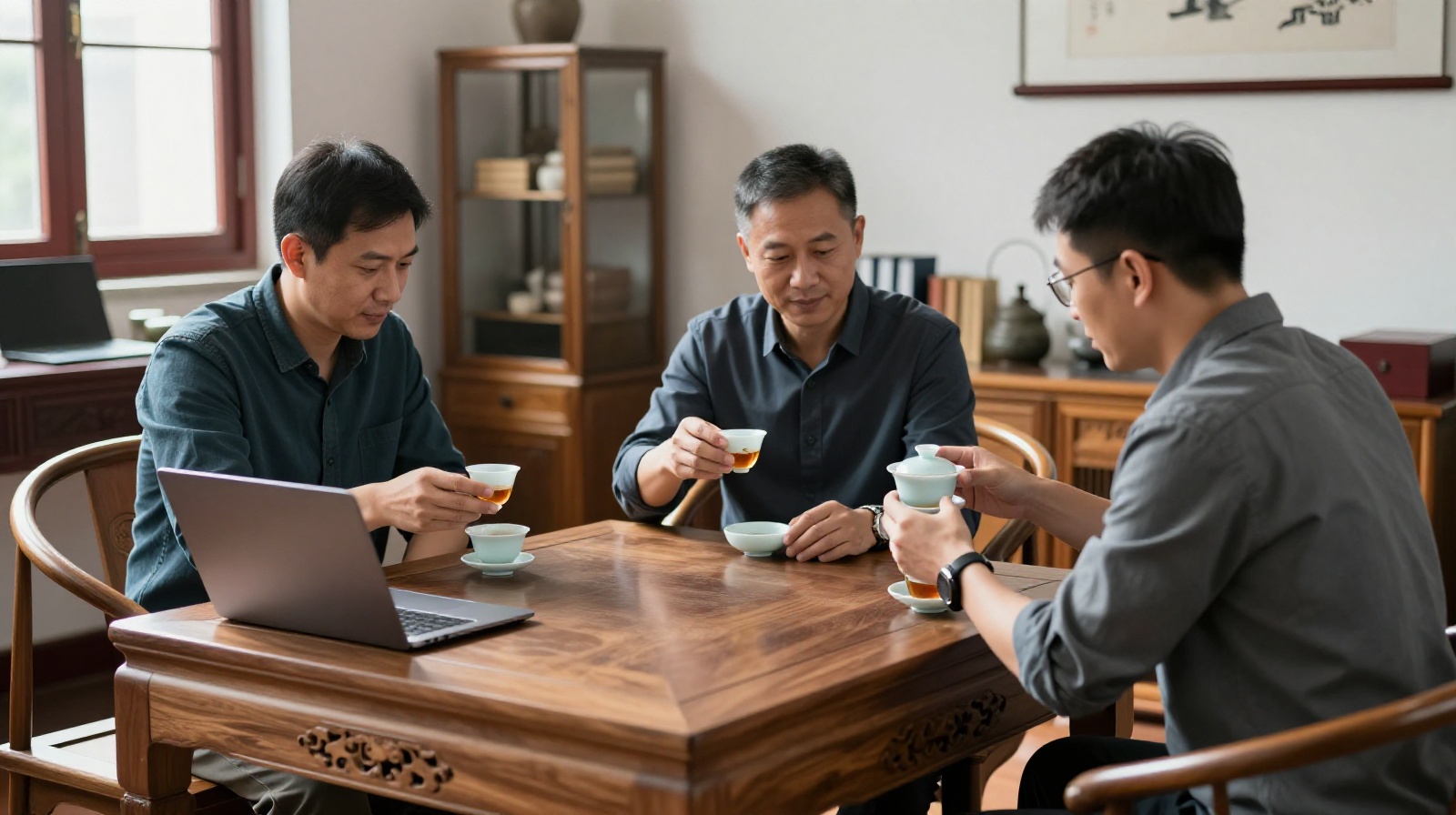
There is a local saying: “Cha San Jiu Si,” which translates to “Tea for three, wine for four.” This custom dictates that tea should ideally be shared among exactly three people. Why?
Sociologists suggest it relates to the concept of equality. With three cups, everyone can reach their own cup without passing it around or reaching across the table. It creates a balanced dynamic where no single person dominates the space.
In a business context, this geometry is powerful. It removes hierarchy. The boss and the potential partner are equals at the tea table. The act of pouring tea for someone else is an act of service and respect. When Li Wei pours tea for his guest, he is subtly saying, “I value our connection.”
If the number of people exceeds three, a fourth person often joins the wine circle after the tea ritual is complete. But for serious negotiations, the tight triangle of three remains the gold standard.
From Tea Leaves to Trade Deals
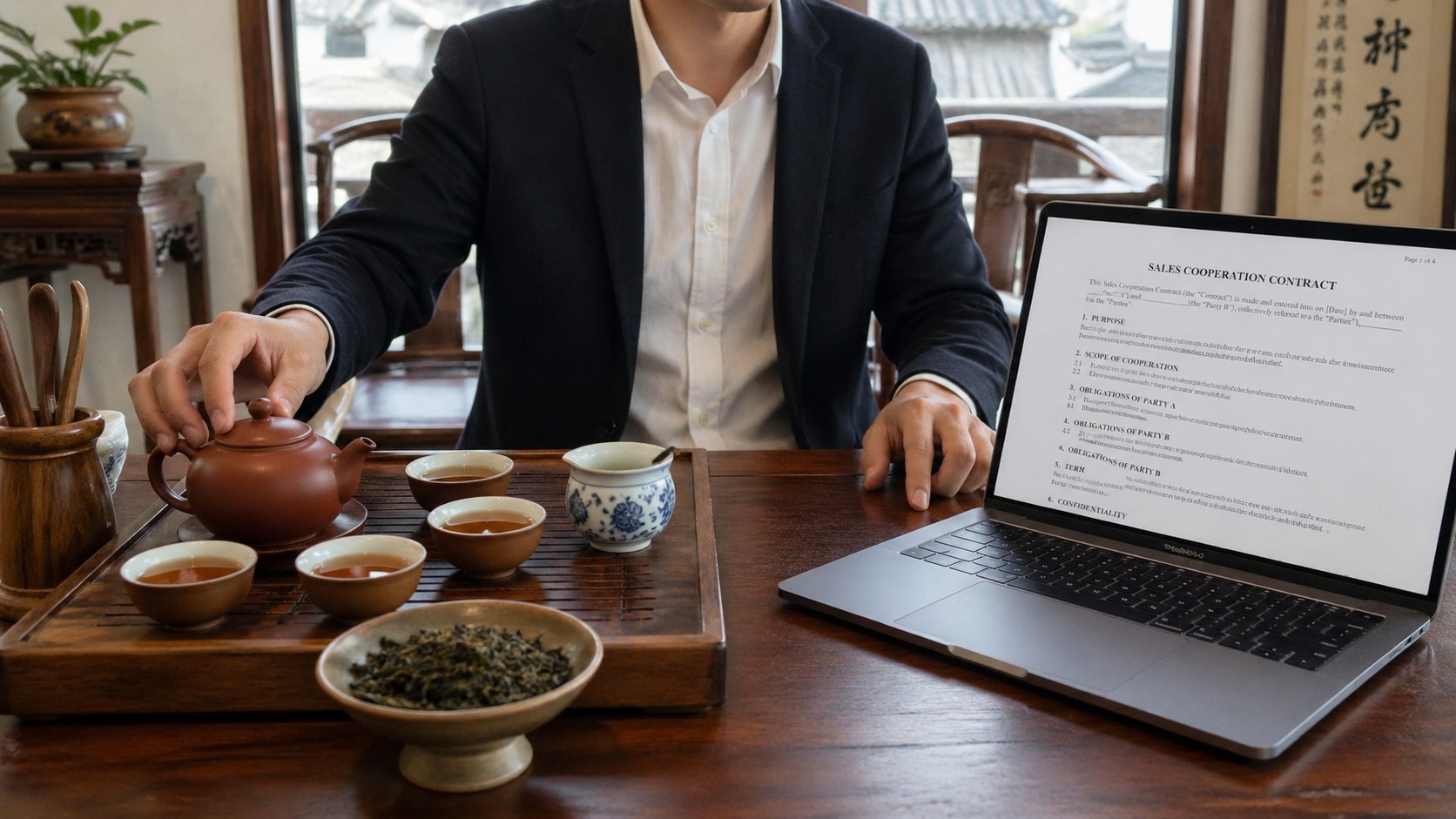
Consider the case of Chen Ming, a textile exporter from Shantou. Last year, he was trying to secure a contract with a large European fashion retailer. The European buyers were used to direct, data-driven presentations. They wanted numbers, ledgers, and quick decisions.
Chen knew that if he just sent emails, he would be ignored. So, he invited the buyers to his office for “a cup of tea.”
For two hours, Chen did not talk about fabric counts or shipping costs. He talked about the history of the tea village where the oolong leaves were grown. He explained how the weather in that specific region affected the leaf’s texture. He demonstrated the precise water temperature needed to unlock the flavor.
The buyers, initially impatient, found themselves slowing down. They watched Chen’s hands move with practiced grace. They tasted the complex, floral notes of the tea. In those two hours, a barrier was broken. The Europeans saw not just a supplier, but a craftsman who understood quality and patience.
When Chen finally opened his laptop and showed the price list, the mood had shifted. The negotiation was no longer adversarial; it was collaborative. The deal was signed three days later.
Tradition in the Age of Speed
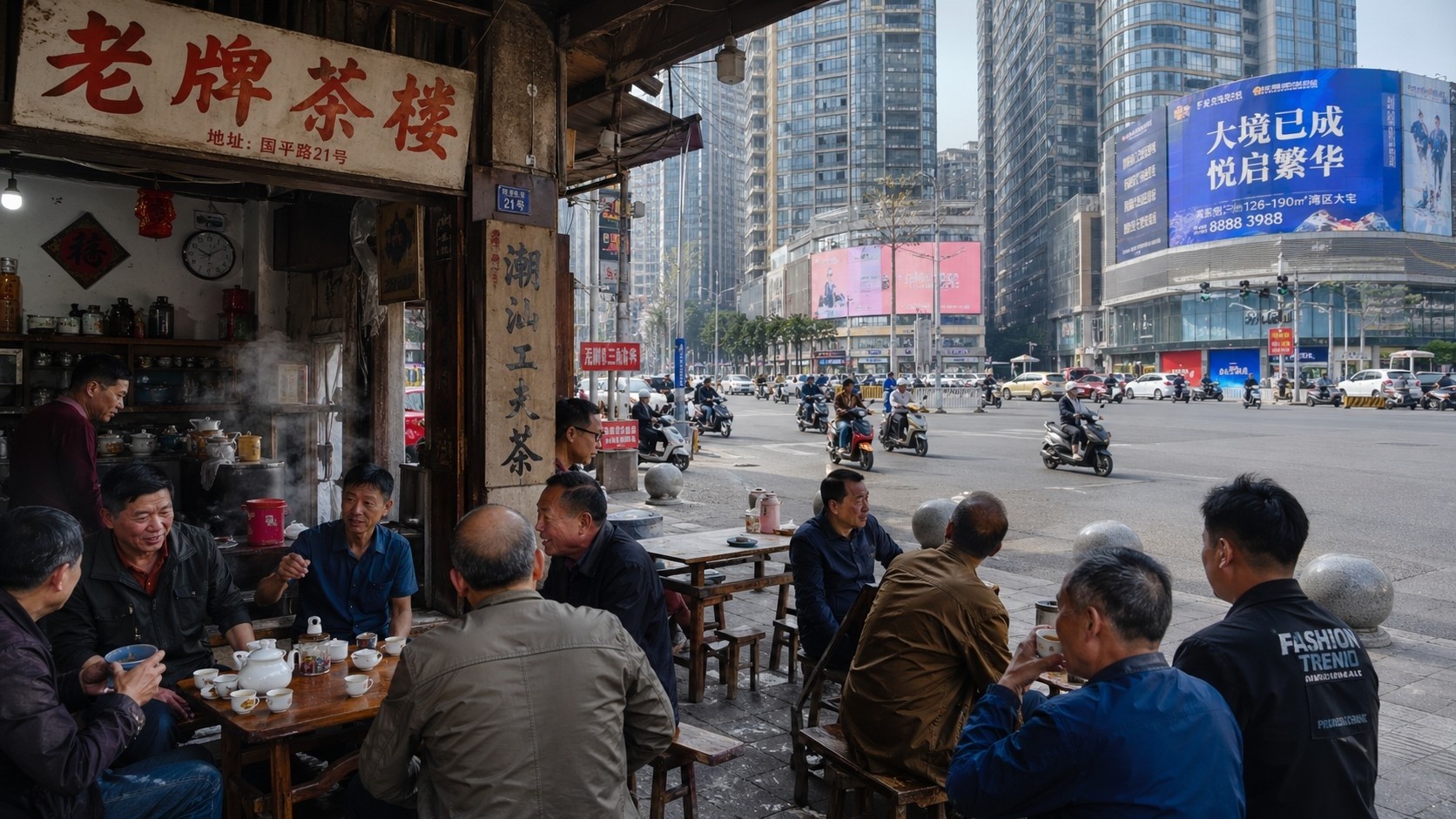
China’s economy is often described as fast-paced, with cities like Shenzhen moving at digital speed. Yet, in Chaoshan, the pace remains deliberately slow when it comes to business relationships.
This is not a rejection of modernity. Young entrepreneurs in Shantou are deeply connected to global markets, using AI and e-commerce platforms daily. But they recognize that trust cannot be algorithmically generated. It must be cultivated human-to-human.
The tea table is where the “slow” logic of relationship-building meets the “fast” logic of global trade. It is a space where time is not money, but rather the medium through which money becomes possible.
For foreign businesses entering China, understanding this ritual is more than cultural etiquette; it is a strategic advantage. To skip the tea is to skip the trust-building phase. In Chaoshan, you don’t just drink tea to quench thirst. You drink it to see if someone is worth doing business with.