


The Hum of the City
If you have walked through a Chinese city in the last five years, you have seen them. They are not loud like motorcycles, nor do they look like the heavy bicycles you might be used to back home. These are shared e-bikes (e-scooters), and they are everywhere.
Imagine it is 6:30 PM on a Tuesday. The subway station exit is packed. But down on the sidewalk, a river of yellow Meituan bikes and blue Hello Bike scooters flows steadily toward the residential districts. For many locals, this is not just a novelty; it is their daily commute to work or dinner.
For an expat, hopping on one of these seems like the ultimate shortcut to blending in. It offers freedom from crowded trains and expensive taxis. But before you unlock that QR code with your phone camera, there are several layers of reality you need to understand. The experience is not as simple as scanning a bike in London or New York.
The First Hurdle: It’s Not Just About the Bike
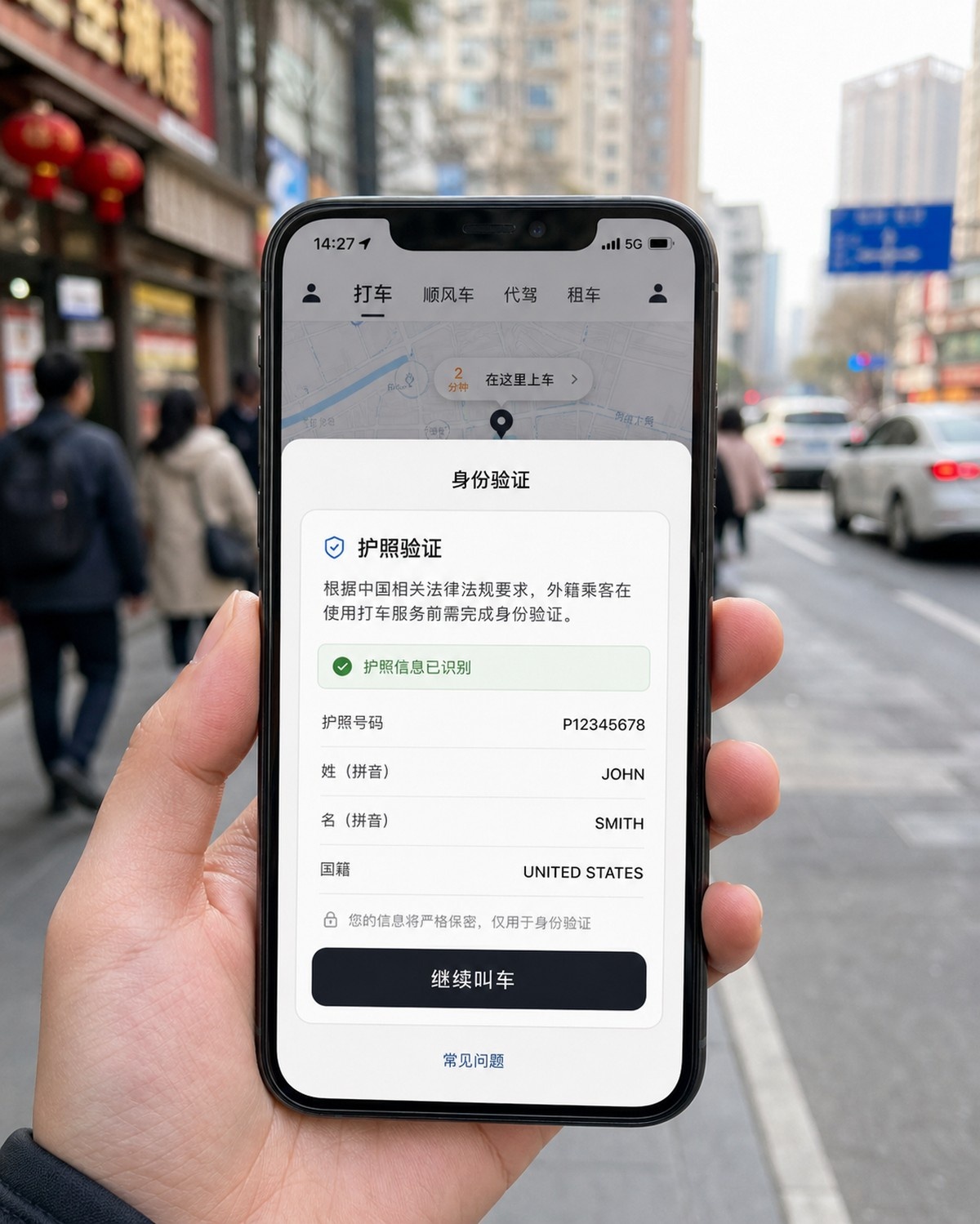
In many Western countries, you can download an app and pay with a credit card to ride a scooter. In China, shared e-bikes are deeply integrated into a system called real-name verification. This is not just a privacy preference; it is a legal requirement for all motorized transport in public spaces.
This means two things for foreigners:
- A Chinese Phone Number: Almost every shared e-bike app (Meituan, Hello Bike, Qingju) requires verification via a domestic SMS code. While some apps are slowly testing support for international numbers, the vast majority still require a +86 number to complete registration and unlock.
- Passport Registration: If you do have a Chinese phone number, you will likely need to verify your identity using your passport. This involves uploading photos of your passport’s biometric page and holding an ID card (or sometimes just standing still) for facial recognition software to match your face against the photo.
This process can be frustrating if your Chinese is not strong, as the menus are often entirely in Simplified Chinese. It is one of the reasons why many foreigners stick to walking or ride-hailing apps (like DiDi), even though e-bikes are cheaper and faster for short distances.
Safety Rules: Helmets Are Not Optional
Let’s be clear about safety. In the early days of shared bikes in China, helmets were rare. Today, that has changed drastically due to strict local regulations.
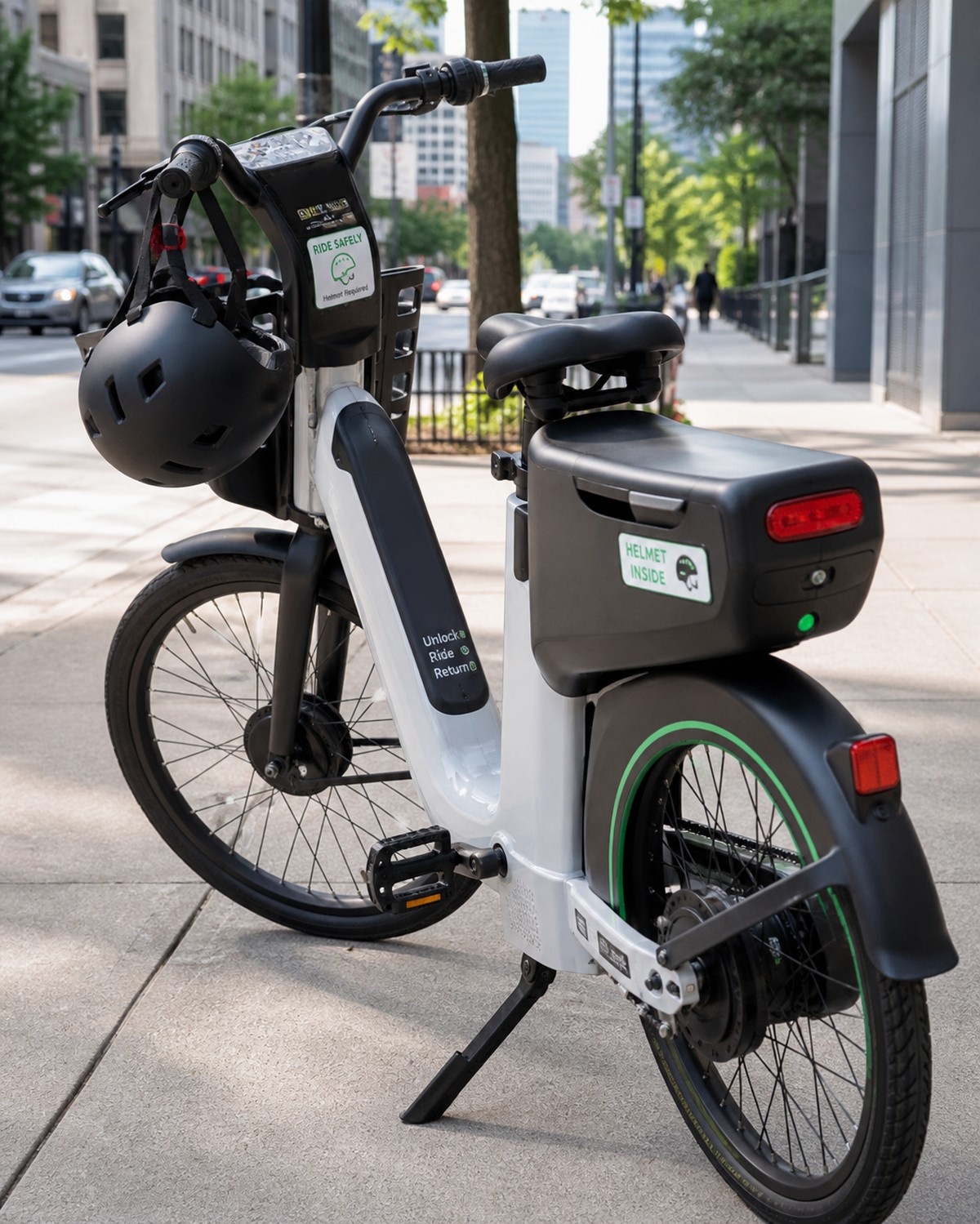
In most major cities, wearing a helmet is mandatory for e-bikes. You cannot just ride away without one. Most shared e-bikes now come with a built-in helmet stored in the seat box or attached to the handlebars. If you do not wear it, the app will often prevent you from starting your trip.
There are also age restrictions. Generally, you must be at least 16 years old to ride an e-bike legally. For foreigners, this is less of a barrier than for children, but it means you cannot let younger kids take the bike out if you are trying to teach them. Furthermore, carrying passengers on shared e-bikes is strictly prohibited in almost all jurisdictions.
Parking: The “Electronic Fence” Trap
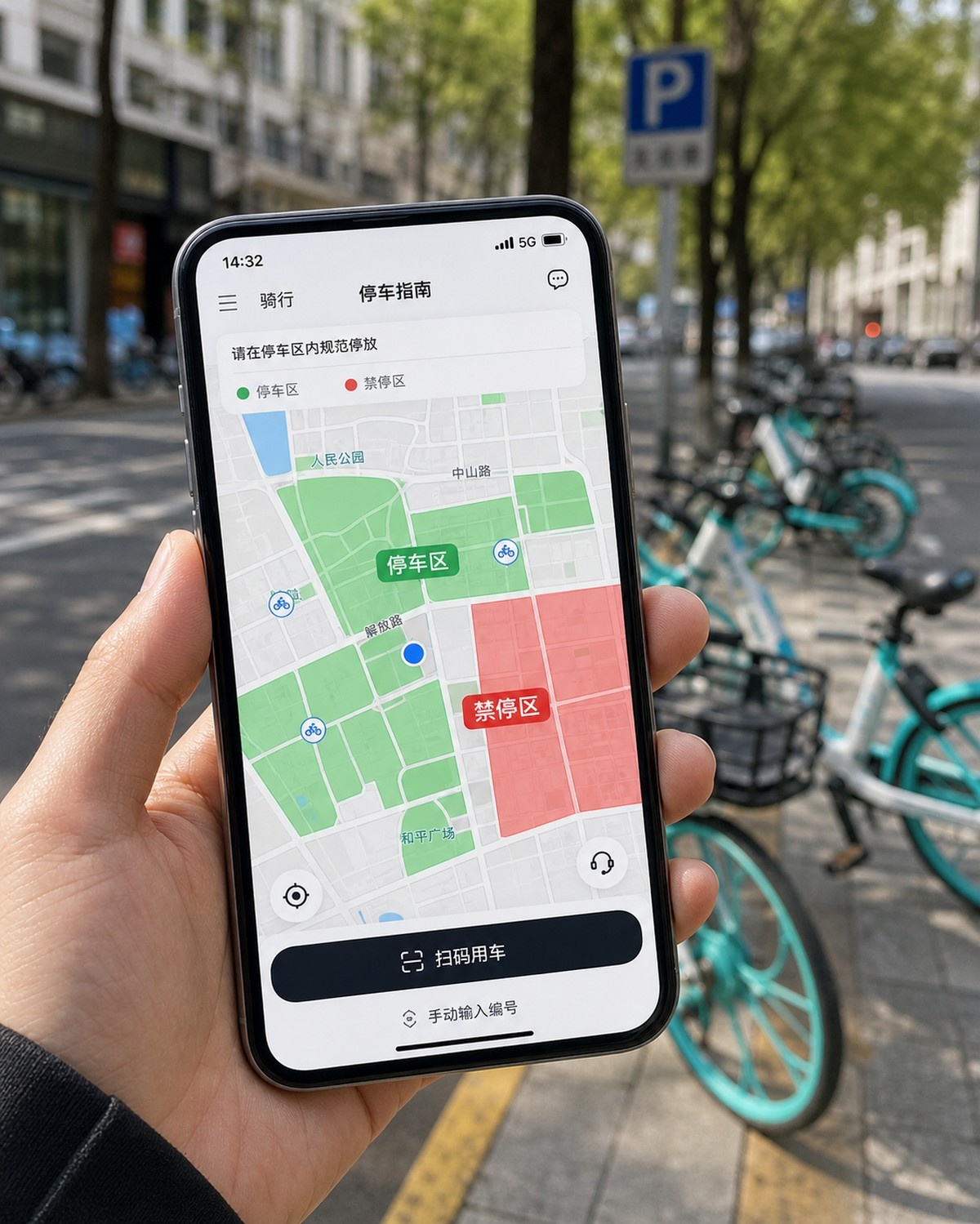
Perhaps the most confusing part for newcomers is where you can actually stop. In China, cities use “electronic fences” (geofencing) to manage bike clutter.
You cannot just lock your bike anywhere on the sidewalk. If you park outside of designated zones, two things might happen:
- Fines: You may be charged a penalty fee (usually 5-20 RMB) for “illegal parking.”
- Inability to End the Ride: The app will not let you lock the bike or end the session until you move it to a valid zone. This can lead to being charged extra minutes while you walk back and forth looking for the correct blue square on the map.
The solution is simple but requires attention: always check the map in the app before you stop. Look for green or blue zones marked as “P” or parking areas. Never assume a random empty spot on the pavement is legal.
How to Actually Ride It
If you have your Chinese phone number and pass the facial recognition check, here is how the actual ride works:
- Download the App: Meituan (yellow) and Hello Bike (blue) are the market leaders. You can also find them embedded within WeChat or Alipay mini-programs.
- Payment Setup: Ensure you have added a Chinese bank card to your Alipay or WeChat Pay, or linked an international credit card if supported by the specific app version.
- Scan and Go: Open the camera in the app and scan the QR code on the bike’s handlebar. Wait for the green light. The seat will pop up (or the lock releases electronically). Start riding.
Riding itself is intuitive but requires defensive driving. E-bikes are quiet. They can accelerate quickly, often faster than you expect from a bicycle. You must share the road with electric motorcycles, delivery drivers rushing to meet deadlines, and sometimes even cars illegally using bike lanes. Stay in your lane, signal clearly (hand gestures work), and never ride on the sidewalk among pedestrians—it is both dangerous and illegal.
Final Thoughts
Shared e-bikes are a vital part of China’s urban infrastructure. They solve the “last mile” problem efficiently and reduce traffic congestion. For foreigners, mastering them means gaining access to a more flexible way of living in Chinese cities.
However, it is not without its headaches. The reliance on Chinese digital ecosystems (phone numbers, apps, facial recognition) creates a high barrier to entry. But once you get past the setup, the freedom of riding through your neighborhood at sunset, wind in your face, is worth the initial learning curve.