
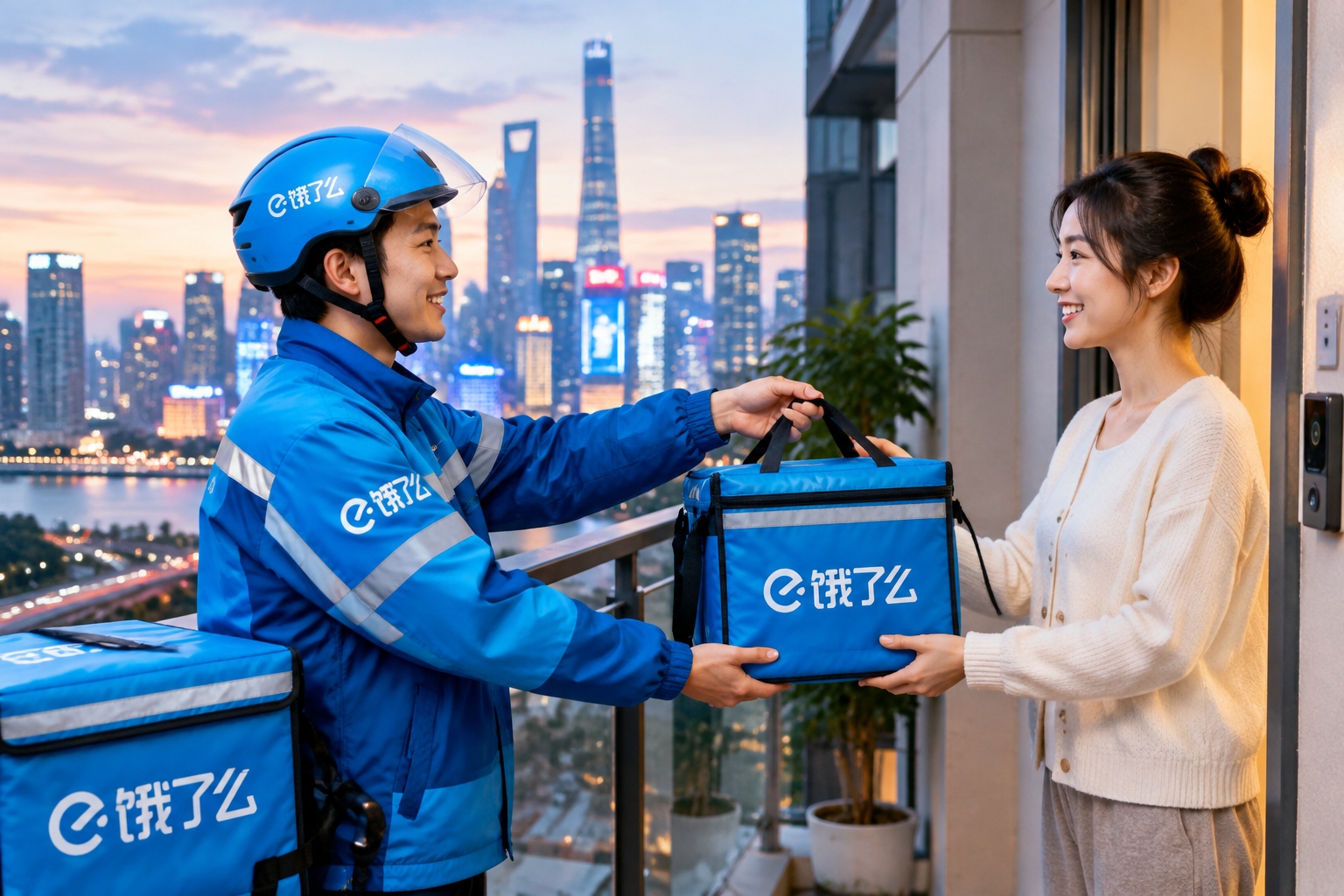

The “Dark Store” Behind Your Door
It is Tuesday evening in Shanghai. Li Wei, a software engineer, comes home from work exhausted. He does not want to visit the crowded local market or cook elaborate dishes. Instead, he opens an app on his phone.
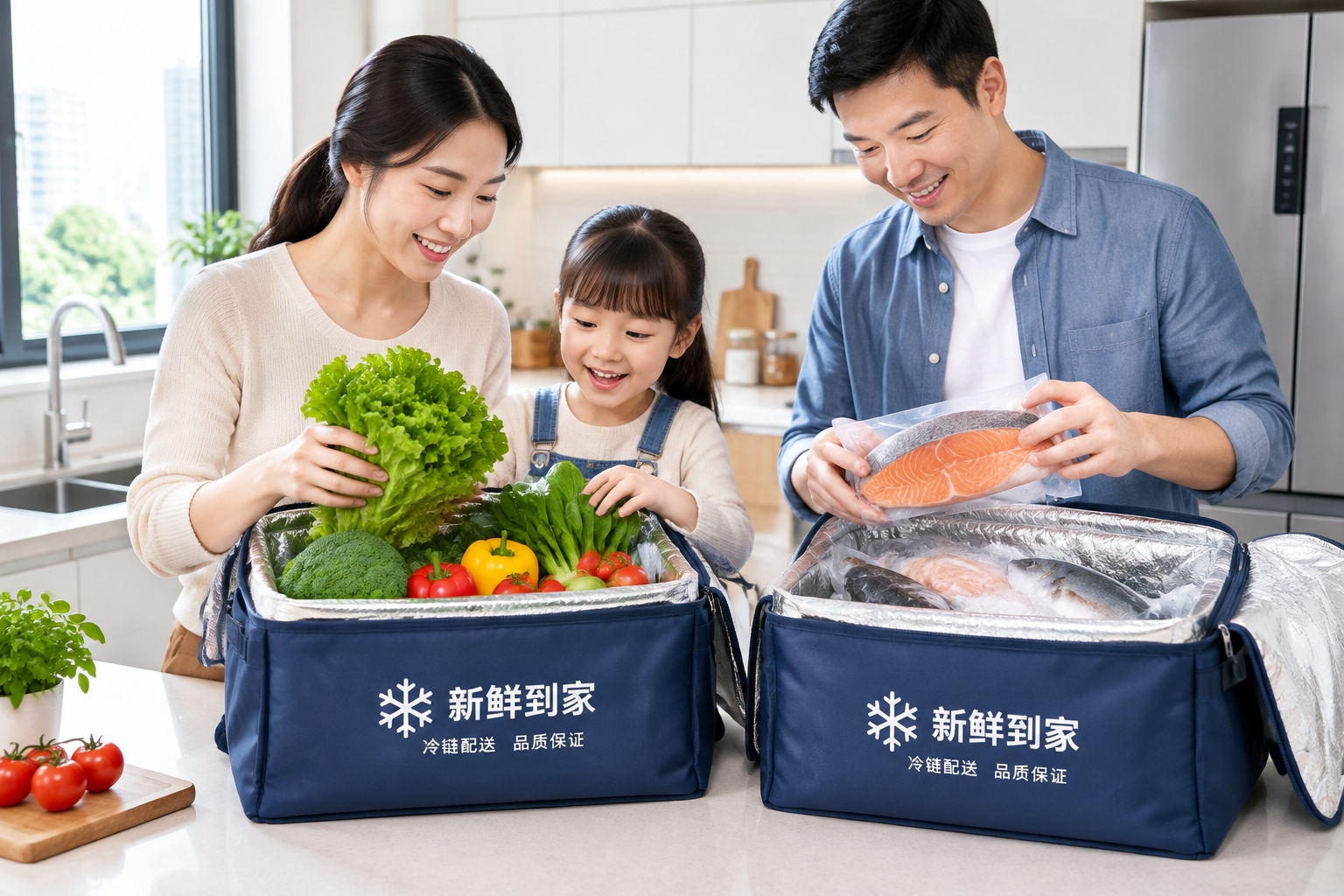
Within minutes, he orders two types of leafy greens, half a chicken, and a live yellow catfish. The price is displayed in real-time. Thirty-two minutes later, a delivery rider wearing a blue uniform knocks on his door with a thermal bag. He scans a QR code, hands over the package, and leaves. Li Wei opens the bag: the vegetables are crisp, and the fish is still swimming.
This scenario, often described as “instant retail” (即时零售), has become commonplace in China’s tier-one cities like Shanghai, Beijing, Shenzhen, and Hangzhou. For many urban residents, going to a supermarket or wet market for daily essentials is no longer a necessity but an optional choice reserved for leisure shopping.
The Engines of Speed: Hema and Dingdong
Two companies dominate this space: Hema (part of Alibaba) and Dingdong Maicai. While they share the same goal—speed—they operate on slightly different models.
Hema, or Freshippo in English, combines online delivery with large physical “experience stores.” Customers can walk into these supermarkets to see the seafood tanks or eat sushi prepared fresh in-store. The store acts as both a retail outlet and a distribution center for surrounding orders.
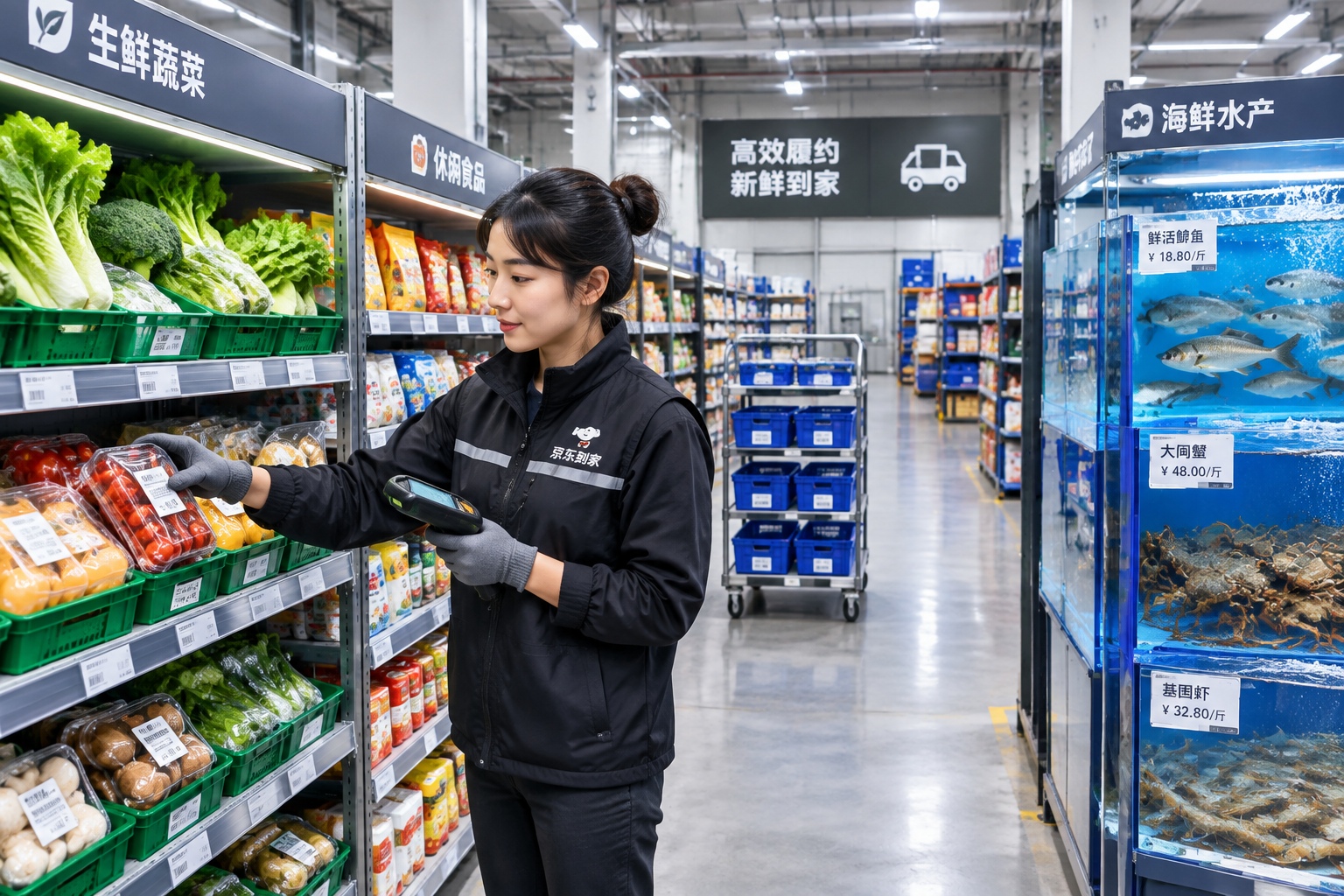
Dingdong Maicai takes a more focused approach. It relies heavily on what is known as the “dark store” model (前置仓). These are small, non-public warehouses located within residential neighborhoods. They do not welcome walk-in customers. Their sole purpose is to serve online orders for a radius of about 1.5 kilometers.
This distinction matters. The dark store model allows Dingdong to operate in dense urban areas where large retail space is prohibitively expensive. By keeping inventory close to the consumer, they minimize the time between picking and delivery.
Data-Driven Logistics
How do these companies guarantee 30-minute deliveries? It is not magic; it is advanced data analytics and algorithmic management.
Before an order is even placed, the system predicts demand. Using historical data from previous days and weeks, algorithms determine which products need to be stocked in which specific warehouse. For example, if a neighborhood tends to buy spicy ingredients on weekends, that dark store will have more of them ready.
When Li Wei places his order, an algorithm instantly assigns the task to the nearest available rider. The system does not just look at distance; it considers traffic patterns, elevator availability, and the rider’s current load. In some cases, orders for the same building are grouped together to optimize efficiency.
This level of coordination requires a massive workforce. Thousands of riders operate in each major city, working in shifts to ensure coverage during peak hours. They are not just delivery drivers; they are nodes in a vast, real-time network that connects digital demand with physical supply.
Changing Habits and Food Culture
The rise of these services has fundamentally altered how Chinese urbanites eat and shop. In the past, buying fresh food was often an early morning ritual involving wet markets, bargaining, and carrying heavy bags home. Today, convenience has taken precedence over interaction.
This shift is particularly noticeable among young professionals and dual-income families who value time over traditional shopping experiences. However, it also reflects a broader change in diet structure. With easy access to high-quality ingredients at all hours, people are experimenting more with home cooking using fresh, premium products that might have been too expensive or hard to find previously.
The Future of Urban Living
As China’s urbanization continues, the demand for instant gratification in daily necessities will likely grow. While challenges remain—such as ensuring fair wages for riders and managing packaging waste—the model has proven its resilience.
For visitors or expats arriving in China, using apps like Meituan, Ele.me, Hema, or Dingdong is the fastest way to navigate local life. It offers a glimpse into how technology can seamlessly integrate into the fabric of everyday existence, turning what was once a chore into an invisible, effortless service.
Start the discussion at forum.chinacomes.com