
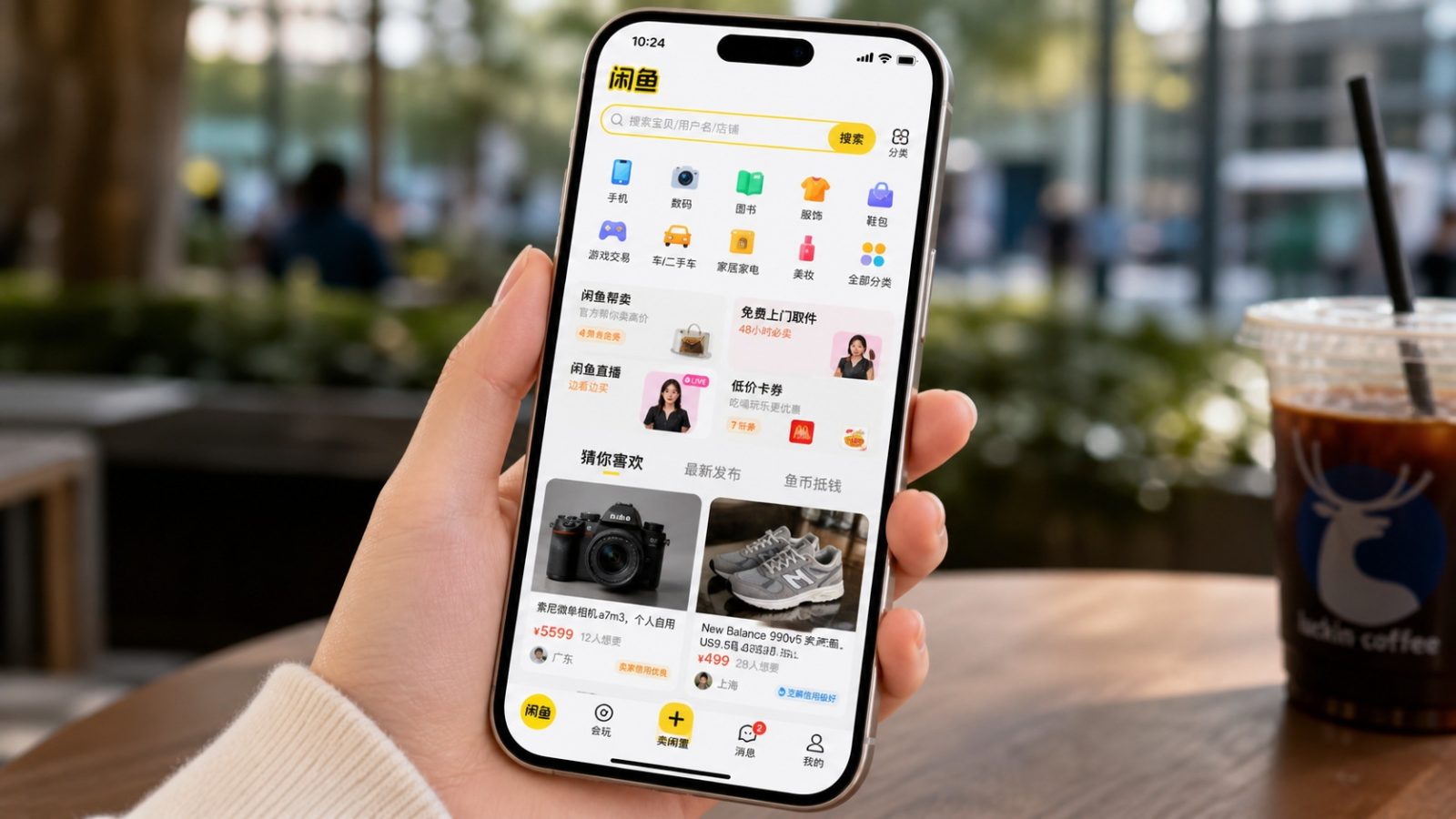

More Than Just a Marketplace
Imagine you are packing up your life in Shanghai. You have a bulky IKEA sofa that no one wants, and a collection of books taking up space. In the West, you might list them on Craigslist or Facebook Marketplace, hoping for a cash transaction from a stranger who might show up three days later with a pickup truck.
In China, there is a more efficient, app-based solution: Xianyu (闲鱼), which translates roughly to “Idle Fish.” Owned by Alibaba, the same giant behind Taobao and Alipay, Xianyu has become an integral part of daily life for millions. It is not merely a classifieds site; it is a cultural phenomenon.

The Power of “Zimo” (Self-Pickup)
For buyers, the biggest hurdle in second-hand shopping is usually shipping costs and item condition. Xianyu solves this with a feature called Zimo (同城自提), or local self-pickup.
This is how it works: You browse listings within your city. If you find that IKEA sofa, you can message the seller and arrange to pick it up yourself. Why does this matter? Two reasons.
First, it saves money on shipping, which can be expensive for bulky items in China. Second, and more importantly, it allows you to inspect the item before paying. You meet at a public place—often a subway station or a coffee shop—and hand over cash via Alipay or WeChat Pay after verifying the condition.
Selling Like a Pro: Photos and Descriptions
If you are listing an item, your photos are everything. In Xianyu culture, honesty builds trust. Avoid overly polished, professional studio shots unless you are selling high-end electronics.
Instead, take clear, well-lit photos in natural light. Show the flaws. If there is a scratch on your laptop screen, photograph it and mention it in the description. This transparency often leads to faster sales because buyers appreciate not being misled.

The Art of the Bargain
Bargaining is expected on Xianyu, but it has its own etiquette. You rarely see aggressive haggling. Instead, users typically send a polite message asking for a “friendship price” (youhuijia). A common tactic is to offer slightly below your target price and let the seller counter-offer.
However, be respectful. If a seller has already marked down an item significantly, pushing too hard can lead to them removing the listing. The goal is a fair trade, not winning a battle.
Avoiding Scams: The Credit System
Like any large platform, Xianyu has scammers. The most common trap is when a buyer or seller asks you to move the conversation to WeChat or another app “to save fees.” Never do this. Once you leave the Xianyu chat and payment system, you lose Alibaba’s buyer protection.
The key to safety on Xianyu is understanding Sesame Credit (Zhima Xinyong). This is a social credit score within the Alibaba ecosystem. When viewing a seller’s profile, look for their Sesame Credit rating.
- Excellent: High trustworthiness, often verified users with long history.
- Good: Reliable, but maybe new to the platform.
- Poor/Low: Proceed with extreme caution. These accounts may have a history of disputes or non-delivery.

Beyond Goods: A Community of Hobbyists
Xianyu is also a hub for specific subcultures. It is where photographers buy and sell vintage lenses, where gamers trade rare collectibles, and where students pass on textbooks after finals.
This community aspect makes it distinct from Western equivalents. You aren’t just buying an object; you are often entering a conversation about shared interests. Many users treat the app as a social network first and a marketplace second.
Final Tips for New Users
To start using Xianyu, download the app and link your Alipay account. It is free to list items. Start small—perhaps selling a few clothes or books—to understand the flow of messages and payments. Be patient, be polite, and always keep transactions within the app. Whether you are decluttering for a move or hunting for rare finds, Xianyu offers a fascinating glimpse into how ordinary Chinese people manage their possessions in the digital age.