


The Hard Reality of Working in China
Li Wei, a software engineer from Berlin, arrived in Shanghai with a three-month business visa. He was excited to network and explore opportunities. Two weeks later, he joined a local startup for unpaid internships that quickly turned into regular work. When immigration police checked his residence permit at a routine community inspection, Li faced immediate detention and deportation. His case is not unique; it is one of thousands recorded annually.
In China, the line between “visiting” and “working” is drawn with extreme precision. Unlike in some Western countries where working on a tourist visa might be tolerated or ignored unless discovered, China’s immigration enforcement is systematic and rigorous. The core mistake many foreigners make is assuming that any visa allows employment if no money changes hands locally, or that the nature of the work (e.g., consulting) doesn’t matter.
What Is a Z Visa?
The Z Visa is China’s official work visa. It is not granted based on your job offer alone; it is part of a dual-approval system involving both the employer and the state.
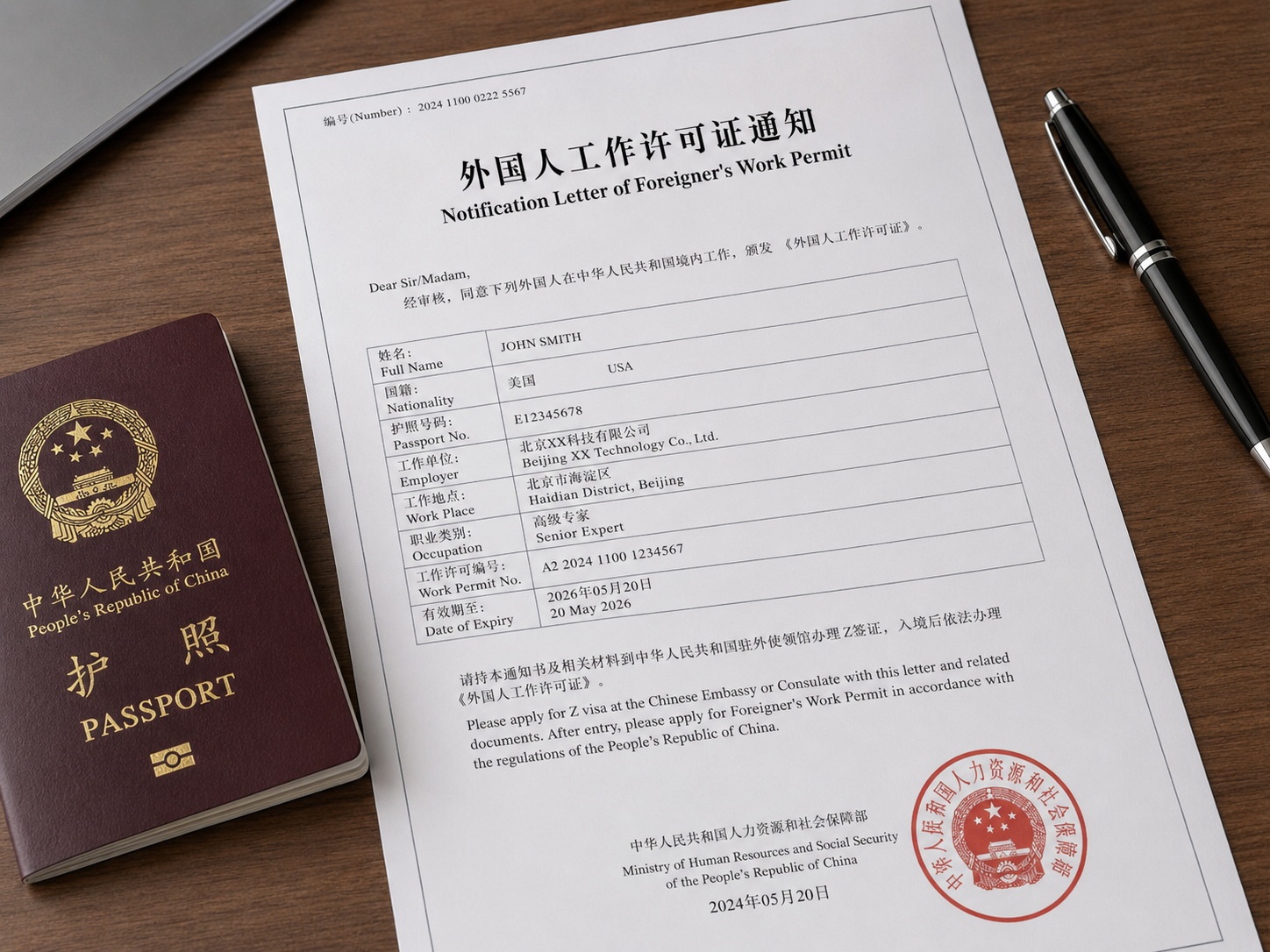
To obtain a Z Visa, you must first secure a legitimate job offer from an entity authorized to hire foreigners. The employer then applies for a Notification Letter of Foreigner’s Work Permit through the local Science and Technology Bureau or Human Resources department. This document is critical. It proves that your position meets China’s talent requirements and that the company has passed background checks.
The Process: From Offer to Residence Permit
Once you have the Notification Letter, you apply for the Z Visa at a Chinese embassy or consulate in your home country. The visa itself is typically valid for only 30 days from the date of entry. This short validity period is intentional.
Upon arrival in China, you cannot simply start working. You must use this 30-day window to:
- Undergo a mandatory medical examination at an accredited international clinic.
- Apply for a Work Permit Card from the State Administration of Foreign Experts Affairs (SAFEA).
- Exchange your Z Visa for a Residence Permit at the local Entry-Exit Bureau.
Only after obtaining the Residence Permit, which is usually valid for one to five years depending on your contract and qualification level, are you legally allowed to work. This process ensures that every foreign worker is registered, medically cleared, and tax-compliant.
The Dangerous Myth: Business (M) and Tourist (L) Visas
This is where most confusion—and legal trouble—arises. The M Visa is for commercial trade activities, such as attending meetings, visiting factories, or negotiating contracts. The L Visa is strictly for tourism.
Neither visa permits you to:
- Receive a salary from a Chinese entity.
- Perform work that would normally be done by a local employee.
- Taught English in a training center or school, even if it’s “informal tutoring.”
Social media is filled with stories of foreigners teaching English on business visas. While some may get away with it initially, the risk is escalating. With digital payment trails (WeChat Pay and Alipay) and stricter crackdowns on private tutoring centers, the likelihood of detection is high. A simple online lesson for a local student can be flagged as illegal employment.
The Consequences of Illegal Employment
China’s Labor Contract Law and Exit-Entry Administration Law are clear: working without the proper visa or residence permit is illegal.
If caught, the penalties are severe:
- Fines: You can be fined between 5,000 and 20,000 RMB for each day of illegal work, with a total cap often exceeding 10,000 RMB.
- Detention: Administrative detention for up to 15 days is common.
- Deportation: You will be forced to leave China immediately. Your passport will likely carry a stamp indicating expulsion or illegal employment.
- Bans on Re-entry: Depending on the severity, you may be banned from entering China for one year, three years, or even permanently.

The Employer’s Role
Your employer also faces heavy fines and potential revocation of their license to hire foreigners. Because of this, reputable companies are extremely cautious. They will never ask you to work on a tourist or business visa, even if you offer to do so for free. If an employer suggests it, they are likely operating illegally themselves and may not pay you or protect your rights.
Protecting Your Future in China
The Chinese immigration system is designed to be transparent but unforgiving of errors. For foreigners, compliance is the only safe path. Before accepting any job offer, verify that the employer can provide the Notification Letter of Foreigner’s Work Permit. Ask direct questions: Will you sponsor my Z Visa? Will I receive a Residence Permit?
If the answer is vague or negative, walk away. The short-term gain is not worth the risk of deportation and a permanent ban from one of the world’s largest economies.
Conclusion
China offers immense opportunities for skilled professionals, but it demands strict adherence to legal frameworks. The Z Visa is not just a piece of paper; it is your legal identity as a worker in China. Treat the application process with respect, avoid gray areas like informal teaching or consulting on business visas, and you will be able to build a stable, rewarding career without the shadow of immigration enforcement.