

The Invisible Nervous System
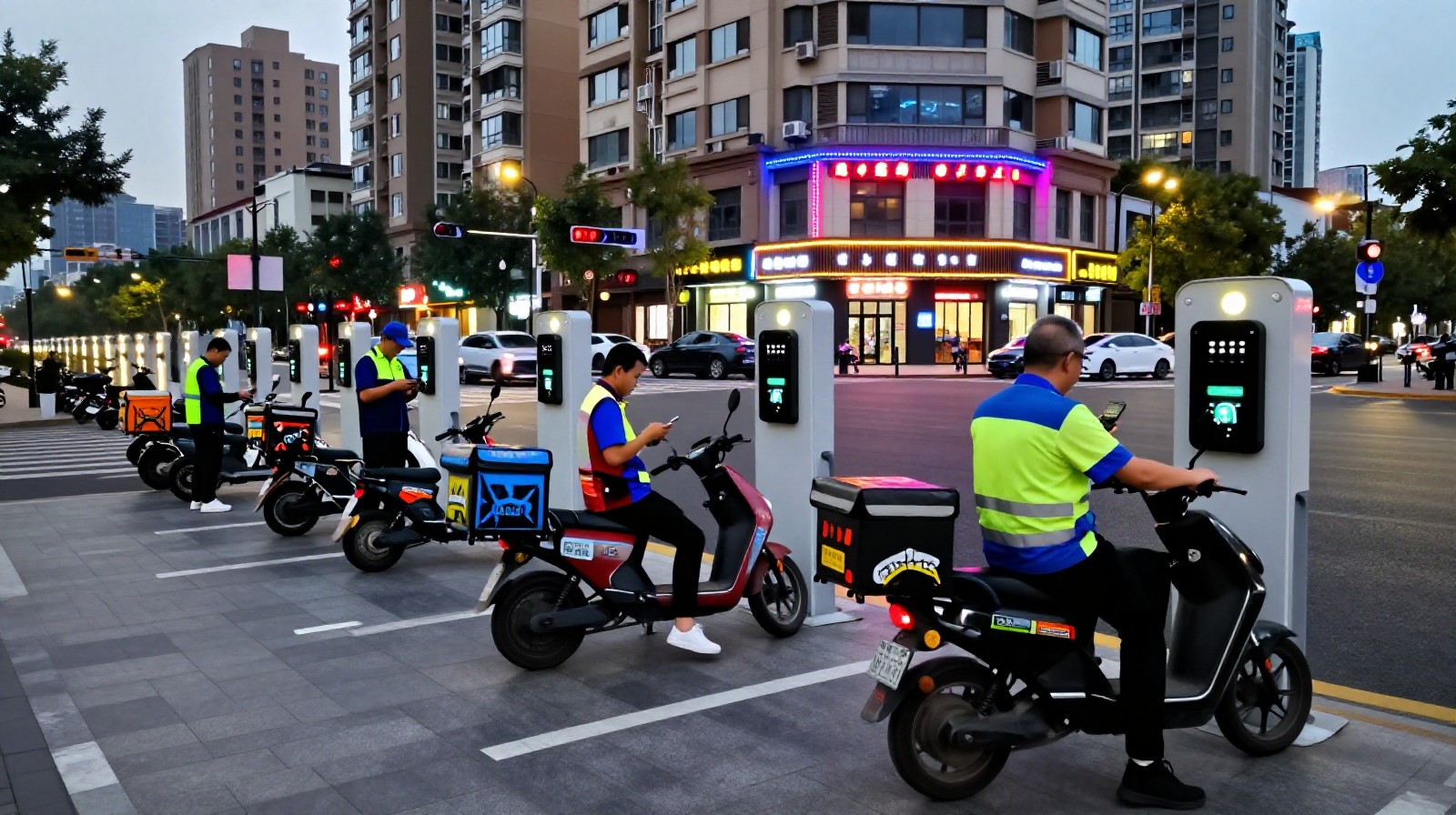
The phone buzzes at exactly seven-twelve in the morning. Before his boots even hit the pavement, Chen Wei is already staring at a glowing screen inside a cramped battery-swapping station off Yunnan Road in Shanghai. He listens to the mechanical click of a fresh power pack sliding into his e-bike frame. The dashboard lights up. A digital countdown appears: forty-eight minutes for four orders. This is not just a delivery app. It is a real-time nervous system that pulses through Chinese cities, moving millions of meals, groceries, and documents every single day. Behind the seamless interface on a customer’s screen lies a complex negotiation between human endurance and mathematical precision.
Waking Up to the Algorithm
Chen’s shift begins with a ritual familiar to over four million delivery riders across China. Before claiming an order, he checks his phone for weather alerts, battery range, and nearby restaurant queues. The moment he accepts the first task, algorithmic management takes over. The platform calculates distance, live traffic patterns, elevator wait times, and even pedestrian flow to generate a strict deadline. For Chen, this number is both lifeline and leash.
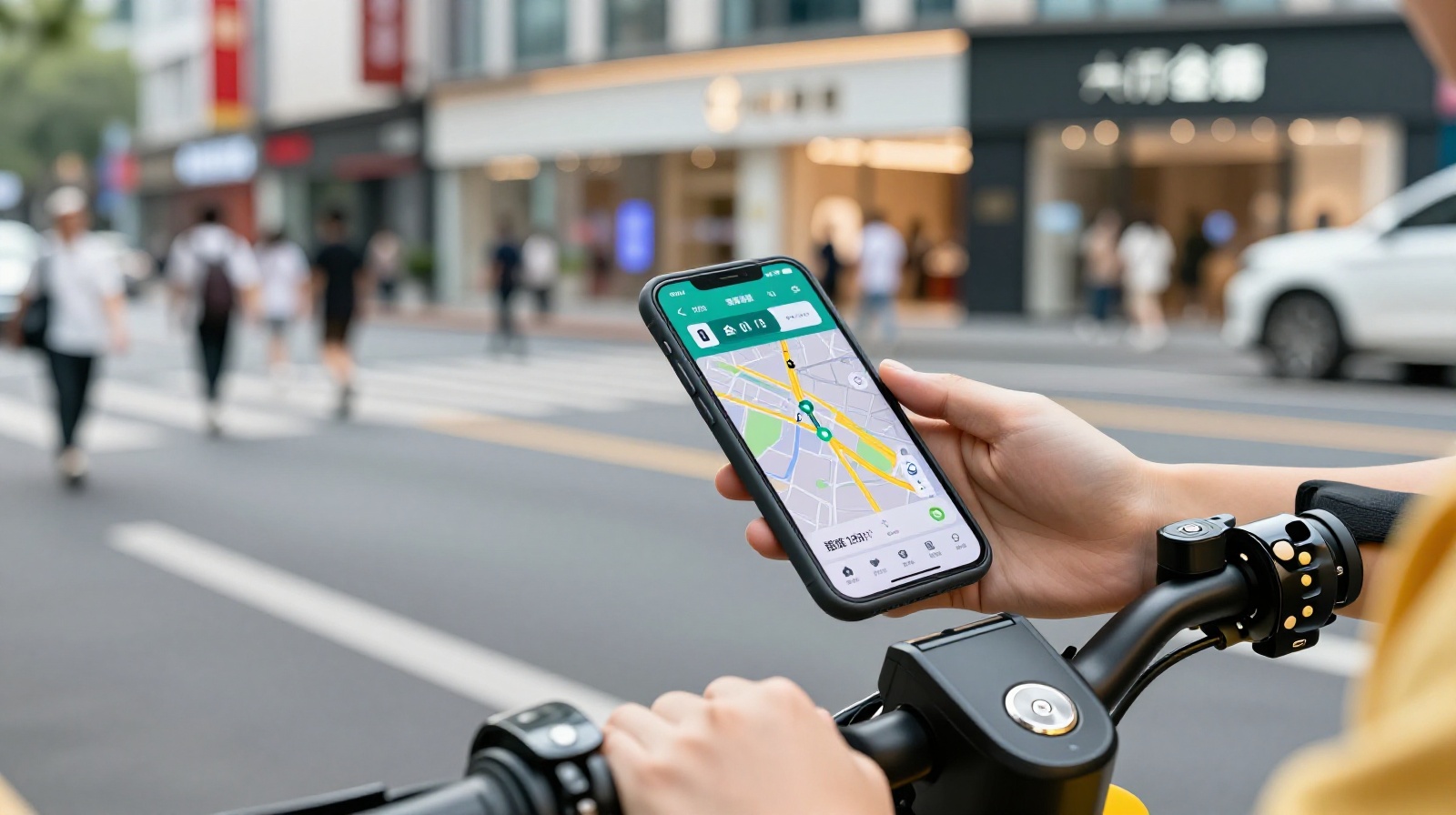
Restaurant handoffs are rarely frictionless. Kitchens in busy commercial districts operate at breakneck speed, often preparing multiple orders simultaneously. Riders learn to memorize kitchen layouts, recognize staff by apron color, and use designated pickup lockers when floors are congested. If he finishes early, the app instantly offers him another task within a three-block radius. If he lags behind by even two minutes, the system deducts points from his daily rating, which directly affects his weekly bonus structure. The GPS tracking that customers see as simple blue dots on a map is, for riders, a continuous pressure gauge that updates every fifteen seconds.
Navigating the Urban Maze
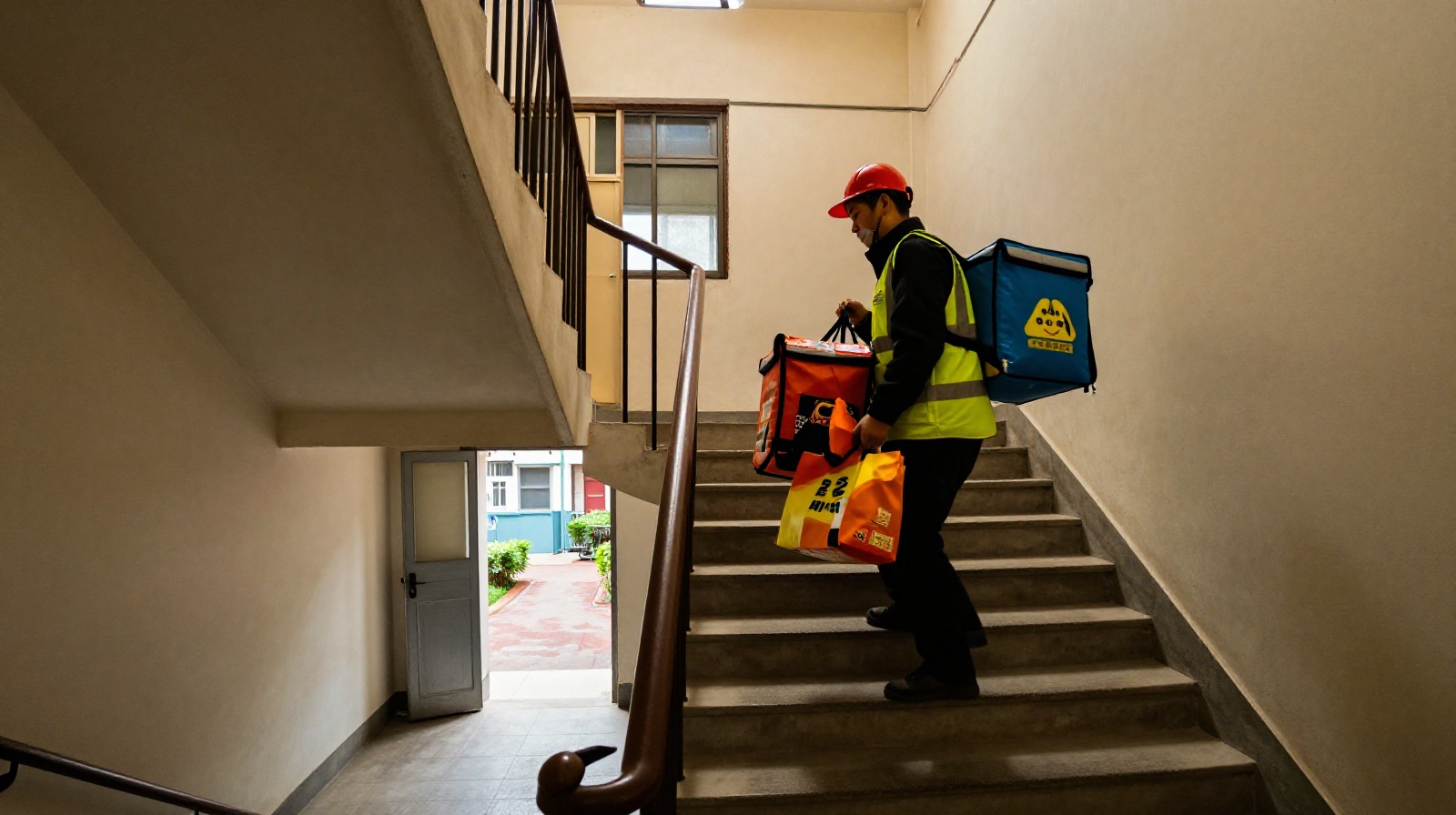
Navigating modern Chinese cities requires more than speed; it demands local knowledge and social navigation. Chen’s third stop today is a gated residential complex in downtown Shanghai. The security guard waves him through but reminds him to wear his helmet inside the compound, then points toward Building Seven without an elevator. Sixth floor, Chen sighs quietly. He locks the bike, grabs two hot soup containers and a plastic bag of groceries, and climbs the stairs.
At the door, he rings the bell. A young woman opens it just enough to see his uniform, gives a quick nod, and leaves the delivery at the threshold to maintain privacy. This unspoken routine repeats thousands of times daily across Beijing, Guangzhou, and Shenzhen. Riders learn which buildings accept deliveries at the gate, which require stair climbs, and how to politely negotiate entry with strict property managers. They are not just couriers; they are temporary guests in strangers’ private spaces, moving through a social maze as complex as the road network.
The Smart City Paradox
The technology that powers this system cuts both ways. E-bikes equipped with anti-theft locks and real-time route optimization make Chen’s job physically possible. His phone maps show live traffic congestion, suggesting shortcuts through alleys or dedicated bike lanes to shave off precious minutes. Yet the same algorithms that guide him also tighten his margins.
As the platform collects data on how fast riders typically move between districts, it recalibrates delivery windows to be increasingly aggressive. A customer enjoys digital convenience with a few taps and thirty-minute guarantees. Meanwhile, the worker on the ground navigates scorching summer asphalt in July, freezing drizzles in November, and constant vigilance against speeding cars or sudden road closures. Many riders purchase supplementary accident insurance through third-party apps because platform coverage has strict deductibles and limited payout tiers. The smart city vision relies heavily on human flexibility to absorb its operational friction.
Evening Reflection: Beyond the Data Points
By seven-forty-five in the evening, the rush has finally ebbed. Chen parks his e-bike near a row of food stalls in a residential alley, wipes sweat from his forehead, and buys a bowl of beef noodles for twelve yuan. He sits on a plastic stool, scrolling through his earnings dashboard on his phone. Today’s shift will net him around two hundred eighty yuan after platform fees and battery rental costs. It is not a fortune, but it covers rent for his shared room in the city’s outskirts and allows him to send money home to his parents in a smaller town in Henan province.
He does not romanticize the job. When asked about his future, he speaks plainly. The gig economy in China offers flexibility that traditional factory or office work rarely does. Many riders see it as a bridge—a way to stay mobile while saving for small business ventures or upskilling. Social mobility remains structurally tight, but platforms provide an accessible entry point into urban cash flows, even if the path upward is narrow. At charging stations after dark, riders often share tips about which restaurants pay fastest, which neighborhoods have fewer red-light cameras, and how to avoid peak-hour traffic.
The People Behind the Pixels
Delivery riders are often invisible until a package arrives at your door. Yet they function as essential infrastructure, stitching together fragmented neighborhoods, commercial districts, and digital marketplaces. They are the capillaries of China’s urban economy, carrying not just food but data, income, and daily rhythm. Watching how they work reveals more about modern Chinese society than any economic report can summarize. The real story of algorithmic management is not found in server farms or quarterly earnings calls, but on cracked sidewalks, in crowded stairwells, and inside the quiet calculations of a rider checking his battery one last time before heading home.