

The Sound of Lunchtime Overhead
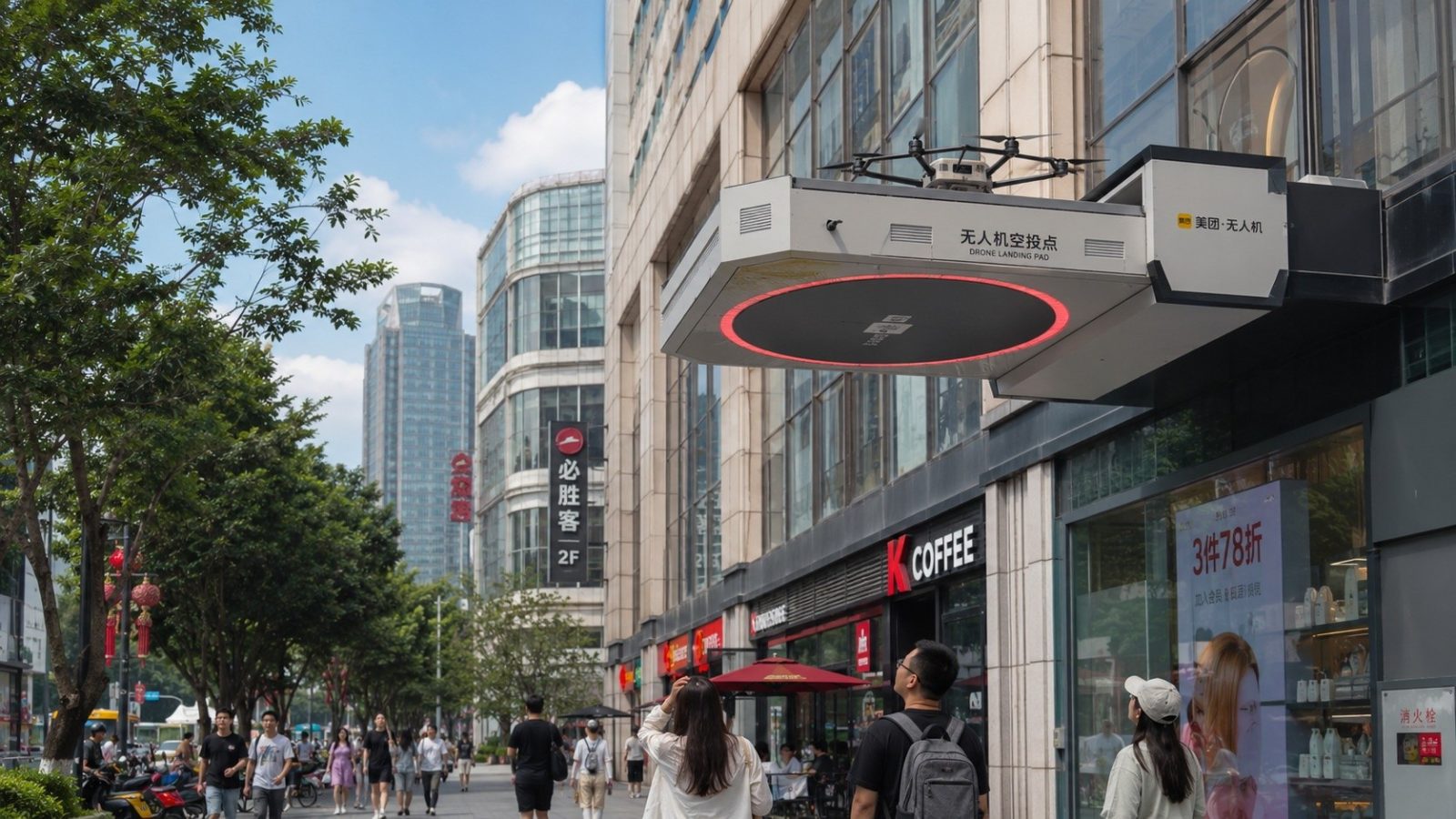
If you stand on this sidewalk at 12:30 p.m., the first thing you notice is not a sizzling wok or a honking scooter. It’s a steady, low hum cutting through the usual street noise. You look up. A white quadcopter with four protective shrouds glides down from a designated corridor three stories above, aligns perfectly with a circular pad mounted on the building’s facade, and touches down with a soft mechanical click. Inside the compartment rests a small insulated bag containing two orders of noodles. The whole process takes forty-two seconds. No rider climbing stairs. No waiting at security gates. Just a scheduled flight, executed by code, delivering lunch to an office block in Shenzhen’s Nanshan district. This isn’t a prototype demonstration recorded for a tech conference. It’s Tuesday lunch in one of the world’s most densely populated cities, operating on a fixed schedule that workers now treat as just another utility, like water or electricity.
A Routine First Flight
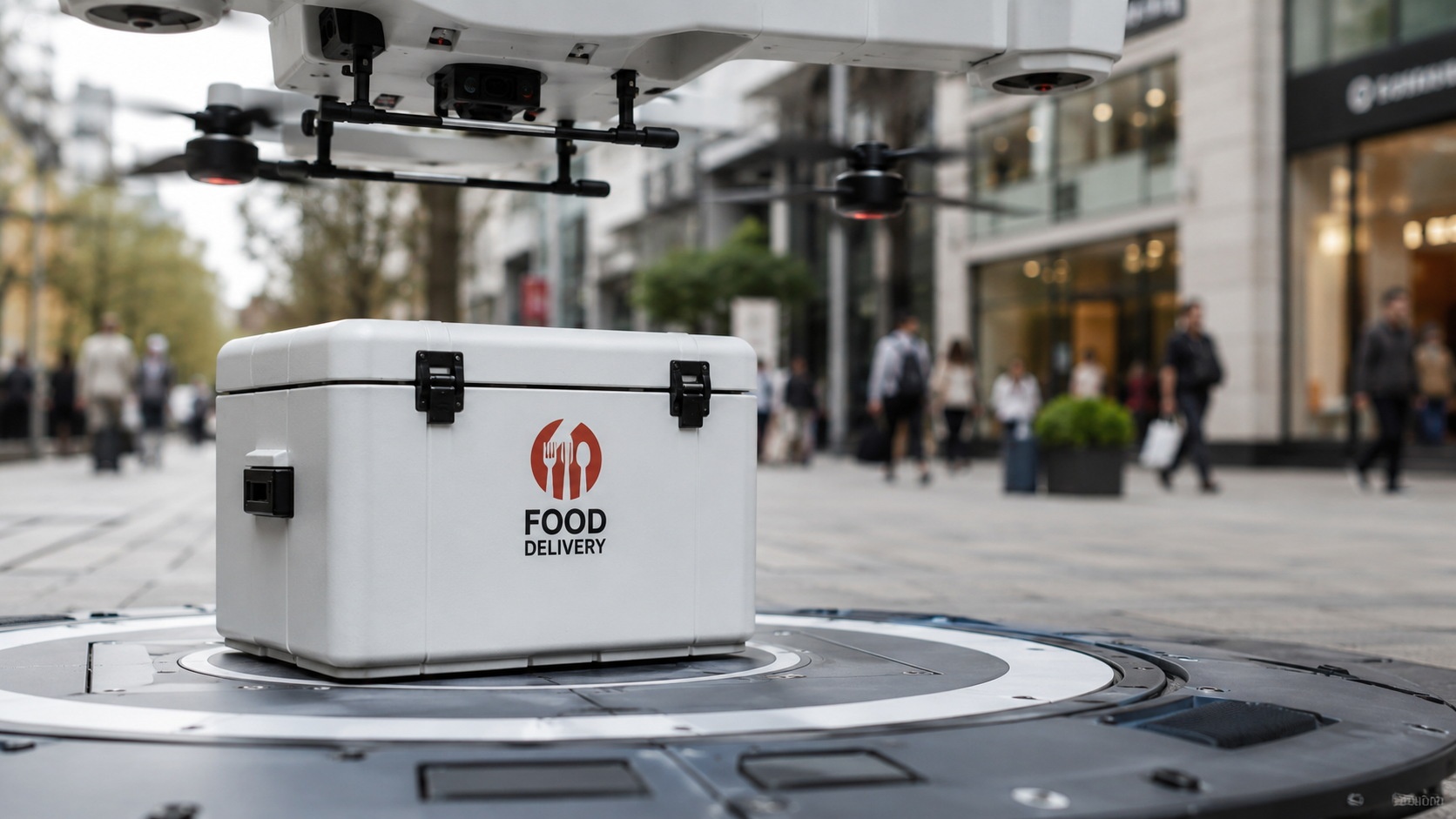
I met Lin Wei, a 29-year-old software tester, while she was scanning the QR code on that landing pad to claim her order. When I asked about her first time using drone delivery six months ago, she didn’t describe it as magical. She described it as efficient. “I ordered from a café three blocks away,” she said, tapping her phone screen to show me the tracking map. “The app showed the flight path in real time. The whole trip took eight minutes. The food was still hot because of the thermal liner.” Her reaction wasn’t awe; it was quiet approval. For urban workers who spend hours trapped in elevators or waiting for delivery riders to navigate complex residential compounds, a predictable drop-off point changes more than just timing. It removes friction from daily routines. Lin now uses drones twice a week for coffee and snacks during afternoon meetings. She notes that the service fee is slightly higher than ground delivery, but for time-sensitive orders in congested zones, the trade-off feels logical. The technology doesn’t replace human choice; it simply adds another option to an already crowded marketplace.
Bypassing the Gridlock, Not Replacing It
Drone food delivery in China isn’t trying to become the only way you get takeout. The model is highly selective by design. Traditional riders still handle last-mile complexities like elderly residents without intercoms, heavy grocery orders, or weather-induced road closures. Drones excel where ground logistics hit bottlenecks. In dense central business districts with restricted vehicle access, on sprawling university campuses, or in hilly tourist zones where scooters struggle to maintain traction, aerial routing cuts travel time by half. The cost structure also differs. While setting up automated terminals requires upfront investment, the marginal cost per trip drops significantly once routes are standardized and flights accumulate. Electric drones operate at a fraction of the carbon footprint per kilometer compared to gas-powered delivery bikes, aligning with municipal goals for cleaner urban air. In mountainous regions like Chongqing or tourist areas on Hainan Island, drones bypass winding roads entirely, reducing delivery times from forty minutes to under eight. The division of labor is clear: humans handle complexity and weight; machines handle speed and straight-line efficiency.
The Invisible Infrastructure Above Us
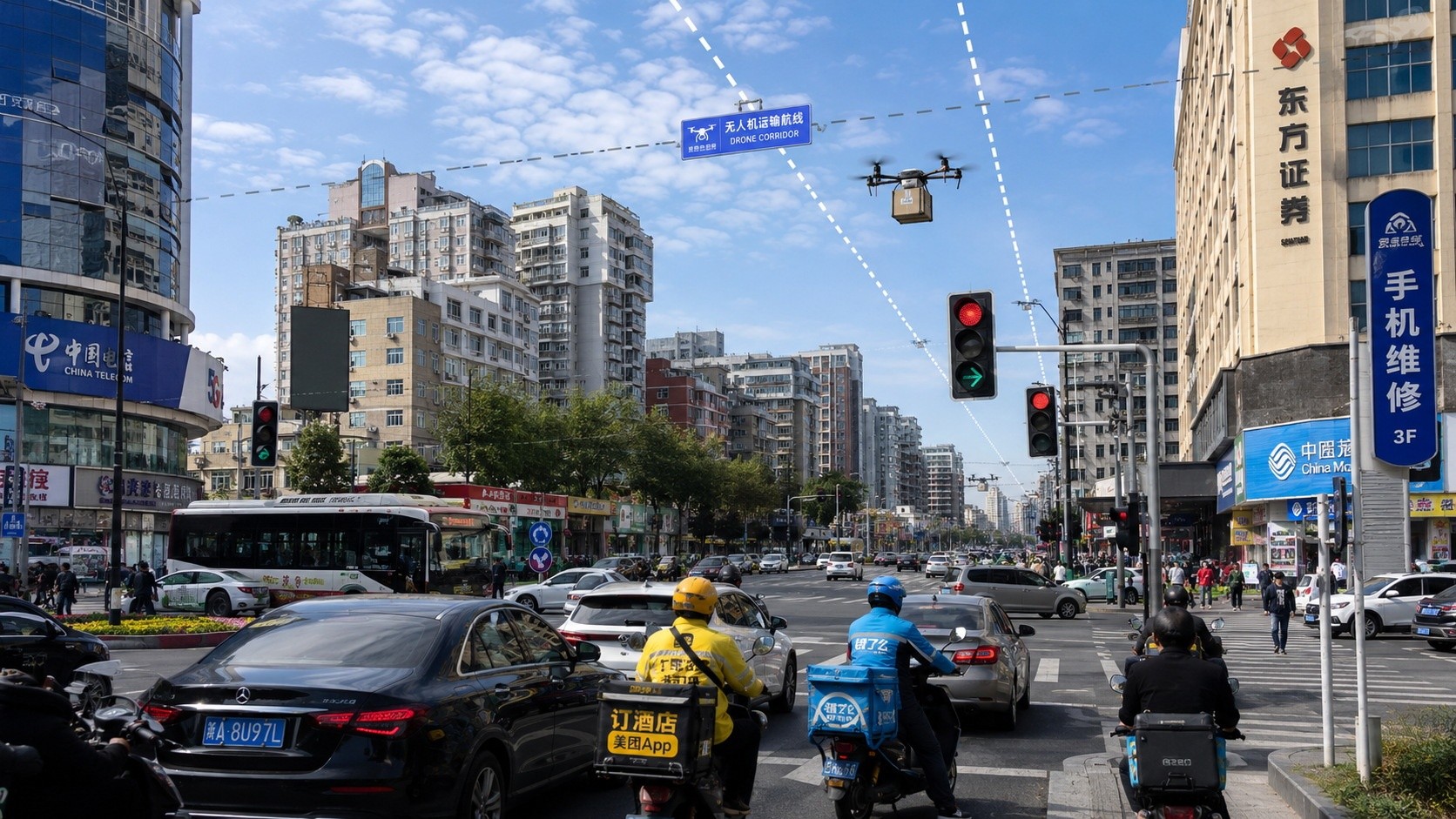
What makes this possible isn’t just better propellers; it’s a coordinated shift in how Chinese cities manage space. Local governments have mapped out low-altitude logistics corridors, typically between 120 and 300 meters above ground. These aren’t free-for-all fly zones. They are tightly regulated by municipal aviation authorities, with each drone broadcasting real-time position data to avoid conflicts. The technology stack relies on multi-sensor navigation—LiDAR, optical flow cameras, and RTK GPS—to maintain accuracy within centimeters during landing. Redundant systems trigger automatic return-to-base if wind speeds exceed safe thresholds or if a signal is lost. Companies like Meituan and SF Logistics have logged millions of commercial flights across pilot cities including Shenzhen, Shanghai, and Hangzhou. The scale exists because China’s manufacturing ecosystem produces the necessary motors, batteries, and flight controllers at competitive prices, turning what once looked like experimental tech into routine infrastructure. Regulatory frameworks now allow beyond-visual-line-of-sight operations under strict conditions, giving operators the legal certainty needed to invest in terminal networks.
Quietly Rewiring Urban Habits
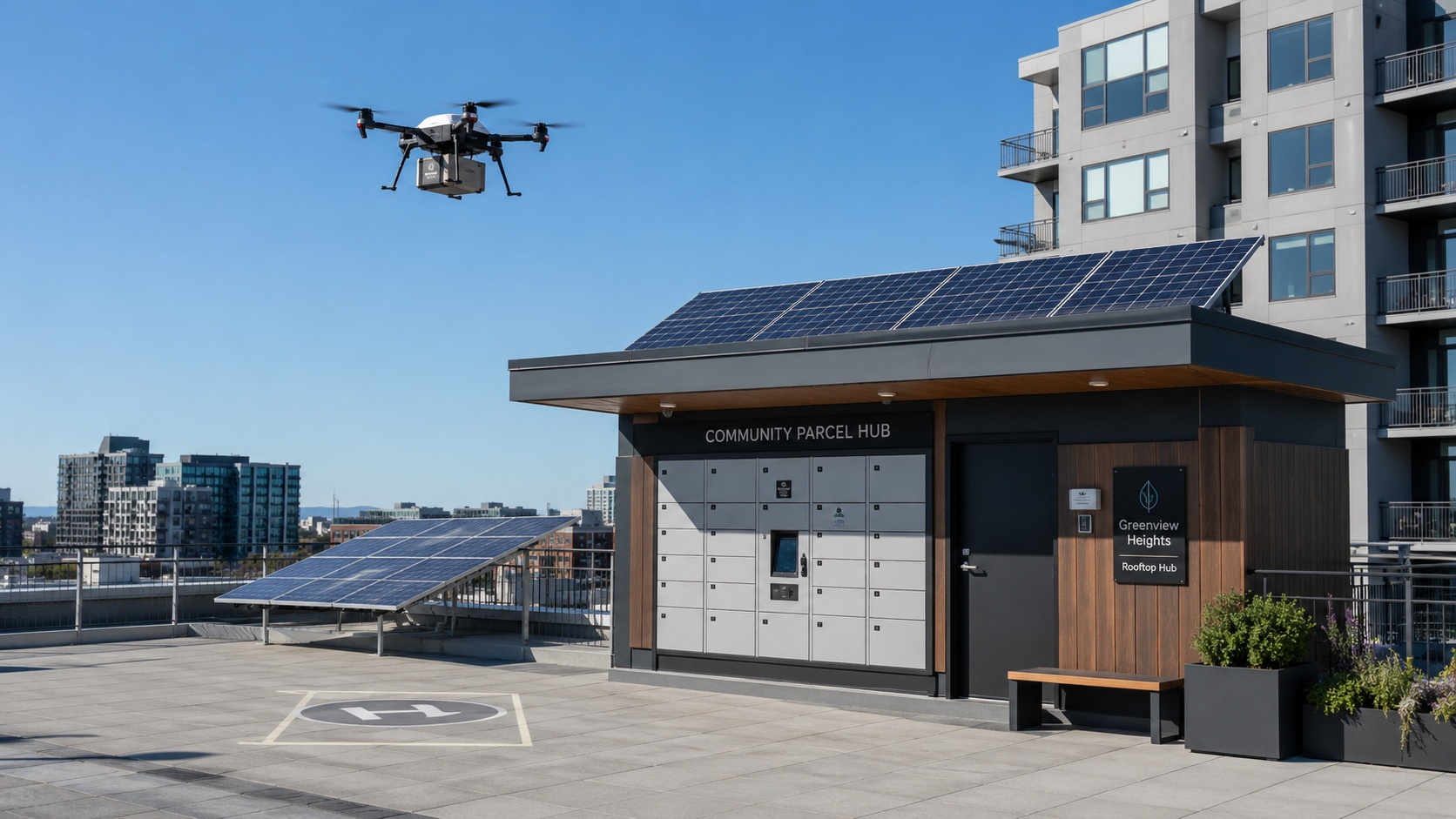
As these aerial routes expand, they are subtly altering how people plan their day. Some rooftop restaurants now design their menus around drone payload limits and weight distribution, favoring lightweight packaging that doesn’t throw off center balance. Delivery apps have introduced “aerial window” scheduling, allowing users to book flights during peak congestion periods when ground traffic grinds to a halt. The noise, once a concern for early adopters, has been dampened by shrouded rotors and optimized blade designs, making the hum nearly indistinguishable from distant construction work. Hybrid models are also emerging: riders handle terminal-to-terminal transfers while drones cover the straight-line middle mile, creating a synchronized chain that reduces idle time. Of course, limitations remain. Heavy rain, dense fog, and strict no-fly zones near airports still dictate when drones stay grounded. Yet the integration is steady. What began as a novelty in tech parks has quietly become part of the urban supply chain, proving that the future of city living isn’t about flying cars or neon skylines. It’s about removing small daily frictions until they simply disappear. When logistics move overhead, streets breathe easier, and routines adapt without fanfare.