


Why Your Phone Is Your New Passport in China
You step off the plane at Beijing Capital Airport, hungry and tired. The first thing you want is a bottle of water and a clear path to your hotel. But as you reach for your wallet, you realize that cash is practically invisible here. A street vendor won’t take dollars. Even some taxi drivers stare blankly when you ask about change. The only thing that bridges this gap is a smartphone with the right apps pre-installed.
This isn’t a quirk of modern tourism; it’s how everyday life works in China. Over the past decade, the country skipped desktop computers and credit cards almost entirely, leaping straight into a mobile-first ecosystem. For locals, an app is no longer just a convenience tool—it is their wallet, subway pass, doctor’s appointment book, and neighborhood bulletin board all rolled into one. If you are visiting for the first time, thinking of apps as optional extras will slow you down. Treat them like your visa or travel insurance: essential gear for navigating smoothly.

The Big Three Categories You’ll Actually Use
China’s app market feels crowded, but most visitors only need a focused toolkit. Instead of downloading everything, group your needs into three buckets: getting around, handling daily errands, and bridging the language gap. Here are the ten apps that consistently show up in every successful itinerary.
Navigating & Moving
1. Amap (Gaode Ditu)
While Google Maps works poorly here due to mapping regulations, Amap is the gold standard for locals. It tracks subways with live departure times, shows walking directions accurate to specific building entrances, and even predicts traffic jams before they happen. Download it from any official app store or its website. When you are lost in a neighborhood of identical high-rises, zooming into street view on Amap will save your afternoon.
2. DiDi Chuxing
This is China’s answer to Uber, but with more vehicle tiers and often lower prices. The interface has an English toggle, so you can set your pickup point by tapping a pin or typing in English. Drivers usually won’t ask where exactly to pick you up if the app shows it clearly. It also handles long-distance intercity rides well, which is useful for trips like Shanghai to Hangzhou.
Food, Groceries & Daily Errands
3. Meituan
Think of this as a Swiss Army knife for local life. Beyond food delivery, it handles movie tickets, hotel bookings, grocery runs, and even pet grooming discounts. The app is overwhelming at first glance, but if you just search “water” or “snacks,” a rider will bring it to your door in twenty minutes. It works everywhere outside of ultra-rural counties.
4. Ele.me
The main rival to Meituan, Ele.me often runs promotions that make delivery cheaper. The interface is slightly cleaner and sometimes easier for non-Chinese speakers to navigate. If a restaurant isn’t listed on one app, it’s usually on the other. Having both installed means you never miss a meal during peak hours.
5. Taobao
This is where China shops online. From traditional silk tea sets to replacement laptop chargers with specific voltage adapters, almost anything can be ordered and delivered within forty-eight hours. The app supports English browsing through third-party translation tools, but the real magic is in its product reviews and user-uploaded photos, which show exactly how items look in real life.
Bridging the Language Gap
6. Baidu Translate
Google’s translation suite doesn’t work reliably inside mainland China without extra configuration. Baidu Translate offers offline packs, camera text recognition for menus and signs, and a conversation mode that splits the screen for two-way talking. It may not match DeepL in literary nuance, but it handles street directions and restaurant orders with solid accuracy.
7. WeChat (Weixin)
You will see this green icon everywhere—on coffee cups, hospital payment screens, and neighborhood group chats. While foreigners usually stick to WhatsApp for personal calls, WeChat is the operating system of Chinese society. It hosts “mini-programs” that run like standalone apps: you can book a dentist, pay a parking fine, or check into a hotel without ever leaving WeChat.
8. Alipay
Paying with cash is rare; paying with QR codes is the norm. Alipay was built for this exact frictionless reality. You scan a merchant’s code, type your amount, and confirm. It also has an “Tour Card” feature that lets you preload money onto a virtual Chinese debit card using foreign credit cards, solving the biggest headache for first-time visitors.
9. Trip.com
When it comes to planning ahead, this English-friendly platform is indispensable. It handles domestic high-speed train tickets (which sell out weeks in advance), intercity flights, and hotel reservations. Unlike local Chinese travel apps that require a mainland ID number for booking trains, Trip.com accepts passports seamlessly.
10. Xiaohongshu (Little Red Book)
Don’t let the social media label fool you. For travelers, it functions like a living guidebook written by locals who hate tourist traps. Search for “Shanghai hidden cafe” or “Chengdu rainy day food,” and you will find real-time recommendations, exact subway exits, and honest price breakdowns that official tourism boards rarely publish.
How to Pick Your Toolkit
You do not need all ten apps running in the background. If your trip is a quick five-day business visit, Amap, DiDi, Alipay, and Trip.com will cover ninety percent of your needs. Staying for two weeks? Add Meituan or Ele.me for weekend exploration, and Baidu Translate for spontaneous street markets. The goal is to build a light support system that disappears into the background until you actually need it.

Before You Land: Registration, Payments & Network
The friction usually happens before you even open an app. First, secure a working SIM or eSIM that supports data roaming. Many visitors rely on hotel Wi-Fi out of caution, but streaming translation apps and booking rides requires stable mobile data. Second, download Alipay and WeChat while still at home. Both now allow foreign passport verification and international credit card linking during the initial setup. Do not wait until you are standing in line at a street stall to figure it out.
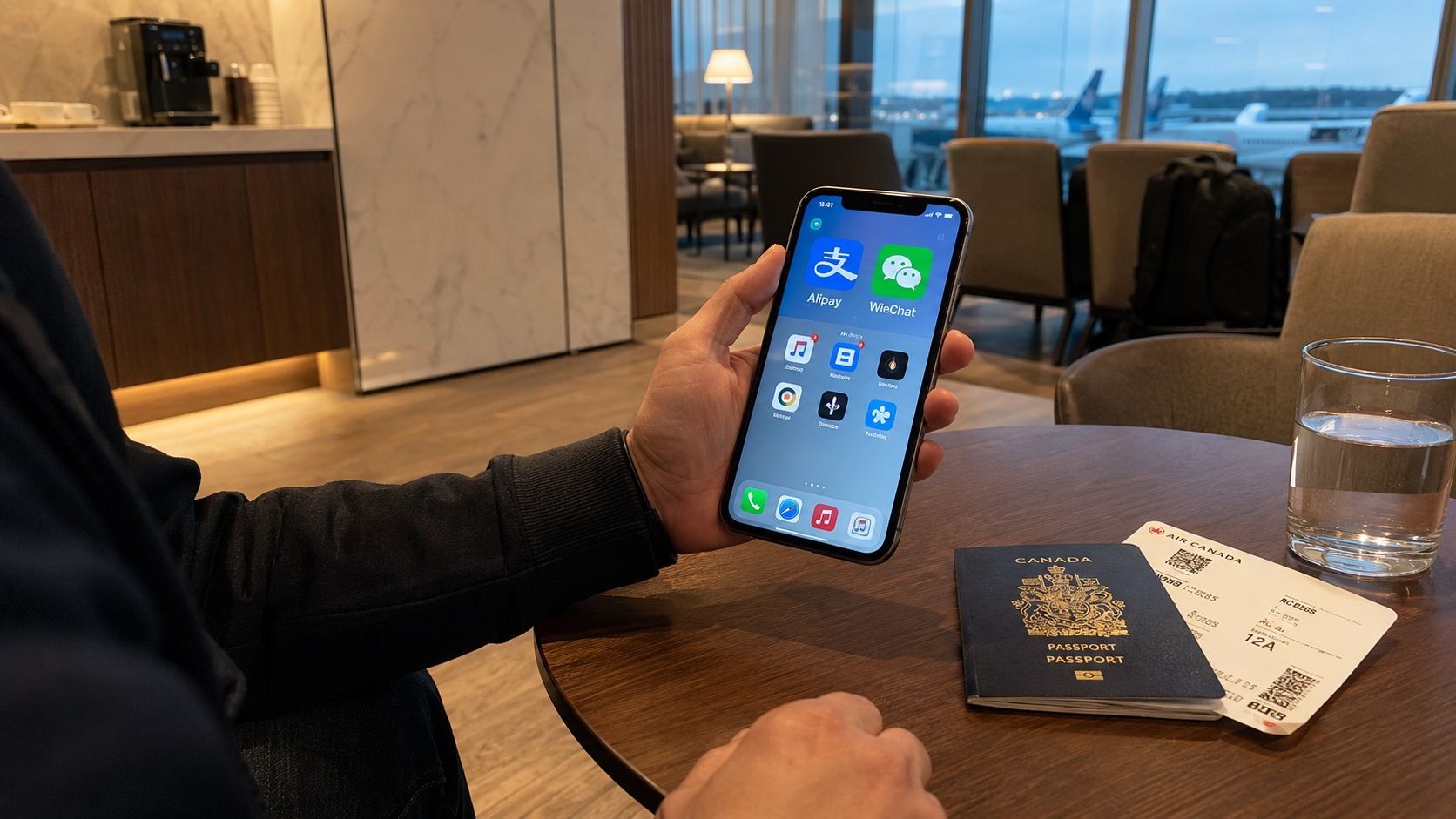
Finally, remember that app stores outside mainland China sometimes lack these specific tools due to regional distribution policies. If an app is missing from your phone’s marketplace, visit the official website directly—most offer safe APK or IPA download links. Keep a screenshot of your Alipay payment QR code saved in your camera roll, and carry a small amount of physical cash just for emergencies like lost signal or older neighborhood vendors.
Navigating China does not require fluency in Mandarin or familiarity with its tech ecosystem. It only requires knowing which digital keys unlock the right doors. Download these ten apps before you pack your bags, and you will find that getting around feels less like solving puzzles and more like following a well-marked trail.