

Introduction: From Sci-Fi Dreams to Reality
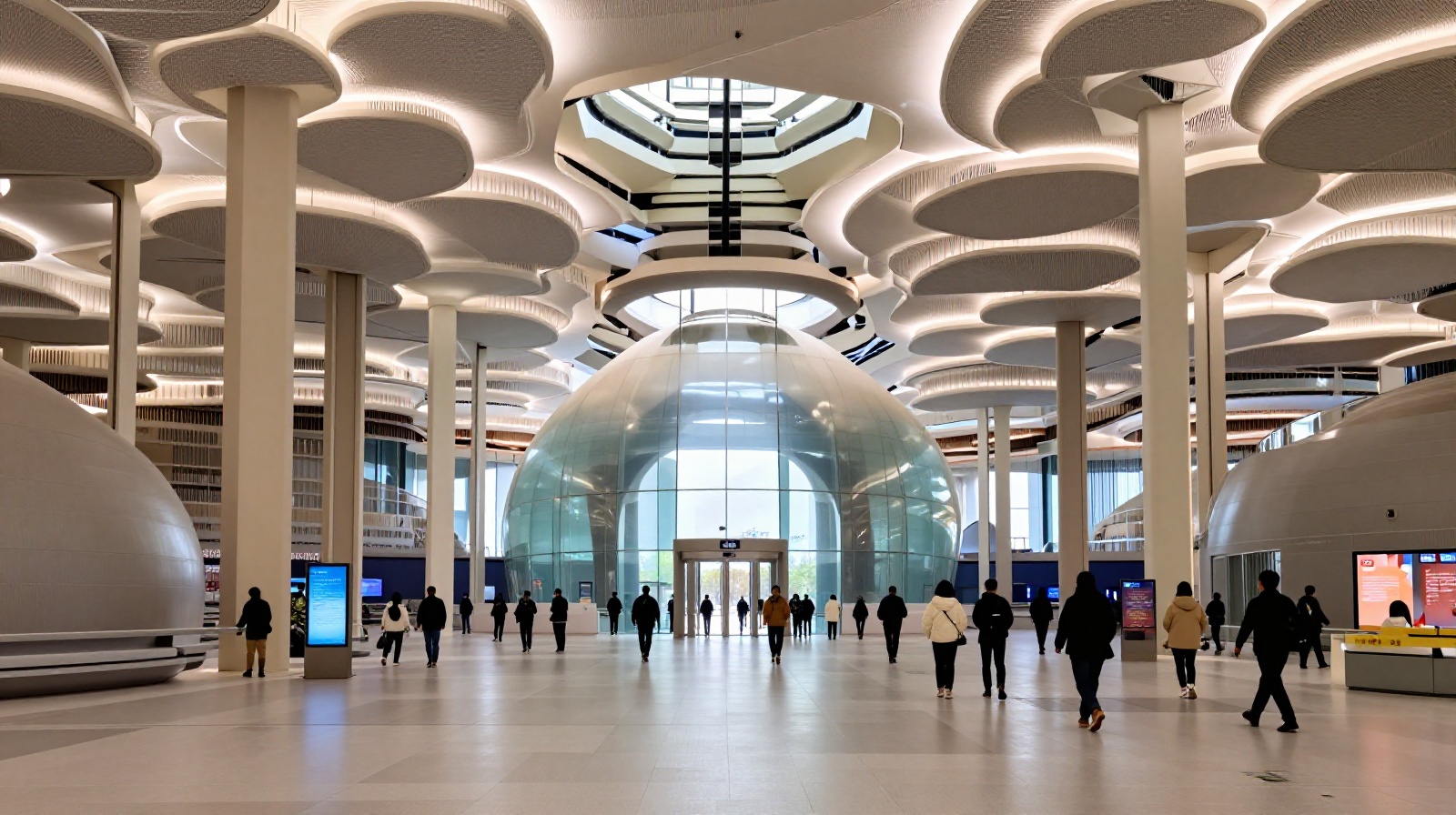
The moment one steps into the Tianjin Binhai Library, the distinction between fiction and reality blurs. Often dubbed “The Eye of the Coast,” this architectural wonder immediately evokes imagery from futuristic sci-fi films, yet it stands firmly as a testament to contemporary engineering prowess.
Architectural Deconstruction: The Visual Spectacle of “The Book Mountain”
At the heart of the library lies its most iconic feature: the undulating white structure known as “The Eye.” Designed by Dutch firm MVRDV and local architects, this central atrium mimics a giant mountain of books, where shelves cascade down like waterfalls.

The iconic ‘Eye’ design mimics a mountain of books cascading down the center.
Structurally, this is a marvel. The design utilizes a complex network of steel beams hidden within the white plaster to support the weight of hundreds of thousands of books and visitors. The visual logic is deceptive; what appears as a continuous flow of literature is actually a carefully engineered stage set that serves both aesthetic and functional purposes.
Functionality and Experience: A Multi-Role Cultural Living Room
Beyond its striking appearance, the library functions as a comprehensive cultural hub. It houses not only books but also cafes, exhibition spaces, and performance areas, effectively acting as the city’s “living room.”

The library serves as a vibrant cultural living room for the community.
Visitors can be seen lounging on the steps of the book mountain, working in quiet nooks, or gathering for community events. The space successfully bridges the gap between a repository of knowledge and a vibrant social venue, encouraging interaction among diverse groups of people.
Controversy and Reflection: Balancing Traffic with the Essence of Reading
Despite its acclaim, the library has faced scrutiny regarding its role as a “internet celebrity” (wanghong) spot. Critics argue that the influx of tourists seeking photo opportunities sometimes detracts from the primary function of reading.
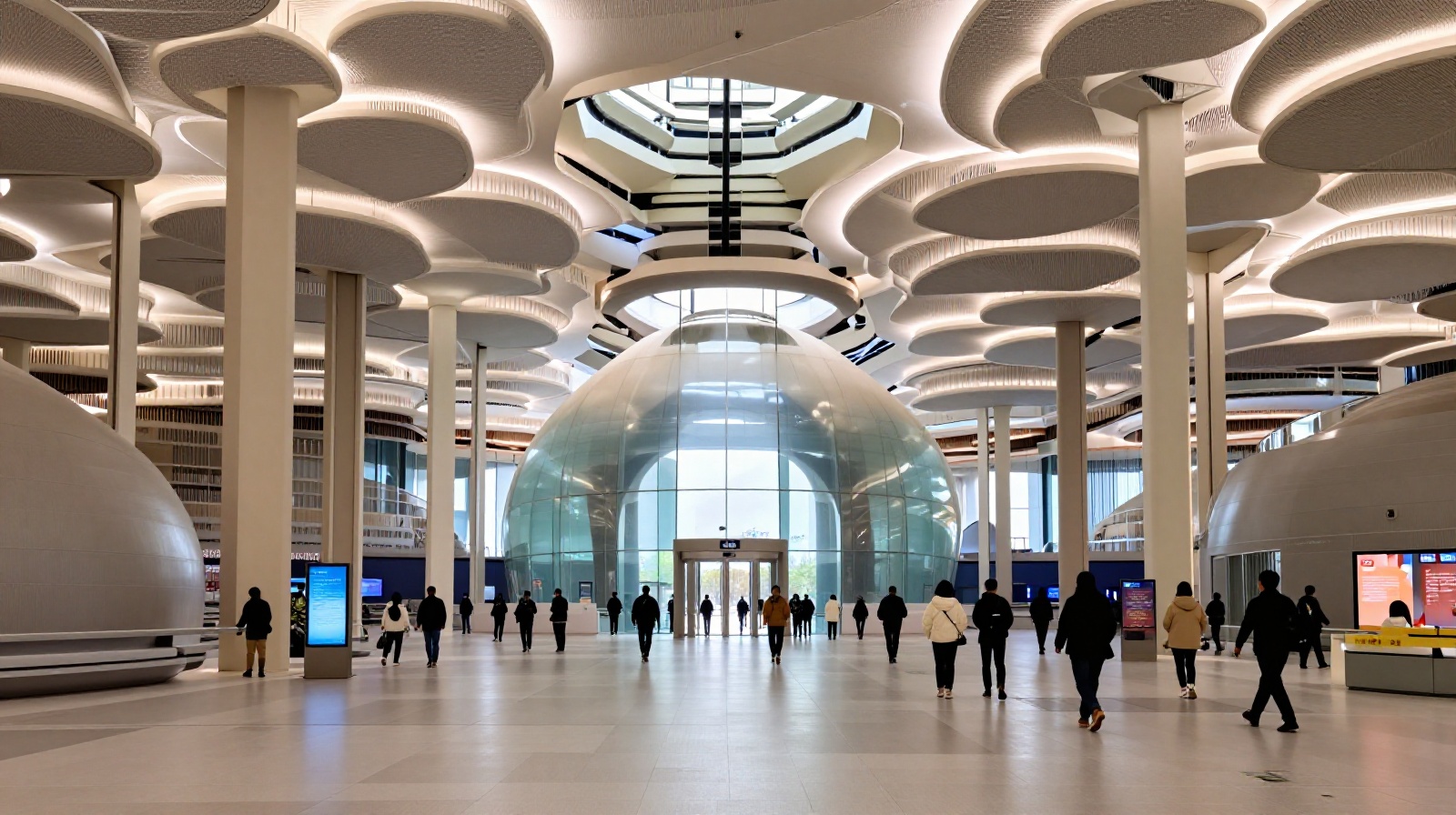
Visitors explore the futuristic corridors of the library’s main atrium.
However, this tension is not unique to Binhai Library; it reflects a broader global challenge in public space design. The question remains: can a space be both a functional library and a major tourist attraction? The answer lies in zoning and management strategies that preserve quiet zones while celebrating the building’s architectural grandeur.
Future Implications: A Blueprint for Contemporary Public Spaces
The legacy of the Binhai Library extends far beyond Tianjin. It serves as a critical case study for architects worldwide on how to design public spaces that are visually arresting yet functionally robust.
The library serves as a vibrant cultural living room for the community.
As cities around the world grapple with the need for cultural centers that can compete in the digital age, the “Eye of the Coast” offers a blueprint. It proves that architecture can be both a sanctuary for learning and a beacon of community identity, inspiring future generations to think boldly about the role of public spaces.