

A Quiet Landing in a Concrete Jungle
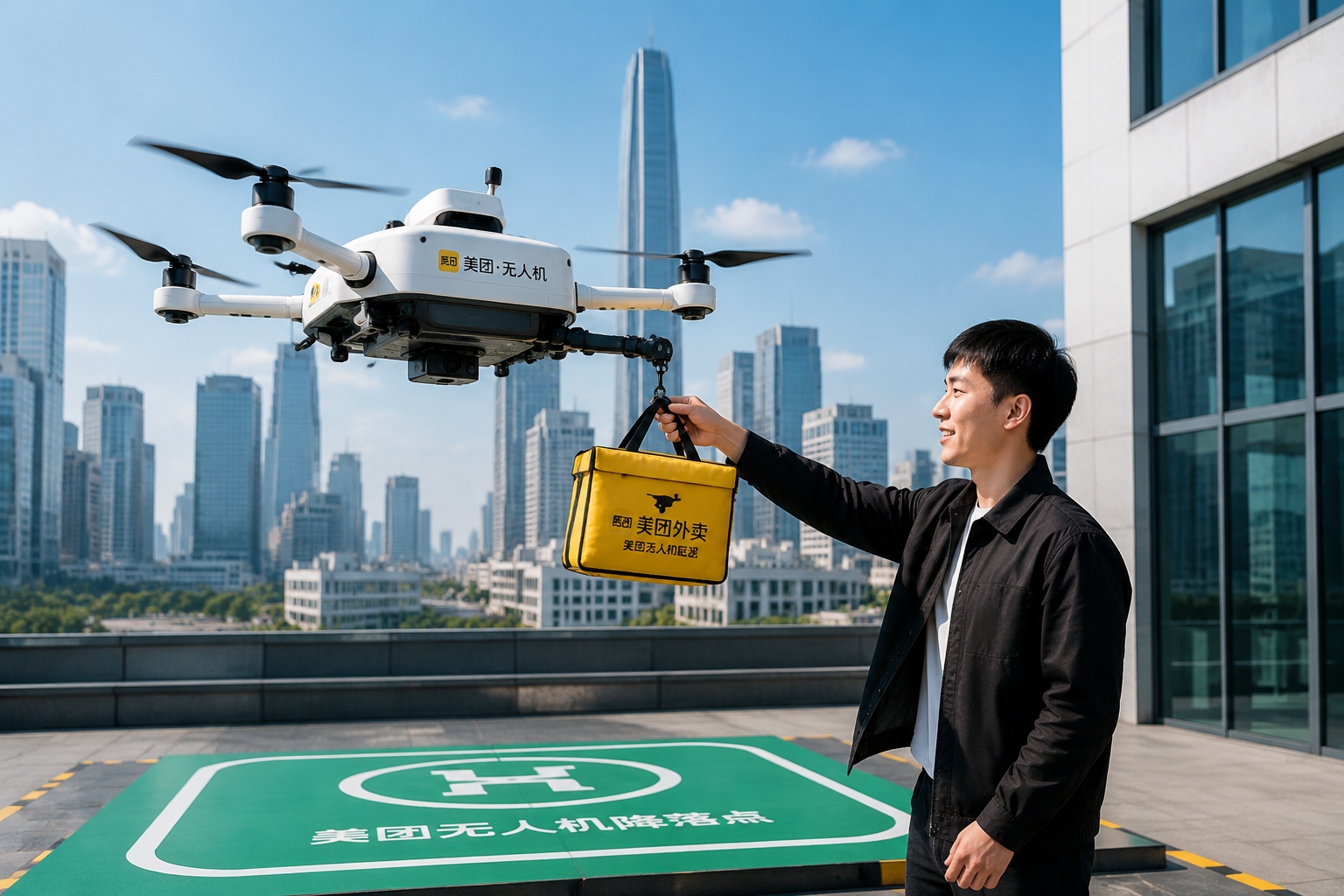
It wasn’t the dramatic landing from a sci-fi movie. There was no siren, no crowd gathering to watch. Just a soft whir of rotors and a gentle descent in a small green zone behind a high-rise office building in Nanshan District.
A drone, roughly the size of a large backpack, touched down on a designated landing pad. A mechanical arm gently dropped a thermal bag onto the platform. A delivery rider standing nearby tapped his phone screen, scanned a QR code, and retrieved the meal. The whole process took less than 90 seconds. Within minutes, that same drone was back in the air, heading for another drop-off point.
This isn’t a prototype anymore. It is a Tuesday afternoon routine for thousands of office workers in Shenzhen. While cities like Chicago or London are still debating regulations and testing pilots, Shenzhen has turned low-altitude logistics into a daily commute for food.
The Map That Flies Above the Grid
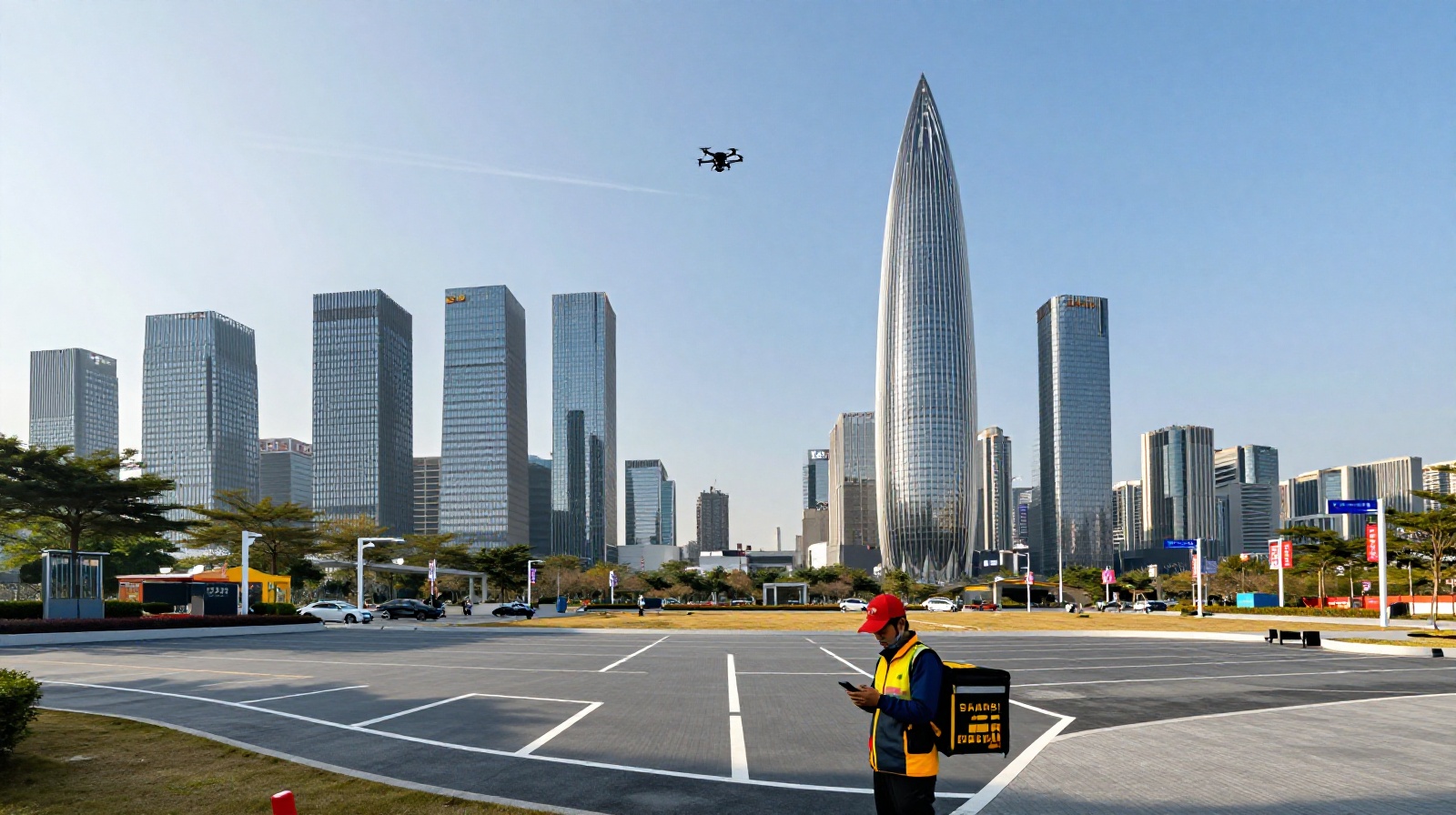
To understand why this works here first, you have to look at the city’s unique layout. Shenzhen is a dense urban forest where traffic jams are the norm and ‘last mile’ delivery by e-bike often means dodging pedestrians in crowded alleys.
The solution wasn’t just better bikes; it was a completely new layer of infrastructure. The city has designated specific ‘air lanes’ for drones, mapped out to avoid skyscrapers and residential zones while connecting high-density business parks with food distribution hubs.
In areas like Nanshan and Futian, the drone network now covers dozens of square kilometers. A single flight path can service over 50 drop-off points in a loop. Unlike traditional delivery which is stuck on the ground, these drones fly at altitudes between 120 to 300 meters, cutting through congestion that makes road traffic crawl.
For the average employee waiting for lunch, this means a meal ordered at 11:45 AM can arrive by 12:05 PM, regardless of whether the main roads are gridlocked with buses and taxis. The time difference is no longer measured in ‘minutes saved’ but in seconds.
How It Actually Works (And Why It’s Legal)
The biggest question for outsiders is usually: Is this safe? And is it even legal?
In China, the regulatory environment has shifted rapidly to support what officials call the ‘low-altitude economy.’ Unlike many Western cities where drones are strictly forbidden over populated areas, Shenzhen’s government actively collaborated with tech giants like DJI and local logistics firms to create a safety framework.
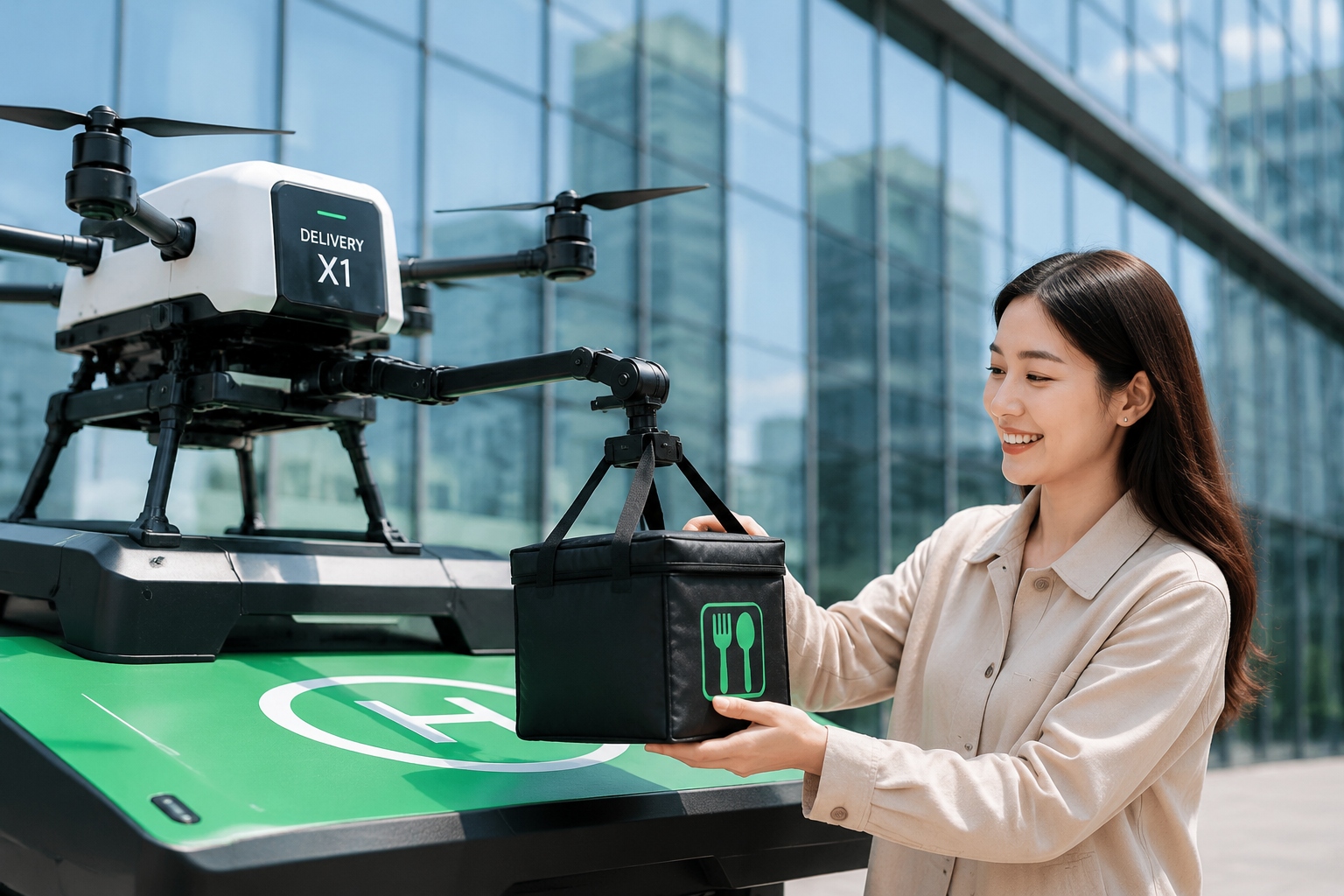
These aren’t just flying cameras. They are autonomous vehicles equipped with advanced obstacle avoidance sensors that can detect birds, other drones, and even power lines in real-time. The flight paths are pre-programmed and monitored by a central command center on the ground. If weather conditions turn bad or an unexpected obstruction appears, the drone will automatically hover or return to base.
The technology has overcome the ‘battery anxiety’ that plagued early tests. New models now offer longer flight ranges and faster charging swaps, allowing a single hub to manage hundreds of deliveries per day without stopping for long recharge cycles.
What Do People Actually Think?
I spoke with Li Wei, a software engineer who has been using the drone service for six months. He told me, ‘The first time I saw it, I thought it was a prank. Now, it’s just part of my day.‘
Li’s main gripe used to be waiting 40 minutes for food during lunch rush hour when e-bike drivers were stuck in traffic. With the drone service, his average wait time has dropped to under 20 minutes. The price is slightly higher—usually a few yuan more than standard delivery—but he says the consistency and speed are worth it for important meetings.
There are quirks, of course. You can’t order anything too heavy or irregularly shaped. If you want soup that might spill, stick to dry noodles. And sometimes, if the wind is strong, deliveries get delayed by 10 minutes while the drones wait out the gusts.

The Future of the City Sky
This shift isn’t just about getting food faster; it’s a glimpse into how cities might evolve. By moving logistics to the air, Shenzhen is freeing up valuable sidewalk and road space for pedestrians and cyclists.
Environmental impact is another key factor. Electric drones produce zero direct emissions on their last-mile journey, unlike the gas-powered scooters that currently clog city streets with fumes and noise.
As the network expands to cover residential neighborhoods and hospitals, the drone courier could become as common as the mailbox or the bus stop. It represents a quiet revolution where technology doesn’t just make things flashy, but solves the mundane friction of daily life.
In Shenzhen, the future isn’t waiting for a movie premiere. It’s already dropping your dinner on the landing pad behind your office building.
Start the discussion at forum.chinacomes.com