
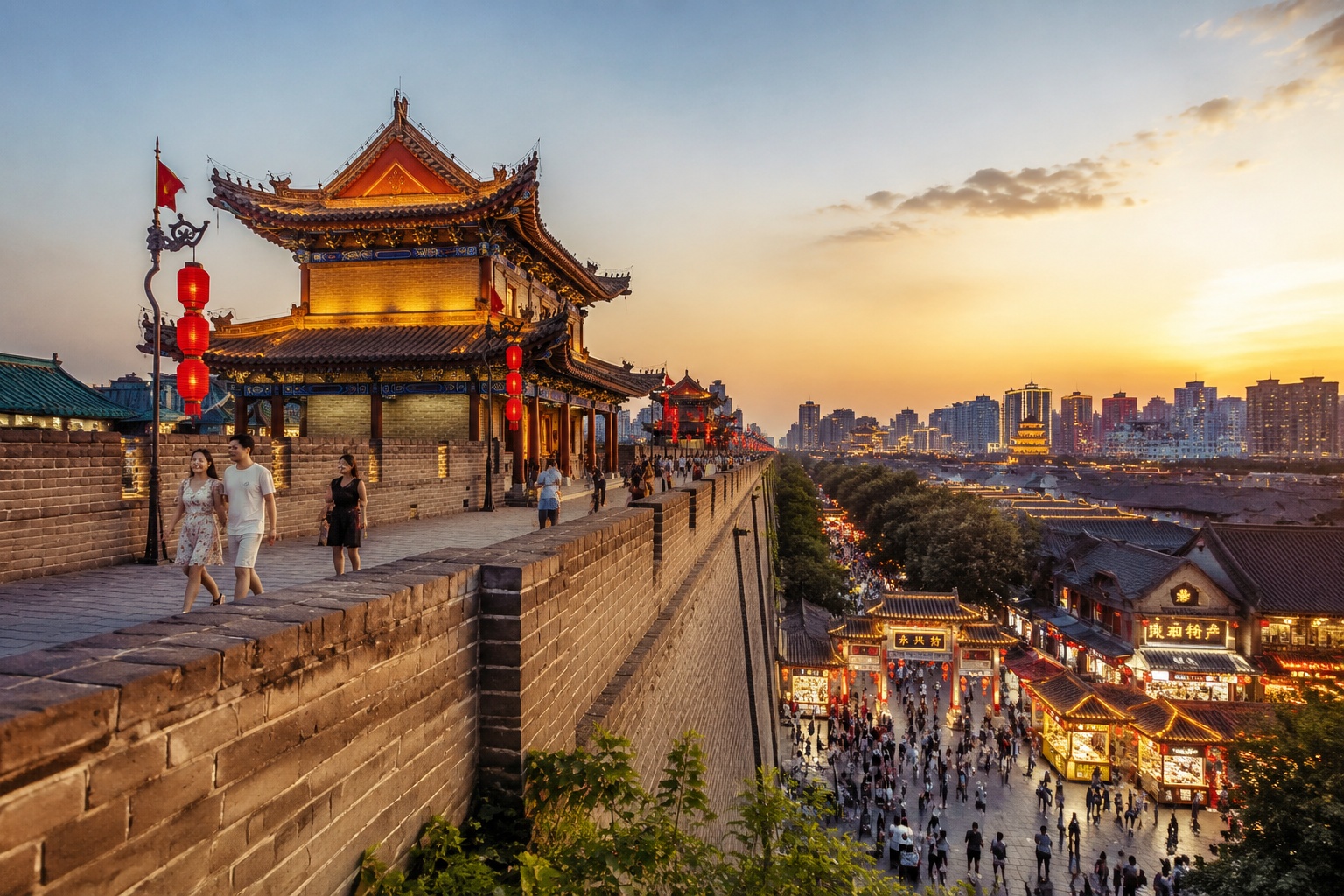

Beyond the Terracotta Warriors
Most people think of Xi’an as a city frozen in time, dominated by the Terracotta Warriors. But if you walk down a street in the evening near the ancient City Wall, you won’t see just history; you’ll see a collision of eras that feels surprisingly modern.
Imagine this: You are standing on a bustling sidewalk in Xi’an’s Beicheng District at 10 PM. The air smells of cumin and sizzling lamb skewers. A teenager scrolls through TikTok, paying with his phone for a bowl of biangbiang noodles. Right beneath his feet, three meters underground, lies the tomb of an ancient general from the Han Dynasty.
There is no tension here between the past and the present. In Shaanxi, history isn’t a backdrop; it’s the foundation.
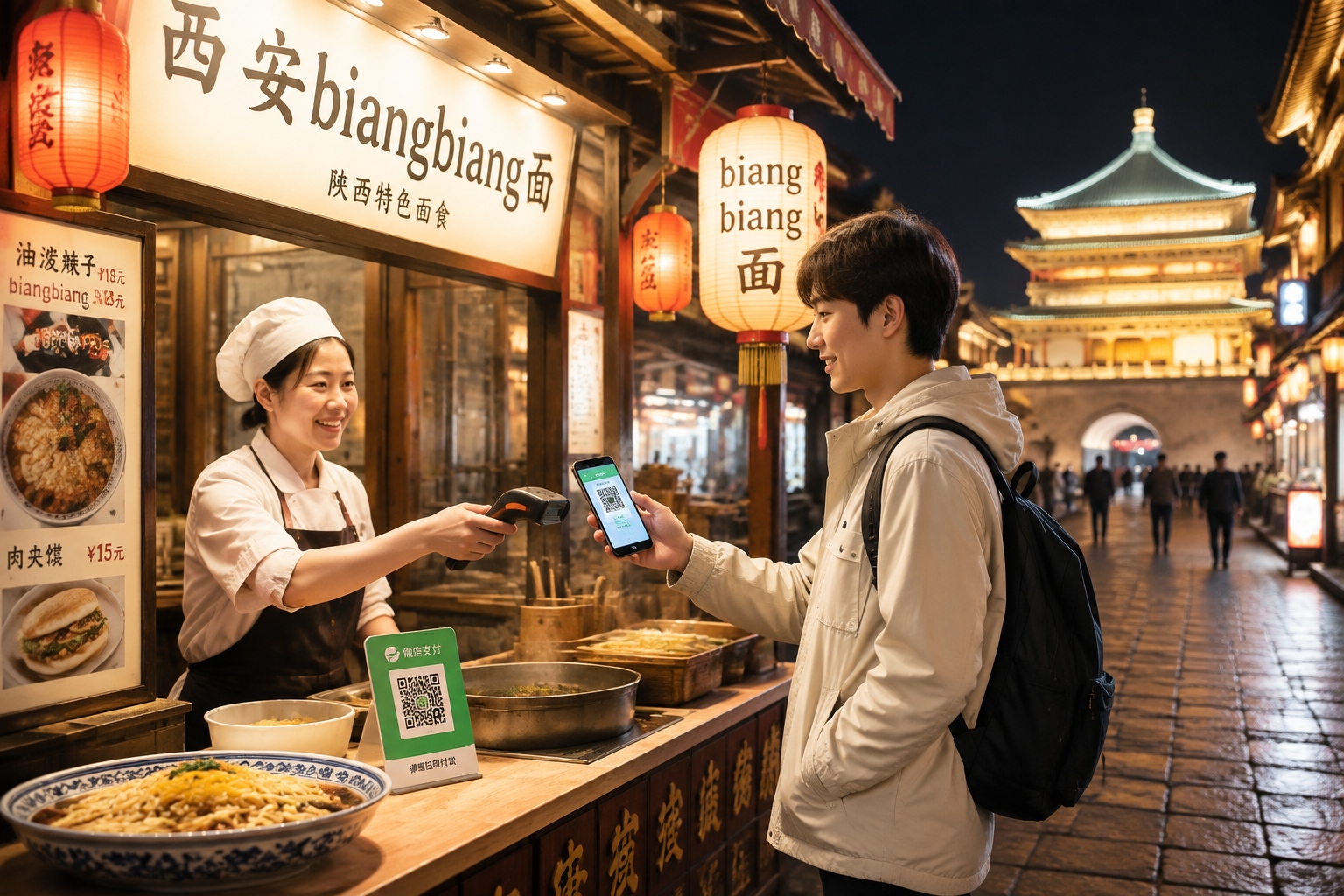
The Subway That Walks on Tombs
For international visitors, one of the most startling realities in Xi’an is how public infrastructure respects the dead while serving the living. The city sits atop a massive archaeological site layer—essentially a graveyard of dynasties.
When engineers planned Metro Line 4, they faced a dilemma: dig through history or find another way? They chose to move the tracks slightly, avoiding major tomb clusters, and in some sections, reinforced the ground specifically to protect artifacts below. The result is a subway system that feels futuristic—sleek, air-conditioned, and app-controlled—but literally runs over 2,000-year-old soil.
This isn’t just engineering; it’s a cultural contract. Locals don’t see these excavations as obstacles. When construction crews uncover pottery shards during road work, they pause, document the find, and let archaeologists step in. It’s a routine part of urban life, not a news headline.
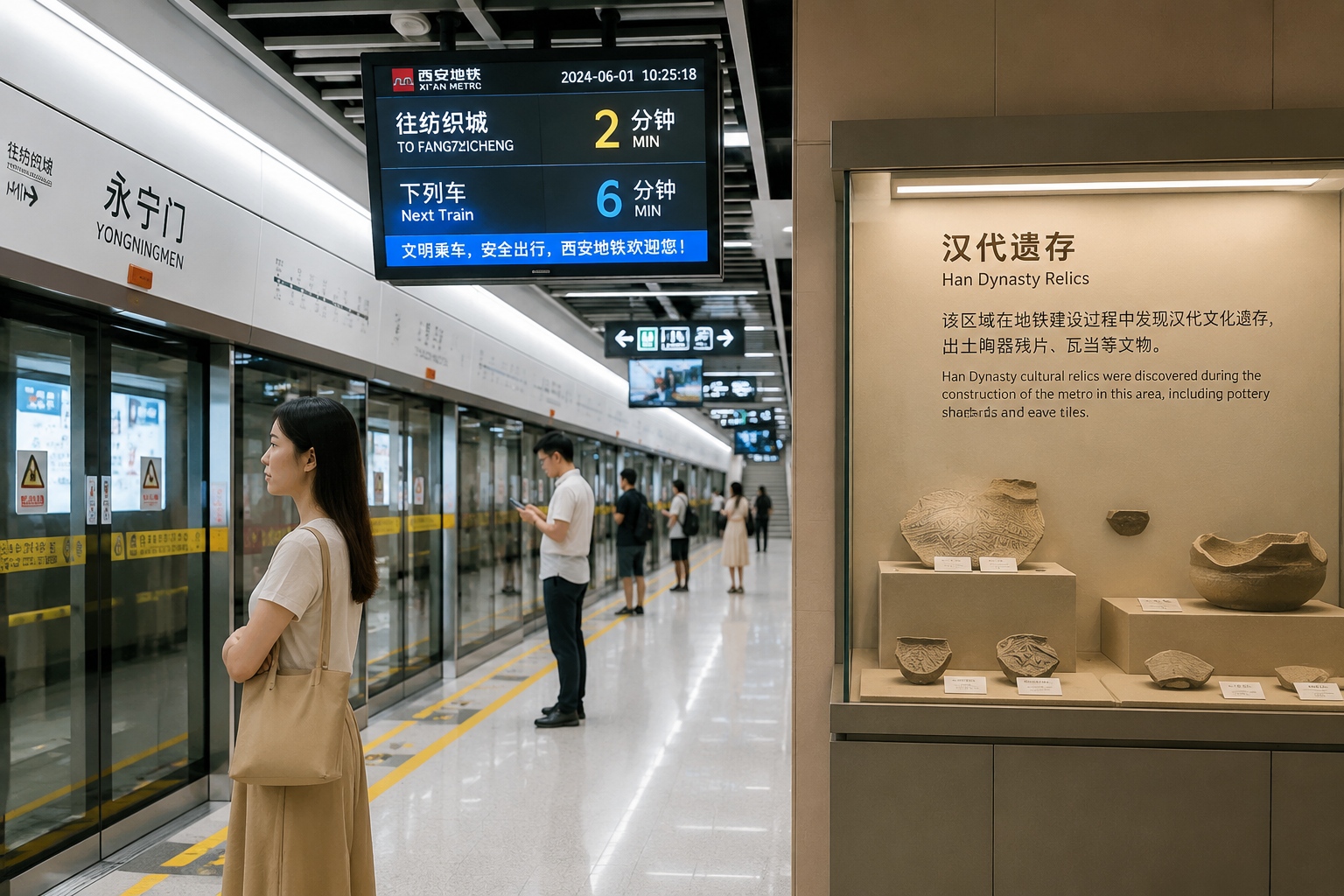
Dining on Ancient Routes
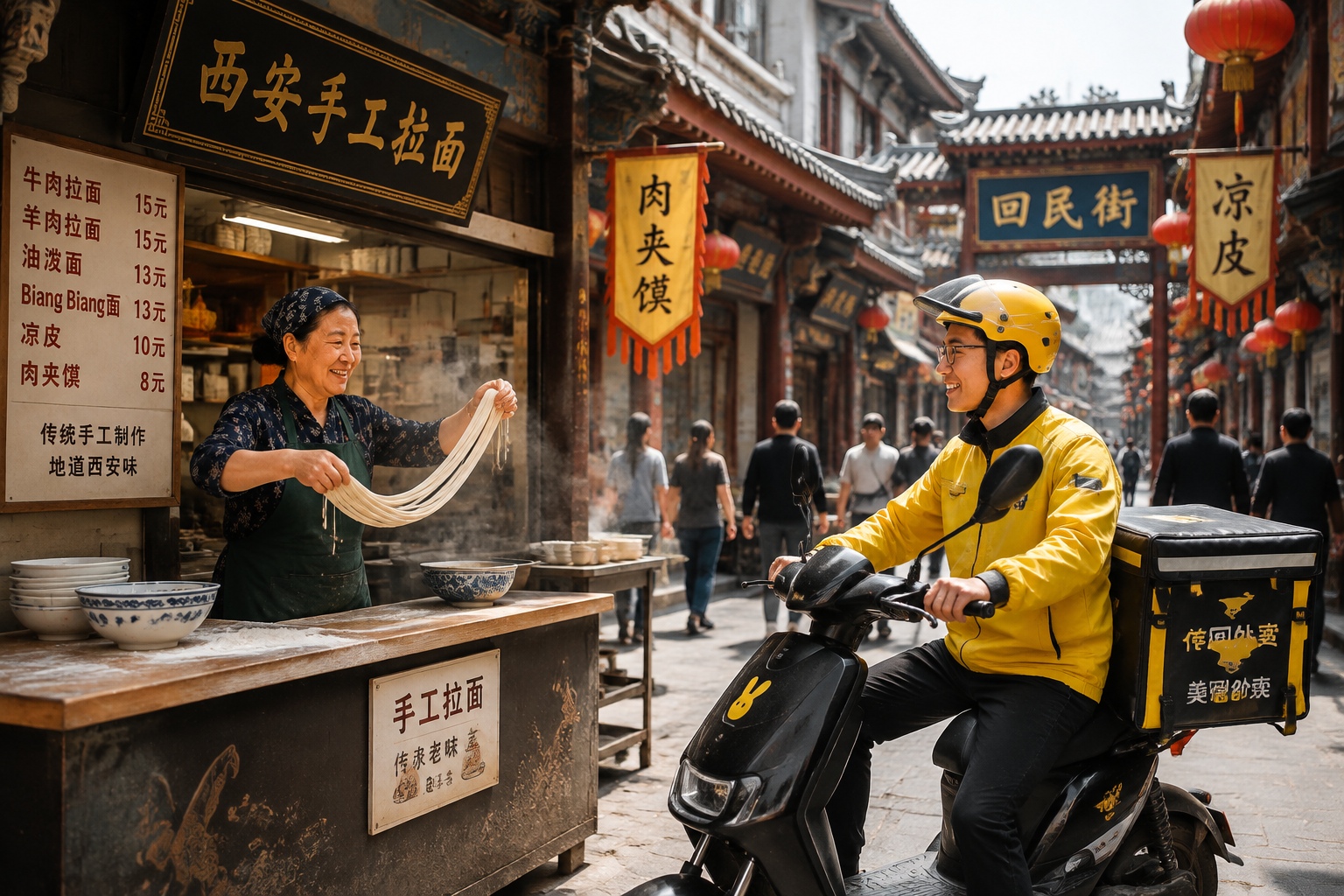
The famous Silk Road didn’t just move silk; it moved flavors, and today, those flavors define the city’s nightlife. The Muslim Quarter in Xi’an is a prime example. It sits within the walls of the Ming-era fortress, but the vibe is anything but traditional.
Here, you’ll find food stalls selling roasted sheep heads next to high-tech delivery drivers waiting for their orders via apps like Meituan. A grandmother might be hand-pulling noodles using techniques unchanged since the Tang Dynasty, while her grandson films her for a Douyin live stream to sell the same noodles online.
The ancient geography dictates the modern rhythm. The narrow alleys of the old city force a slow pace that encourages lingering, yet the digital infrastructure allows these small businesses to reach millions instantly. It’s a hybrid economy where the past fuels the present.
Urban Parks as Living Museums
In many Western cities, history is boxed up in glass cases behind velvet ropes. In Xi’an, it spills out into the parks and plazas. Take the Qianling Mausoleum area or the smaller community parks scattered around the city.
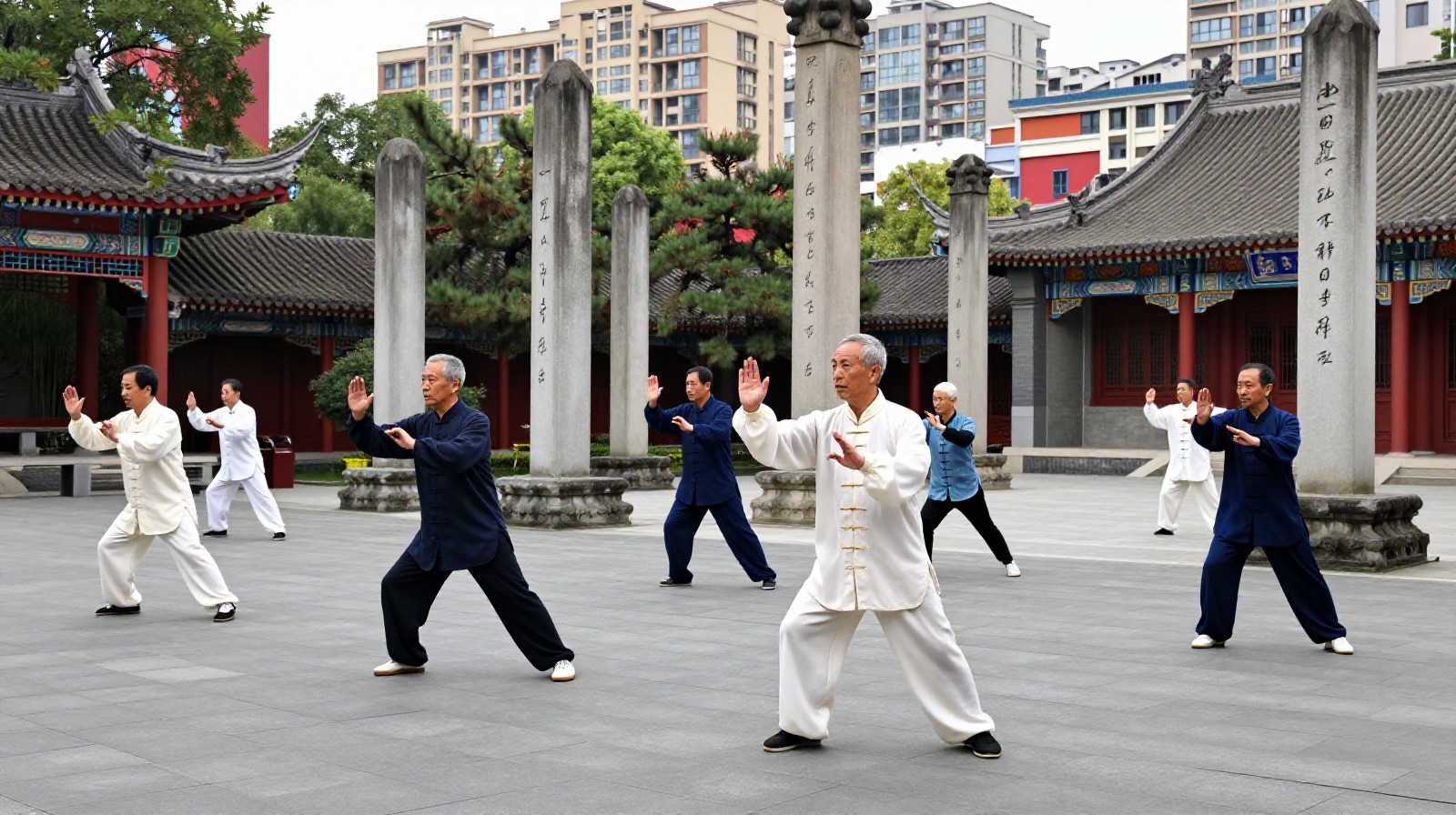
You might see elderly men practicing Tai Chi among restored Han-style stone pillars. They aren’t posing for tourists; they are just exercising in a space that has been sacred for centuries. The architecture of modern residential compounds often incorporates traditional “Dougong” bracketing or curved rooflines, not as a theme park gimmick, but as a subtle nod to local identity.
Even the street names tell the story. Walking past a building named after an ancient county seat reminds residents that they are living in a continuous timeline. This constant visual reminder creates a unique sense of place—where you feel grounded in deep time while navigating a high-speed digital world.
A Shared Cultural DNA
What makes this different from other heritage cities? In Xi’an, the ancient past is not something to be mourned or merely observed. It is a living resource.
The government invests heavily in protecting these layers, but more importantly, the citizens embrace them. The result is a city that feels both deeply rooted and aggressively modern. You can take a high-speed train from Xi’an North station to Beijing in four hours, yet you are still standing on soil where Qin Shi Huang unified China.
For outsiders, this might seem contradictory. For locals, it’s simply normal. The heritage isn’t a barrier to development; it is the very texture of their daily lives.
Start the discussion at forum.chinacomes.com