
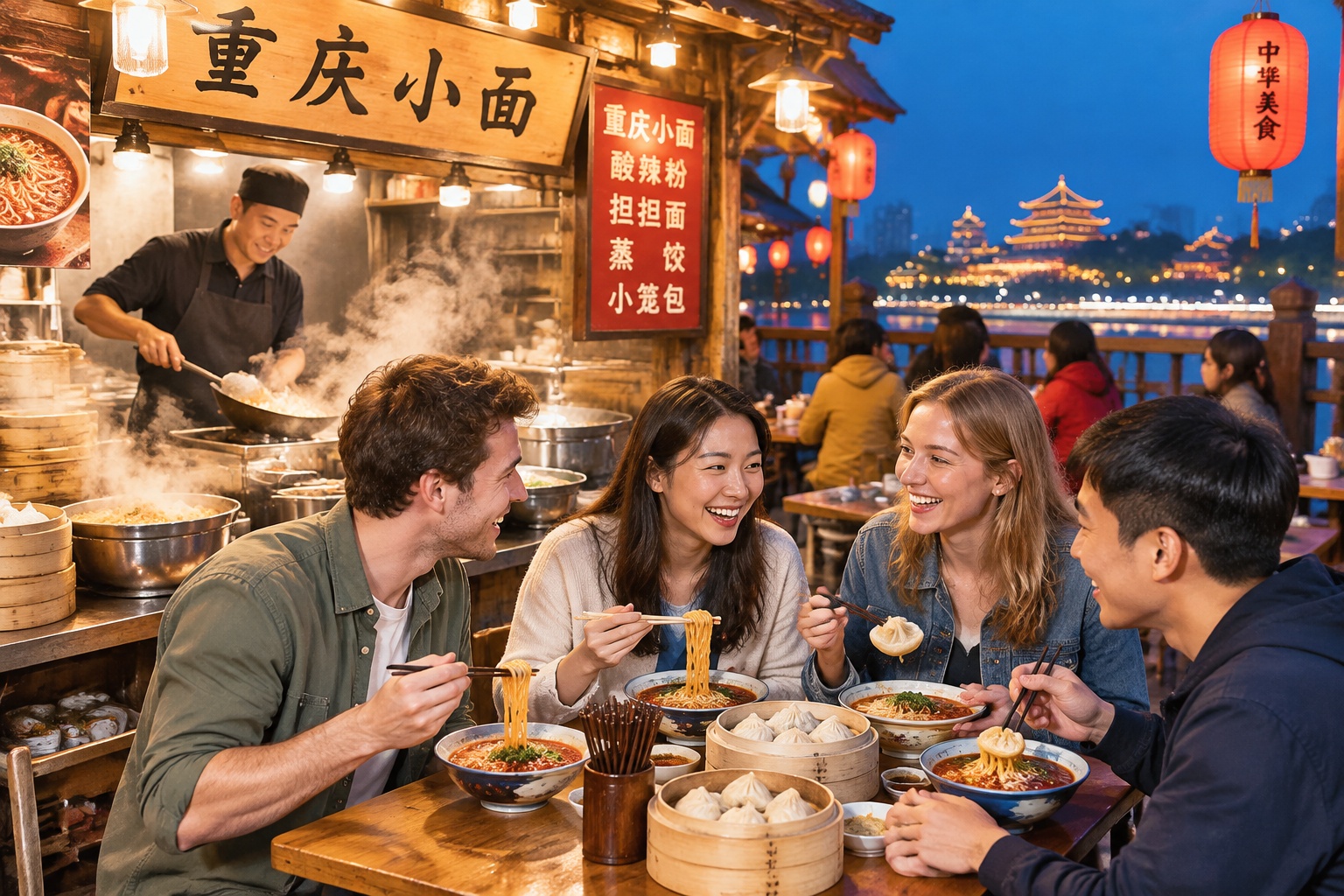

More Than Just Takeout
If you ask an American what they know about Chinese food, they might mention General Tso’s chicken or sweet and sour pork. But walk into a bustling night market in Chengdu or a morning tea house in Guangzhou, and you will find something entirely different. Today, international foodies aren’t just looking for “Chinese cuisine”; they are chasing specific flavor profiles that tell a story of history, geography, and rapid modernization.
Why do these five flavors trigger such a strong reaction? It’s not just about the taste buds; it’s about how food connects people in a society where community dining is still the heartbeat of daily life.
1. The Numbing Heat: Sichuan Ma-La
Imagine biting into a dish that stings your lips, then numbs them, all while tasting rich spice. This is ma-la, the signature combination of Sichuan peppercorns and chili peppers.
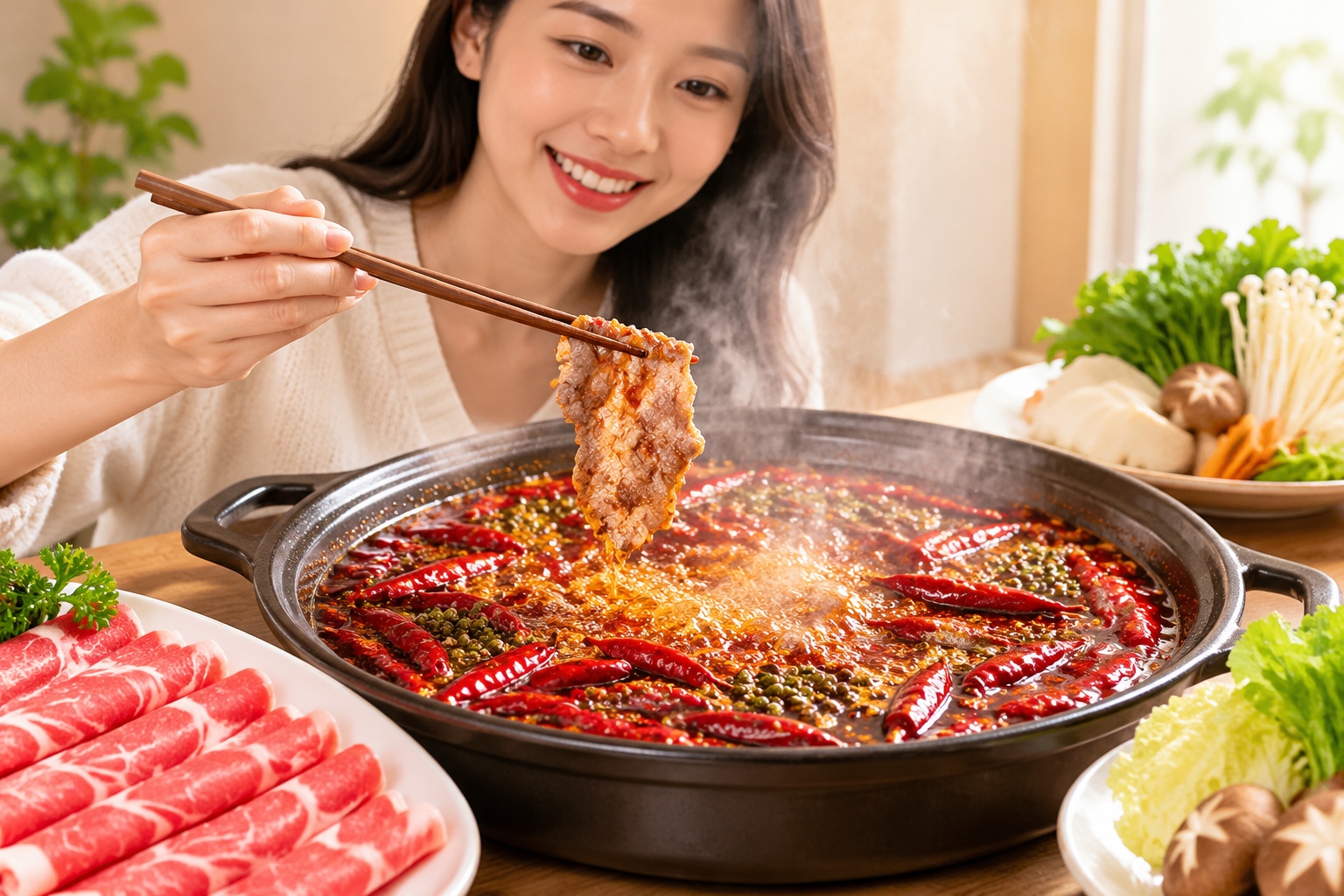
A close-up shot of steaming hot pot broth bubbling with red chilies and green Sichuan peppercorns, surrounded by fresh ingredients ready to be dipped.
For Western palates used to heat from pure capsaicin (like jalapeños), the numbing sensation is a revelation. It’s a physical experience that forces you to slow down, drink water or tea, and engage with your friends around the table. This flavor isn’t just about pain; it’s a social lubricant. In China, eating spicy food is often seen as a way to build camaraderie—sharing the challenge creates a bond.
2. The Umami Bomb: Fermented Soy & Mushrooms
In many Western kitchens, salt and pepper are the go-to seasonings. In China, fermentation is an art form that has been refined over thousands of years. Think of the deep, savory richness in a bowl of noodles or a braised pork belly.
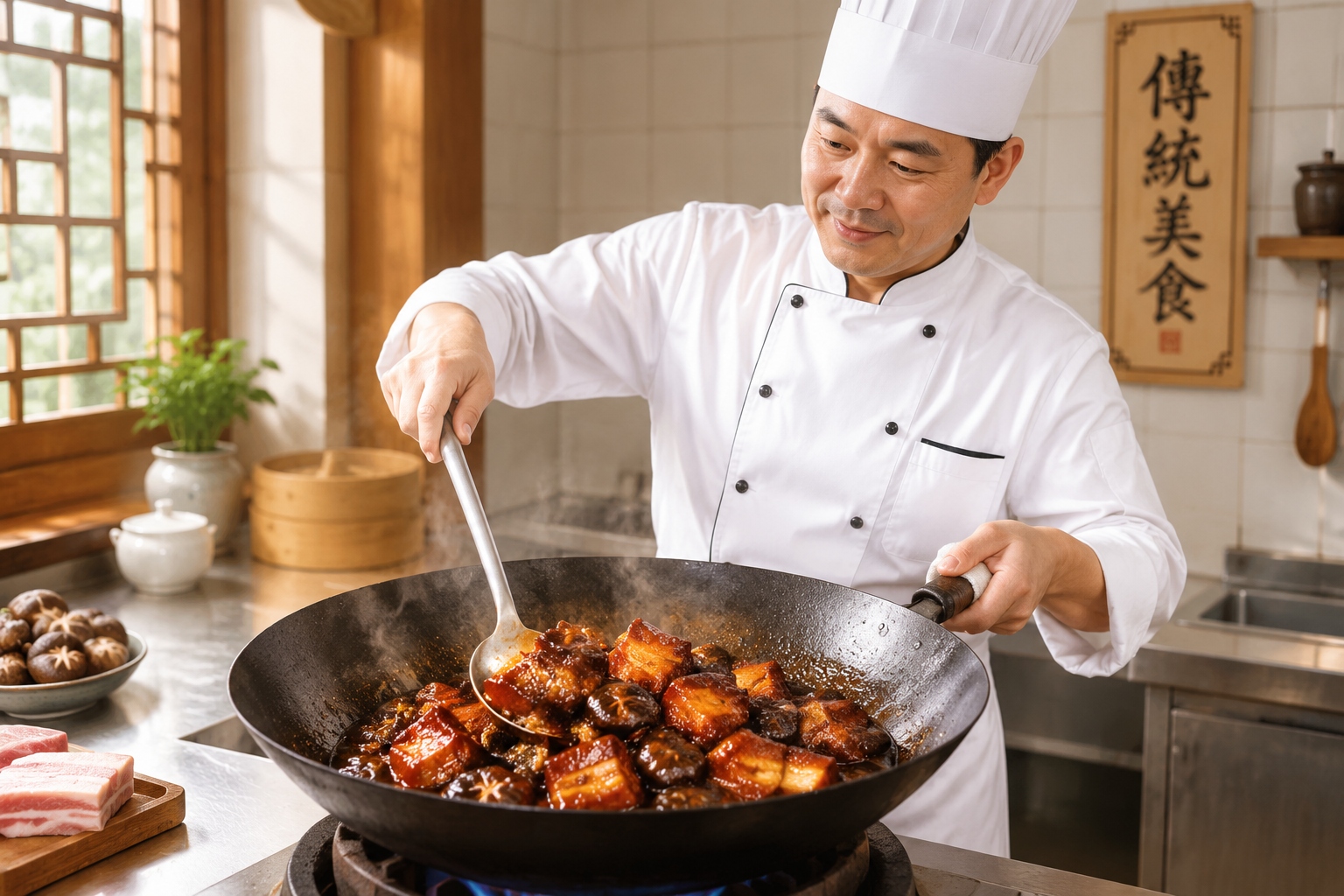
A chef stirring a large wok containing dark soy-sauce-based braised meat and shiitake mushrooms in a traditional restaurant kitchen.
Why does this taste so different? The answer lies in glutamates. Dishes like hong shao rou (red-braised pork) or simple noodle soups rely on fermented soy sauce, bean paste, and dried mushrooms to create layers of flavor that salt cannot replicate. For a foodie from New York or London, tasting this is often an epiphany: it’s the difference between “seasoning” food and building its soul.
3. The Sweet & Sour Balance
You might know sweet and sour pork from a takeout box, but authentic versions in China are far more nuanced. They aren’t cloying; they are bright, tangy, and perfectly balanced with fresh vinegar and fruit.
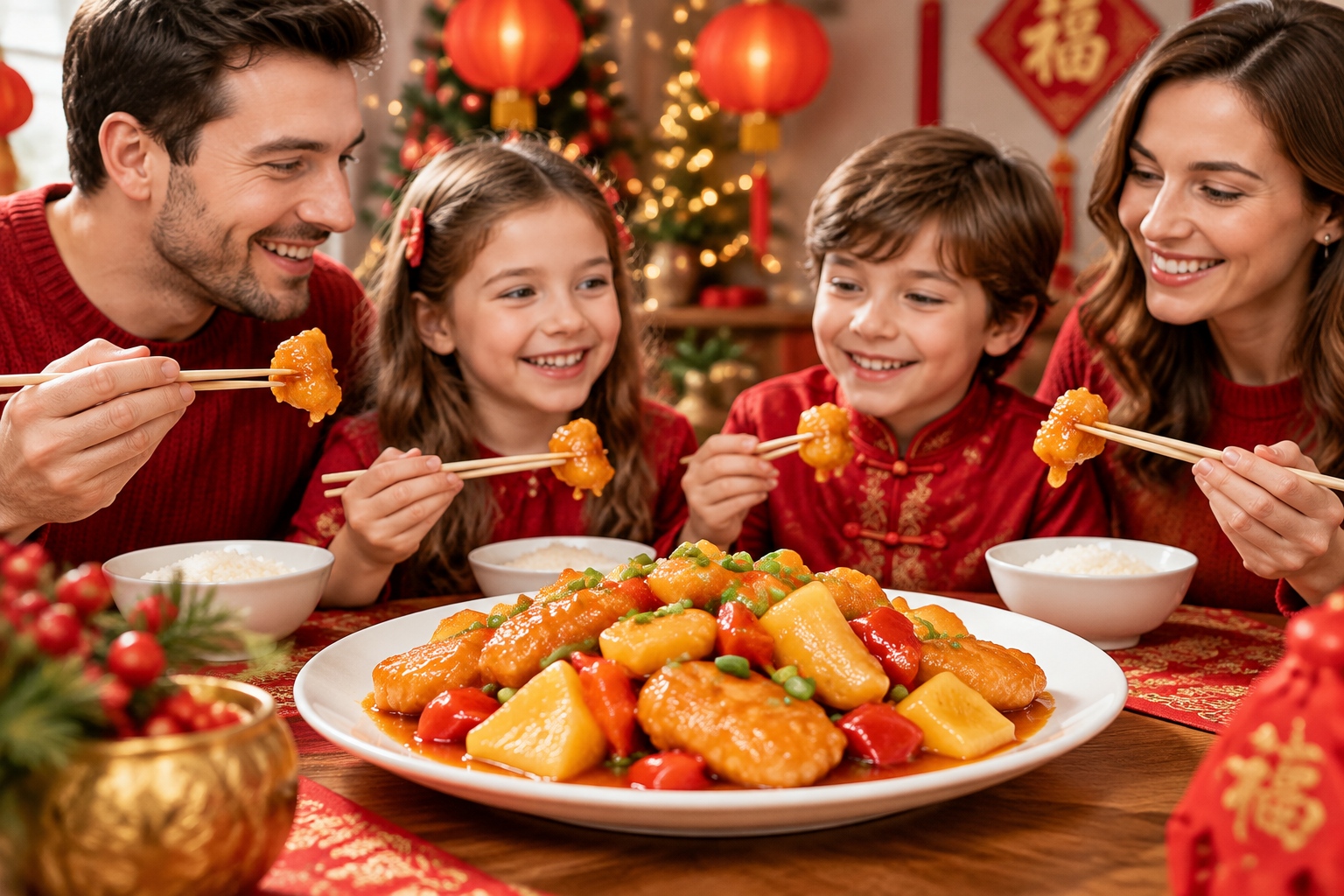
A vibrant plate of glossy sweet and sour fish fillets garnished with pineapple chunks and green onions on a white ceramic plate.
This flavor profile reflects the Chinese culinary philosophy of balance (yin and yang). A good chef doesn’t just make it sugary; they cut through the sugar with sharp acidity. This is why you often see fresh fruits like oranges or pineapples in savory dishes. It’s a reflection of a culture that values harmony over extremes.
4. The Delicate Sweetness: Cantonese Dim Sum
While some regions love heavy spices, Guangdong cuisine focuses on the natural taste of ingredients. This is most evident in yum cha, or “drinking tea,” where steamed dumplings are served alongside fresh fruit and light soups.
A traditional bamboo steam basket filled with different types of dim sum like har gow and siu mai, sitting on a table in a busy restaurant.
For someone used to heavy European breakfasts or American brunches, the lightness here can be surprising. The goal isn’t to overwhelm the palate but to highlight the freshness of shrimp, pork, or vegetables. It’s a culinary expression of longevity and health, central to Chinese culture.
5. The Fresh Herbal Kick: Cold Noodles & Herbs
In the heat of summer, few things beat a bowl of cold noodles tossed with garlic, chili oil, and fresh cilantro or green onion.
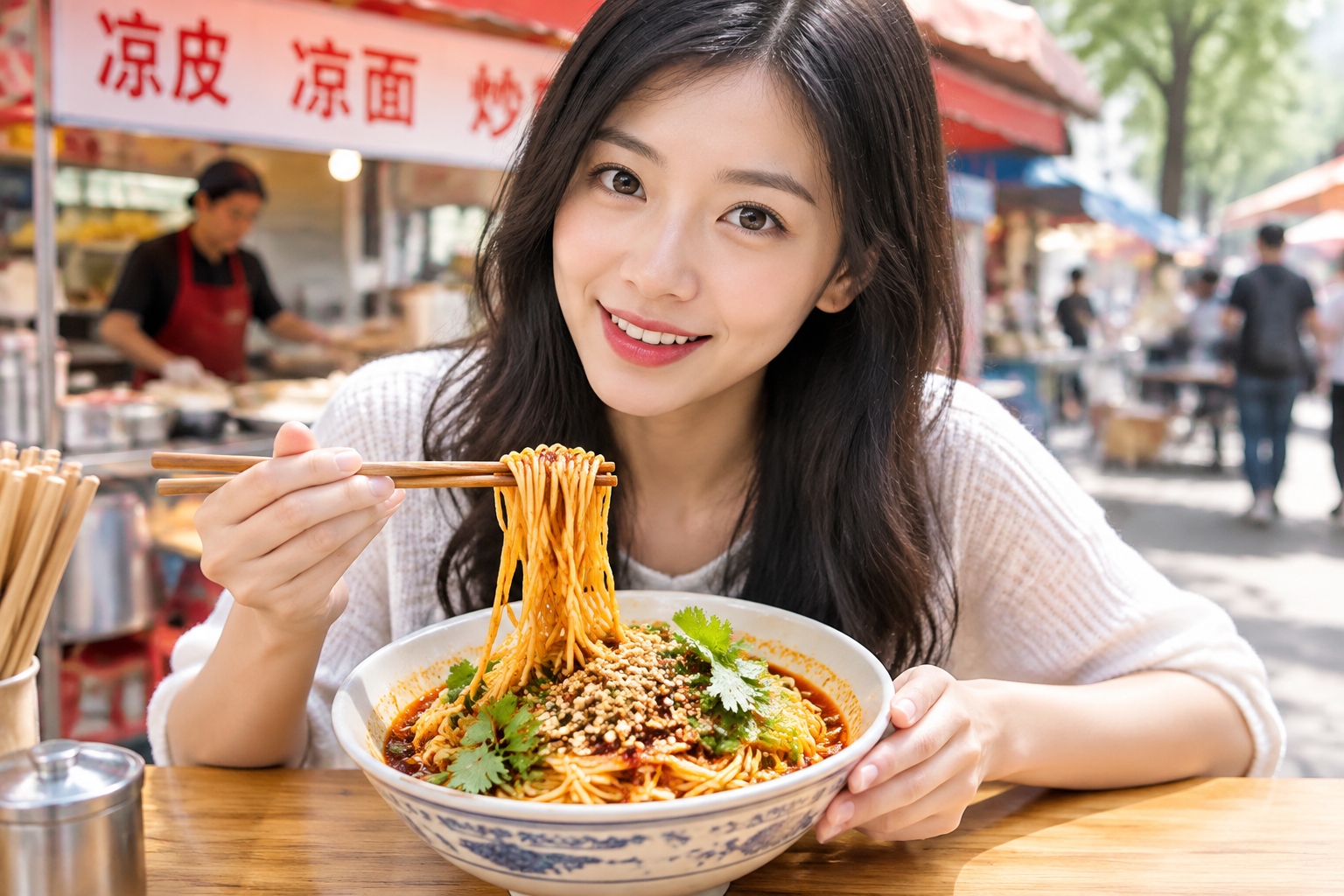
A close-up of a bowl of spicy cold wheat noodles topped with crushed peanuts, cilantro, and sesame seeds, ready to be eaten on a street side stall.
This flavor is about freshness and contrast. It’s often the go-to lunch for office workers in Shanghai or Beijing because it’s quick, cooling, and energizing. The heavy use of raw garlic and herbs provides a sharp kick that wakes you up, different from the cooked flavors found in Western salads.
What This Means for Global Dining
These five flavors aren’t just trends; they are windows into how Chinese society functions. The communal nature of spicy food reflects our tight-knit communities. The use of fermentation shows a deep respect for preservation and time. The balance in sweet and sour dishes mirrors the cultural pursuit of harmony.
As global travel opens up, people are realizing that “Chinese food” is not a monolith. It is a complex tapestry of regional identities, each with its own logic. When you taste these flavors, you aren’t just eating; you are understanding a different way of living.
Start the discussion at forum.chinacomes.com