
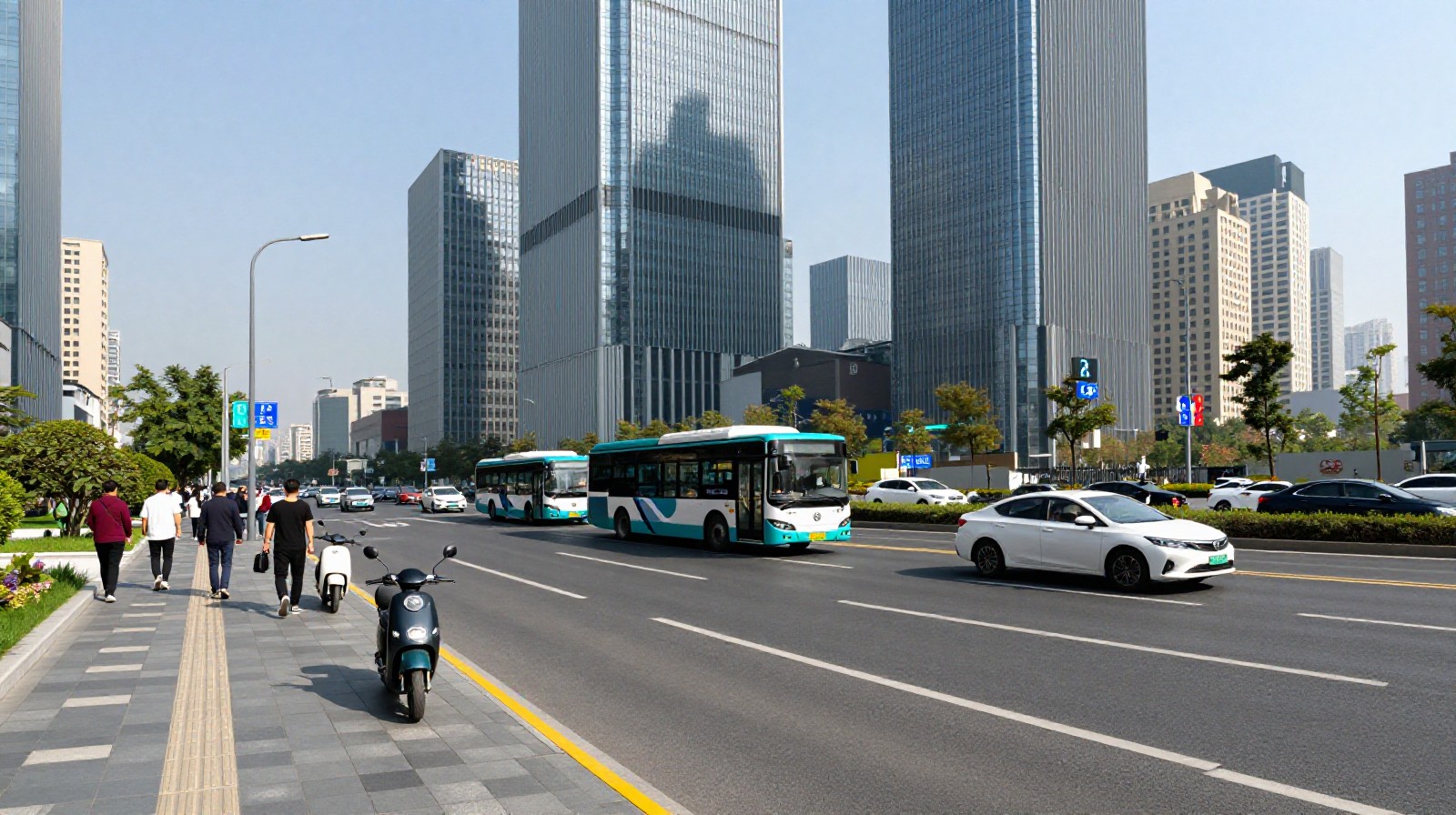

From Smoggy Mornings to Clear Skies: A Personal Shift
In 2013, I remember waking up in Beijing to a gray sky where the sun was just a faint ghost. The air smelled of coal smoke. You had to wear masks not just in winter, but often all year round. Fast forward to 2024: standing on the same spot, the sky is a vivid blue. The air smells cleaner, and the streets are filled with silent electric vehicles instead of roaring diesel buses.
This isn’t magic; it’s the result of a decade-long shift from top-down government mandates to a thriving market economy. The Chinese environmental sector has evolved from relying solely on subsidies and strict orders to becoming a self-sustaining engine of innovation and commerce. For ordinary citizens, this transition means cleaner air, new job opportunities, and a daily life that increasingly integrates green technology.
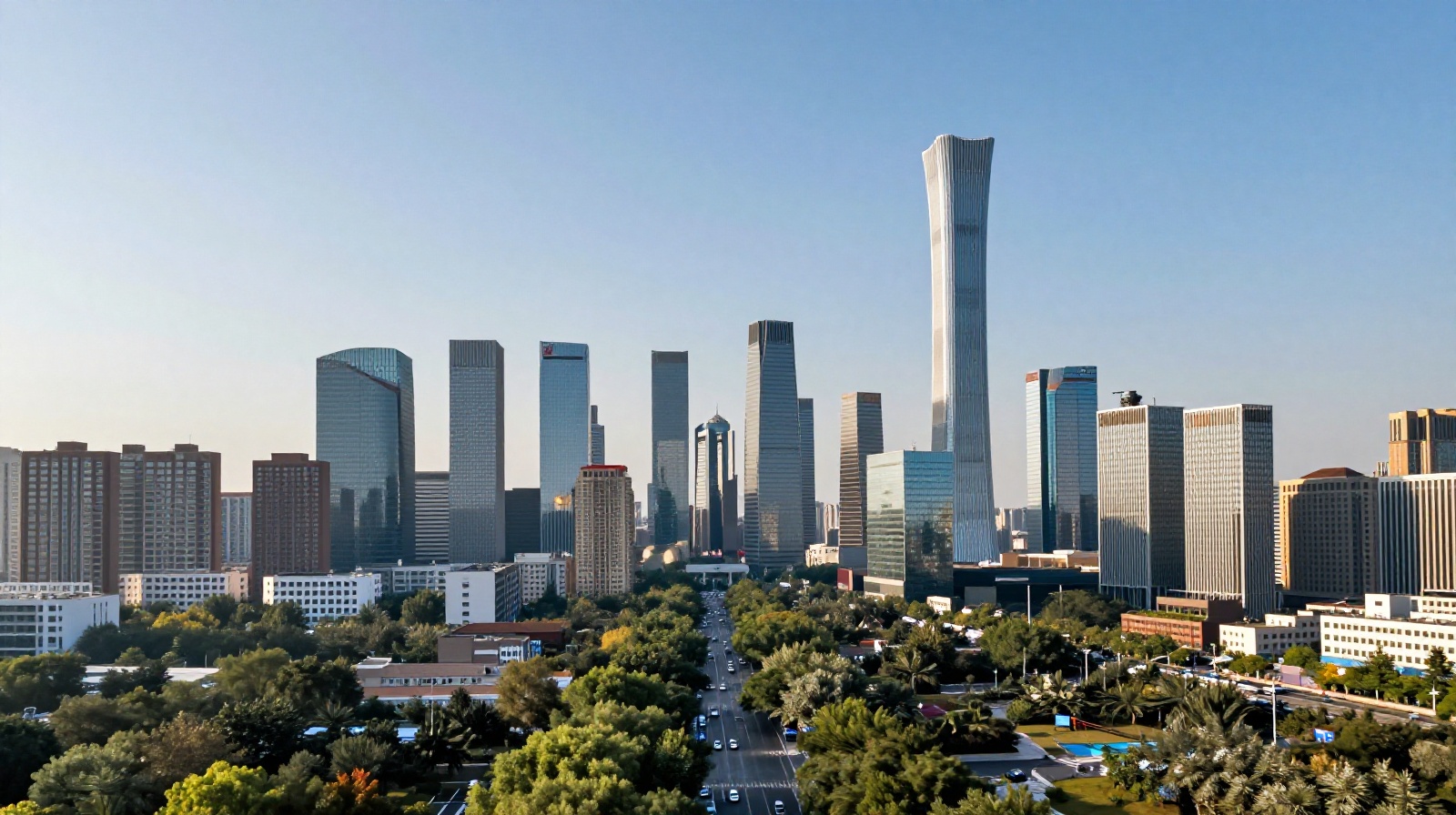
The Electric Shift: How E-Bikes and EVs Changed Street Life
Walk down any street in a Chinese city today, and you will see the most visible sign of this change: electric mobility. In 2015, if you saw an electric scooter (e-bike) on the road, it was often unregulated and dangerous. Today, e-bikes are the primary mode of transport for millions of commuters.
Consider Li Wei, a delivery rider in Shanghai. Ten years ago, he rode a noisy gas-powered motorcycle that required constant refueling and emitted thick smoke. Now, he rides an electric bike with a swappable battery system. He can swap his flat battery at a station in two minutes for less than $2. The government’s early push to ban high-emission motorcycles forced this transition, but the market kept it alive because it made economic sense.
This shift has rippled into the automotive industry. China is now the world’s largest market for electric vehicles (EVs). Companies like BYD and NIO have grown from startups to global giants, offering cars with ranges exceeding 600 kilometers at prices competitive with gasoline models. The result? A massive reduction in urban noise and exhaust fumes. In cities like Shenzhen, 100% of public buses are electric.
Waste Sorting: When Rules Became Habits
Another quiet revolution happened in residential communities. Starting around 2019, major cities like Shanghai and Beijing implemented strict waste sorting rules. At first, neighbors complained. “Why do I need to separate food scraps from plastic?” they asked.
The system works by placing staff at bins during peak hours (7-9 AM and 6-8 PM) to guide residents. It feels intrusive at first, but it has fundamentally changed behavior. In Shanghai, the waste recycling rate jumped from roughly 35% in 2018 to over 45% today. The byproduct is also a booming industry: food waste is now processed into biogas for electricity or high-grade fertilizer.
For the average resident, this means less smell from trash cans and cleaner streets. It’s no longer about obeying a distant government decree; it’s about living in a neighborhood where everyone participates to keep their own environment clean.
Green Tech for Ordinary People: Solar Roofs and Smart Meters
The environmental leap isn’t just about big factories or public transport; it has trickled down to individual homes. In rural areas of Jiangsu and Zhejiang provinces, farmers are installing solar panels on their roofs not just for subsidies, but for profit.
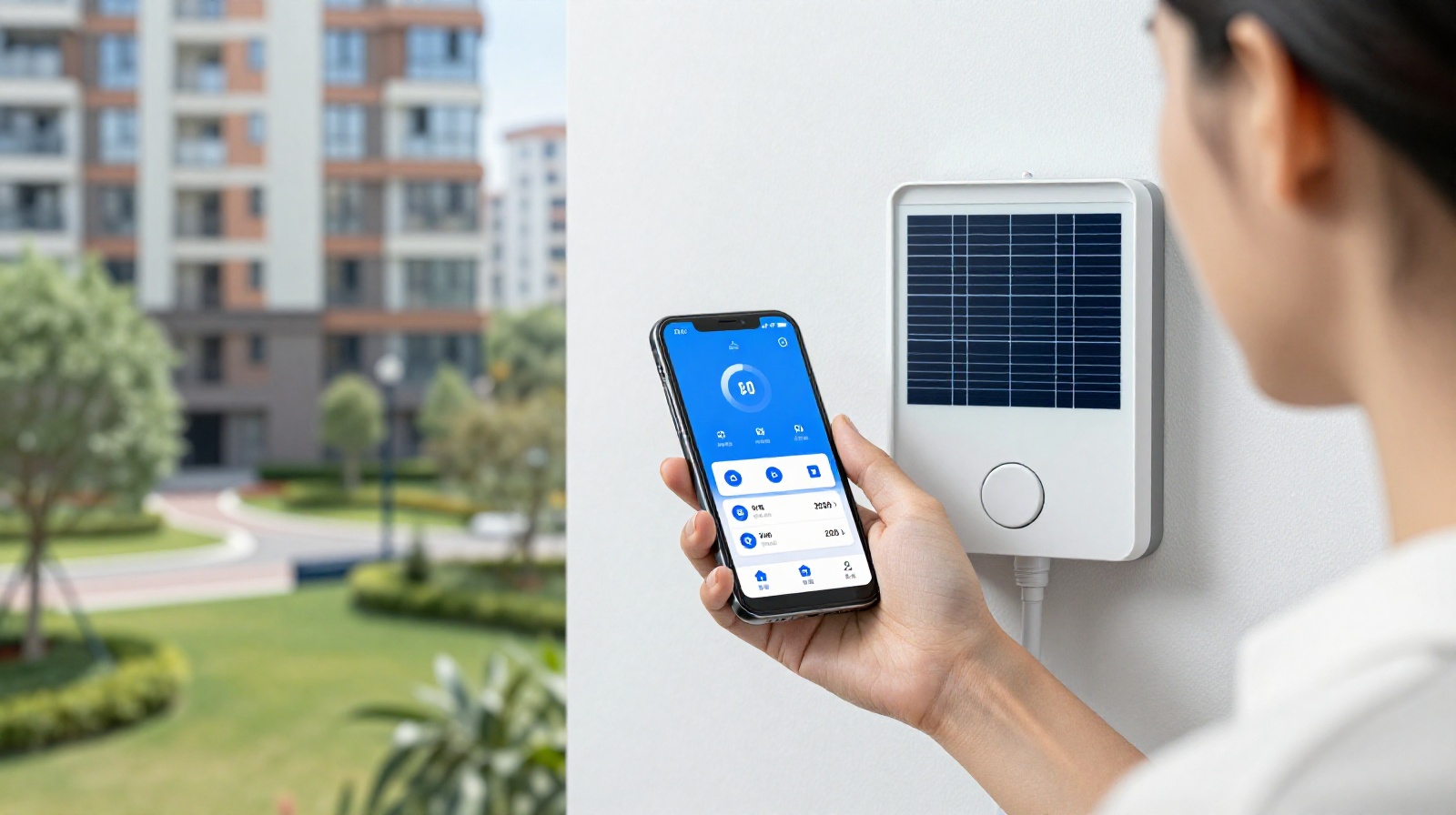
They sell excess electricity back to the grid. The technology is now so advanced that “smart meters” in urban apartments automatically adjust energy usage based on time-of-day pricing. You can check your real-time air quality and carbon footprint through a simple app on your phone.
This democratization of green tech means that even those without large capital can participate in the green economy. A homeowner in Hangzhou might install a small solar array, while a family in Chengdu tracks their daily energy savings via an AI-powered home system.
The Human Cost and Gain: Workers on the Front Lines
Transitioning to a green economy isn’t without its challenges. Thousands of workers who once built coal-fired power plants or mined for coal had to find new roles. The government has invested heavily in retraining programs, helping former miners become technicians for wind farms or solar panel installers.
Take Zhang Ming, a 50-year-old former coal miner from Shanxi province. He feared unemployment when the mines closed. Today, he works at a nearby solar farm, installing and maintaining panels. “The pay is good, and I know I’m helping clean the air,” he says. This human story of adaptation shows that the shift is not just about numbers; it’s about livelihoods.
A New Normal: A Shared Global Story
Today, China’s environmental sector is a market-driven powerhouse. The policies were the spark, but the sustained growth comes from consumer demand, technological innovation, and economic incentives. For the world, this offers a crucial lesson: green transition doesn’t have to mean slowing down growth.
As electric vehicles become cheaper and waste management becomes more efficient in China, these solutions are being exported globally. The changes we see on Chinese streets today—clean air, silent transport, smart recycling—are becoming a blueprint for urban living worldwide. It is no longer just a story of government policy; it is a story of how ordinary people across the globe can build a cleaner future together.