

A Seat in the Rush Hour of Speed
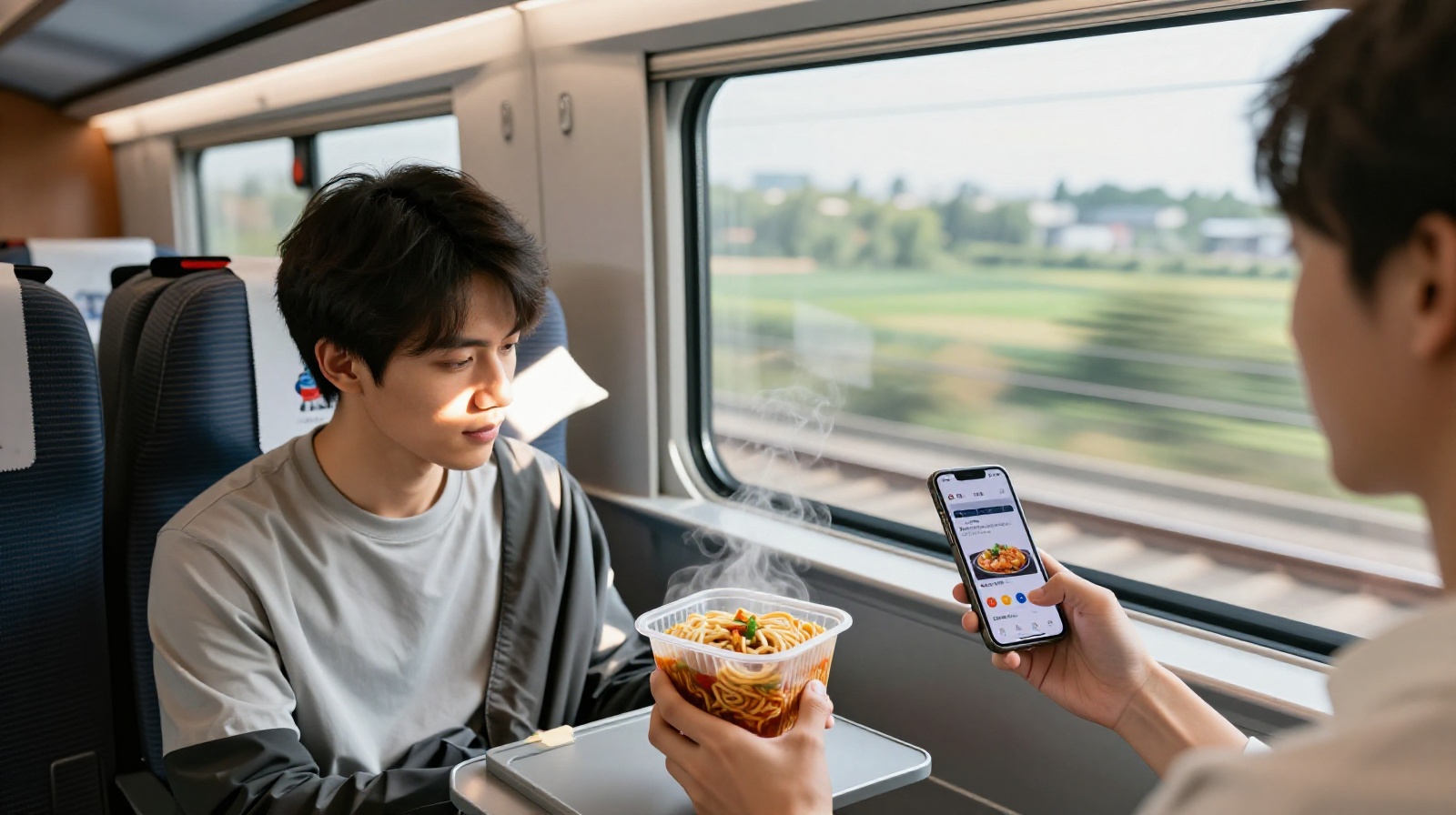
The air conditioning hums at a steady 71°F (22°C). Outside, the landscape blurs into green streaks as our train, G104, tears through the Chinese countryside at 350 kilometers per hour (217 mph). I am halfway between Beijing and Shanghai. My stomach growls, but unlike years ago, I don’t need to settle for a lukewarm pre-packaged meal or dry instant noodles.
I pull out my phone. The screen glows in the dim cabin light. With two taps on a delivery app—either Meituan or Ele.me—I am ordering lunch from a restaurant in Suzhou, 20 minutes away.
How It Works: From App to Window
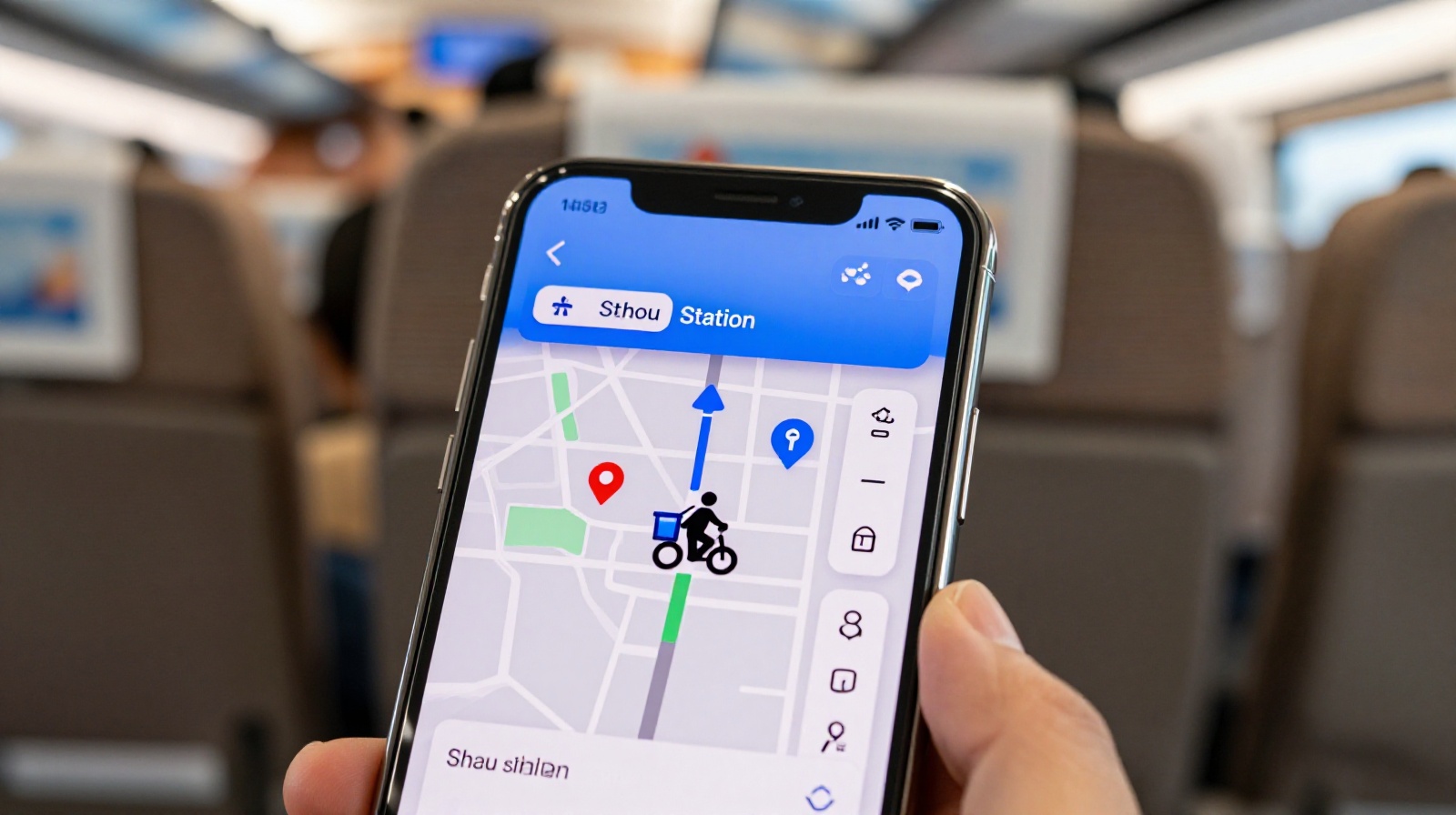
The process feels almost magical if you’ve never seen it. I type ‘Suzhou Station’ as the delivery location and select my seat number (Car 5, Seat 12A). The app instantly calculates that the train will arrive at Suzhou Station in exactly 18 minutes. It then shows a list of nearby restaurants, filtering only those capable of delivering to high-speed rail platforms.
I choose a famous local noodle shop known for its ‘Squirrel Fish’ and spicy beef noodles. The menu displays fresh prices, photos of steaming bowls, and an estimated delivery time that syncs with the train’s arrival schedule. I pay via WeChat Pay in seconds. No QR codes at tables, no waiting for a waiter to take orders. Just digital precision.
The Last 100 Meters: A Race Against Time
Thirty minutes later, the train slows down, screeching slightly as it approaches Suzhou Station. The announcement crackles over the intercom: “Arriving at Suzhou Station in three minutes.” My phone buzzes. The rider’s location icon is moving rapidly on the map.
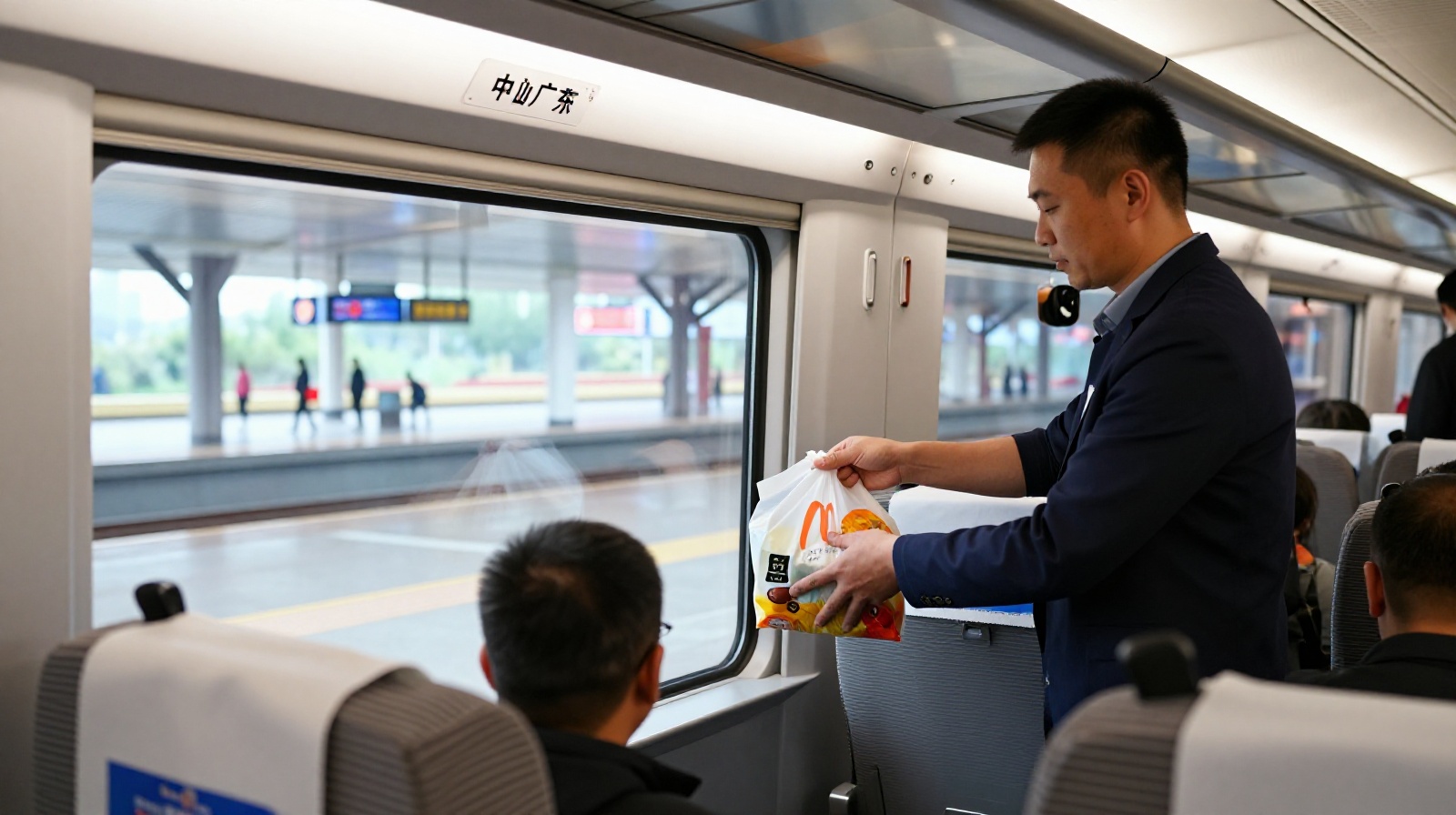
This is the magic of China’s logistics network. A specialized delivery worker, often wearing a distinctive uniform and a helmet with a thermal bag, has already boarded the platform. As the train doors open for just two minutes, this courier sprints from the station exit to the specific carriage door. They don’t knock; they have memorized the car number. Through the open window or by handing it directly through the gap between seats (depending on local safety protocols), the food is passed in.
In many cases, if the train doesn’t stop for long enough at that specific station, the rider waits for the next scheduled stop where the train actually pauses for a few minutes. The system calculates this perfectly. In my case, it was a seamless handoff at Suzhou Station. The courier didn’t miss a beat. He handed me a sealed bag, I tipped him digitally via the app, and he vanished back into the station crowd before the doors closed again.
A Sensory Shift: From Noodles to Local Flavors
As I unwrap the plastic container, the steam rises, carrying the scent of star anise and chili oil—a sharp contrast to the sterile smell of instant noodles that usually dominates a high-speed rail car. The food is hot, fresh, and distinctly regional. It tastes like it was cooked ten minutes ago, not reheated in a factory.
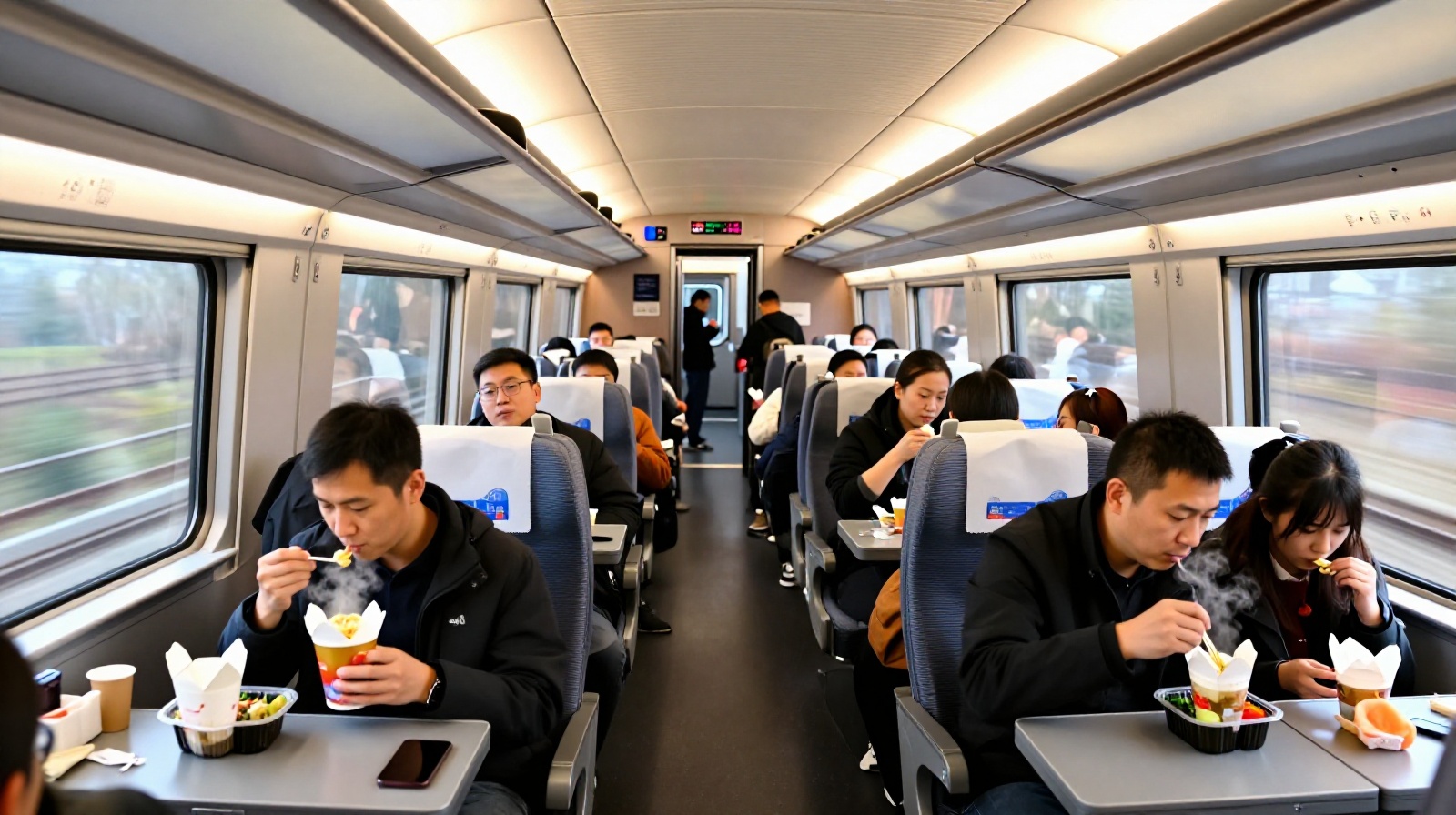
Looking around the carriage, the reaction is mixed but generally positive. An elderly couple nearby shares a smile as they see my steaming bowl; they remember the days of eating dry, salty biscuits during long journeys. A young student next to me is already filming her own delivery, showing off a bubble tea and a fried rice box she ordered from a station in Nanjing.
The traditional image of high-speed rail travel—silent, efficient, but food-wise, monotonous—is changing. The smell of local cuisine wafting through the carriage creates a strange, wonderful sense of connection to the places we are passing through. We aren’t just moving from point A to B; we are tasting the journey.
Beyond Convenience: A Digital Infrastructure Miracle
This isn’t just about hunger; it’s a testament to how deeply technology has woven itself into China’s daily fabric. Behind this simple act lies a complex ecosystem of real-time data, synchronized train schedules, and a massive, agile logistics workforce.
According to recent industry data, high-speed rail delivery services now cover over 100 major cities across China’s vast network. The number of orders placed on trains has grown exponentially in the last three years, transforming from a niche novelty into a standard service for millions of commuters and travelers.
The system solves a unique logistical puzzle: how to move goods at high speed without stopping a massive train. By treating the station as a dynamic hub and using AI to predict arrival times within seconds, Chinese tech companies have turned the train itself into a moving restaurant.
The Future is Here, One Bite at a Time
As the train picks up speed again, leaving Suzhou behind, I take a bite of the spicy noodles. It’s hot, flavorful, and perfectly timed.
This experience challenges the old stereotype of China as just a factory or a place where everything is mass-produced. Here, in the quiet hum of a 350 km/h train, we see the future of mobility and consumption arriving not with a bang, but with the gentle click of a phone screen and the warm delivery of a meal.
For international visitors wondering what life is really like on China’s fast trains today, the answer is simple: it’s convenient, tech-driven, and surprisingly delicious. The sky isn’t the limit; it’s just another route for your next lunch.