

It’s Not Just Dumplings Anymore
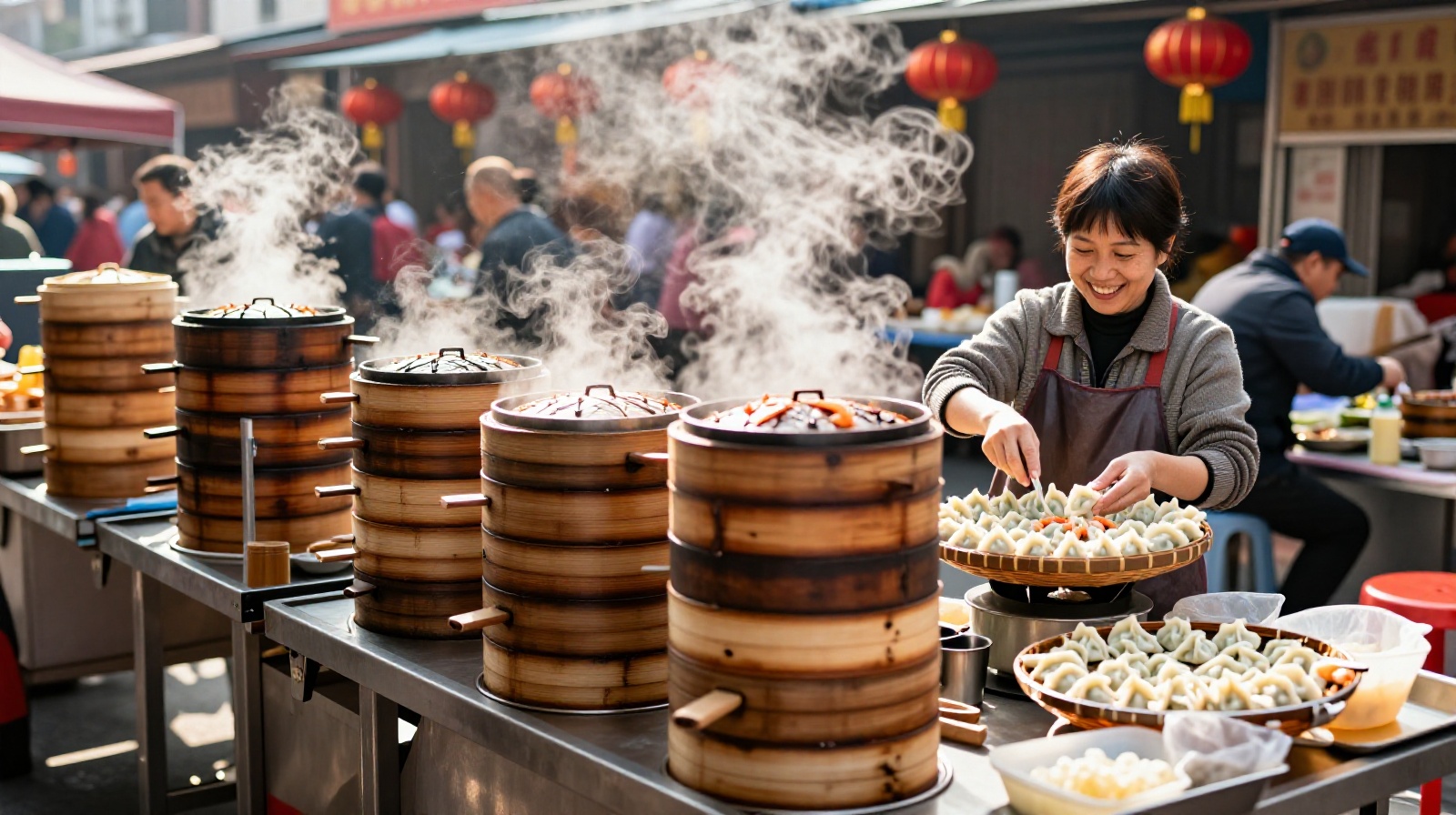
If you ask someone in the West about Chinese food, they will almost certainly say “dumplings.” But if you walk into a bustling morning market in Guangzhou or a quiet neighborhood bakery in Xi’an, you’ll find a universe of dough that has nothing to do with those folded pockets of meat and cabbage.
In China, we call this vast world mian dian (steamed pastries). It’s not just breakfast; it’s the rhythm of daily life. From cloud-soft buns in the north to sticky rice cakes in the south, these items are often made fresh every single morning. They are sweet, savory, and sometimes a surprising mix of both.
The Morning Ritual: Dim Sum and Steamed Clouds
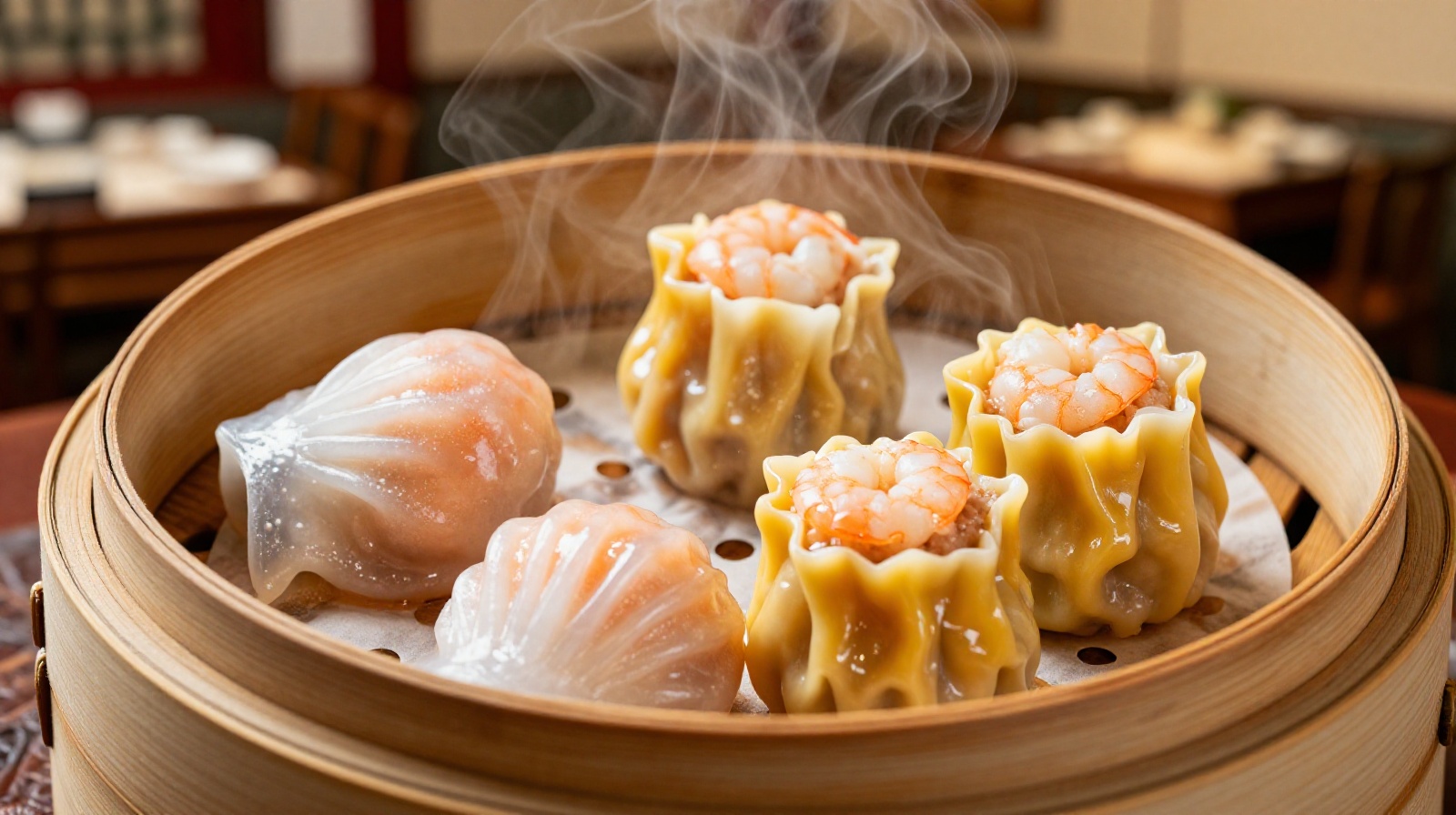
Let’s start with the most famous chapter of this story: Cantonese Dim Sum. In Guangdong province, breakfast is a social event that can last hours. You don’t just order food; you navigate a cart rolling through the restaurant filled with bamboo steamers.
The Har Gow (shrimp dumpling) looks like a translucent jewel with plump shrimp inside. The Siu Mai (pork and prawn dumpling) is open-topped, dusted with roe, sitting proudly in the steamer. But beyond seafood, there are savory pork buns (Pao Chai) that melt in your mouth and fluffy flower rolls (Hua Juan) layered with scallions and oil.
Why is this so popular? In the West, breakfast often means cereal or toast. In Southern China, mian dian offers warmth, texture, and a sense of community. The dough is fermented to perfection, creating a lightness that feels like eating a cloud.
The North’s Heavy Hitters: Buns and Flower Rolls
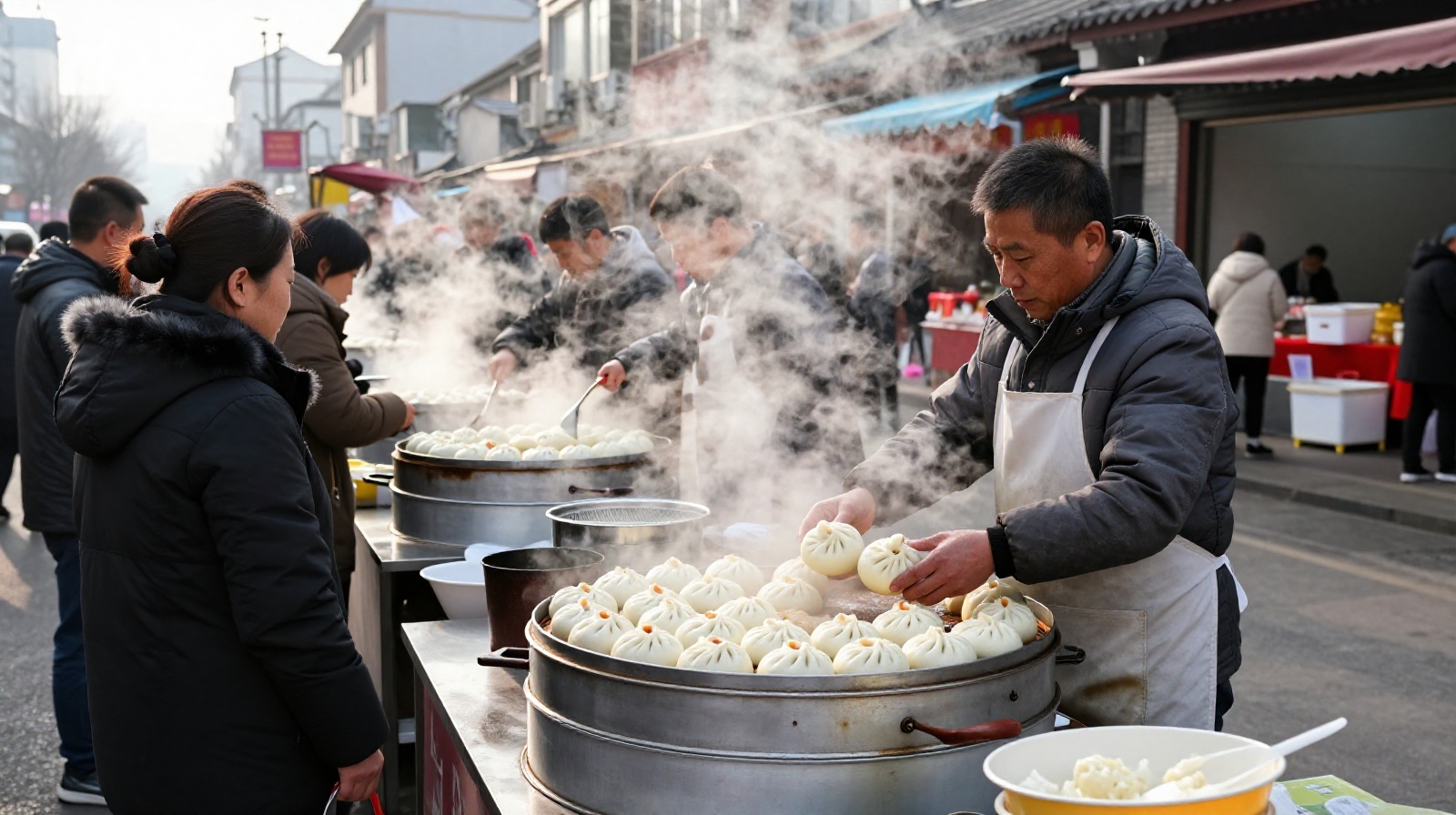
Travel north to Beijing or Xi’an, and the style changes. The climate is colder, and the food needs to be more filling. Here, the star is the Bao Zi.
Unlike the thin-skinned dumplings of the south, northern buns have a thick, fluffy skin that can hold a generous amount of filling. You might find sweet red bean paste (Dou Sha) or savory meat and cabbage. A true local favorite is the Jian Bing (crispy crepe) eaten on the go, but for steamed goods, the Hua Juan remains king.
The process of making these buns is an art form passed down through generations. The dough must be kneaded until smooth, then left to rise in a warm place. When you bite into a freshly steamed bun, the steam escapes, and the texture is chewy yet tender. It’s comfort food at its absolute best.
The South’s Sticky Sweetness: Cakes and Glutinous Rice
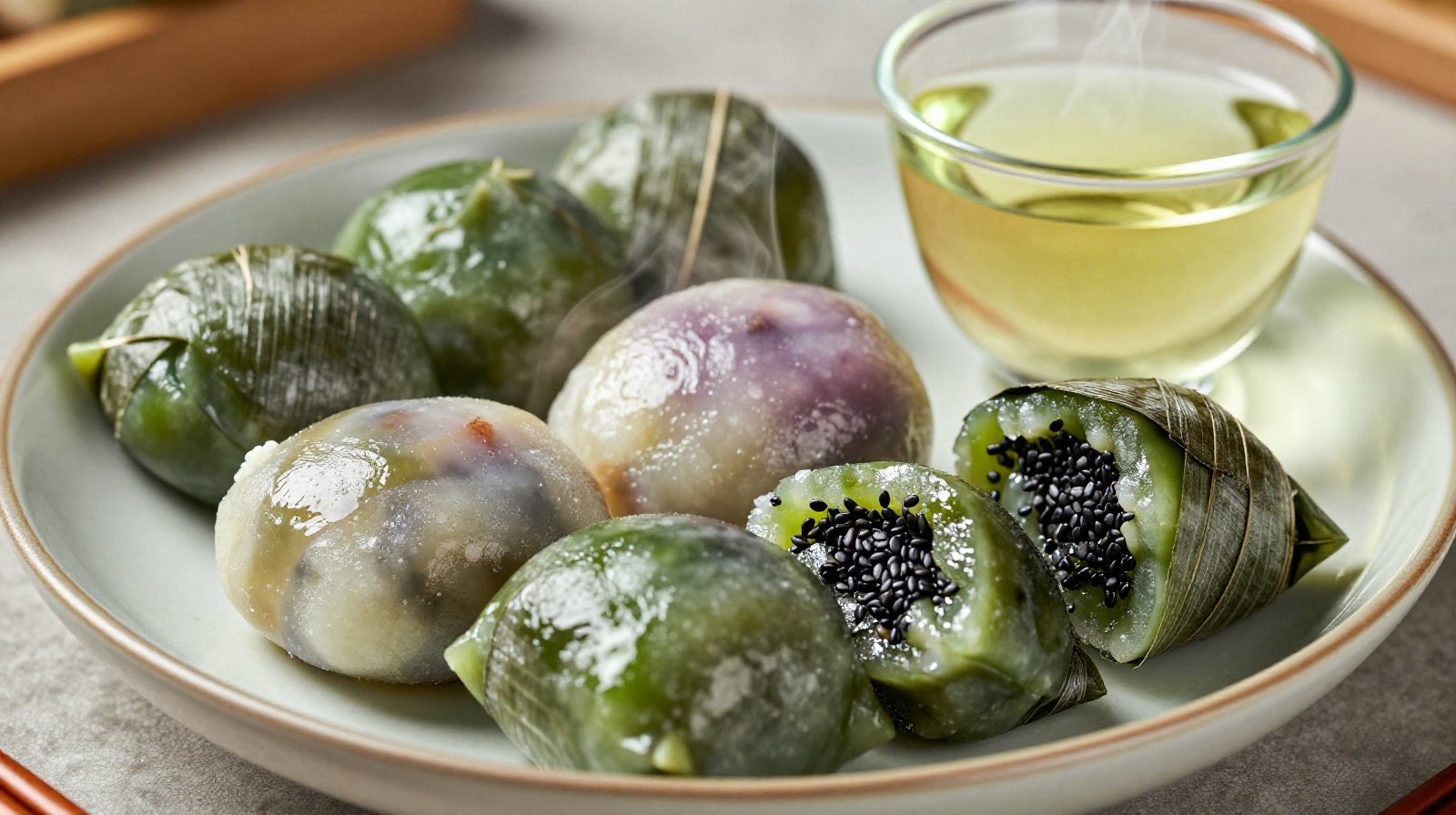
Head back south to Jiangsu or Zhejiang, where humidity reigns. The dough here is often made from glutinous rice flour, creating a completely different texture—sticky, chewy, and sweet.
In spring, you’ll find Qing Tuan (green dumplings), dyed with mugwort juice to represent the new season. They are filled with black sesame paste or red bean, wrapped in a grassy, aromatic skin. Then there’s Gui Hua Gao (Osmanthus Cake), a translucent jelly-like cake scented with tiny yellow flowers.
These treats are often paired with tea. The sweetness of the cake balances the bitterness of the tea, creating a perfect harmony. It’s a subtle dance between flavors that you won’t find in Western pastries.
The People Behind the Dough: A Master’s Story
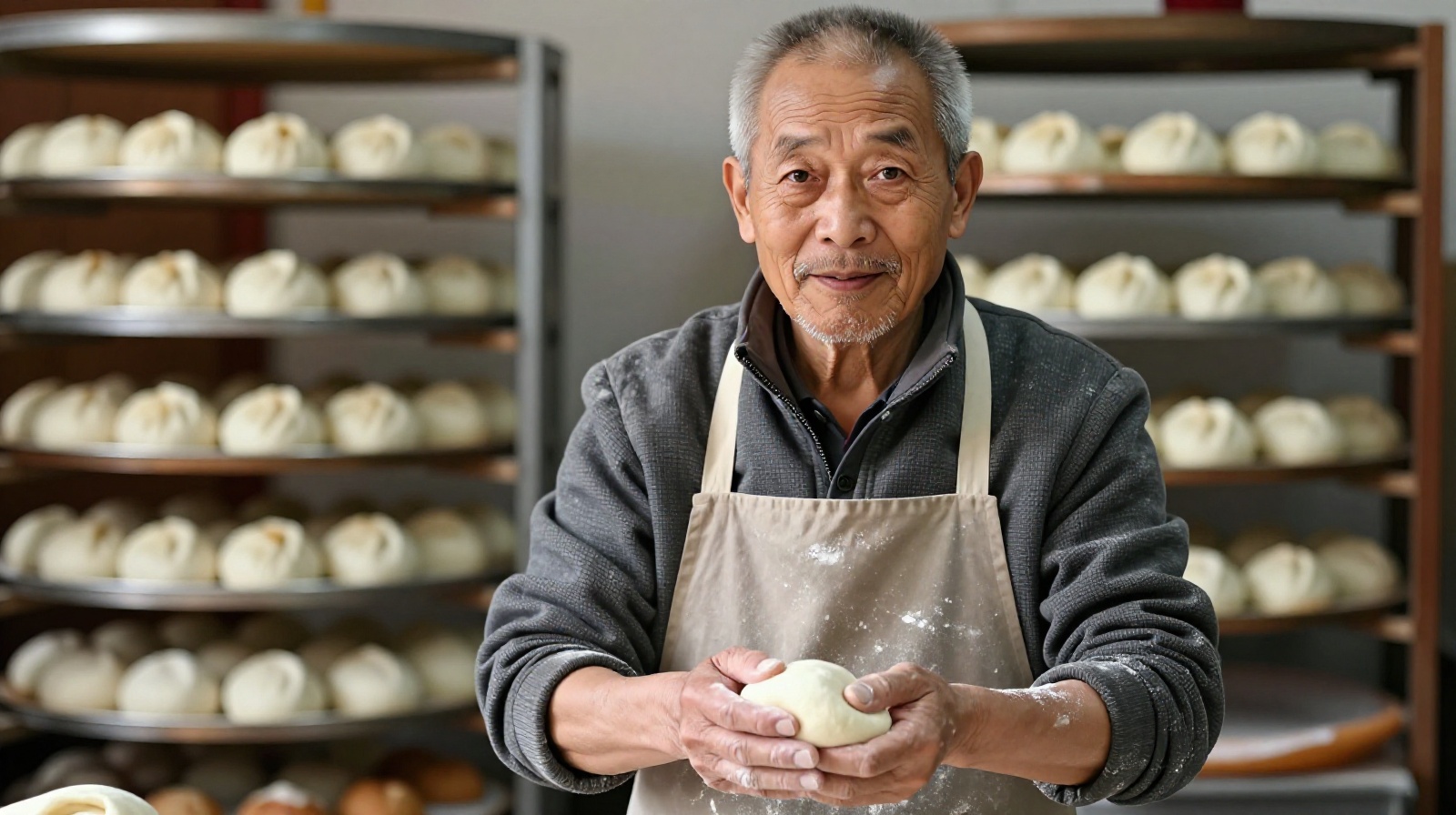
To understand why mian dian matters so much, I spoke with Li Wei, a 62-year-old non-intangible cultural heritage pastry maker in Shanghai. His family has been making buns for four generations.
“The machine can make them fast,” Li told me over a pot of tea, “but it cannot feel the dough.” He explained that experienced hands know exactly when the fermentation is right by touch and smell alone. The challenge today is that young people prefer working in offices or tech companies rather than learning this labor-intensive craft.
However, Li is adapting. His bakery now sells modern flavors like matcha red bean buns and lavender milk tea cakes to attract younger customers. “Tradition isn’t a museum piece,” he said with a smile. “It’s something we must eat today, not just remember from yesterday.”
Your Guide to Trying It Yourself
You don’t need to live in China to experience this universe. If you are visiting, look for Chaoshan tea houses or local breakfast markets early in the morning (around 6:00 AM). The best spots are often crowded with locals, not tourists.
If you want to cook at home, start simple. Make steamed buns from scratch using all-purpose flour and a little yeast. Or, buy high-quality frozen Bao Zi from an Asian grocery store; they steam up perfectly in just 10 minutes. The key is to find a place that sells them fresh or uses traditional fermentation methods.
The next time you think of Chinese food, look past the dumplings. Step into the world of mian dian. It is a delicious, soft, and surprisingly complex universe waiting for you.