

It’s Not Just a Cup; It’s a Three-Piece Puzzle
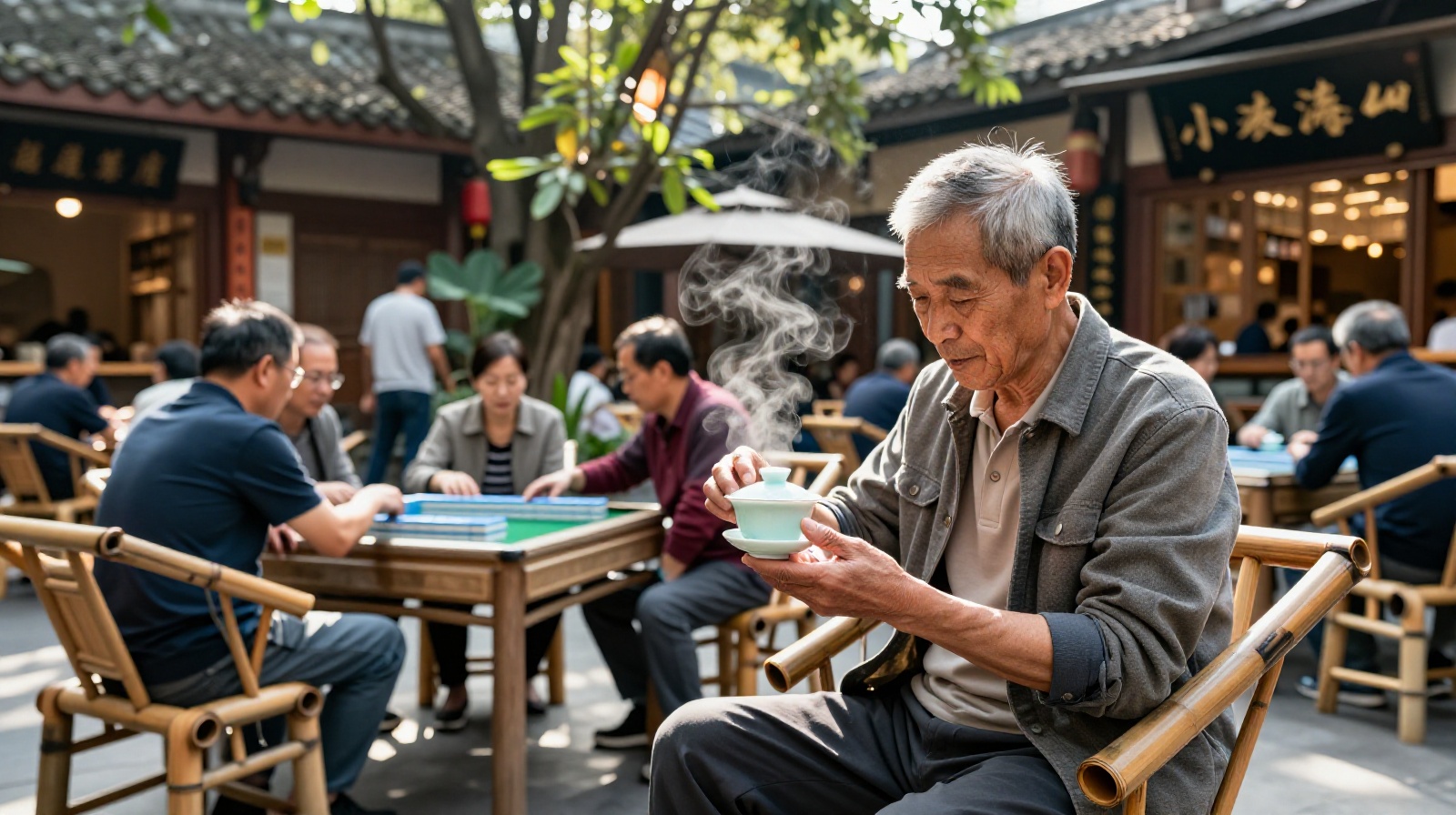
If you walk into a teahouse in Chengdu, you won’t find the sleek espresso machines or the quiet corners of Western cafes. Instead, you’ll see rows of wobbly bamboo chairs and tables cluttered with porcelain sets that look like they belong in a museum but are currently being used to wash down spicy hotpot.
This is the Gaiwan (gai = lid, wan = bowl). Historically designed for emperors and scholars, it consists of three parts: the saucer (the ‘Earth’), the bowl (the ‘Human’), and the lid (the ‘Heaven’). In Chengdu, this isn’t just about aesthetics; it’s a functional tool that turns tea drinking into a game of dexterity.
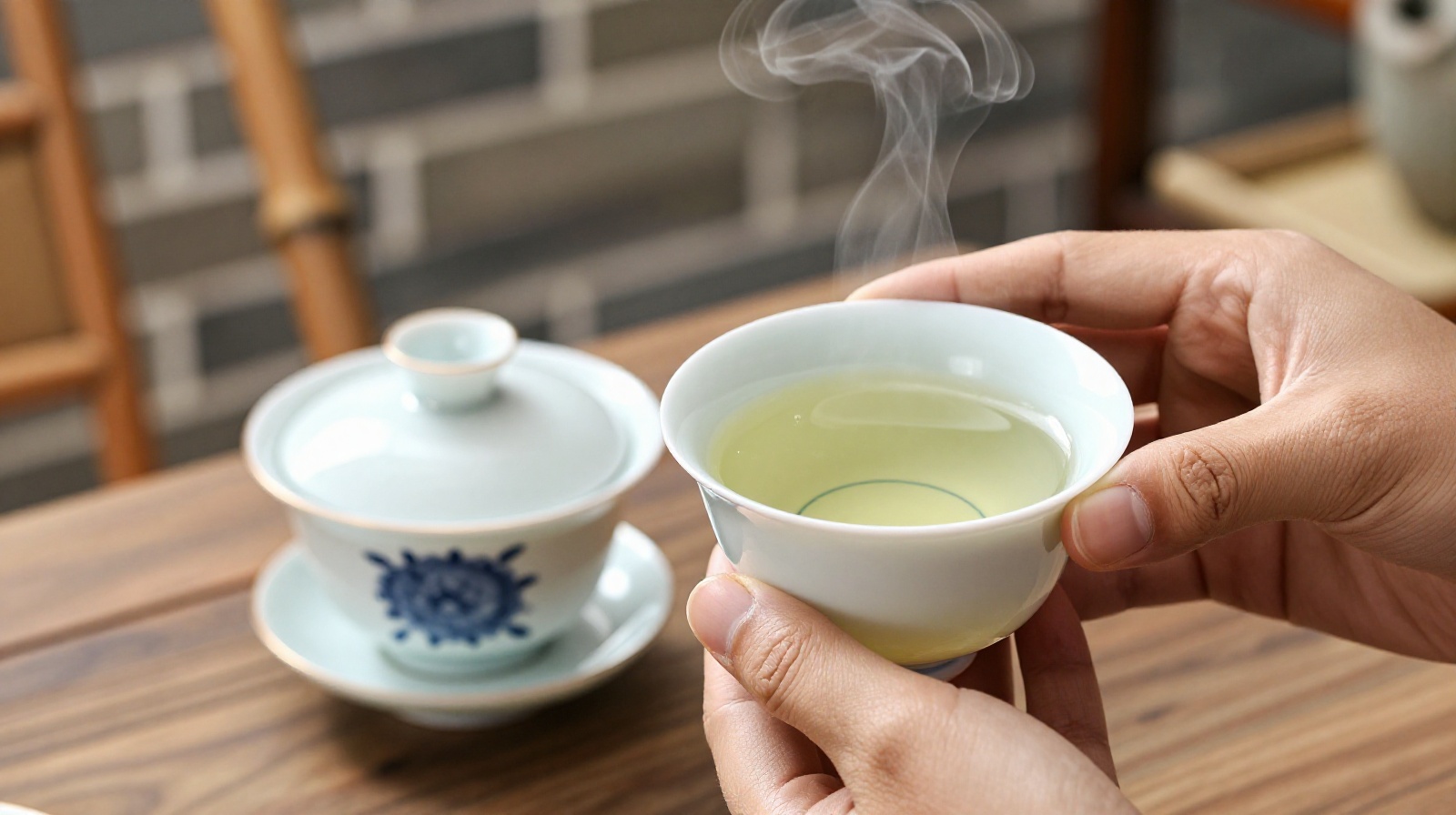
” alt=”A close-up landscape photo of an elderly man in Chengdu holding a traditional three-part porcelain gaiwan teacup on his lap, wearing a casual shirt and sitting on a bamboo chair with steam rising from the tea. The background shows a bustling street scene blurred slightly.” />
The Gaiyan is more than a cup; it’s a cultural tool.
The Mechanics: How to Not Burn Your Fingers
For first-time visitors, the biggest fear isn’t the taste of the tea—it’s the physics. The lid is small and slippery. If you hold it wrong, hot water sloshes over your hand. Here is the secret technique locals use without thinking:
- The Grip: Place your thumb on top of the lid knob (the ‘Heaven’) and your index finger just under the rim of the bowl (the ‘Human’). Your middle finger supports the saucer from underneath.
- The Tilt: To drink, tilt the whole assembly. Do not lift the lid off! The lid is there to filter out tea leaves. By tilting it slightly, you create a gap just wide enough for liquid but too small for leaves to slip through.
It feels awkward at first, like trying to juggle while walking. But once you get the rhythm, the Gaiyan becomes an extension of your hand. It allows you to sip continuously without ever having to stand up or go to a sink.
The Social Ritual: ‘Longmenzhen’ and the Bamboo Chair
Tea in Chengdu is rarely about hydration. It’s about longmen zhen (龙门阵)—essentially, chatting about everything from neighborhood gossip to global politics. The setting defines the vibe.
You sit on a low bamboo chair with a wooden backrest that tilts slightly backward. This isn’t for comfort; it’s for relaxation. You can lean back so far you feel like you’re floating. While you sip, your neighbors might be playing mahjong, getting a foot massage, or watching a local opera performance nearby.
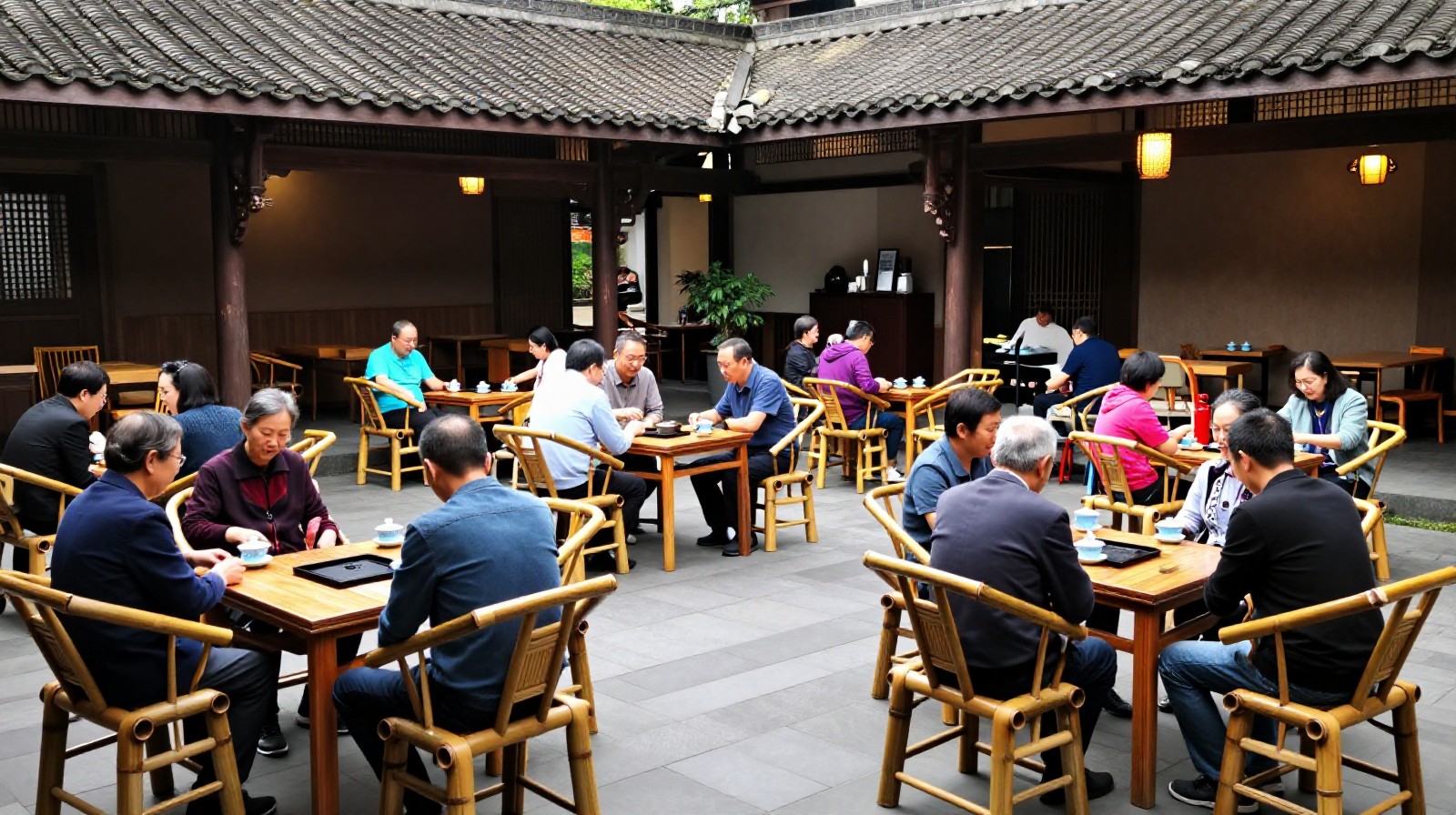
” alt=”A wide landscape shot of a traditional Chengdu teahouse courtyard filled with bamboo chairs and tables where locals are chatting, drinking tea from gaiwans, and children playing in the background under bright sunlight. Green trees surround the area.” />
Tea time in Chengdu is a social event, not a solo activity.
A Day in the Life: What the Locals See
To understand the soul of this ritual, I asked Old Zhang, a 72-year-old regular at a teahouse near Wenshu Monastery. He’s been sipping ‘Maojian’ (green tea) there for forty years.
“When I was young,” he told me, pouring water from a long-spouted kettle with practiced precision, “the only thing we worried about was whether the leaves would bloom. Now? We watch how fast the city changes.”
For Old Zhang, the Gaiyan is a window into time. He watches the construction cranes rise in the distance while sipping his tea, then compares them to the old stone bridges that used to be there. “The tea leaves change flavor with the seasons,” he said, tapping the lid gently against the bowl rim to make a soft clinking sound. “But the act of sitting here, watching the world go by? That never changes.”
Visitor’s Guide: Avoiding the ‘Upside-Down’ Disaster
If you want to blend in, avoid these common mistakes:
- The Upside-Down Bowl: Never flip the bowl over. In Chinese culture, an upside-down cup can symbolize a broken relationship or bad luck. Just sip from the tilted angle.
- Blowing on Leaves: Don’t blow on the tea to cool it down. It’s considered rude. Wait for it to cool naturally or tilt the bowl further.
- The ‘Lid Tap’: If someone pours you tea, tap your index and middle fingers twice on the table to say thank you. This mimics kneeling in gratitude.
Mastery comes with practice. The first time you try, you might spill a bit of hot water. That’s okay. Locals will smile, maybe even offer you a handkerchief. In Chengdu, making mistakes while trying to be a local is often more charming than getting it perfect immediately.