

The Heat on the Streets, The Steam in the Bowls
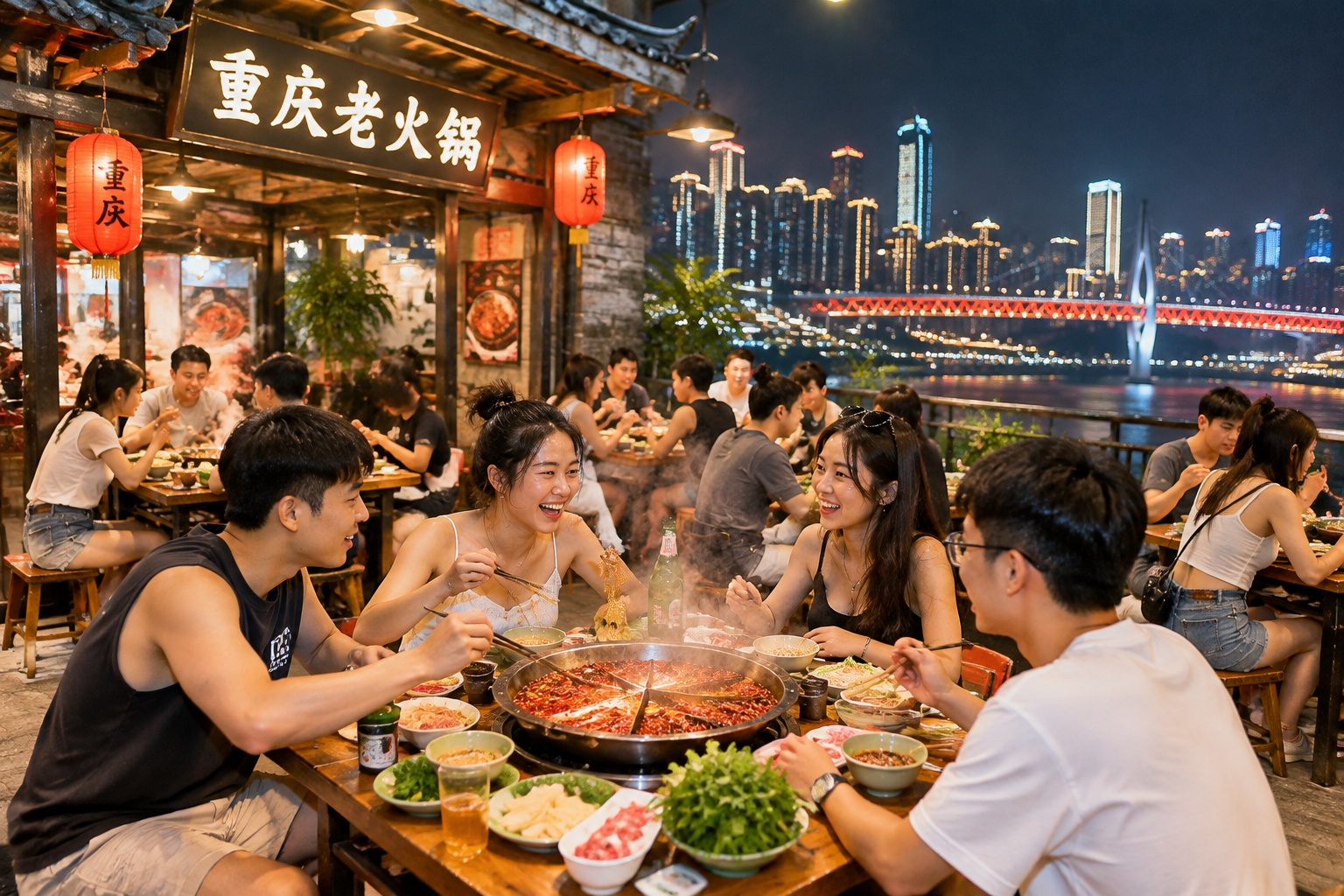
It is August in Chongqing. The humidity hangs heavy like a wet blanket, and the air conditioning in malls is struggling to keep up. Yet, outside a popular hot pot restaurant in the Yuzhong District, a line of people snakes around the corner. They are fanning themselves with paper menus, wiping sweat from their brows, but they do not leave. Inside, the room is thick with steam, the air smells intensely of Sichuan peppercorns and chili oil, and diners are laughing as they dip raw ingredients into boiling red broth.
If you come from a Western country where lunch usually means a cold sandwich or salad in July, this scene might seem irrational. Why would anyone seek out heat when the thermometer hits 35°C (95°F)? To understand this, we have to look past the temperature of the food and see it as a cultural phenomenon rooted in tradition, social connection, and a different definition of comfort.
“Releasing Heat with Heat”: An Ancient Logic
The most common explanation locals give is simple: “Hot pot fights heat.” This concept stems from Traditional Chinese Medicine (TCM), a system that has guided health choices for thousands of years. The logic isn’t about temperature alone; it’s about circulation.
In TCM theory, consuming spicy, hot food in summer induces sweating. This process is believed to expel “dampness” and internal heat trapped by the humid weather. When you eat a bowl of scalding beef or duck offal with intense chili oil, your body reacts by opening pores and releasing moisture through sweat. Many diners describe this as an immediate sense of relief—a physical “reset” that makes the oppressive humidity feel bearable.
It is not unlike how some European cultures drink hot tea in winter to warm up from the inside out. The Chinese summer hot pot ritual is the inverse: using intense external heat to trigger a cooling internal response. For many, the feeling of sweat dripping down their face isn’t misery; it feels like victory over the weather.
The Social Engine of the Summer Night
Beyond health beliefs, there is a practical social reason for the summer hot pot boom. In China, summer evenings are not just about cooling off; they are often the most vibrant time for socializing. The day is too hot for long walks or outdoor sports, so people retreat indoors to gather.
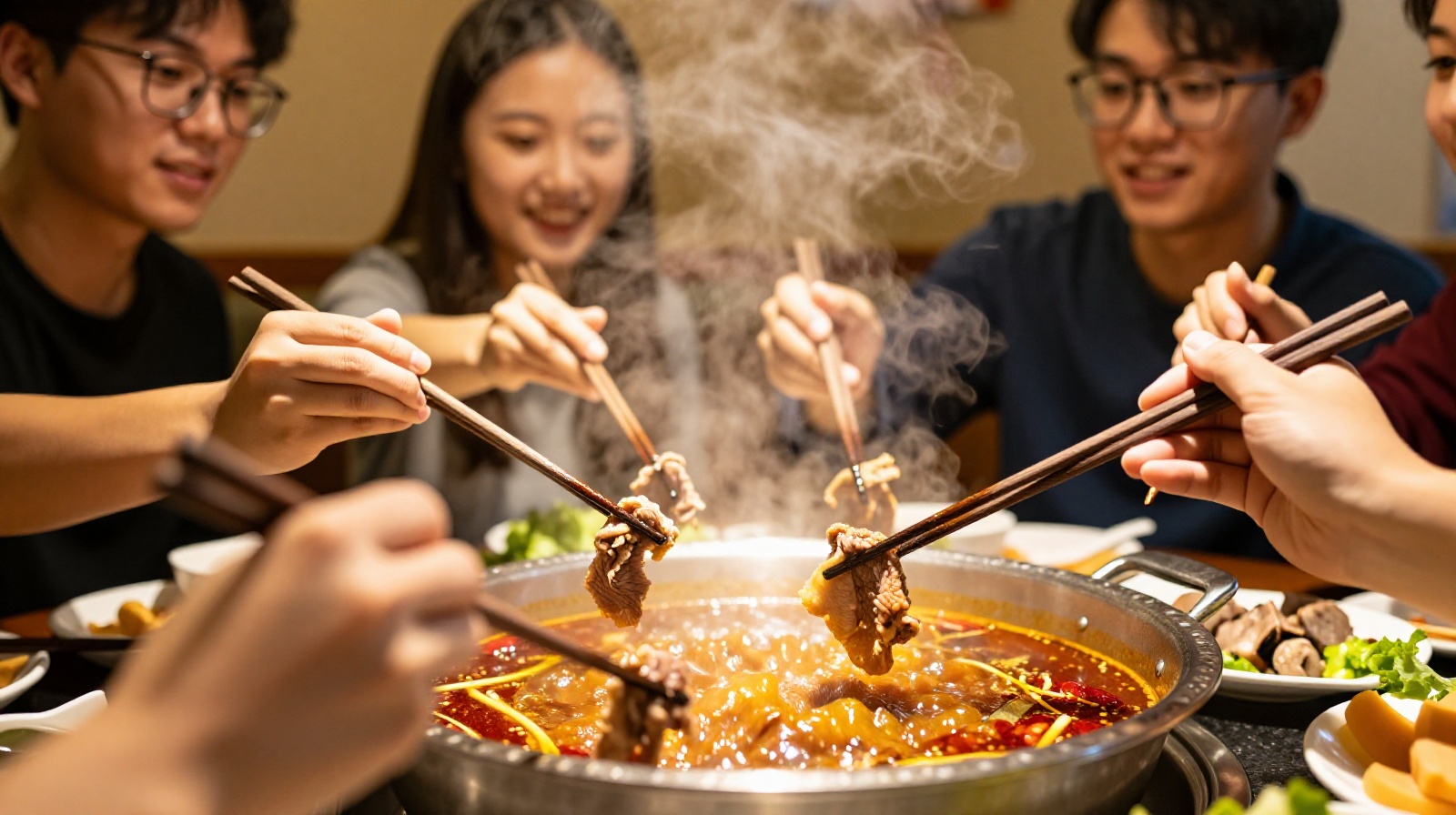
Hot pot is uniquely suited for this. Unlike a Western steak dinner where everyone orders their own plate and eats in relative silence, hot pot requires cooperation. Everyone gathers around a single table, sharing a communal pot. You cook the food, but you also watch your friends’ plates to see if they need more ingredients added.
This shared activity breaks down social barriers. It encourages conversation that lasts for hours. In a city where young professionals often work long hours and live in compact apartments, the hot pot restaurant becomes a living room extension—a place to unwind, drink beer or soju (or baijiu), and reconnect without the pressure of formal dining etiquette.
It’s Not Just One Flavor: Regional Variations
If you think all Chinese hot pots are scalding red broths, you haven’t seen the summer menu. While Sichuan style dominates the conversation, different regions have adapted their versions for the heat.
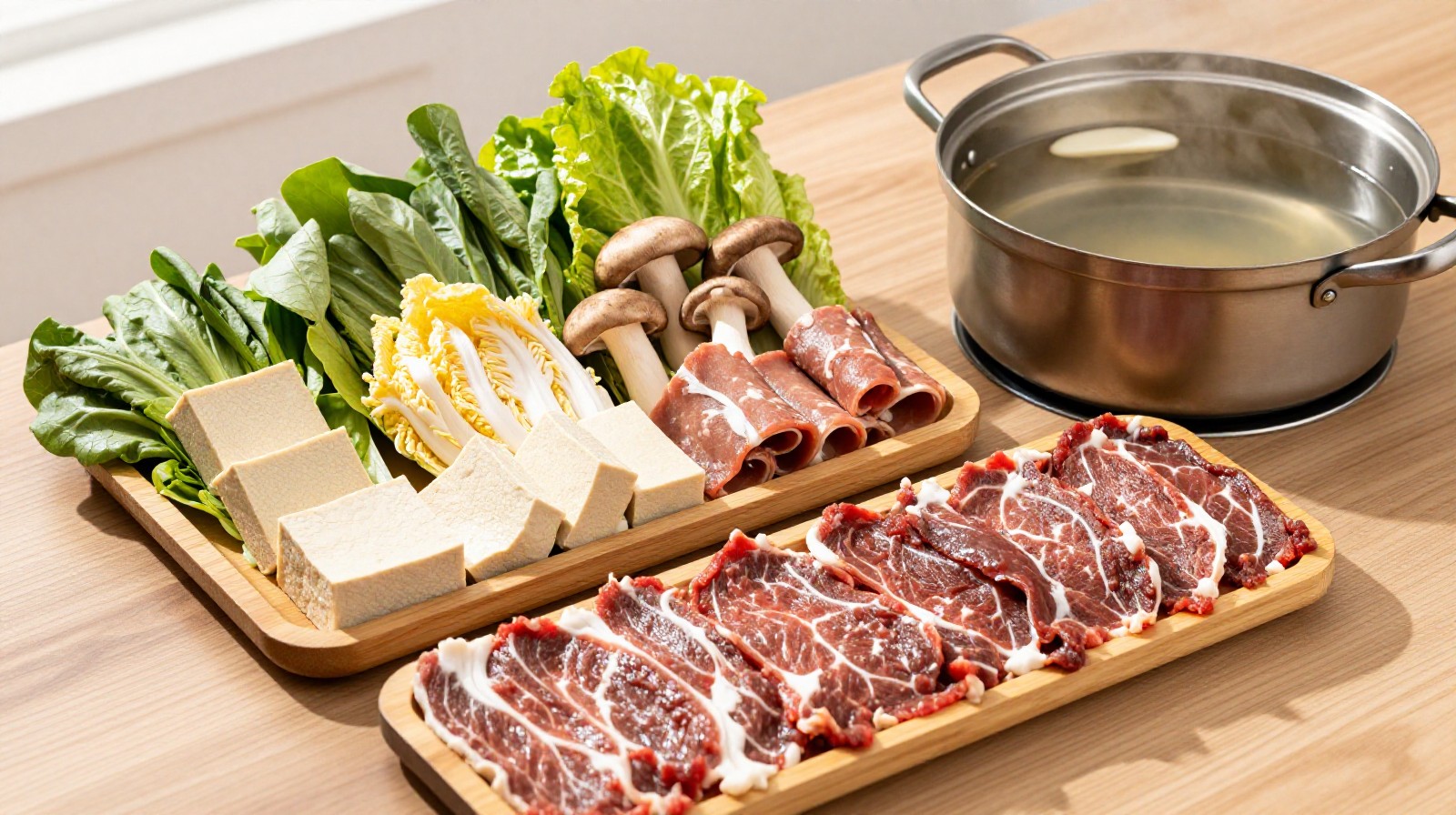
In Guangzhou and Fujian, the climate is even more humid, so diners often prefer “Cantonese Beef Hot Pot.” The broth here is clear, simmered with beef bones and rock sugar, served almost like a soup. It is hot enough to steam but lacks the burning chili of the west. In Chengdu, you might find “Cold Pot Fish” (Leng Guo Yu) in summer—a dish where fish is poached and then soaked in a spicy sauce that has been cooled down, offering a spicy kick without the boiling heat.
These variations show that Chinese cuisine is not monolithic. It is highly adaptive to local conditions and seasonal needs. The core idea remains: food should bring people together and align with how the body feels in that specific moment.
“The More I Sweat, the Better I Feel”
I spoke with Li Wei, a 28-year-old software engineer who works in Shenzhen’s tech hub. He told me he has been eating hot pot every Friday for three years. “When it is that hot outside, my AC unit feels like it’s fighting a losing battle,” he said. “I go to the restaurant, order a spicy broth, and within ten minutes, I am sweating. My friends and I are laughing so hard we don’t even notice the heat anymore. By the time we leave, I feel completely refreshed.”
Li Wei’s experience highlights a psychological shift. The discomfort of the summer heat is constant and draining. Eating hot pot gives people agency over that feeling. They choose to embrace the heat for 90 minutes, transform it into sweat, and then step back out into the cool night air with a sense of accomplishment.
For many Chinese, this ritual is not just about hunger; it is a way to reclaim control over their day in a city that never sleeps. The steam rising from the pot is less about cooking meat and more about warming up the soul before heading back into the humid night.
Start the discussion at forum.chinacomes.com