
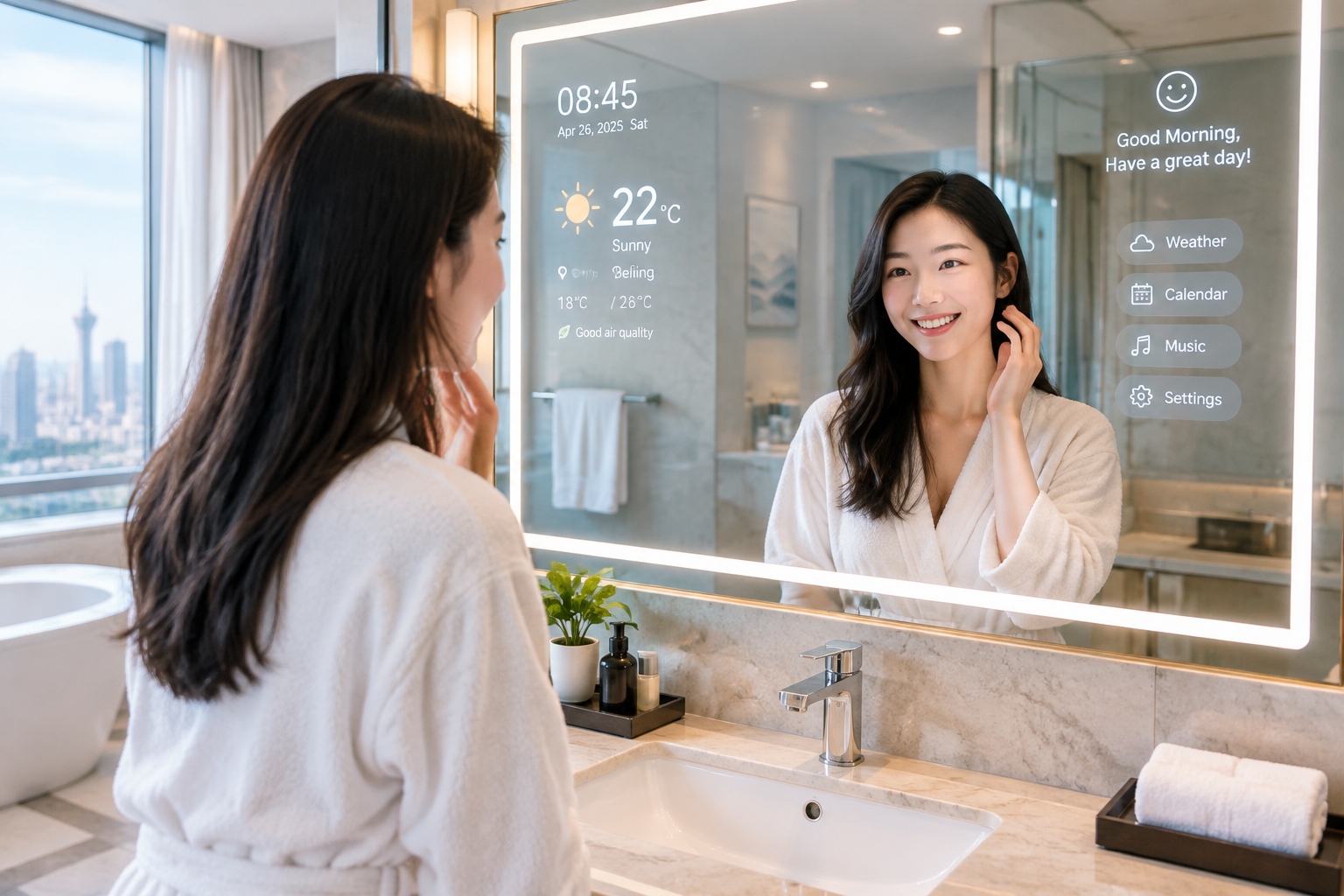

A Mirror That Knows More Than You
It was 7:00 AM in Chengdu when I walked into my hotel room. The view of the city skyline was decent, but nothing compared to what stared back at me from the bathroom wall. As I brushed my teeth, a large smart mirror lit up with soft blue light. It didn’t just show my reflection; it displayed the current weather—24°C and partly cloudy—along with a forecast for the next three days.
Then, a gentle voice spoke in perfect English: “Good morning. Your flight to Beijing is on time. The air quality today is moderate. Would you like me to order breakfast?” I paused, toothbrush in hand. This wasn’t a scene from a sci-fi movie; it was a standard room at a mid-range hotel in China’s second-tier city.
For Western travelers used to checking their phones for every detail, this level of integration feels almost magical. But here, it’s just the new normal. The “smart mirror” is part of a broader ecosystem where AI and IoT (Internet of Things) are woven into the fabric of daily life, not as gimmicks, but as practical tools.
Beyond the Room: Robots in the Hallway
After breakfast, I needed more coffee. Instead of calling room service or waiting for a human waiter to carry trays down five flights of stairs, I tapped “Order” on the mirror’s interface. Within minutes, a small, boxy robot with glowing eyes navigated the hotel corridor.
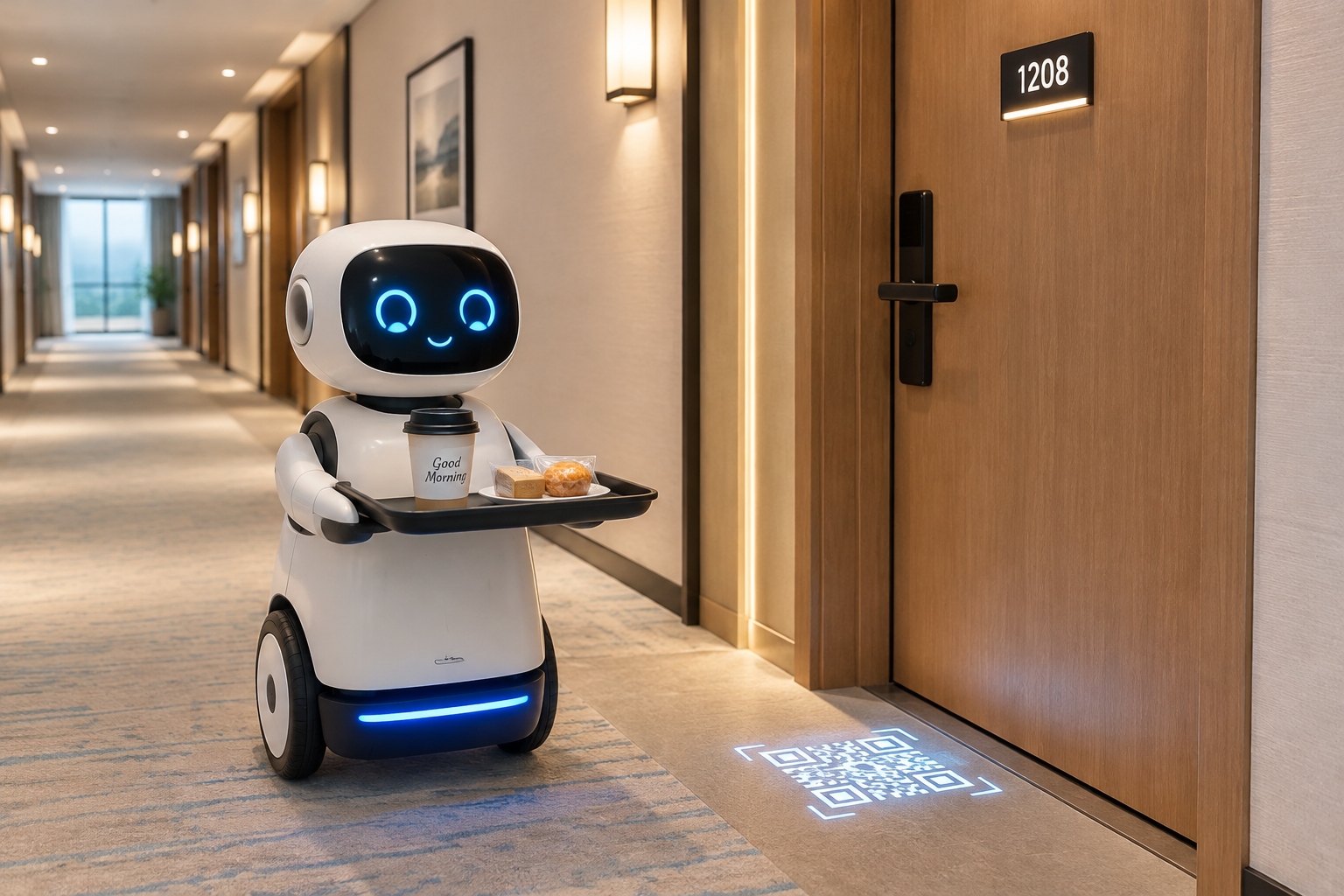
A friendly delivery robot moves smoothly along a modern hotel hallway, carrying a coffee cup and snacks, approaching a guest room door.
The robot stopped at my door, beeped softly, and projected a QR code. I scanned it with my phone to unlock the compartment. No cash, no awkward small talk, just instant delivery. This is how logistics work in China: fast, contactless, and surprisingly efficient.
These robots aren’t replacing staff; they are handling the repetitive tasks so humans can focus on what matters more—personalized service. In many hotels across Shanghai, Guangzhou, and Chengdu, you’ll see these silver companions zipping through corridors while human staff greet guests with warm smiles at the front desk.
The Human Touch Behind the Tech
Despite the high-tech environment, the heart of the hotel remained deeply human. When I mentioned to the receptionist that I was a first-time visitor and had trouble with spicy food, she didn’t just nod; she immediately flagged my profile in the system.
The next morning, when the smart mirror suggested local breakfast options, it specifically filtered out dishes with chili peppers. The robot delivered the meal without any spice warnings because the staff had already prepared it that way.
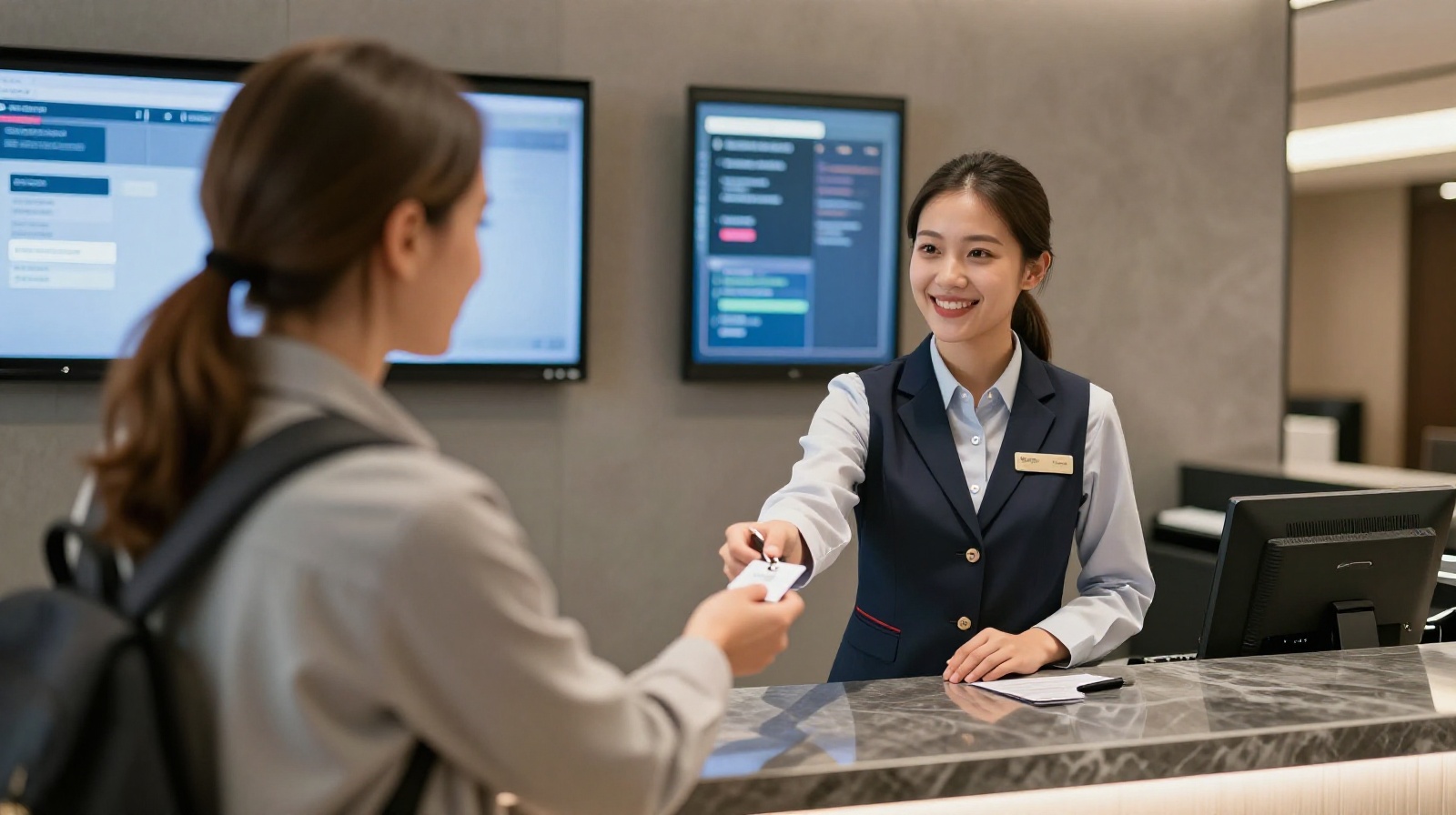
A smiling hotel receptionist in a modern lobby assists a foreign guest, showing how technology and personal care work together in Chinese hospitality.
This balance is key. Technology handles the data, the logistics, and the routine. Humans handle the empathy, the nuance, and the connection. For international travelers, this means you get the speed of automation with the warmth of traditional hospitality.
What This Says About Modern China
This hotel experience isn’t an isolated luxury; it’s a reflection of how technology has permeated everyday life in China. From cashless payments on street corners to autonomous delivery drones in rural areas, the integration is seamless.
For many abroad, there’s a misconception that China is only about fast growth or massive factories. But for ordinary citizens and travelers, it’s about convenience. It’s about being able to order a hot meal at 10 PM from a robot, check your health data on a smart mirror, and navigate a city without carrying cash.
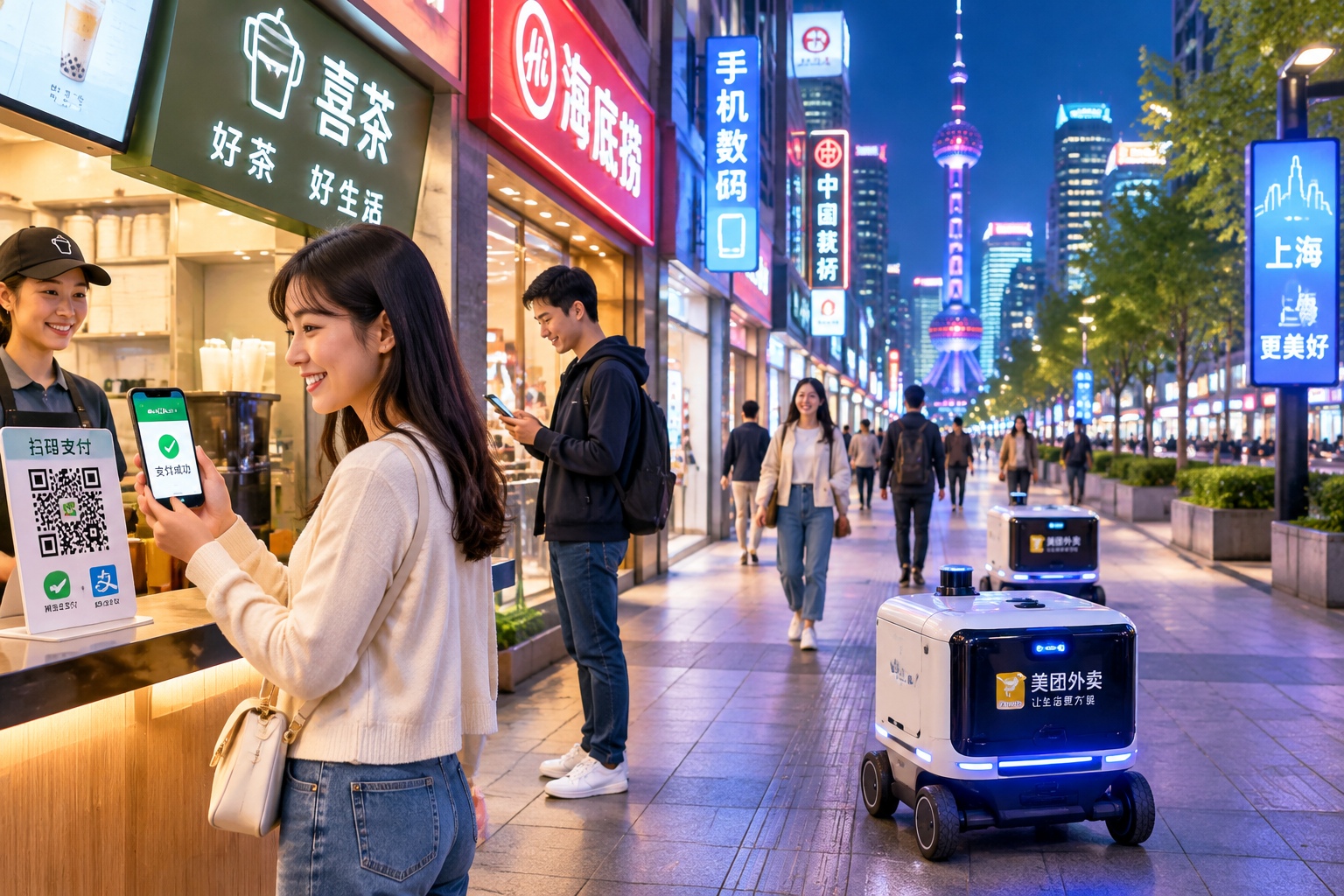
A bustling street scene in a Chinese city at night, showing neon signs, people using smartphones for payments, and delivery robots moving along the sidewalk.
The “smart mirror” is just one small piece of a much larger puzzle. It represents a society that has embraced digital tools to solve real-world problems, making life smoother for everyone involved.
Tech as a Bridge, Not a Barrier
As I packed my bags the next day, I realized something important. Technology in China isn’t about creating a cold, futuristic world where humans are replaced by machines. Instead, it’s designed to be invisible when you need it least and helpful when you need it most.
The smart mirror didn’t replace the human element; it enhanced it. The delivery robot didn’t stop the staff from being friendly; it freed them up to be more attentive. For any traveler curious about China today, this is the invitation: come see how technology serves people, not the other way around.
Start the discussion at forum.chinacomes.com