


The Middle Way Isn’t Weakness
In a bustling office in Shanghai, two managers are locked in a heated debate. One pushes for aggressive expansion; the other insists on strict cost-cutting. A Western observer might expect a winner-takes-all vote or a polarized standoff. Instead, they take a break, grab coffee, and return with a third option: a phased rollout that moderates risk while allowing for measured growth.
This isn’t just indecision. It’s the ‘Doctrine of the Mean’—known in Chinese as Zhongyong (中庸). For centuries, this Confucian philosophy has guided how people navigate conflict, make business decisions, and handle family disputes. To an outsider trained in binary logic (right vs. wrong, win vs. lose), it can look like hedging or even laziness. But to the Chinese mind, it is a sophisticated form of risk management.
More Than Just Compromise

A diverse group of colleagues discussing over a map with sticky notes, seeking a balanced solution in a modern office setting.
The term ‘Zhongyong’ is often mistranslated as ‘mediocrity.’ But the original meaning is closer to ‘adapting to change while maintaining balance.’ It doesn’t mean finding the average; it means finding the right point at the right time. In a country where policies can shift rapidly and economic conditions fluctuate, staying rigid often leads to failure.
Consider the family dinner table. When parents want their child to take a stable civil service job, but the young adult dreams of starting a tech startup, open rebellion is rare. Instead, families engage in what looks like endless negotiation until they find a ‘middle path’: perhaps launching the business part-time while keeping a day job, or delaying the startup for two years after gaining savings.
Stability in a Fast-Changing World
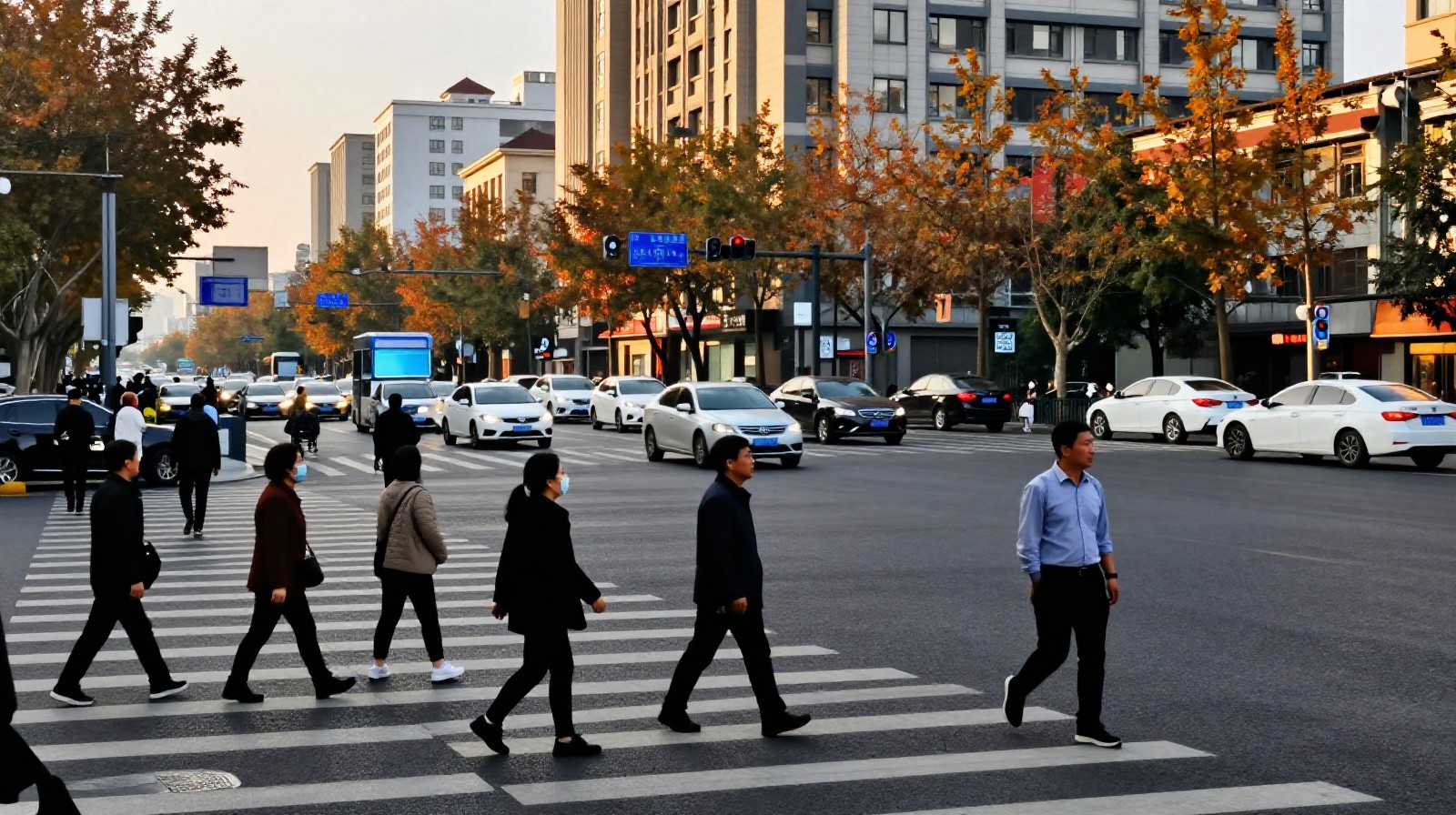
A busy Chinese intersection with pedestrians crossing calmly amidst traffic, symbolizing order and balance in urban chaos.
This mindset is crucial for China’s stability. While Western societies often debate issues through polarized political battles that can stall progress, the ‘Zhongyong’ approach seeks to absorb shockwaves. In negotiations, a Chinese business partner might not say ‘no’ outright if a deal feels too risky. Instead, they will propose a pilot program or a delayed start—keeping the door open while protecting their interests.
This isn’t about being indecisive; it’s about avoiding the extreme that could cause collapse. It allows society to absorb rapid technological and social changes without fracturing. When a new platform economy emerges, for example, regulators don’t always ban it immediately (the extreme of prohibition) nor do they let it run wild (the extreme of deregulation). They often find a regulatory middle ground that curbs abuse while allowing innovation to continue.
Why This Works Differently Than Western Logic

A close-up of a traditional Chinese scale balance next to a modern smartphone, representing the blend of ancient philosophy and modern technology.
If you come from a legalistic background where every dispute must have a clear judge and a winner, this can feel frustrating. Western decision-making often prizes clarity: ‘Is it right or wrong?’ But in China, the question is often, ‘Will this hold together under pressure?’
This cultural difference explains why Chinese consumers might wait for prices to drop rather than buy at peak demand, or why neighbors might resolve disputes through community mediation before calling the police. It’s a pragmatic approach that values long-term harmony over short-term victory.
A Dynamic Wisdom, Not a Stagnant Rule
Ultimately, ‘Zhongyong’ is not about being average. It is an active, dynamic skill. It requires reading the room, understanding the context, and adjusting your position continuously to find that sweet spot where stability meets opportunity. In a world facing constant uncertainty, this ancient philosophy offers a surprising lesson: sometimes, the most decisive move is the one that refuses to choose an extreme.