

Beyond the Dust: The Taste of Ningxia
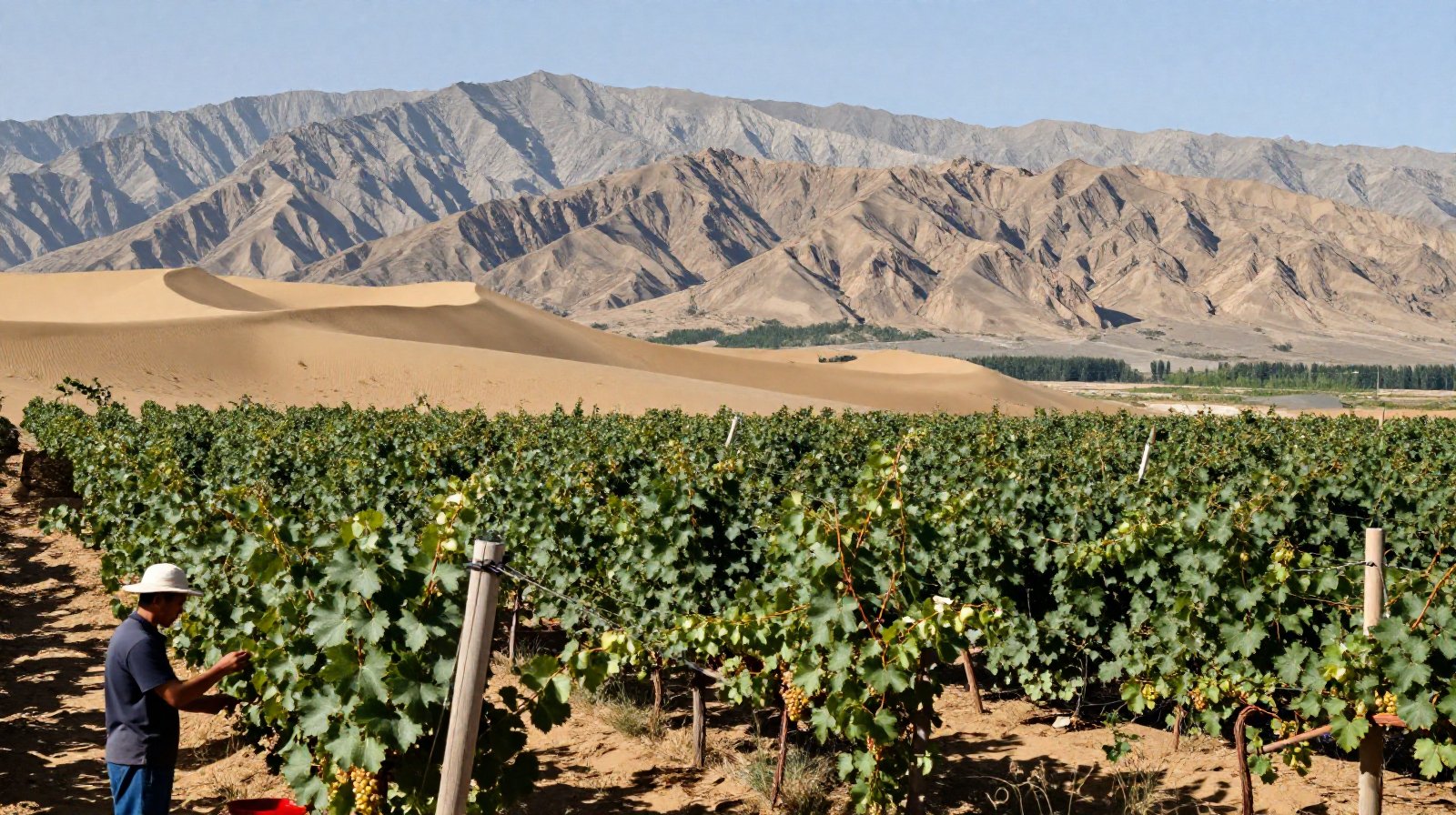
Li Wei, a winemaker in Helan Mountain East Foothill, stands at the edge of his vineyard. One side is a vast expanse of shifting yellow sand dunes; the other, rows of lush, green Cabernet Sauvignon vines stretch toward the cold grey peaks of the Helan Mountains. It sounds like an impossible contradiction: wine grapes in a desert? Yet, this is exactly what has happened in Ningxia, China’s northwestern autonomous region.
Just two decades ago, this area was known for nothing but dust storms and sparse agriculture. Today, it hosts over 250 wineries and produces more than 70% of China’s premium red wine. The transformation is not just a statistic; it is visible in the crisp air tasting notes that have won gold medals at competitions in Paris and London.
The Secret Ingredient: A Desert Terroir
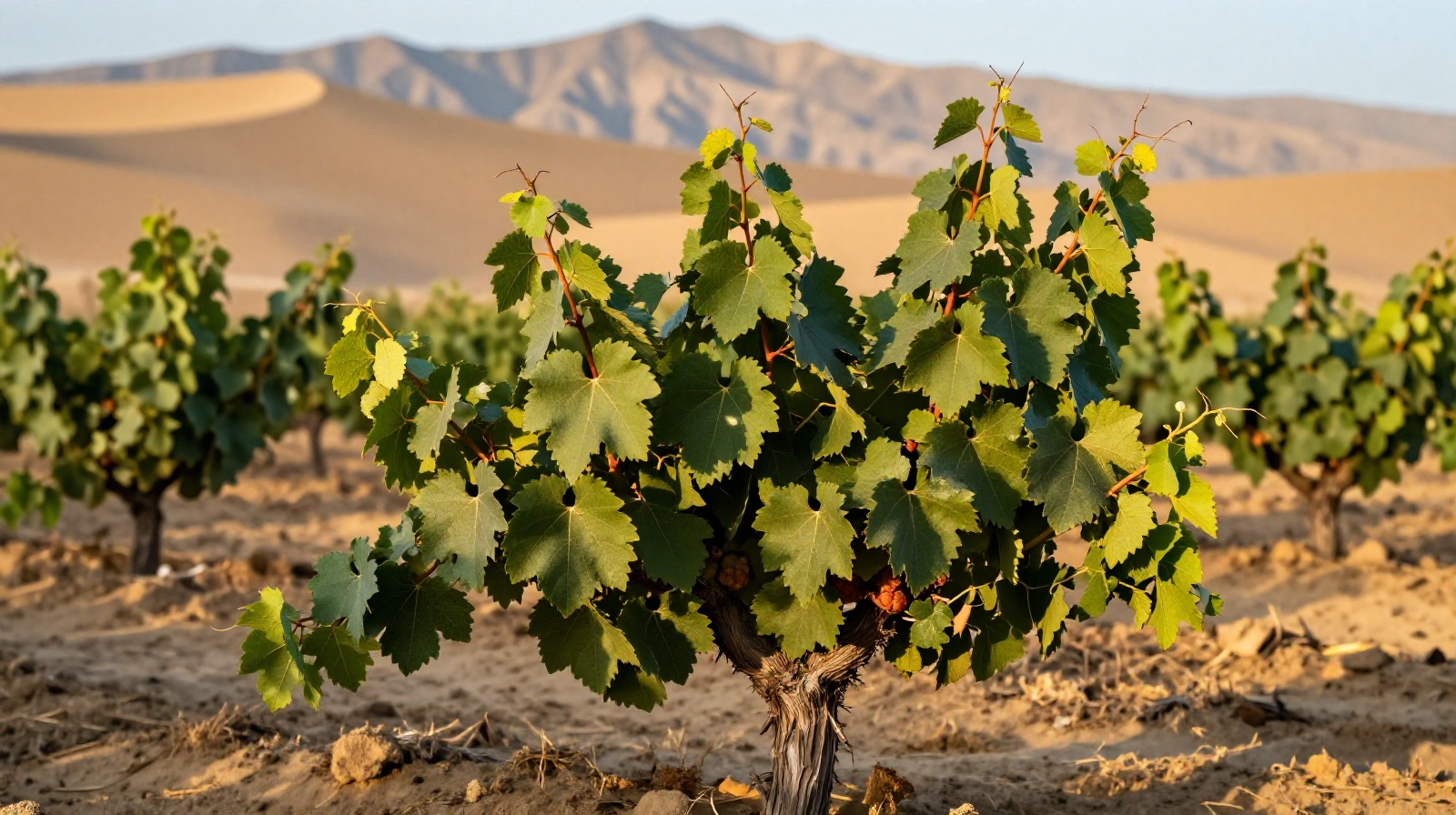
How does one grow high-quality grapes in such an arid environment? The answer lies in a unique combination of geography often called ‘terroir’—the specific set of environmental conditions that give wine its character.
Ningxia’s secret is the Helan Mountains themselves. Located just 40 kilometers west of the vineyards, these mountains act as a massive natural windbreak, shielding the vines from harsh cold winds sweeping down from Siberia. The desert sand provides excellent drainage, forcing the grapevines to dig their roots deep in search of water, which concentrates flavors and sugars.
Furthermore, the region enjoys more than 3,000 hours of sunshine annually and a significant temperature difference between day and night. This diurnal shift allows grapes to ripen during the hot days while retaining acidity at night—a crucial balance for producing wine that is both fruity and structured.
From Local Experiment to Global Recognition
The industry didn’t happen overnight. In the early 2000s, Chinese government officials and French viticulture experts began collaborating on a pilot project. They realized that while the climate was extreme, it shared key similarities with famous wine regions like Bordeaux.
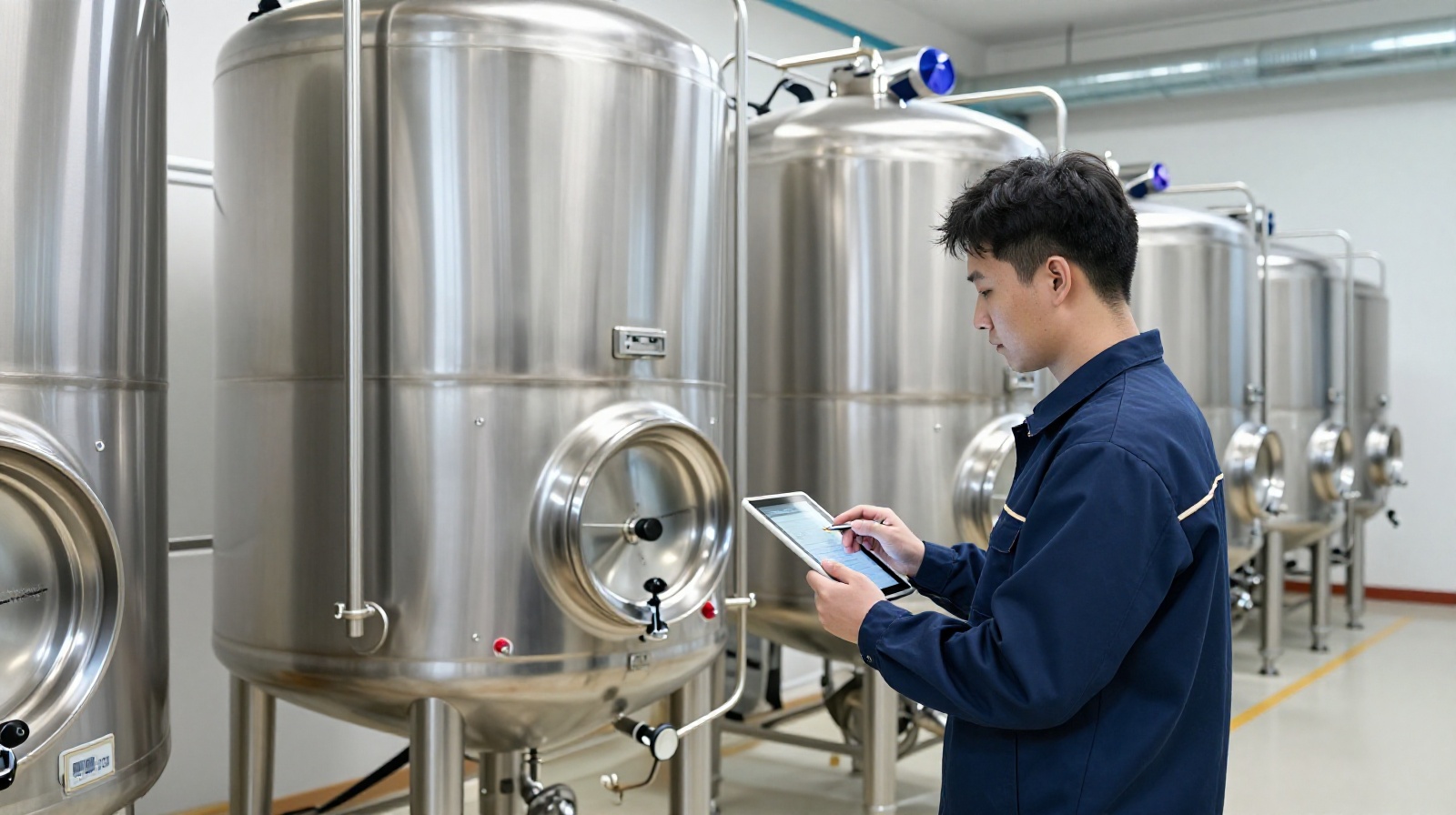
Today, Ningxia’s reputation is solidifying rapidly. At the 2016 Decanter World Wine Awards, Ningxia wines swept the top three spots in their category. Since then, international investment has poured in. Wineries are no longer just local family businesses; they are high-tech facilities using AI-driven monitoring systems to track soil moisture and temperature in real-time.
This success is reshaping China’s agricultural map. It proves that technology and scientific planning can turn ‘unusable’ land into economic assets, a model now being studied by agronomists across Central Asia and the Middle East.
A New Node on the Silk Road
Ningxia’s rise coincides with the Belt and Road Initiative (BRI), China’s massive infrastructure and trade strategy. Historically, this region was a crossroads for ancient camel caravans trading silk and spices. Today, it remains a critical logistics hub connecting western China to Central Asia and Europe.
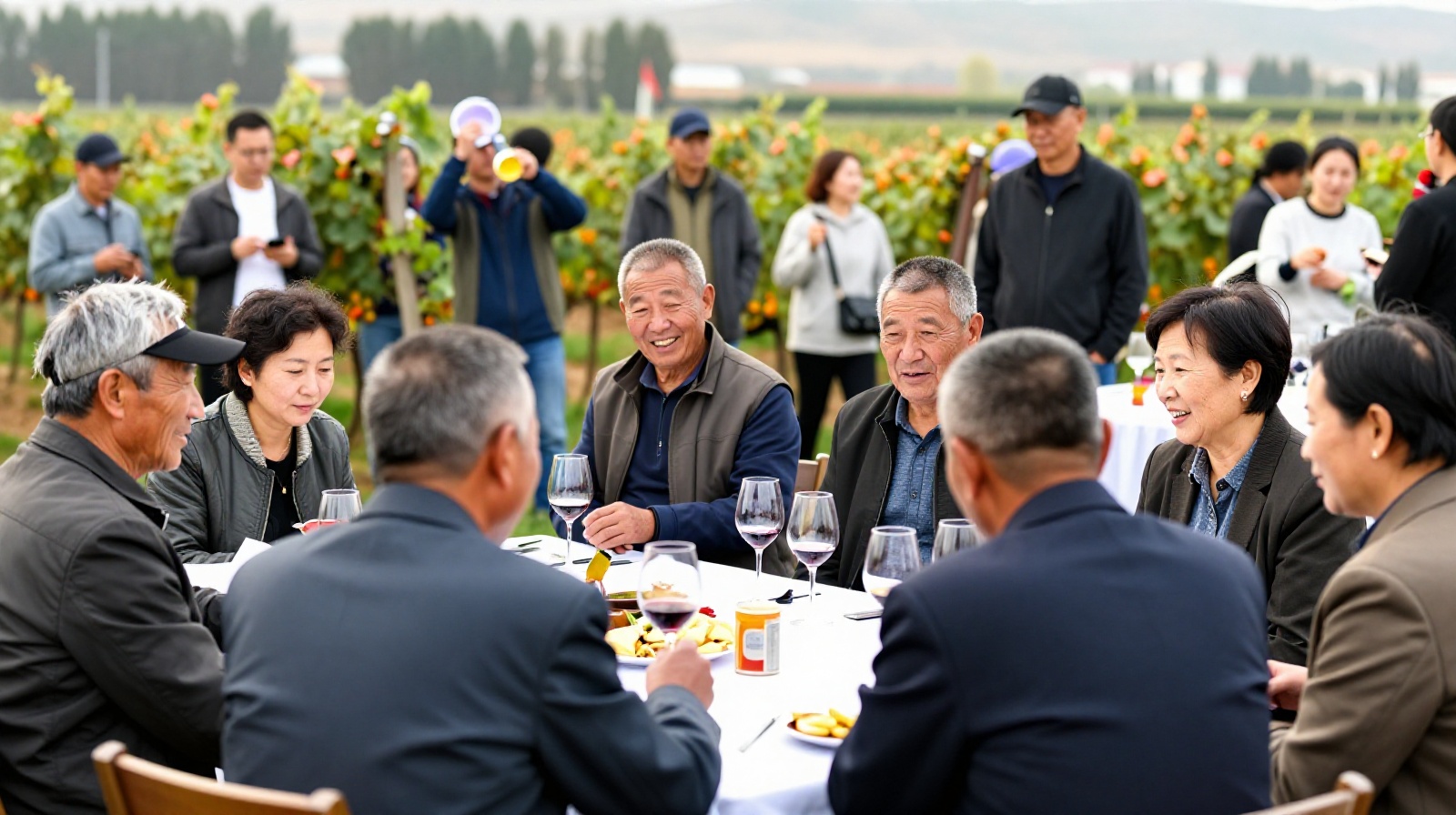
But the new Silk Road here isn’t just about steel rails or cargo ships. It’s about cultural exchange through wine. Ningxia has established wine tourism routes that attract visitors from across the BRI countries. Local wineries host international tastings, turning a glass of red into a diplomatic tool that fosters understanding between cultures.
Changing Lives in the Village
The economic impact ripples down to the local communities. In villages like Helan County, young people who once migrated to coastal cities for factory work are returning home. The wine industry offers skilled jobs that pay better than traditional farming—positions as vineyard managers, sommeliers, and marketing specialists.
In a small village near Yinchuan, the local cooperative built a community center funded by vineyard profits. It now serves as a place for children to study and adults to learn new skills. The desert landscape is no longer seen just as an obstacle; it is a source of pride and livelihood.
The story of Ningxia is not about conquering nature, but working with it. By leveraging its unique desert conditions and strategic location, this region has turned a dusty frontier into a vibrant hub of innovation and trade. For the world watching China’s development, Ningxia offers a quiet but powerful lesson: even in the most unlikely places, opportunity can bloom.