

Beyond the Postcard: A Morning in Dali
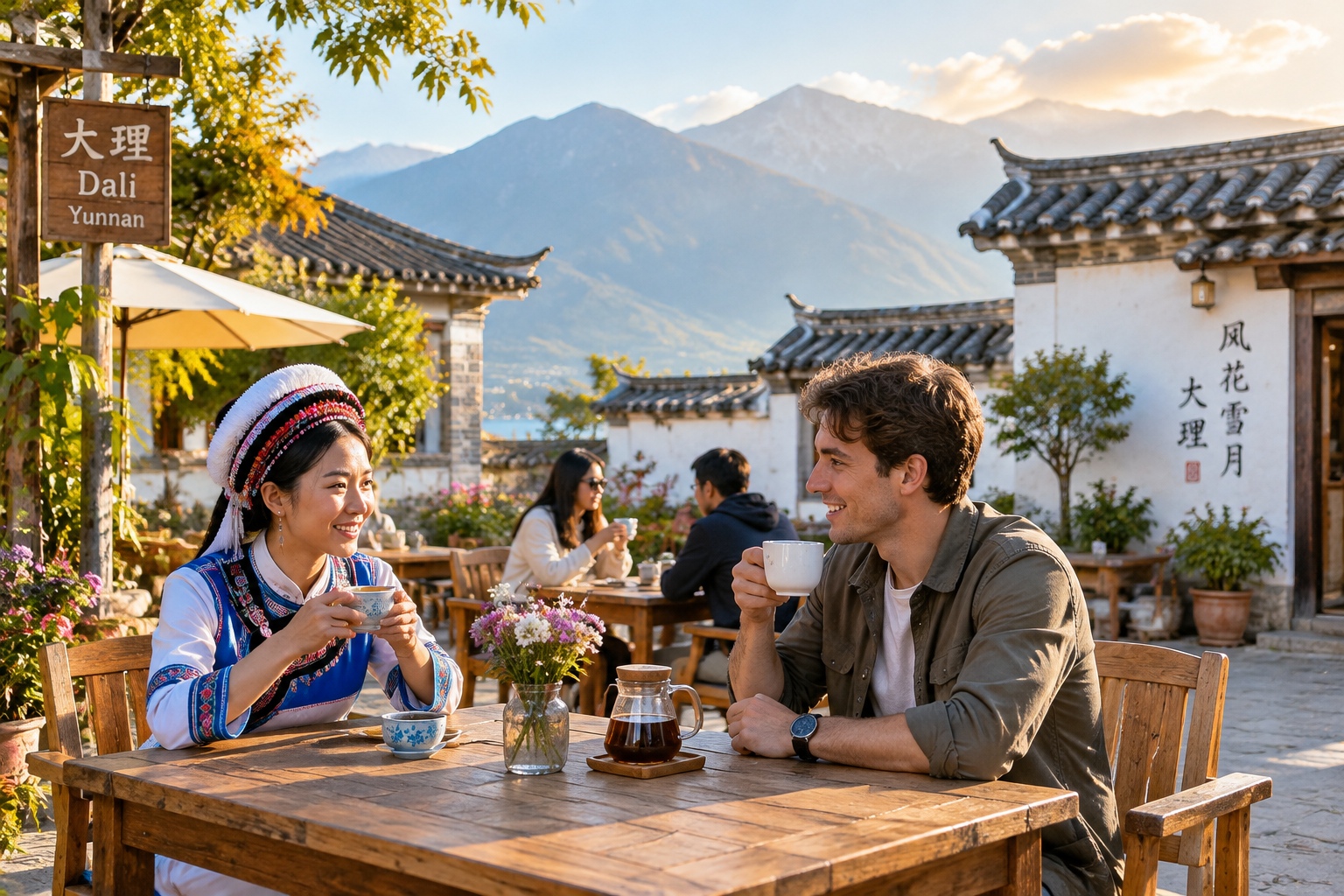
The smell hits you first. It’s not exhaust fumes or street food oil, but roasted tea leaves and brewing coffee beans mixing in the cool morning air of Erhai Lake. I sit on a low wooden stool outside Yunshui Ge, a café in Shuanglang village. The owner, Li Wei, 34, is wiping down a table made from reclaimed timber. Behind him, a white-washed wall features a mural painted by a former graphic designer who moved here from Beijing in 2018.
Across the small courtyard, an elderly Bai woman sits on a bamboo chair, sipping dark tea from a glass mug. She watches a young man in his twenties type furiously on a laptop connected to a portable solar generator. This is the daily rhythm of Dali: a seamless blend of ancient traditions and hyper-modern connectivity.
For decades, Western travelers have called this place “The Hippie Capital of China.” But today, the term feels both accurate and outdated. It’s no longer just about long hair and peace signs; it’s a complex economic ecosystem where global creatives, local farmers, and digital nomads coexist.

Tracing the Roots: From 90s Backpackers to Digital Nomads
The story begins in the early 1990s. When China’s internet was still a luxury and travel visas were hard to get, Dali’s mild climate and stunning landscape became a magnet for Western backpackers seeking an alternative to the industrialization sweeping Beijing and Shanghai.
“They came looking for silence,” says Zhang Min, a local historian who grew up in Dali. “Back then, it was just a few foreigners renting rooms from locals, living on instant noodles and buying fresh fish at the market.”
By the late 90s, these transient visitors started settling down. They opened small cafes, art studios, and craft shops. The first wave of expats were often artists or musicians who couldn’t afford life in big cities. They found a community where their unconventional lifestyles were not just tolerated but welcomed.
Fast forward to today: the population has shifted dramatically. While the original hippies have aged or left, new generations of “digital nomads” and creative professionals from Shanghai, Shenzhen, and even abroad have arrived. They don’t just want a vacation; they want to work remotely while living in a place that feels authentic.
This migration has created a unique demographic mix. In Dali’s old town and nearby art villages like Xiaochangding, you can find co-working spaces powered by solar energy next to traditional Bai stone houses. The economic impact is tangible. Local farmers now rent out rooms for 20% more than the market rate because of the high demand from these remote workers.
The Collision and Fusion of Cultures
Life in Dali isn’t always a harmonious utopia. There are friction points where Western ideals clash with local realities.
In the art village of Shuanglang, tensions occasionally flare between new arrivals who want to preserve “the vibe” and locals who feel pushed out by rising rents. Some newcomers criticize the traditional lifestyle as “backward,” while some locals view the expats as privileged tourists who don’t understand the struggles of rural life.
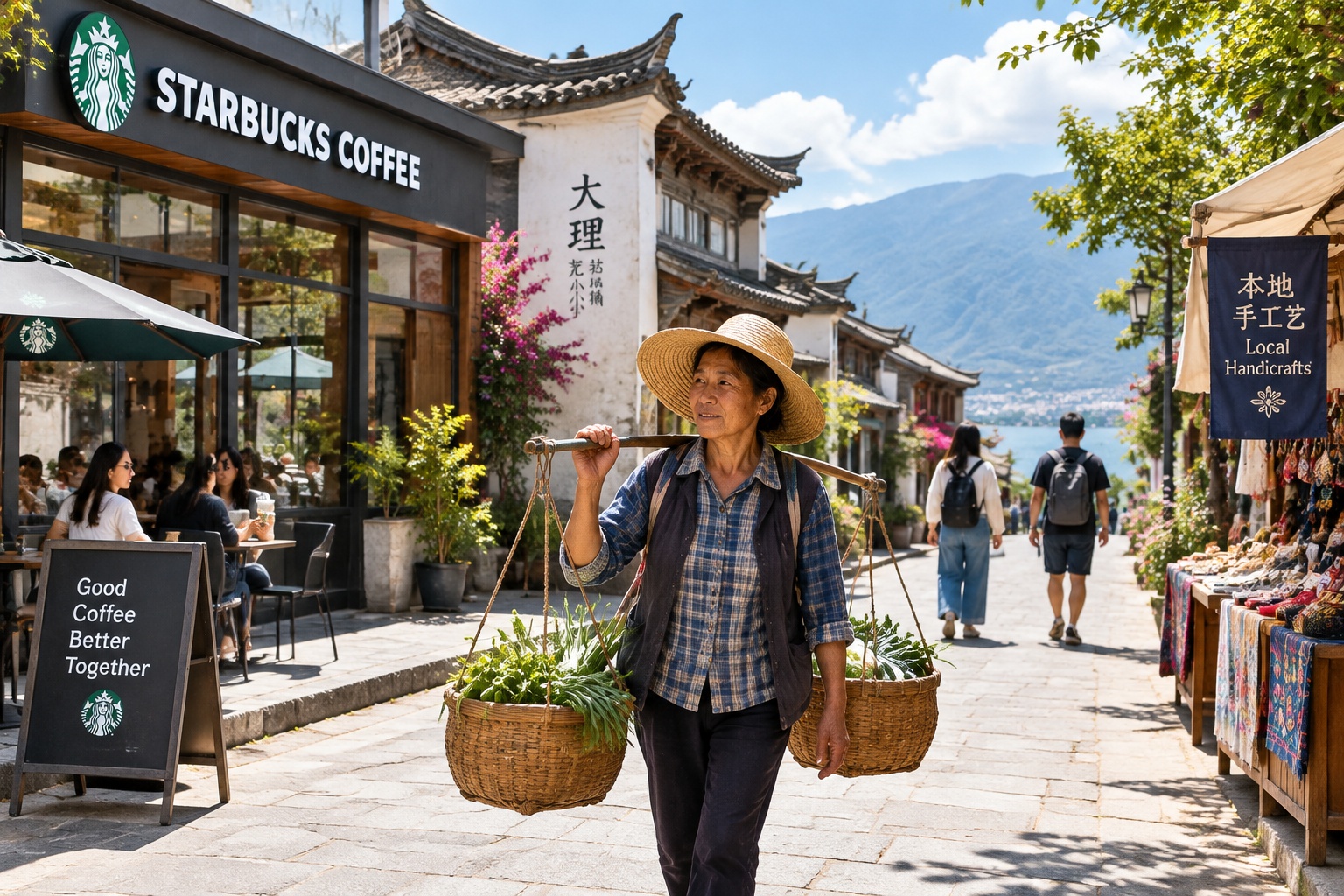
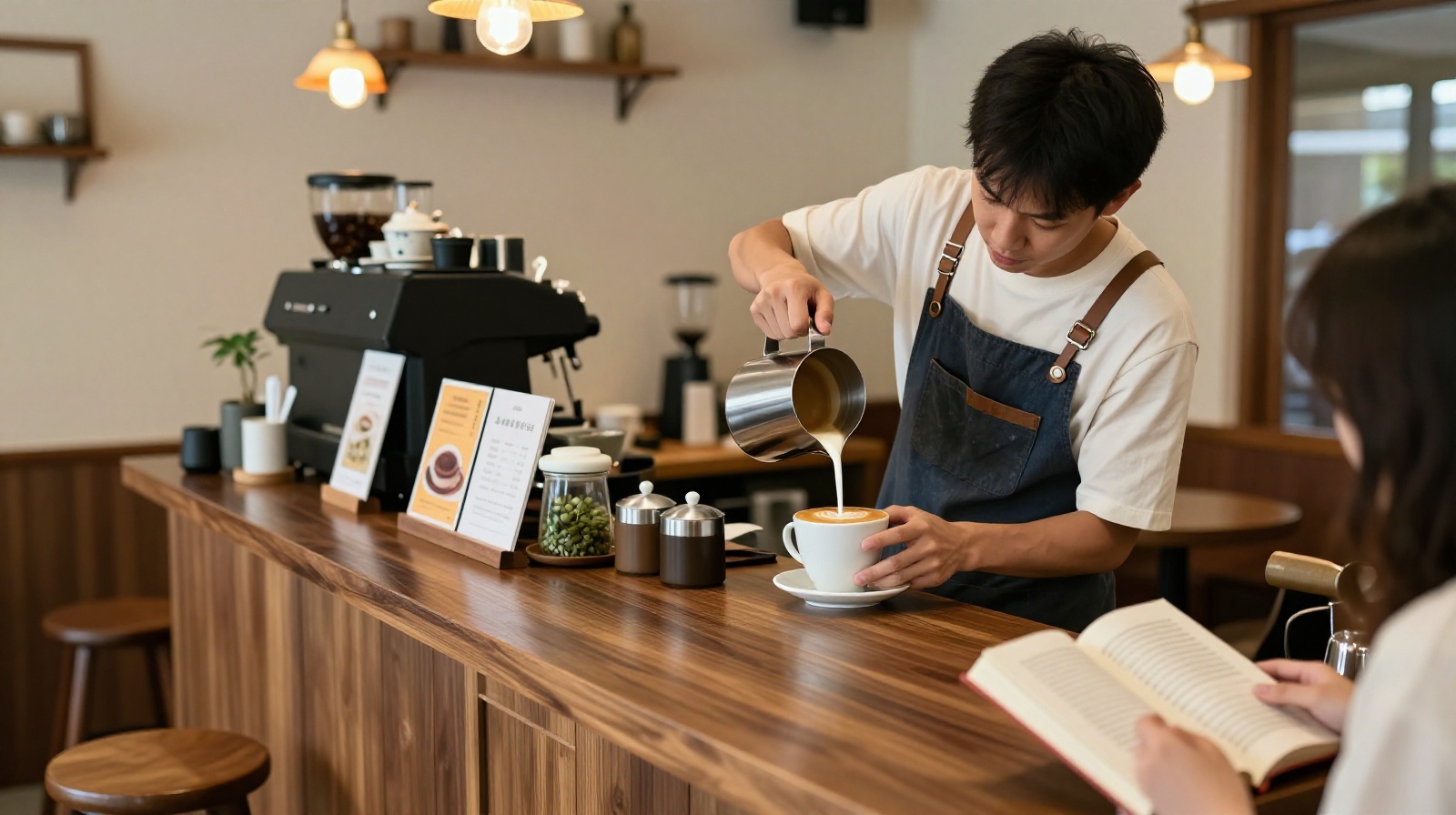
Yet, there is a remarkable fusion happening under the surface. Many cafés now serve both locally grown Dali coffee and traditional Bai tea. The architecture has evolved: new buildings retain the white-washed walls and grey-tile roofs of Bai style but incorporate modern glass facades for better light.
The social fabric is also changing. Local youth are increasingly adopting elements of this “hippie” culture—wearing vintage clothes, practicing yoga, or starting their own small businesses. Conversely, long-term expats often learn the local dialect and participate in traditional festivals like the March Fair.
“It’s not about replacing one culture with another,” says Elena, a German artist who has lived here for eight years. “It’s about finding a new way to live together. We share our skills; they share their land and knowledge.”
The Meaning of “Escape” in Modern China
Why do people come to Dali? For many, it represents an escape from the intense pressure of China’s urban rat race. In cities like Beijing or Shanghai, the work culture is often described as “996” (9 am to 9 pm, six days a week), with soaring housing costs and fierce competition.
Dali offers a different pace. The cost of living is significantly lower, and the community support system for remote workers is surprisingly robust. Many expats and locals alike speak of Dali as a place where they can breathe again.
This phenomenon has broader economic implications. It signals a shift in how young Chinese people view success. For a generation that grew up with rapid development and intense competition, the definition of a good life is expanding to include mental well-being, creative freedom, and connection with nature.
The government has also taken notice. While initially wary of these “alternative” communities, local authorities have started investing in infrastructure to support this new economy. Improved internet connectivity, better roads, and cultural preservation grants are now common.
A Living Experiment
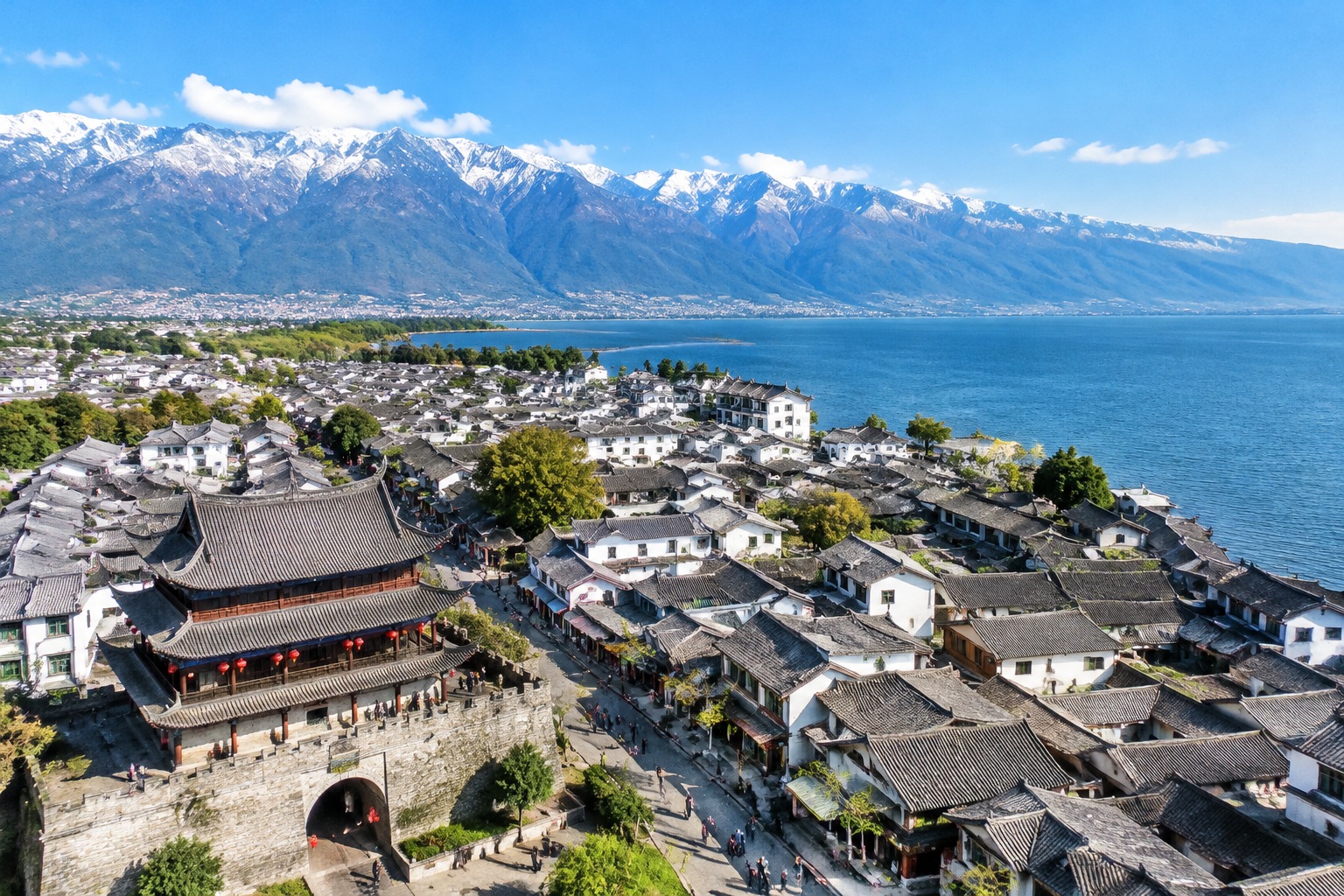
Walking through Dali today, you don’t just see a tourist destination; you see a living experiment in social cohesion. It’s a place where the past and future collide, where global trends meet local traditions, and where people from vastly different backgrounds find common ground.
The “hippie” label might be a simplification, but it captures the essence of this unique community. Whether you are a backpacker looking for peace or a digital nomad seeking inspiration, Dali offers something rare: a space to rethink how we live.
Start the discussion at forum.chinacomes.com