

When the Game Feels Realer Than Reality
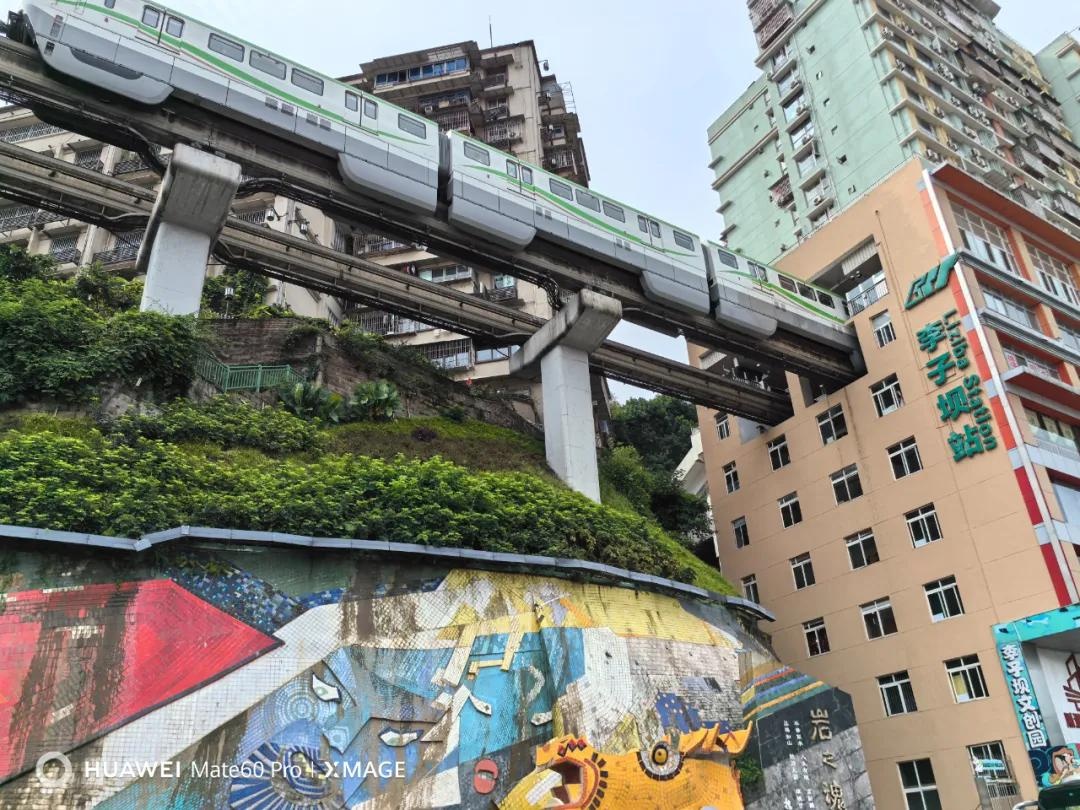
If you’ve ever played Cyberpunk 2077, you know the feeling: towering skyscrapers, layered highways, and a city that defies flat maps. You might think this is just video game design fantasy. But in Chongqing, China’s “Mountain City,” I stepped onto Line 2 of the light rail and realized the developers got lucky with their inspiration.
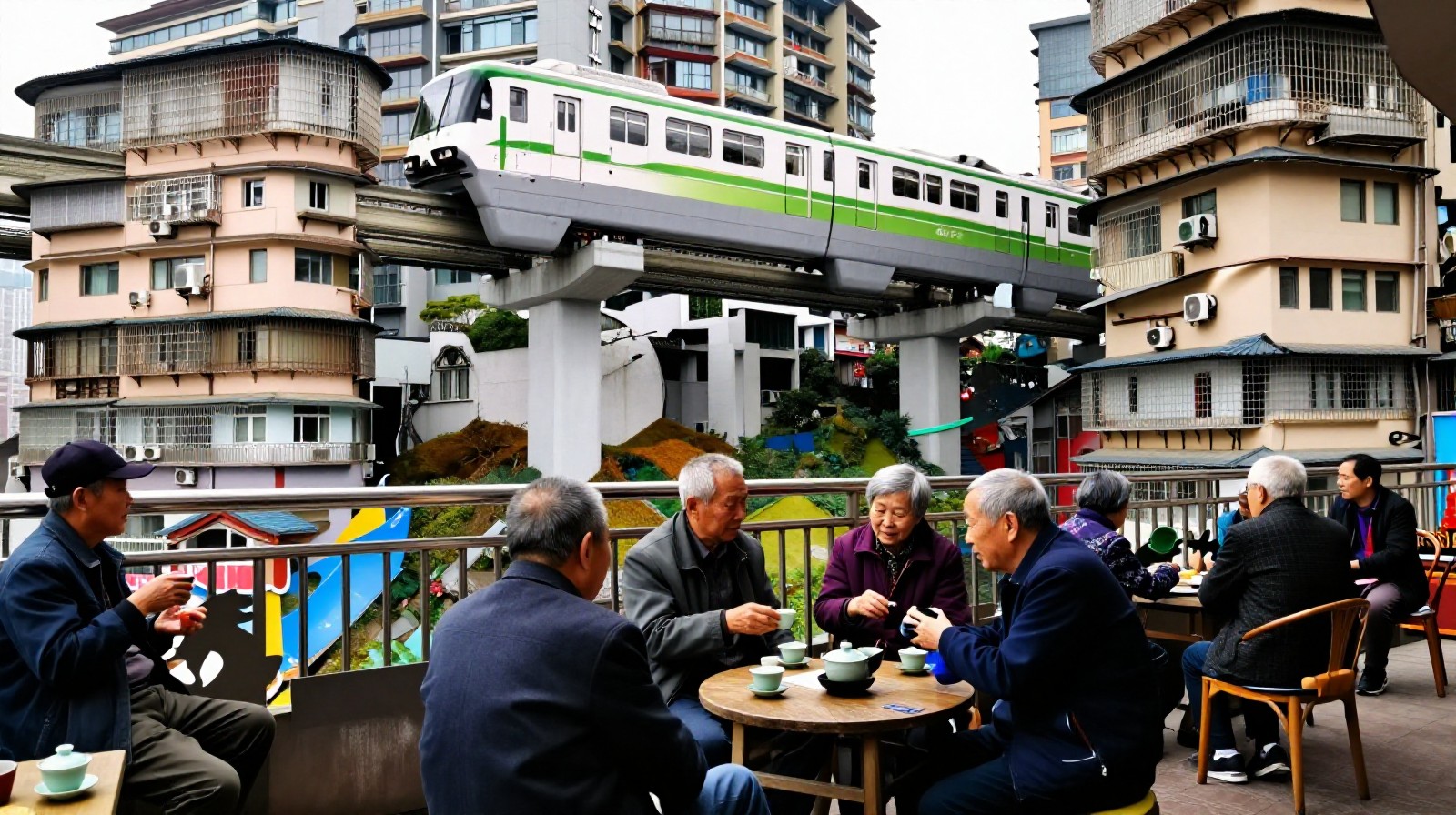
As the train leaves the station at Jiaochangkou, it doesn’t turn a corner or go up an incline. It simply drives straight through the 10th floor of Linjiang Apartment Complex. There is no break in the building, no special door for commuters. The tracks are embedded directly into the concrete structure where families have lived for decades.
The Soundtrack of a Living Building
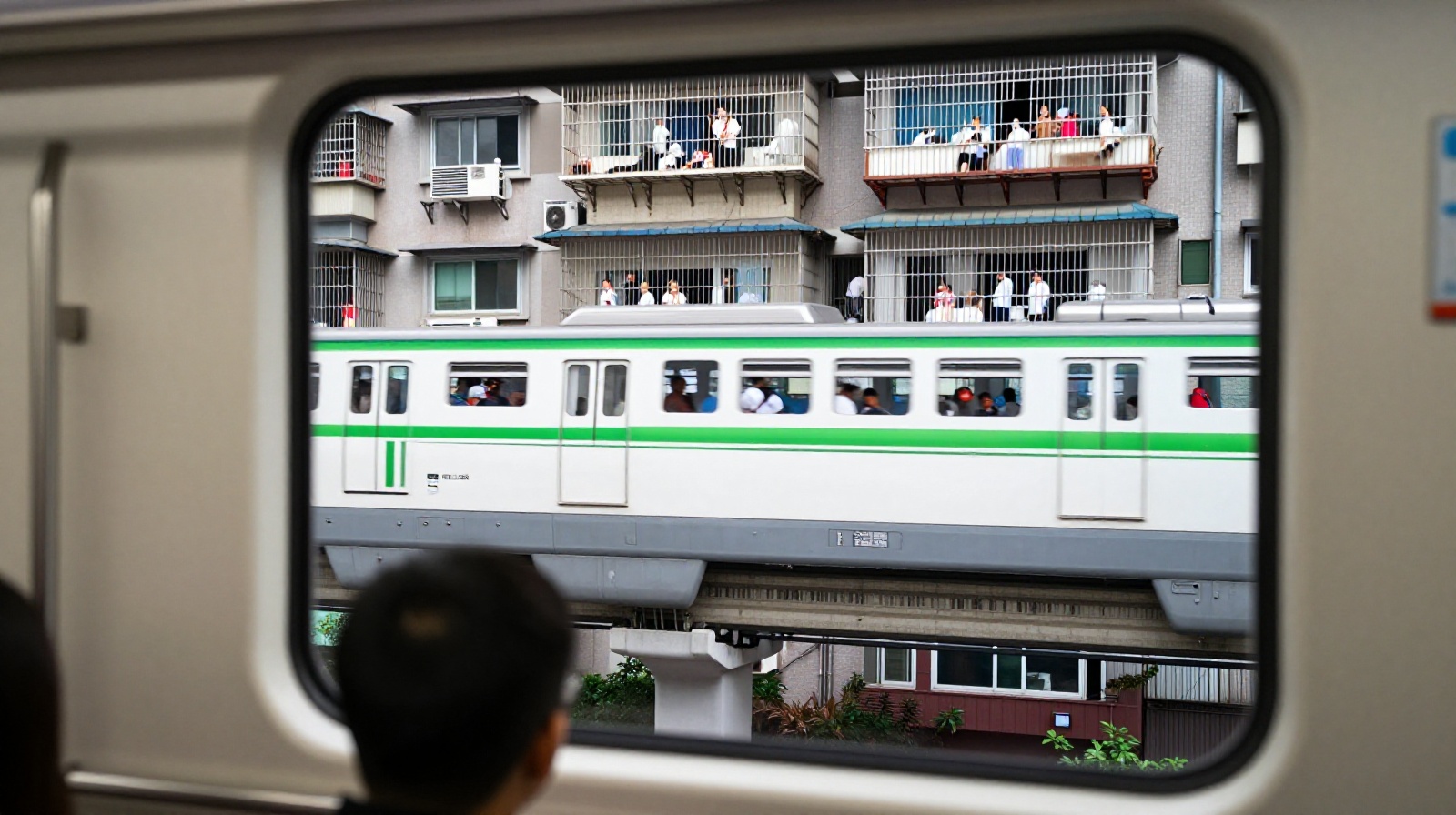
Imagine sitting on a plastic seat, holding onto a metal rail, as the train glides past your neighbor’s living room window. That’s exactly what it feels like inside the carriage when it passes through the building.
In reality, there is no dramatic sci-fi hum. You hear the rhythmic clatter of wheels on tracks and the low drone of the motor. Inside the apartment, residents often report barely noticing the train if they are watching TV or listening to music. However, during quiet moments—like a morning coffee—the vibration can be felt through the floor.
Locals have adapted. Many apartments facing the track now feature double-paned soundproof windows and heavy curtains. “It’s part of life here,” says Ms. Zhang, a grandmother living on the 10th floor. “When the train comes, we know it’s time to close the window. It doesn’t disturb our sleep, but it does remind us that this building is moving.”
Beyond the Hype: Engineering vs. Lifestyle
While the image looks like a scene from a futuristic movie, the reality is a triumph of pragmatic urban planning. Chongqing’s terrain is rugged, with deep ravines and steep hills that make traditional road expansion nearly impossible.
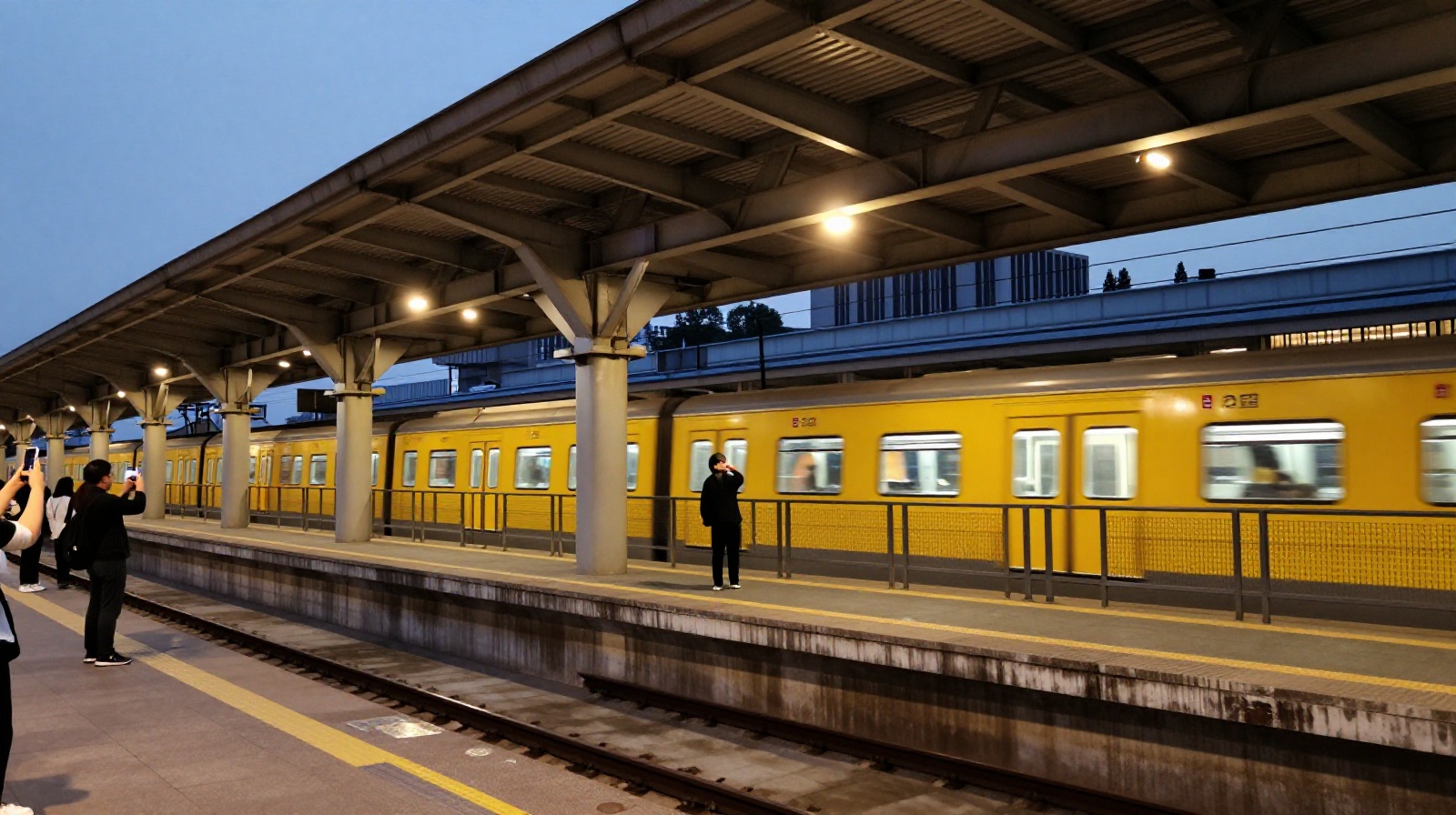
The solution wasn’t to demolish old neighborhoods or build expensive bridges over every valley. Instead, engineers integrated the transit line into existing structures. The train station at Liziba was built specifically to navigate this constraint, passing through a building while maintaining residential integrity below and above.
This isn’t about making things look cool for tourists; it’s about survival in a geography that refuses to flatten out. For the millions of commuters who use this line daily, the “flying train” is just their morning commute. The novelty wears off quickly once you’re rushing to work or school.
How to Experience It Like a Local
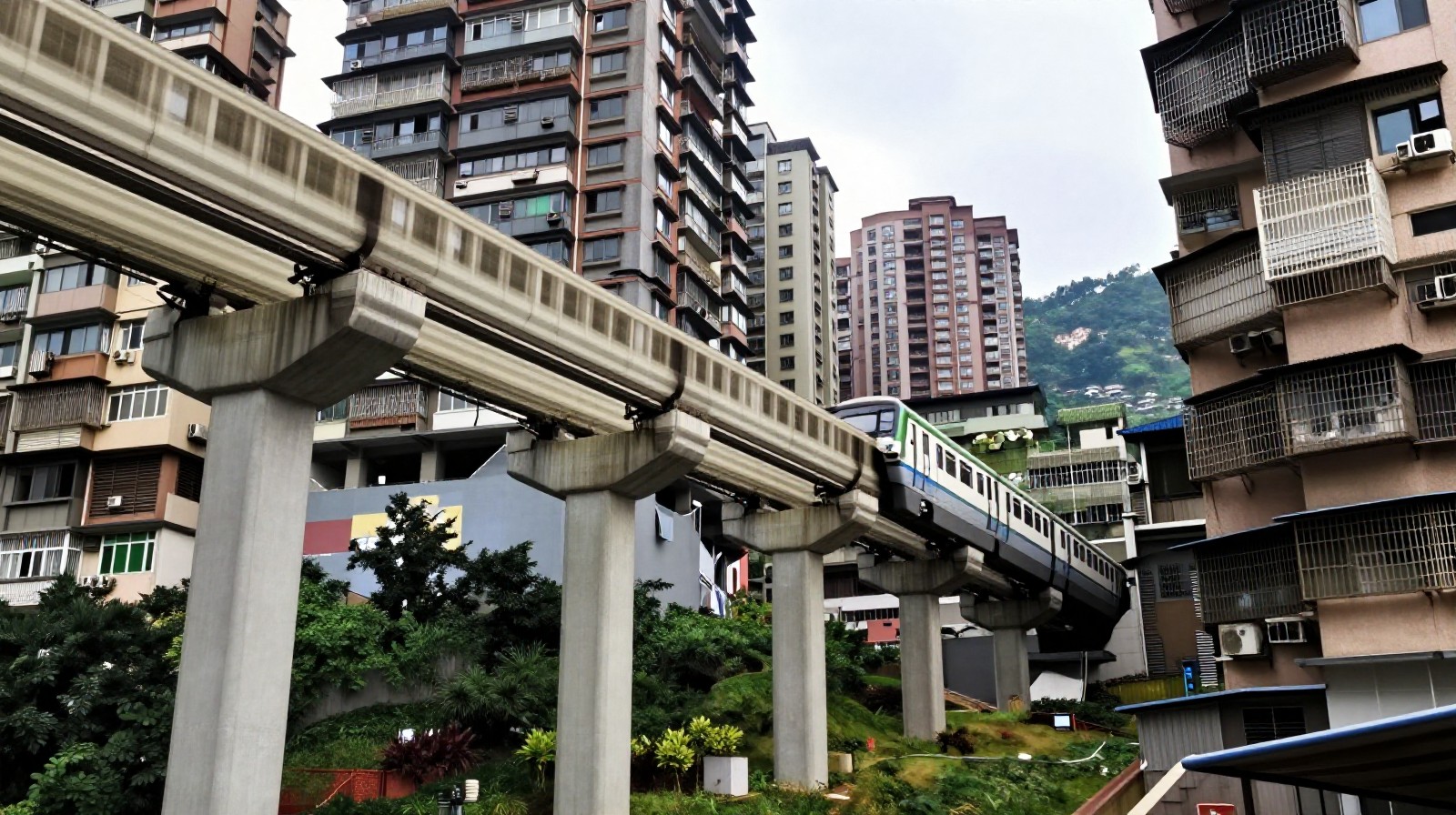
If you want to witness this 3D maze for yourself, timing and location matter more than the camera gear.
The best time to ride is early morning (around 7:00 AM) or late evening (after 9:00 PM). During these hours, the train moves smoothly without the crush of rush hour crowds, giving you a clear view of the architecture. Avoid weekends if you want to avoid long lines for photos.
For the best shot, stand on the platform at the Liziba station exit. Wait for the train as it approaches the building, then step back slightly to capture the full scale of the structure. If you’re brave enough, ride inside and hold your phone up against the window just before the train enters the building—the view from inside a moving room is surreal.
The Human Side of Steel and Concrete
It’s easy to get distracted by the “cool factor” of a train going through an apartment. But looking closer, you see something more profound: resilience and adaptation. The people who live here aren’t displaced by progress; they are part of it.
The community around the track is tight-knit. Neighbors chat on balconies as trains pass below. Children watch from windows, not with fear, but with the casual curiosity one might have for a large bird flying past a house. This isn’t a dystopia where technology crushes humanity; it’s a testament to how humans shape their environment to fit their needs, even when that environment is vertical.
Chongqing doesn’t need CGI to feel futuristic. It just needs a map that shows you where the trains go—and sometimes, that means driving straight through your living room.