

Beyond the Postcard Peaks
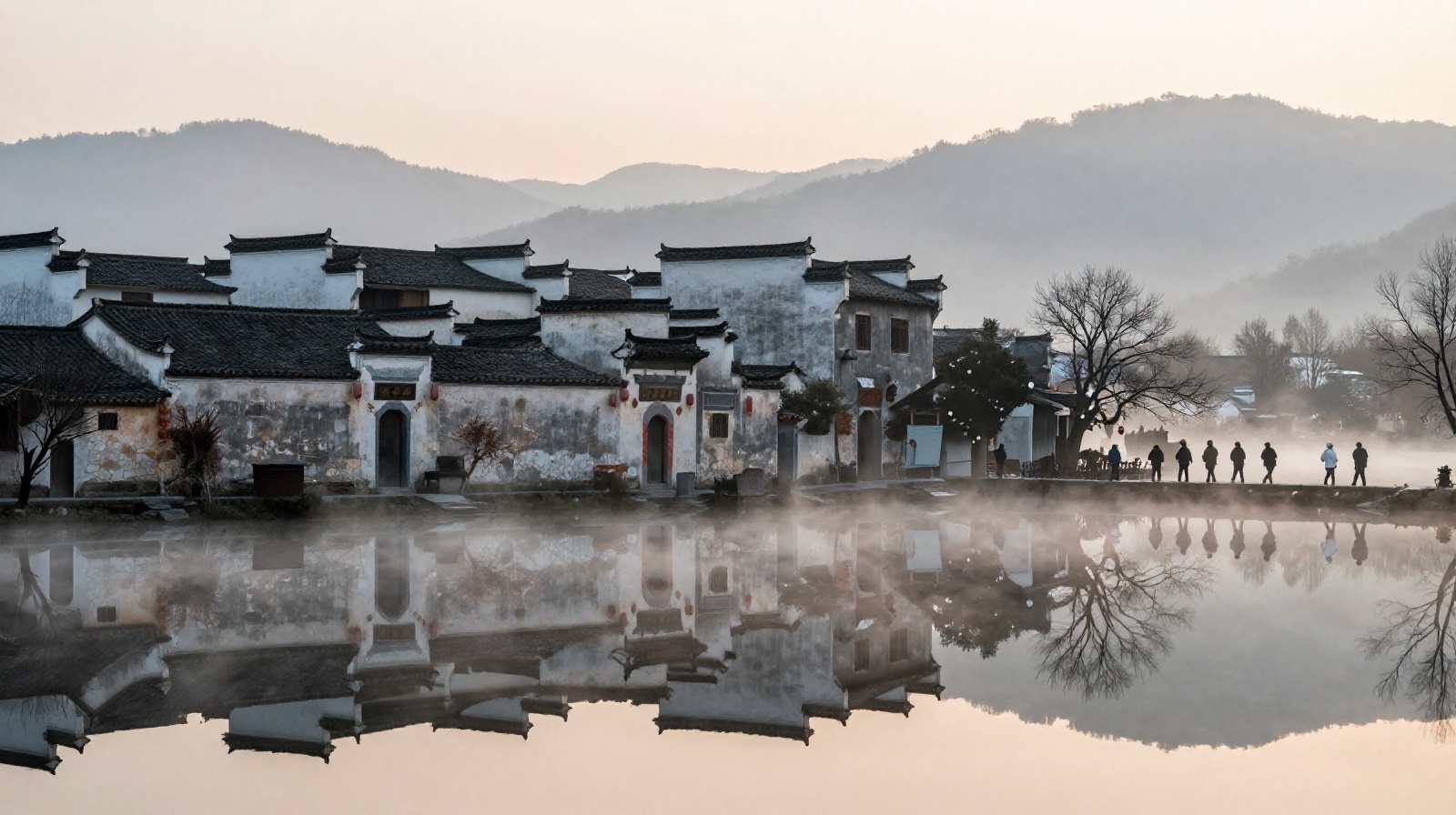
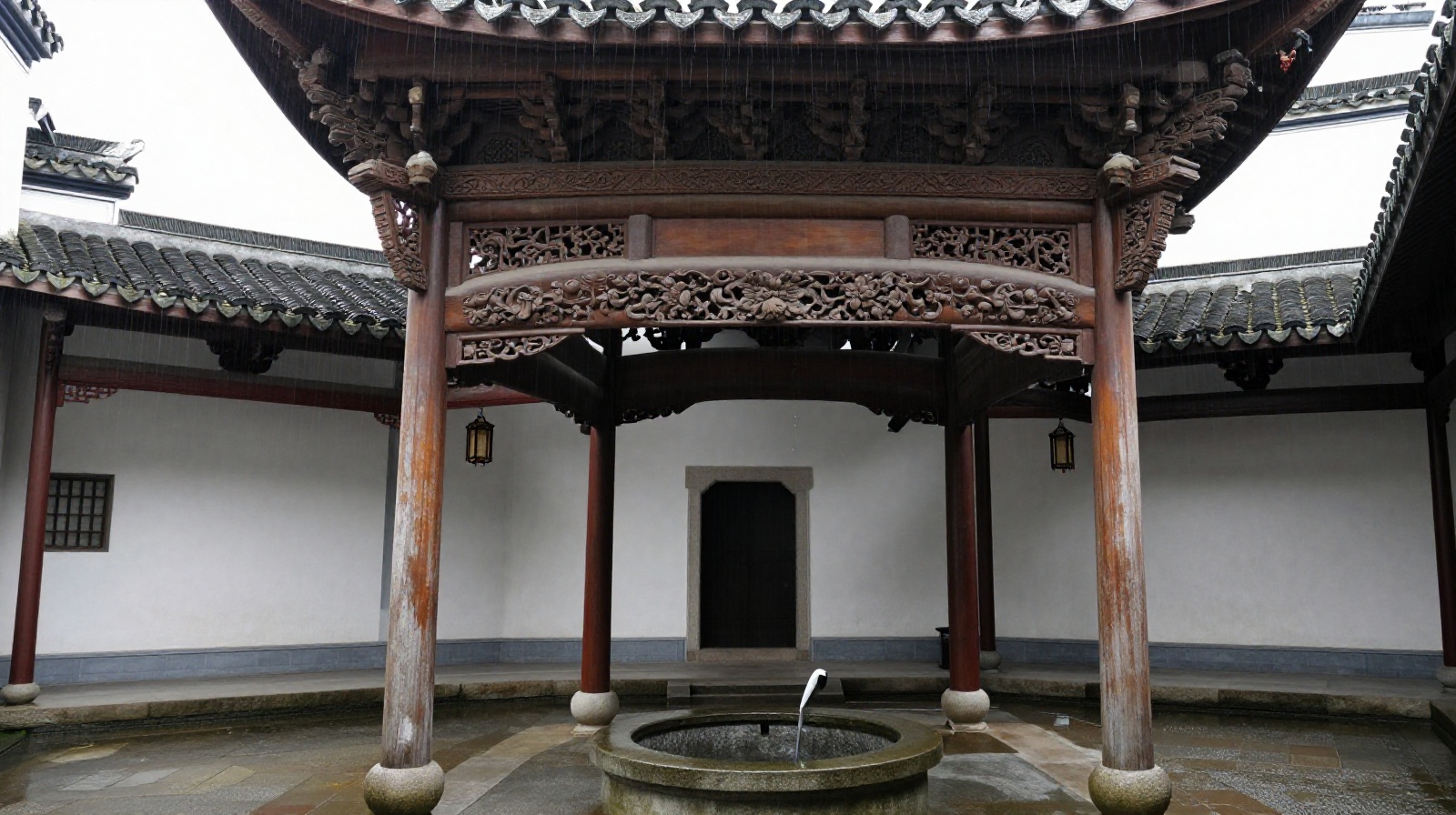
At 6:30 AM, the air in Hongcun village is cool and smells faintly of woodsmoke and wet stone. I am sitting on a wooden bench outside an inn that was once a merchant’s home from the Ming Dynasty. The only sounds are the distant clatter of a rooster and the soft drip of rainwater falling into a square, open-topped well in the center of the courtyard. This is not the Huangshan mountain range I saw in travel brochures—a chaotic line of tourists climbing steep steps to catch a glimpse of sea-of-clouds. This is the living room of a culture that has survived for centuries.
Huizhou architecture is famous for its “white walls and black tiles,” but seeing it from a bus window is different from stepping inside. The village I am in, Hongcun, is often called an “ink wash painting come to life.” But what makes it real isn’t just the scenery; it’s how people actually live there today.
Inside a Merchant’s Home: Old Craft, New Comfort
The inn I am staying at is called “The Courtyard of Four Waters.” The name refers to a traditional Feng Shui concept where rain falling on the four-sided roof flows inward into a central courtyard, symbolizing wealth flowing into the family. Standing in this open-air square, looking up at the carved wooden eaves, you feel the weight of history.
But don’t imagine a museum exhibit frozen in time. The room I occupy has crisp white linens and a rain-shower head that works perfectly, right next to a wall decorated with intricate wood carvings of cranes and pine trees—symbols of longevity. It is a quiet negotiation between the past and present. A local host named Li shows me how she uses a tablet app to manage bookings while her mother grinds tea leaves in a bronze mortar in the corner.
The Hike: From Foggy Peaks to Stone Paths
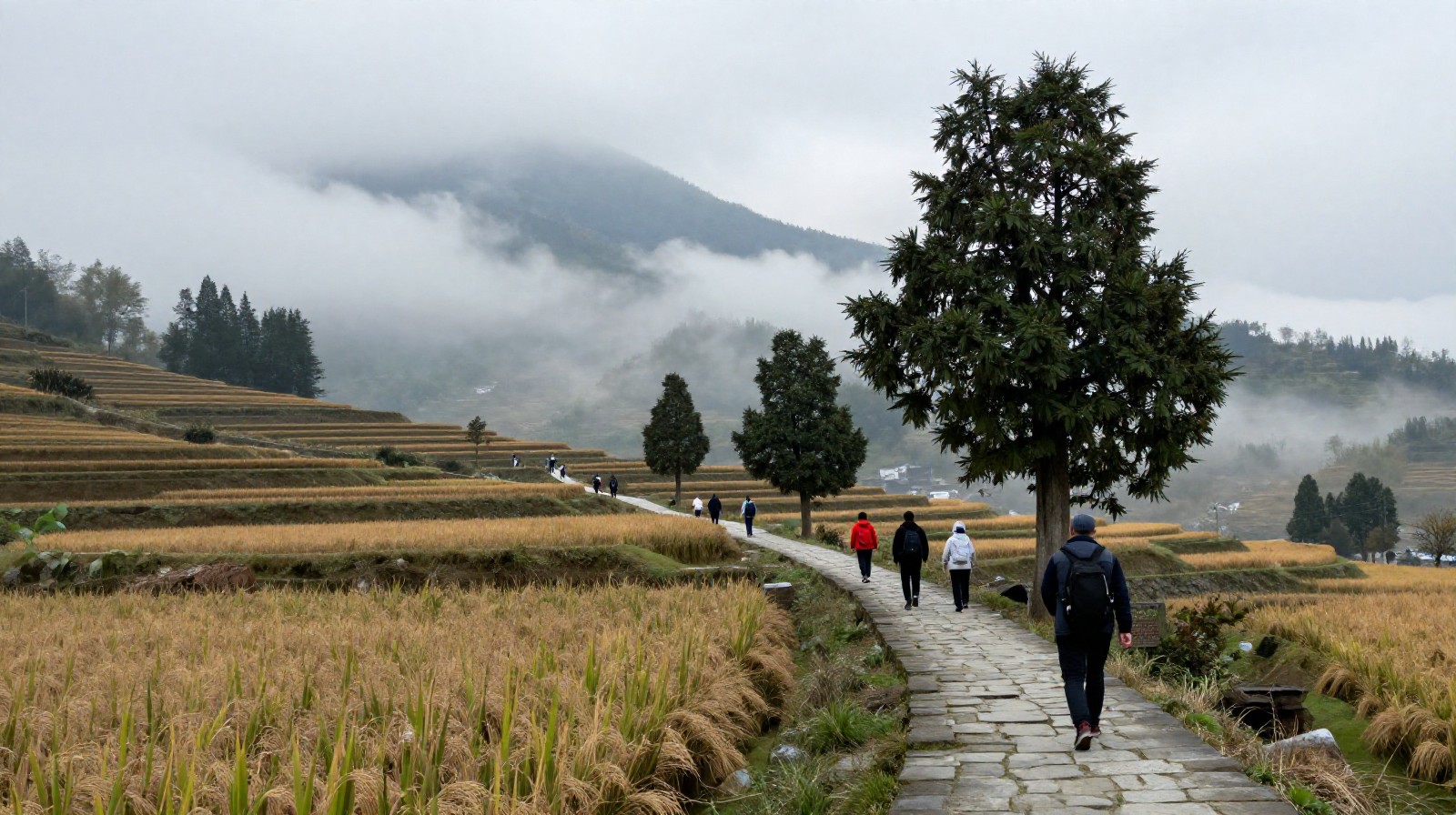
Leaving the village, I join a small group of hikers heading toward the foothills of Huangshan. We aren’t climbing the famous “Broken Cliff” trail with its thousands of steps; instead, we are following an old mule path that connects Hongcun to the neighboring village of Xidi.
The hike takes about three hours. The terrain is gentle, winding through terraced rice fields and past clusters of ancient cypress trees. At 8:45 AM, the fog rolls in from the valley floor, wrapping around the white walls like soft silk. This is a prime photography spot. The contrast between the deep green of the pines and the pale gray of the stone paths creates a natural composition that photographers have chased for generations.
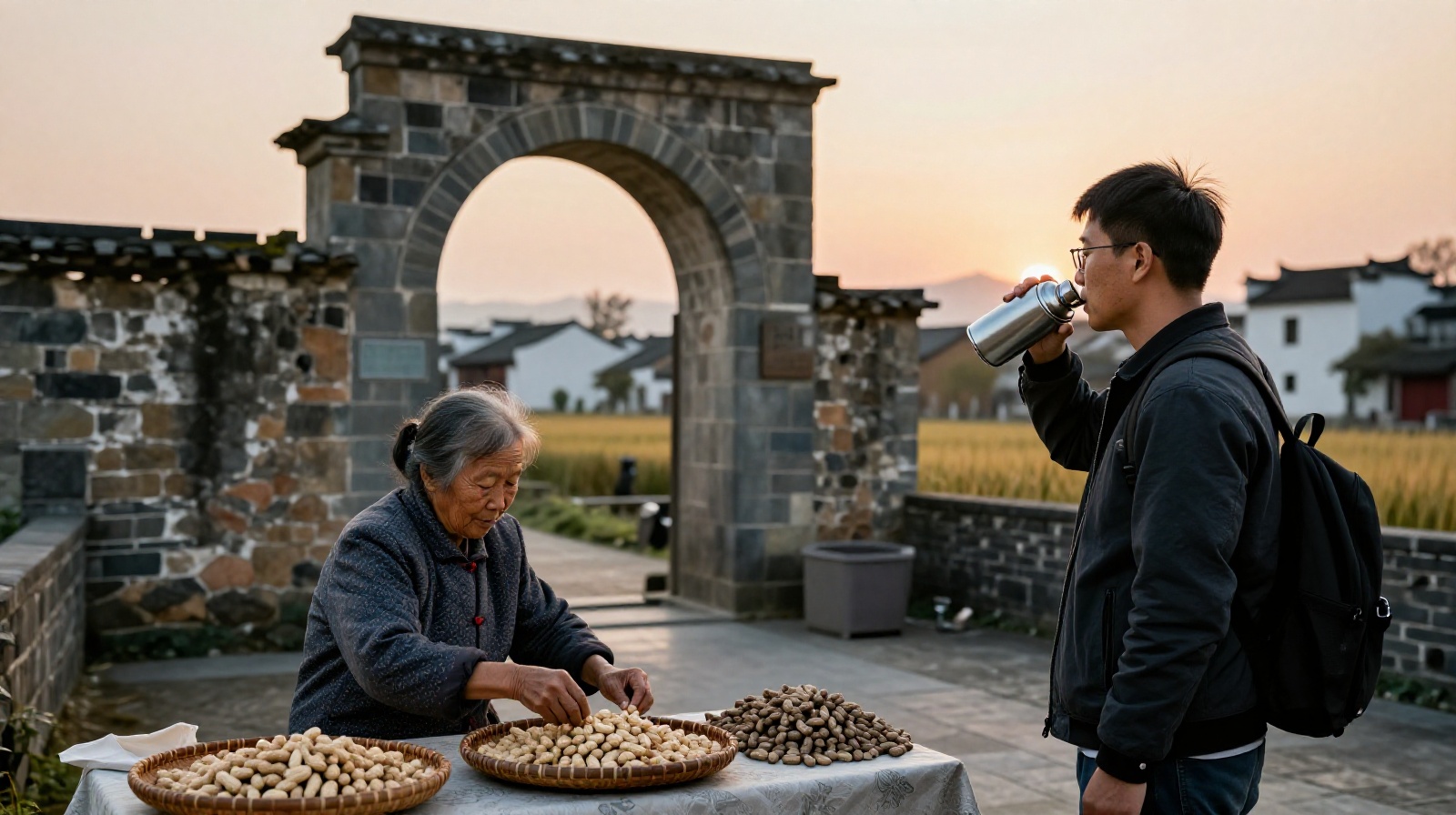
We stop at a small rest area under an old archway. An elderly woman selling boiled peanuts offers us warm water in a thermos. There is no souvenir shop here, just a quiet exchange of goods between locals and travelers. It feels less like a tourist attraction and more like a shared moment on a rural road.
The Sound of Rain: A Cultural Reflection
As evening falls, the village transforms again. The artificial lights that tourists love to take photos of are dimmed out, leaving only the soft glow of street lamps and the warm light from windows. I sit on a stone bench by the canal, listening to the rain hit the tiles.
In Huizhou culture, water is everything. The “Four Waters Return to the Hall” isn’t just about geometry; it reflects a deep family structure where everyone gathers around a central point of strength. Today, that gathering place has changed. Some homes are now boutique hotels, while others remain occupied by aging families who still cook their own meals and tend small vegetable patches.
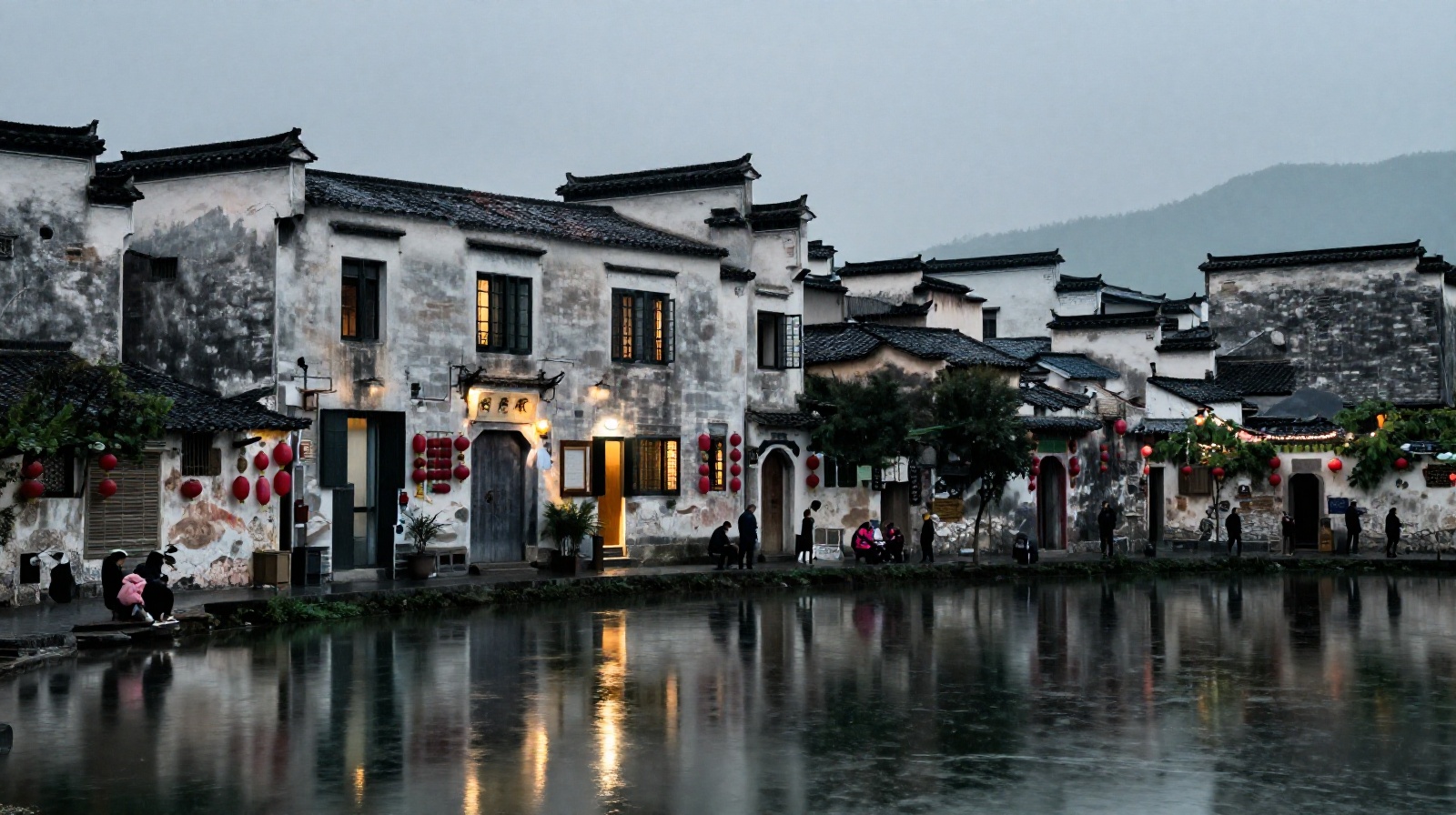
Reality Behind the Beauty
It is important to acknowledge that this idyllic scene is not without friction. The influx of tourists has changed the rhythm of village life. Some locals have moved out, leaving their homes empty for renovation into hotels. Others struggle with noise and trash in what was once a quiet sanctuary.
Yet, there is a resilience here. Young people are returning to work as guides or artisans, blending traditional skills with modern marketing. The village isn’t a dead relic; it is a place adapting to the 21st century while holding onto its soul.
Walking back to the inn at dusk, I see a child playing soccer in the courtyard of an ancient temple, the ball bouncing off centuries-old stone walls. It is a perfect metaphor: history providing the stage, but life writing the script.