
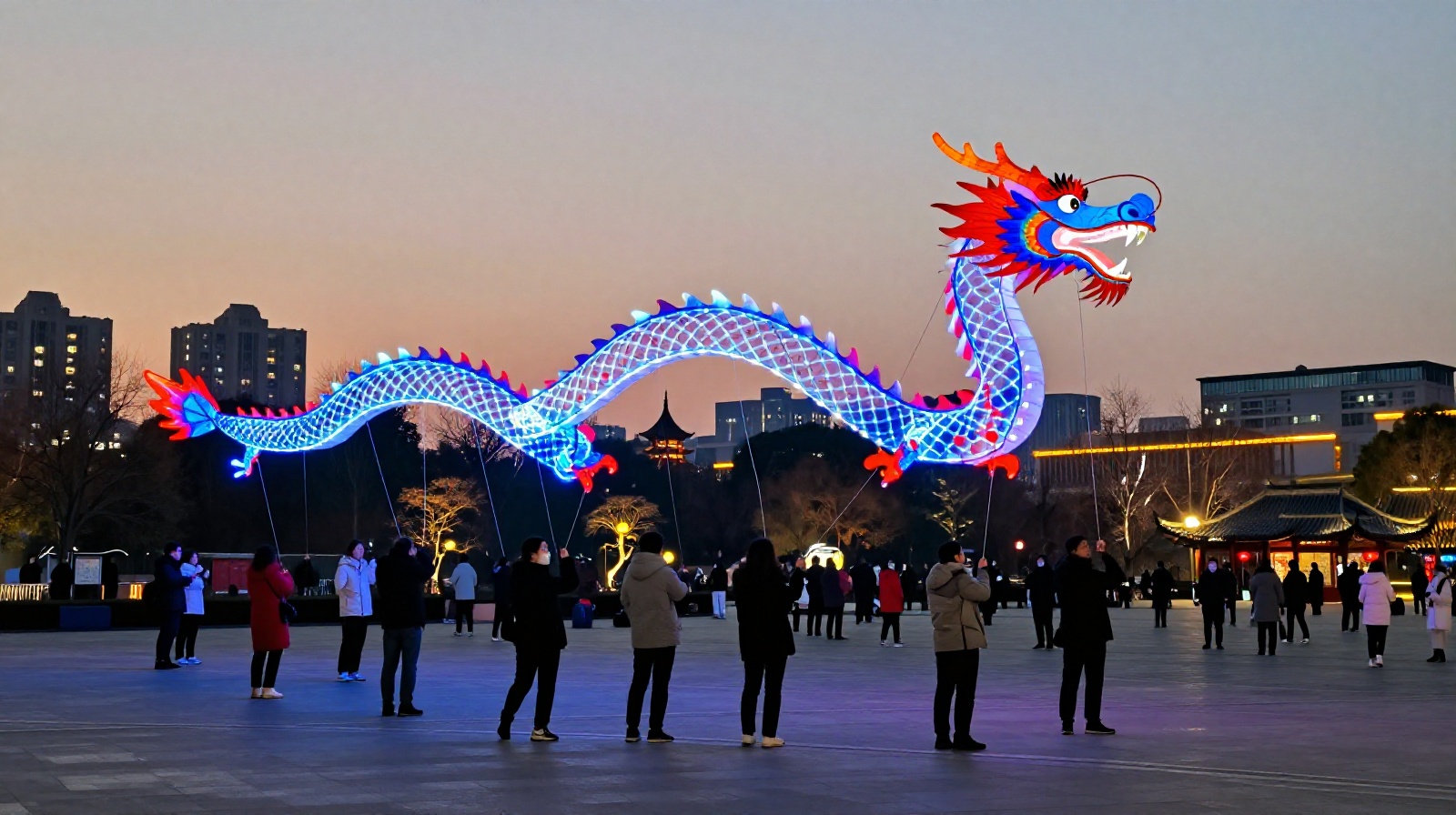

When Dusk Falls, The Sky Lights Up
Imagine a city square in China at 7:00 PM. The sun has just set, and the streetlights flicker on. But look up. The sky isn’t dark anymore. It is pulsing with neon colors.
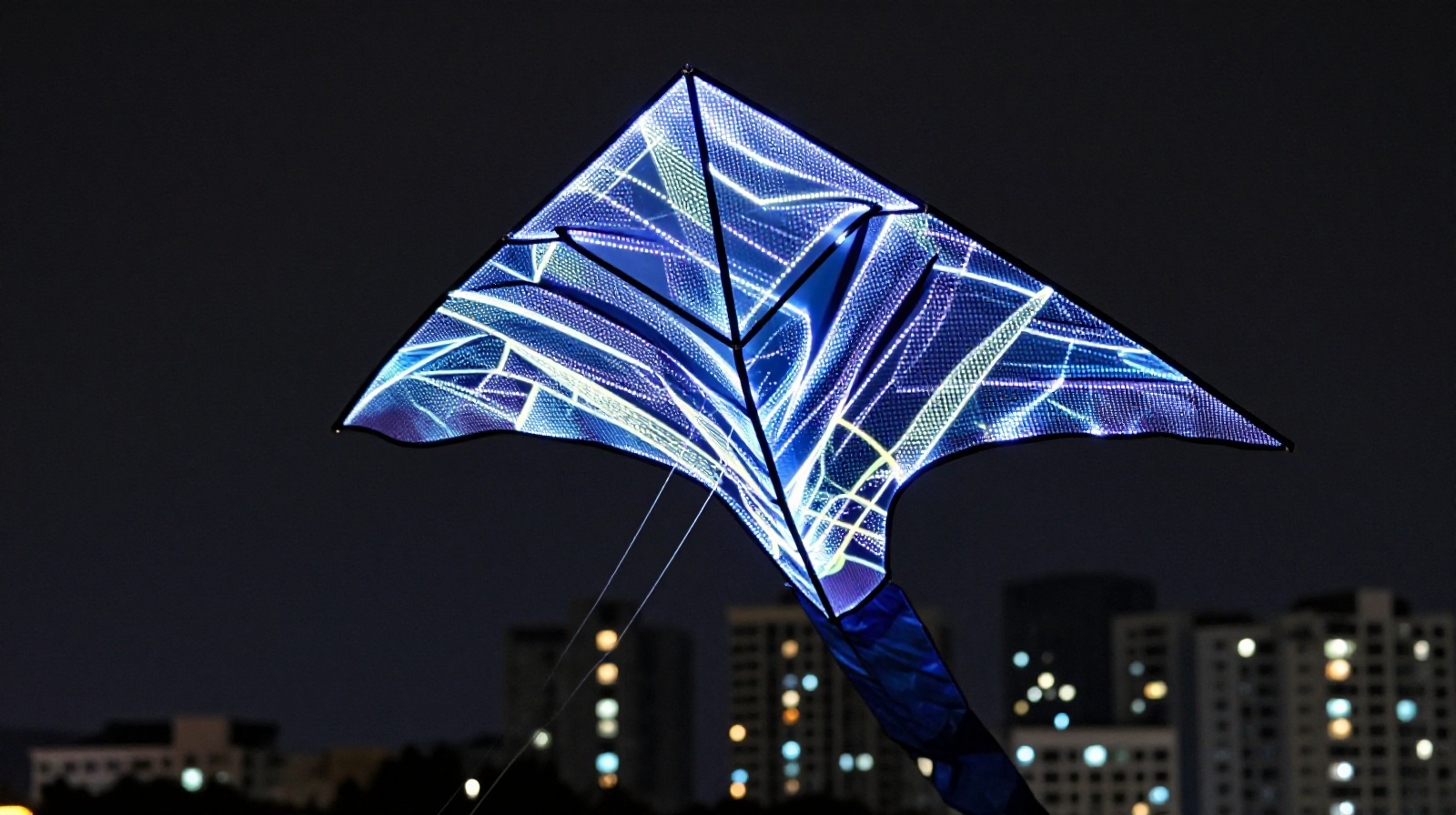
This is not a drone show, nor a projection mapping event. These are kites. Giant, sometimes 50-foot-long kites, rigged with thousands of LED lights. In China, kite flying has evolved from a quiet afternoon pastime into a high-stakes, competitive spectacle that turns public parks into arenas for tech-savvy enthusiasts.
For many Western readers, the image of a kite is still tied to childhood memories or delicate paper art. But in Chinese urban culture today, “night kiting” is a serious subculture. It combines traditional Chinese craftsmanship with modern electronics, creating a visual experience that rivals any light festival.
A Fusion of Ancient Craft and Modern Tech
Walk up to one of these giant structures, and the first thing you notice is the complexity. A typical night kite might weigh 10 to 20 kilograms. Its frame is not made of simple bamboo strips anymore. It often uses lightweight carbon fiber and advanced aerodynamic designs to withstand high-altitude winds.
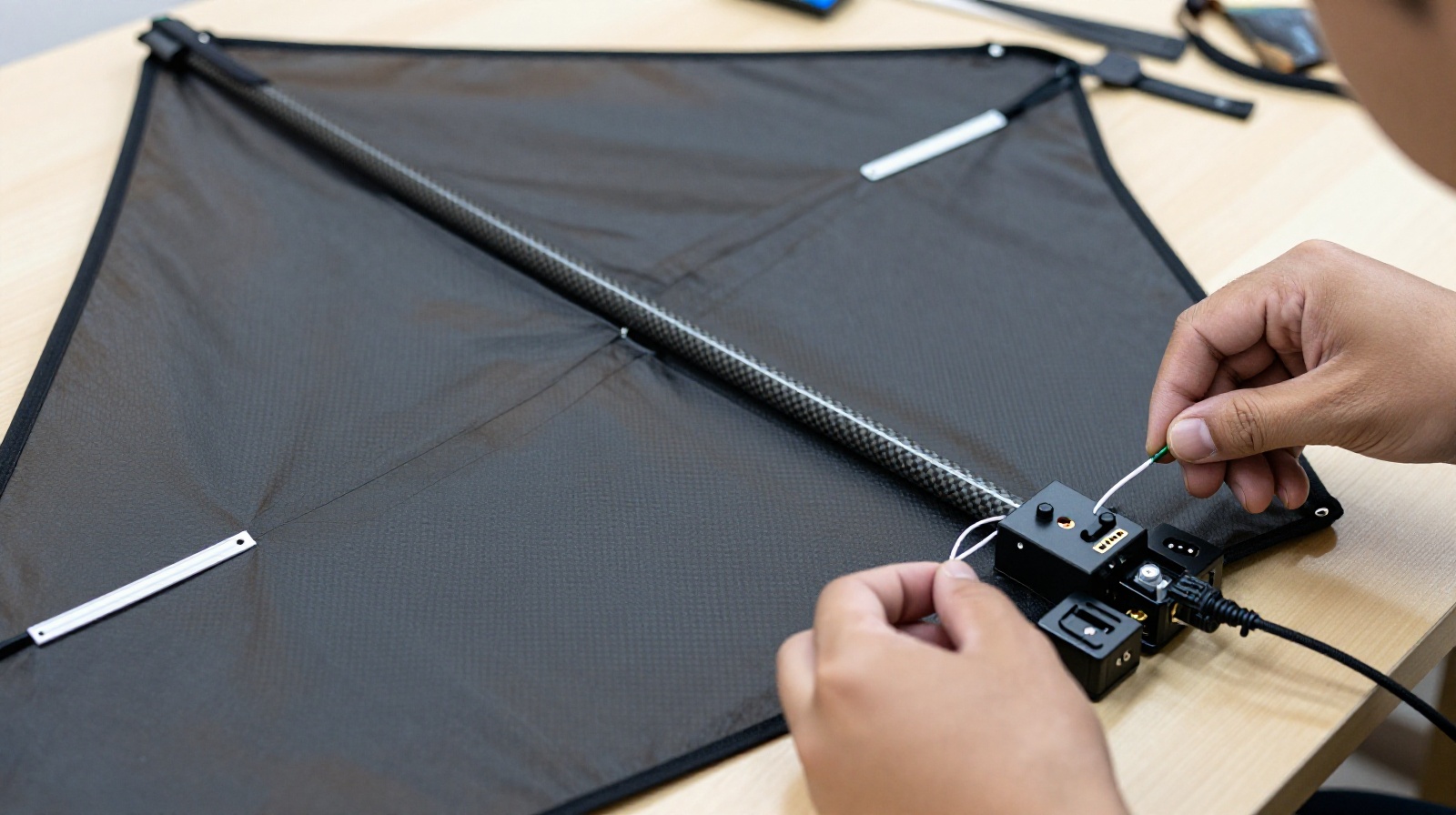
The real innovation, however, is in the skin. Manufacturers embed flexible LED strips and micro-control circuits directly into the fabric. This allows the kite to change patterns, flash, and even respond to wind speed. Some advanced models can display scrolling text or complex geometric animations while soaring hundreds of meters in the air.
This fusion is not just about looking good. It’s a test of engineering. If the wiring is too heavy, the kite won’t fly. If the battery distribution is uneven, it will crash. Every giant LED kite on the square is a flying proof of concept for local DIY engineers and small tech workshops.
The Human Element: Teamwork in the Wind
Seeing a 10-meter-long dragon kite dancing in the night sky makes it easy to think this is an automated process. It is not. Kite flying, especially with heavy, large-scale loads, is intensely physical and requires precise teamwork.
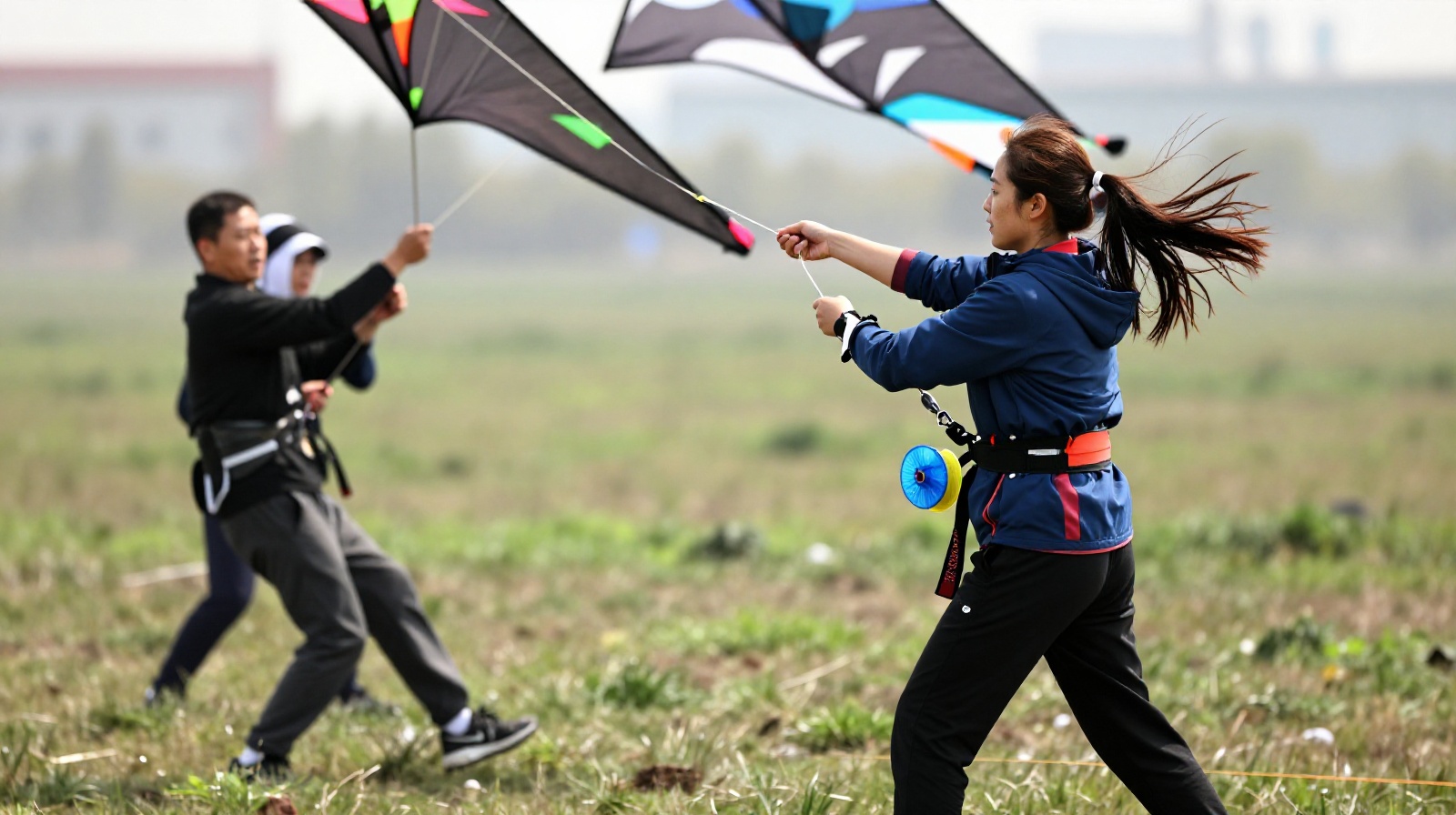
A typical crew consists of three to five people. One person is the “flight master,” holding the main line, feeling the tension through their hands, and adjusting the angle based on wind gusts. Another manages the spool, ensuring the line doesn’t tangle. Others are ground handlers, ready to catch the kite if the wind dies or steer it away from obstacles like power lines or trees.
The skills required are surprisingly technical. Enthusiasts must read the wind like sailors. They need to understand drag, lift, and torque. When a giant LED kite dips suddenly, the flight master has to make split-second decisions to either let out line or pull back hard. It is a dance between human intuition and aerodynamic forces.
Community Hubs in Concrete Jungles
Why do people spend weekends doing this? In China’s dense urban environments, public squares and large parks serve as vital community hubs. For the kite enthusiasts, these spaces are more than just open areas; they are social clubs.
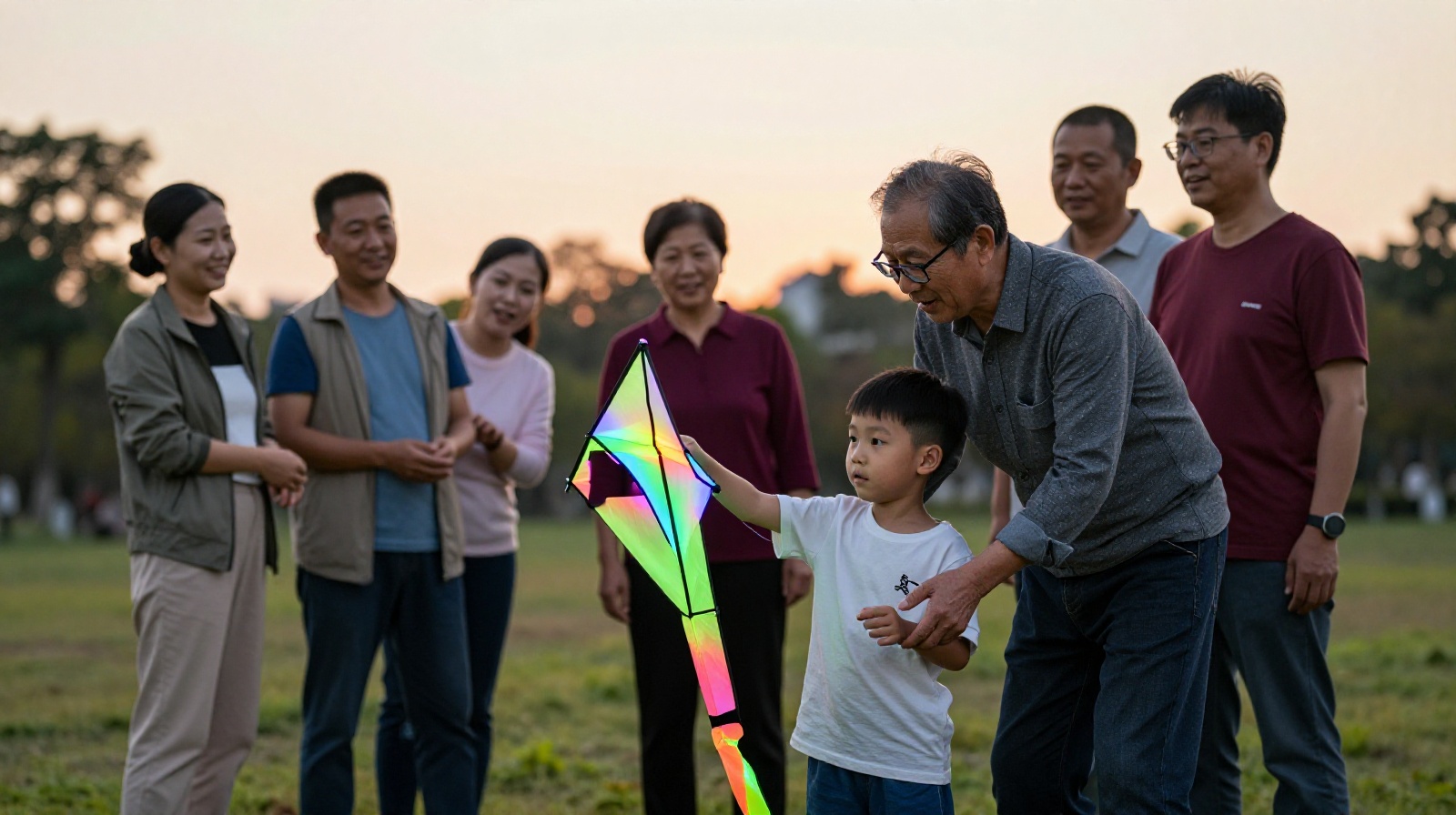
The night kite community is tightly knit. Newcomers are often taught by veterans for free. There is a shared culture of troubleshooting, sharing battery tips, and modifying frames. It bridges generations. You will see teenagers in hoodies flying next to retired grandfathers in traditional vests, both united by the glow of their creations.
These gatherings have also become tourist attractions. Families walk by, children point at the glowing shapes, and locals invite them to try smaller, handheld LED kites. It turns a solitary hobby into a shared public joy.
The Future of Flight
As technology advances, the line between traditional kites and other aerial toys is blurring. Some enthusiasts are experimenting with drone-assisted launches for heavier models. Others are integrating smart sensors that can automatically adjust the kite’s shape in response to changing weather conditions.
This evolution shows how Chinese culture adapts old traditions to new contexts. The spirit of kite flying—freedom, craftsmanship, and connection to nature—remains. But the tools have changed. What started as a leisure activity for scholars has become a vibrant, glowing testament to modern Chinese innovation, lighting up the night skies of cities across the country.