
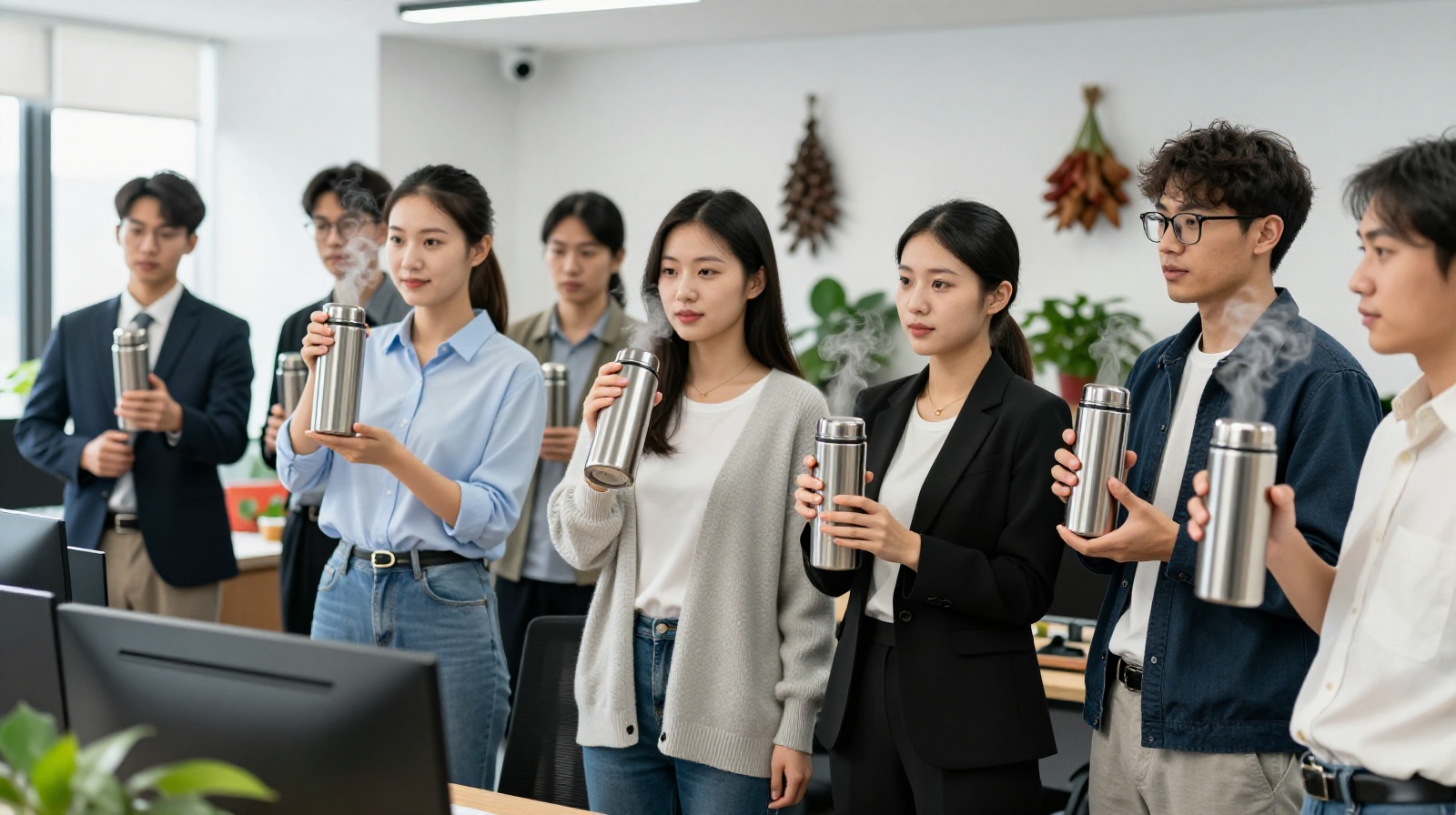

The Boiling Water Ritual
It starts with a thermos. In many Chinese offices, hospitals, and university classrooms, you will see people carrying stainless steel flasks filled with steaming hot water, not just for hydration but as a daily ritual. For a Western visitor, this might seem odd: why drink boiling water instead of ice-cold drinks? The answer lies in a concept called ‘Qi’ (energy flow) and the belief that cold disrupts the body’s internal balance.
This isn’t just tradition; it’s a widespread health habit. Whether it’s adding goji berries to the hot water or waiting for the tap water to boil before drinking, these small acts are believed to protect against fatigue, improve digestion, and boost immunity. It is a quiet, collective agreement that warmth equals healing.
The Science Behind ‘Yin and Yang’
At the core of Chinese wellness is the ancient framework of Yin-Yang balance and blood flow. Unlike Western medicine’s focus on isolating symptoms, traditional Chinese health practices look at the whole person in relation to their environment.
This logic dictates that your diet should change with the seasons. In spring, people eat ‘sprouts’ to lift energy; in winter, they consume rich soups and meats like lamb or duck to ‘nourish the body.’ You might see a grandmother in a park teaching her grandchild that eating bitter melon in summer clears internal heat, while ginger tea warms you up in autumn. These practices are not merely superstition; many nutritionists today argue that seasonal eating aligns with local agricultural cycles and provides specific nutrients needed at different times of the year.
Quirky Daily Rituals That Look Strange
If you walk into a Chinese community center or watch late-night social media videos, you will encounter habits that seem bizarre to outsiders. There is moxibustion, where dried mugwort herb is burned near the skin to stimulate acupoints. You’ll see young people soaking their feet in basins of herbal water every night before bed—a practice rooted in the belief that warming the soles of the feet improves sleep and circulation.
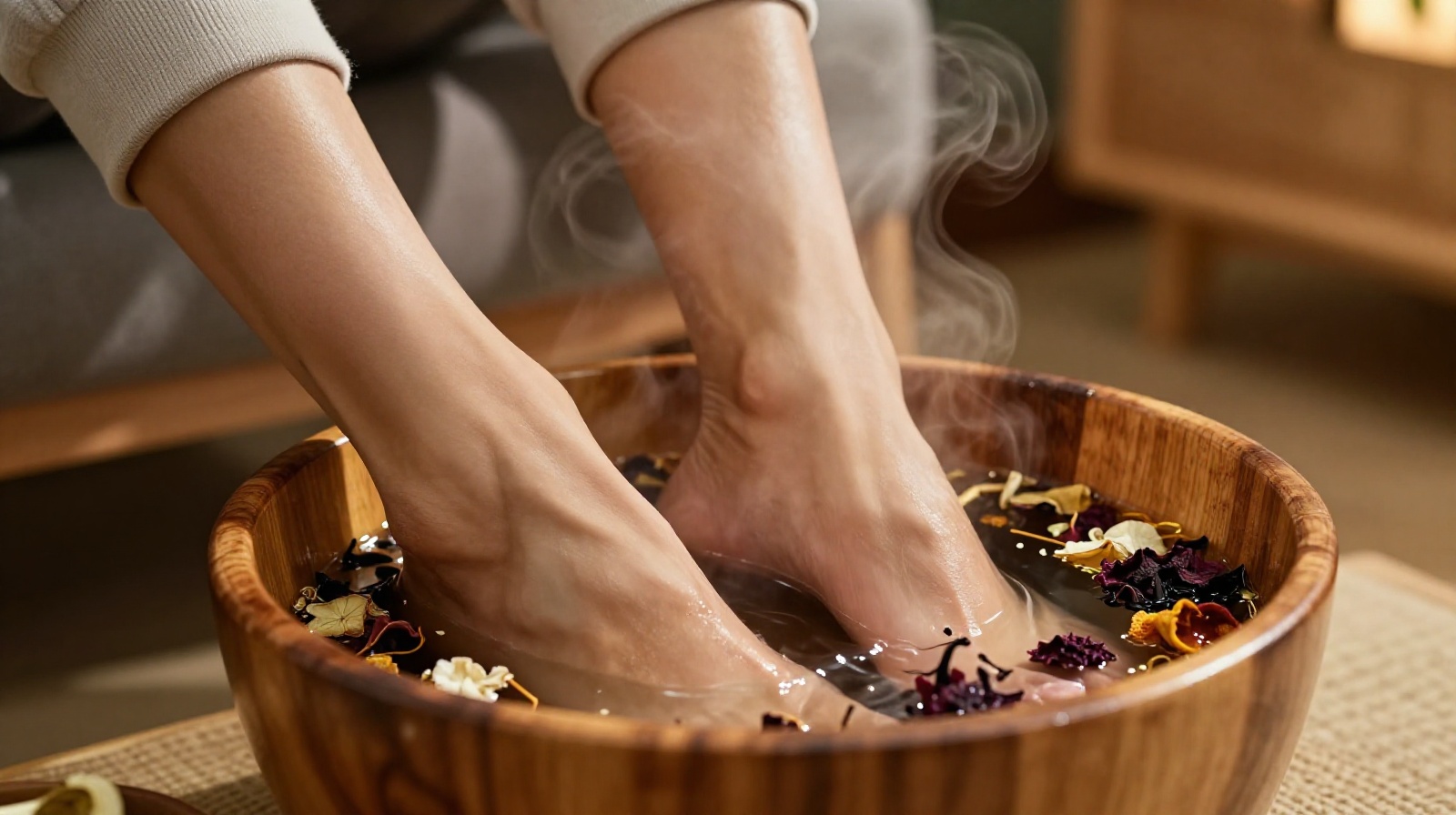
Young office workers relaxing with foot baths after a long day at the office, blending tradition with modern stress relief.
Then there is the ubiquitous self-massage. On the subway or in a waiting room, you might spot people pressing specific points on their hands or necks to relieve headaches or eye strain from staring at screens. These actions are not isolated; they are part of a shared cultural language where taking care of one’s body is an active, daily practice rather than a passive reaction to illness.
Where Tradition Meets Modern Science
The line between wellness and superstition can be thin. While the benefits of acupuncture for pain relief or herbal teas for digestion are increasingly supported by modern research, some traditional claims lack rigorous scientific validation. For instance, drinking ‘hot water’ is beneficial for hydration and comfort, but it doesn’t cure viral infections.
Most ordinary Chinese people today navigate this with a pragmatic mindset. They might visit a doctor for a fever (Western medicine) but drink ginger soup to recover (traditional wisdom). It is a hybrid approach: respecting the old while embracing the new.
The ‘Punk’ Generation’s Wellness
Perhaps the most surprising twist is how young Chinese people are reinterpreting these ancient rules. Dubbed the ‘punk wellness’ generation, young professionals often stay up late gaming or working and then immediately try to counteract it with extreme health measures.

A trendy café scene where a young woman sips herbal tea from a glass jar while scrolling through her phone, representing the fusion of modern lifestyle and traditional care.
They might wear socks for sleeping to keep their feet warm after staying up until 3 AM. They put hairline protectors (hair oil) on their balding foreheads before going out to nightclubs. This is not hypocrisy; it’s a form of self-deprecating humor and experimental living. For them, ‘wellness’ isn’t about rigid discipline but about finding the perfect balance between modern indulgence and ancient protection.
A Life Philosophy in Action
Chinese wellness is more than just avoiding disease; it is a philosophy of harmony. It teaches that health is dynamic, requiring constant adjustment based on weather, mood, and time. Whether it’s an elderly person practicing Tai Chi in the morning or a teenager drinking goji-infused hot water at night, these habits weave together thousands of years of observation with modern life.
For the outside observer, it might look quirky or even contradictory. But for the people living it, it is simply how they make sense of their bodies and their world.