
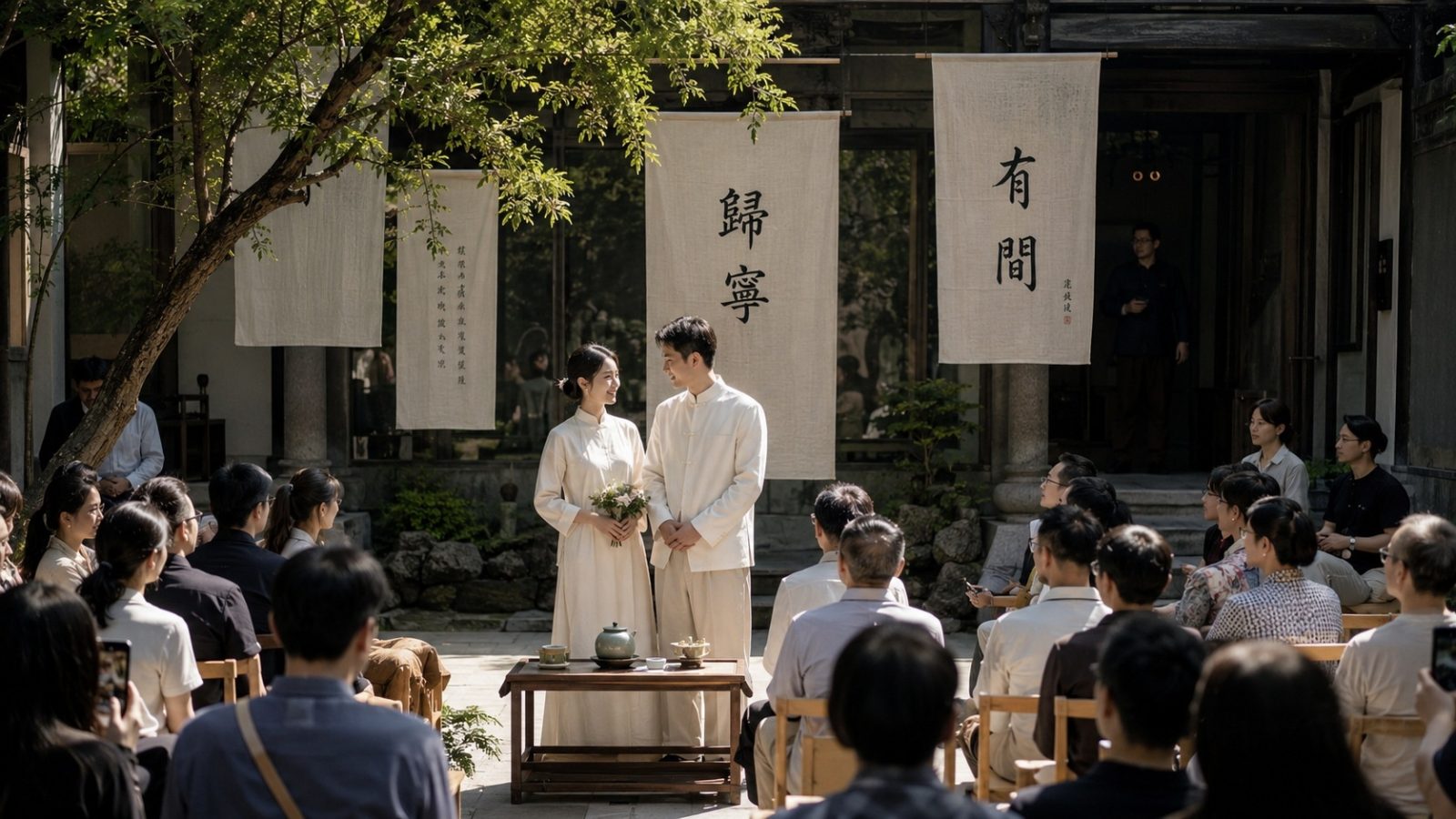

A Quiet Morning in Hangzhou
The sun hits a low wooden table in a walled garden near West Lake. Steam rises from a ceramic teapot. Two young people in linen and silk sit across from each other, reading handwritten vows instead of following a script. Thirty guests watch in silence. No loud MC, no awkward door games, no red envelope counting.
This is what a modern Chinese wedding looks like today for many couples. It is not a rejection of tradition. It is an edit.
The Old Script vs. The New Edit
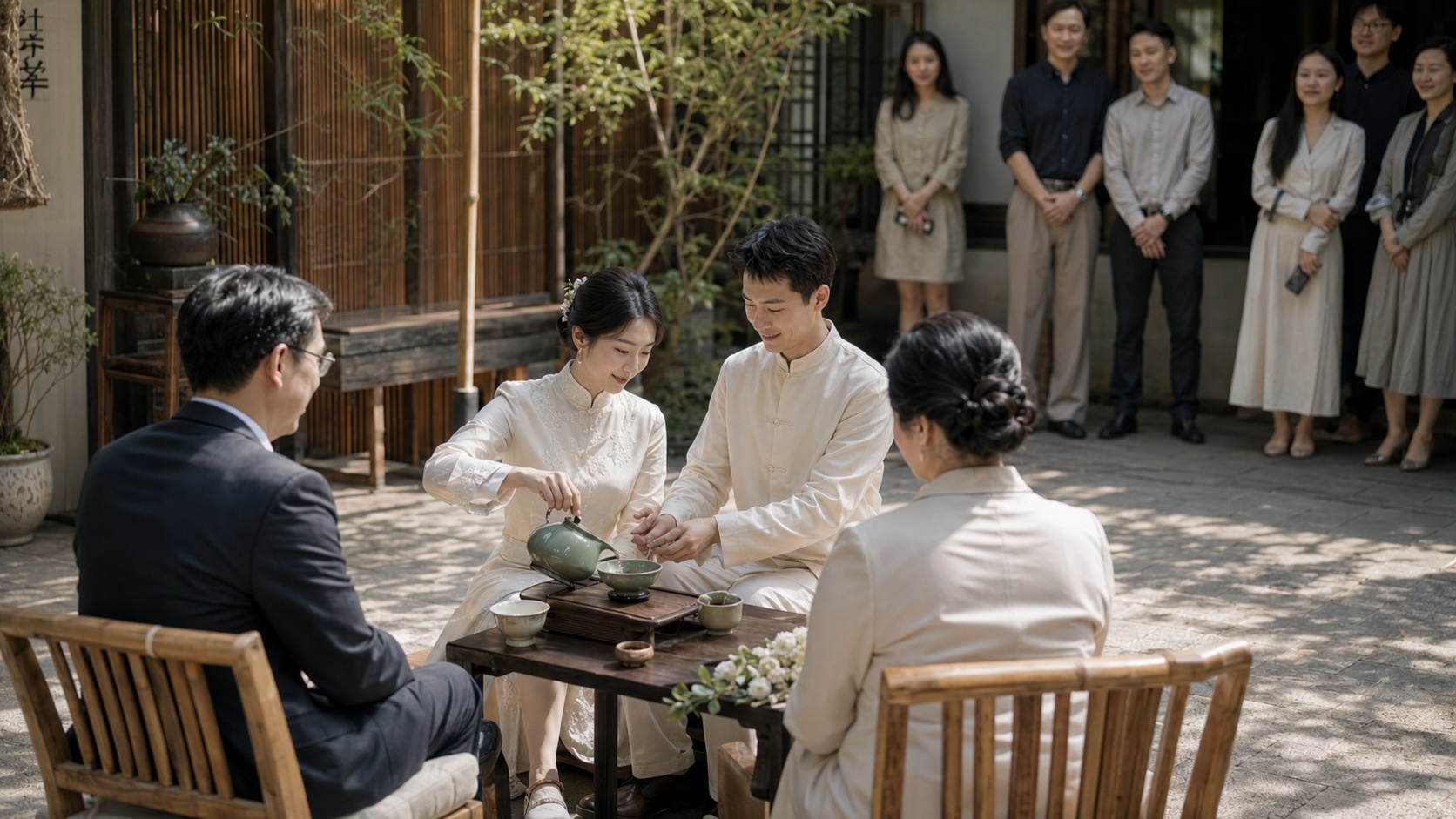
Understand the shift, and you understand how everyday life in China has changed. Ten years ago, a typical urban wedding followed a predictable formula. Couples rented hotel ballrooms that cost anywhere from 50,000 to 200,000 yuan. They wore heavy gold jewelry, hosted dozens of family friends, and played staged games to win red envelopes. The day was loud, exhausting, and often funded by six wallets—the bride’s parents, the groom’s parents, and sometimes grandparents.
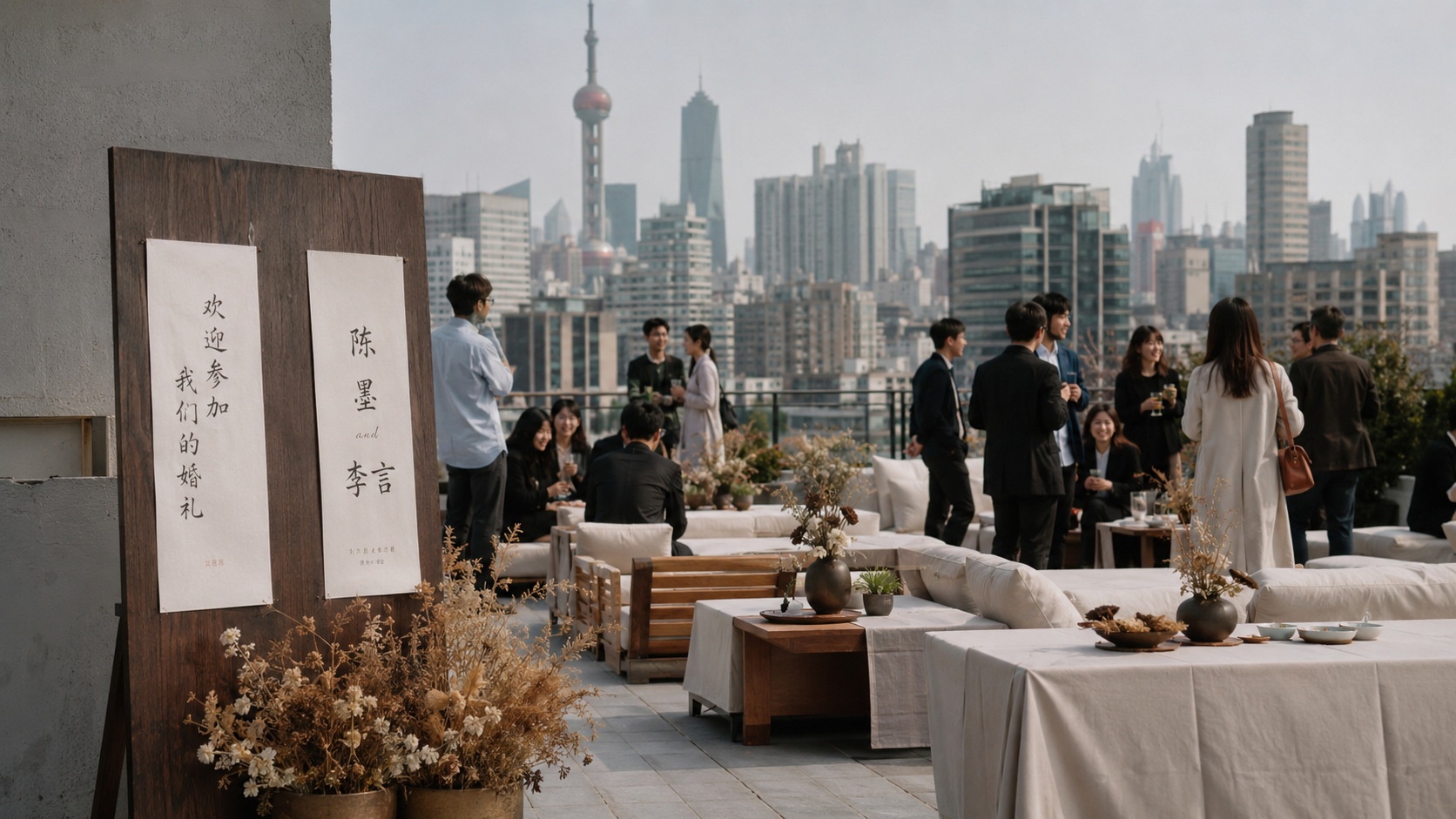
Young people today are stepping off that conveyor belt. Instead of one massive banquet, they are choosing micro-weddings or small gatherings of 20 to 50 people. Instead of hotel ballrooms, they book rooftop terraces, independent museums, or renovated courtyard houses. The budget is still there, but it is moving from decoration to experience.
Unpacking the “New Chinese” Aesthetic
The term xin zhongshi (new Chinese style) has spread beyond weddings into fashion, interiors, and design. In marriage ceremonies, it means blending familiar cultural symbols with modern simplicity. Think bronze, jade, and unbleached cotton instead of neon red. Calligraphy invitations replace mass-printed cards. The traditional tea ceremony is kept, but stripped of performative pressure. Couples kneel to pour tea for their parents, not because an MC demands it, but because they want a quiet moment to express gratitude.
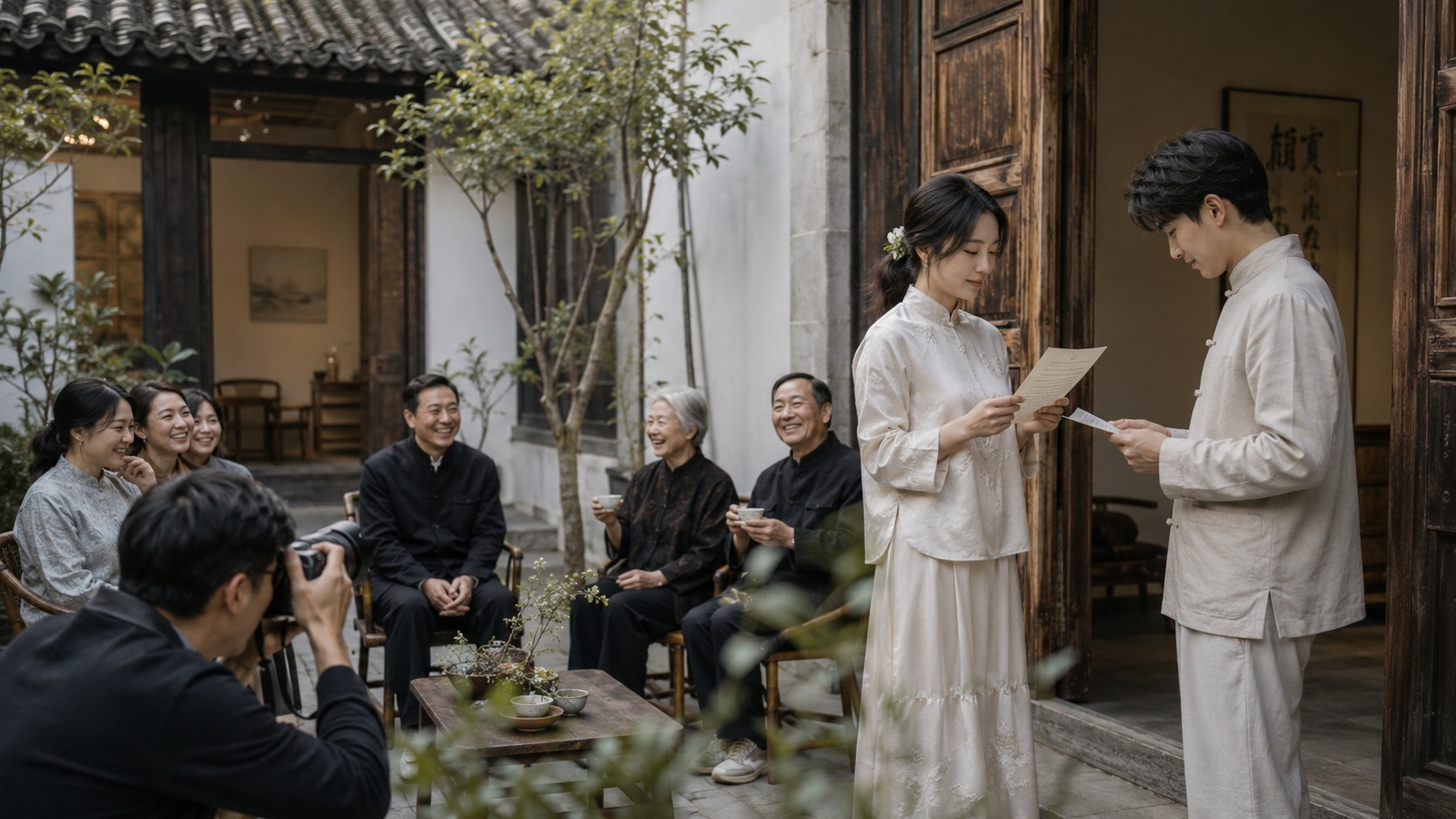
Photographers have adapted too. Documentary-style coverage is now standard. Couples prefer candid shots over rigid posing. Vows replace scripted jokes. The goal is no longer to impress strangers in the back row. It is to mark the day for the people who actually matter.
Why Young Couples Are Pushing Back
The change is practical as much as cultural. Weddings in China have become expensive performances. Many young professionals delay marriage because saving for a house, car, and child-rearing takes priority. When they do marry, they want the ceremony to reflect their actual lives, not a showroom template.
Social media fatigue plays a role too. A decade ago, couples felt pressure to post perfectly staged photos for WeChat Moments. Today, that same pressure has turned into exhaustion. Young people would rather spend the day talking with close friends than standing in line for posed group shots. They are reclaiming control over their own milestones.
Tradition, Stripped of the Baggage
Does simplifying a wedding mean abandoning Chinese culture? Not at all. It means filtering it. The rituals that stay are usually the ones that carry emotional weight. Bowing to parents, sharing tea, exchanging rings or bracelets—these moments persist because they work. What disappears is the part that feels like obligation: forced drinking rounds, loud matchmaking jokes, and exhausting multi-venue tours that leave couples running between hotels and restaurants by noon.
Older generations sometimes question the change. Parents who grew up with scarcity remember when a grand wedding was a status signal. Today, many parents quietly prefer a calm day over a stressful spectacle. The financial burden has shifted, and families are realizing that a smaller, more intentional ceremony often brings closer connections than a crowded banquet hall.
What This Shift Really Means
New Chinese weddings are not just an aesthetic trend. They are a quiet negotiation between tradition and modernity. Young couples are taking the framework of Chinese marriage—family respect, mutual commitment, cultural continuity—and removing the parts that no longer serve them. The result is slower, quieter, and deeply personal.
For outsiders looking in, it might look like less ceremony. In reality, it is more intention. Marriage in China is becoming less about public performance and more about private agreement. And that shift is happening in courtyards, cafes, and small gardens across the country, one carefully chosen detail at a time.