

Walking Into the Digital Sky
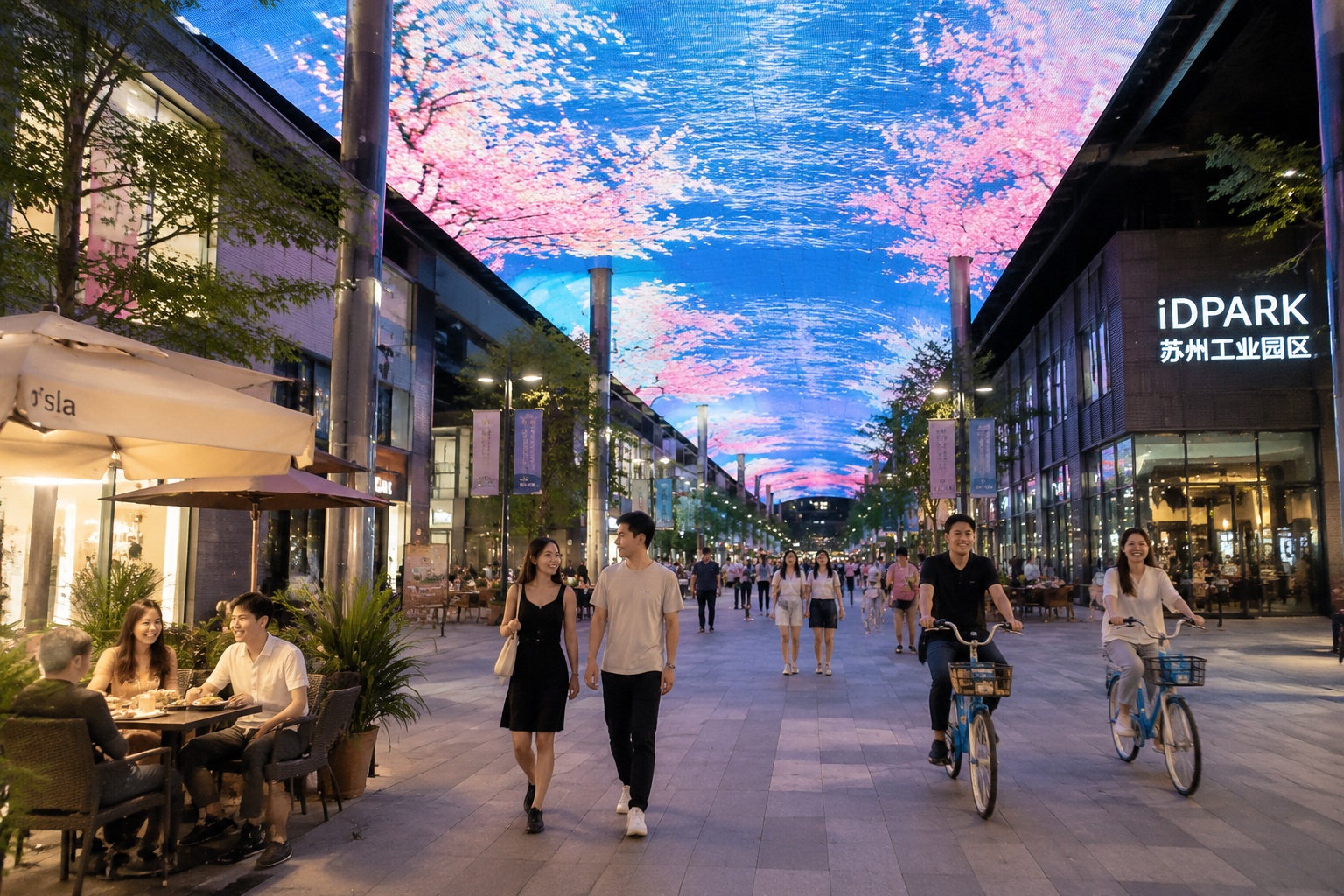
The air in Suzhou Industrial Park carries the damp, cool scent of late autumn. It is 8:30 PM on a Tuesday. If you look up from the sidewalk, you aren’t seeing stars or clouds. You are looking at a ceiling made of light.
Li Wei, a 29-year-old software engineer, stops his e-bike near a crosswalk. He doesn’t look at his phone. Instead, he watches as the street above him shifts from a serene projection of falling cherry blossoms to a gentle blue pulse indicating the next pedestrian signal phase. For Li and thousands of others working in this district, this isn’t a tourist attraction they visit on weekends. It is their daily commute.
Suzhou, historically known as the “Venice of the East” for its ancient canals and gardens, has quietly engineered one of the most ambitious urban infrastructure projects in recent memory: an 80,000-screen LED canopy spanning over four kilometers of main streets in the Suzhou Industrial Park (SIP). It is often described as the world’s largest digital sky screen.
More Than a Giant Screen
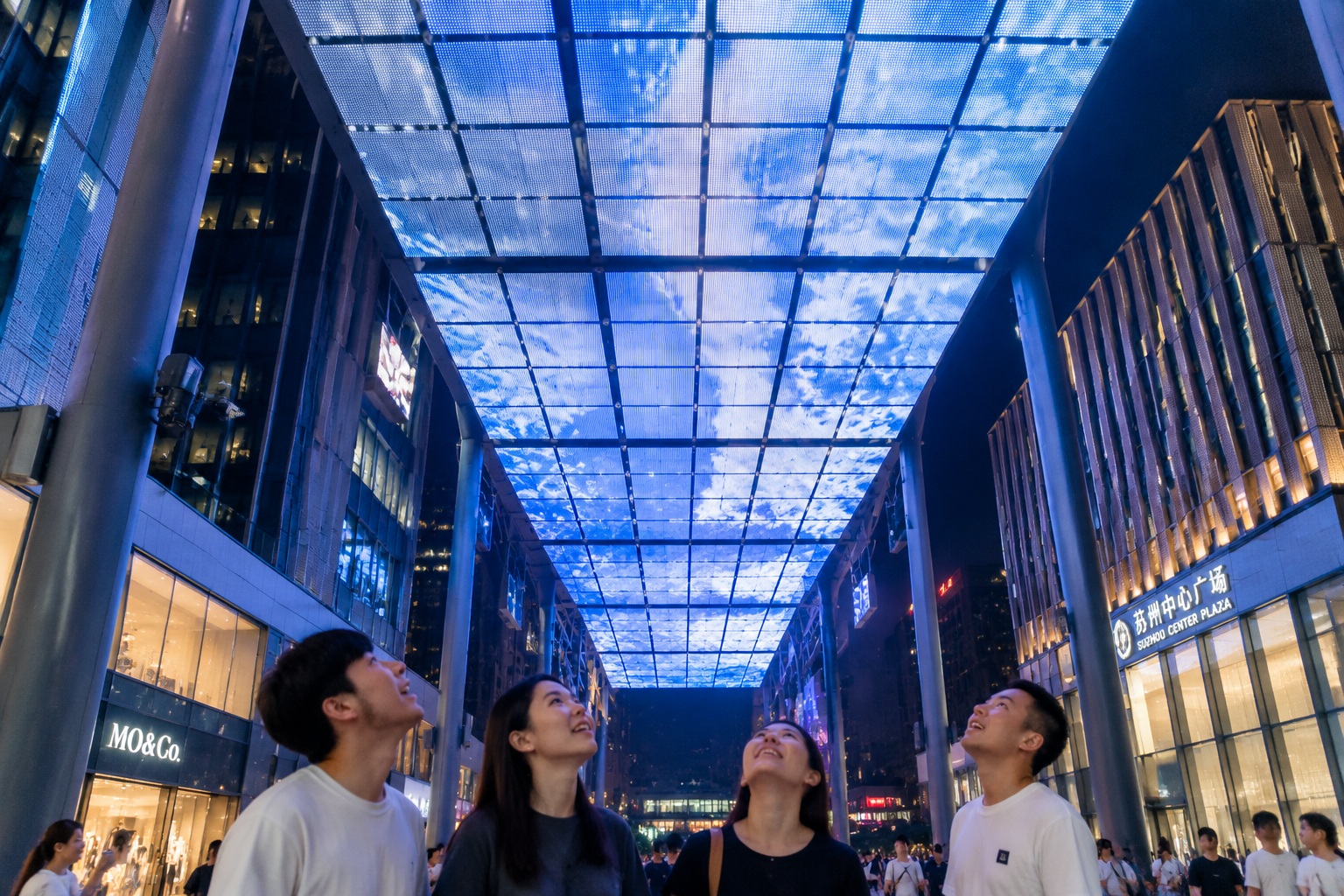
To understand the scale, imagine hanging 80,000 smartphone screens end-to-end. Now, stretch them across multiple city blocks, suspended just high enough for buses and cars to pass underneath.
The canopy is not a single monolithic billboard. It is a decentralized network of thousands of LED modules installed on overhead beams connecting buildings along the main avenues like Jinji Lake Road and Sino-Singapore Avenue. Each panel can be controlled individually, creating a unified yet flexible canvas.
While the visual impact is striking—transforming gray concrete corridors into vibrant tunnels of color—the purpose goes beyond aesthetics. The system serves as a dynamic public utility. During the day, it diffuses sunlight to reduce heat island effects. At night, it provides adaptive lighting that adjusts based on weather forecasts and pedestrian traffic density.
Tech in Daily Life: From Spectacle to Utility
Five years ago, the streets here were lit by standard sodium-vapor lamps—yellowish, static, and often flickering. Today, the change is subtle but pervasive.
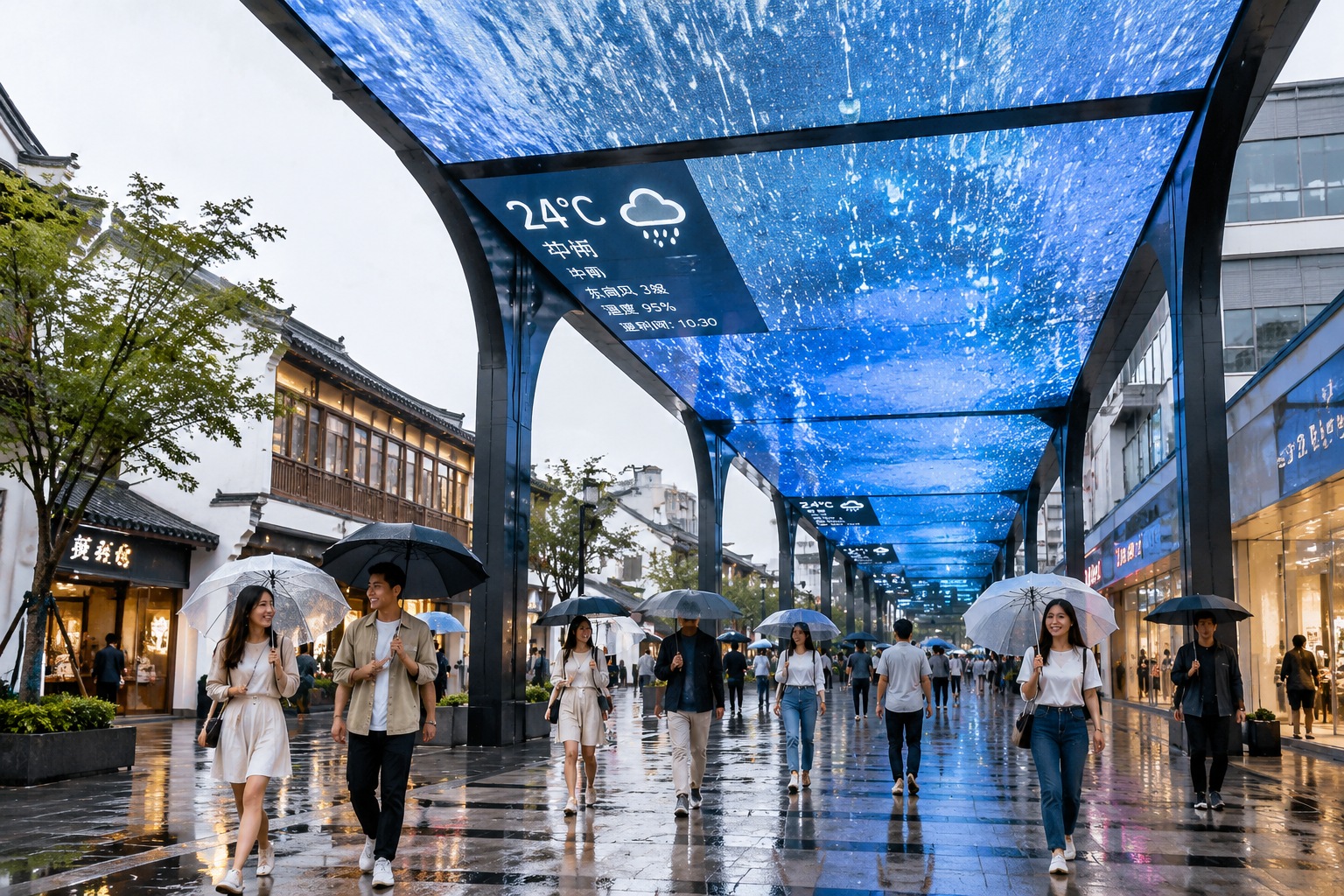
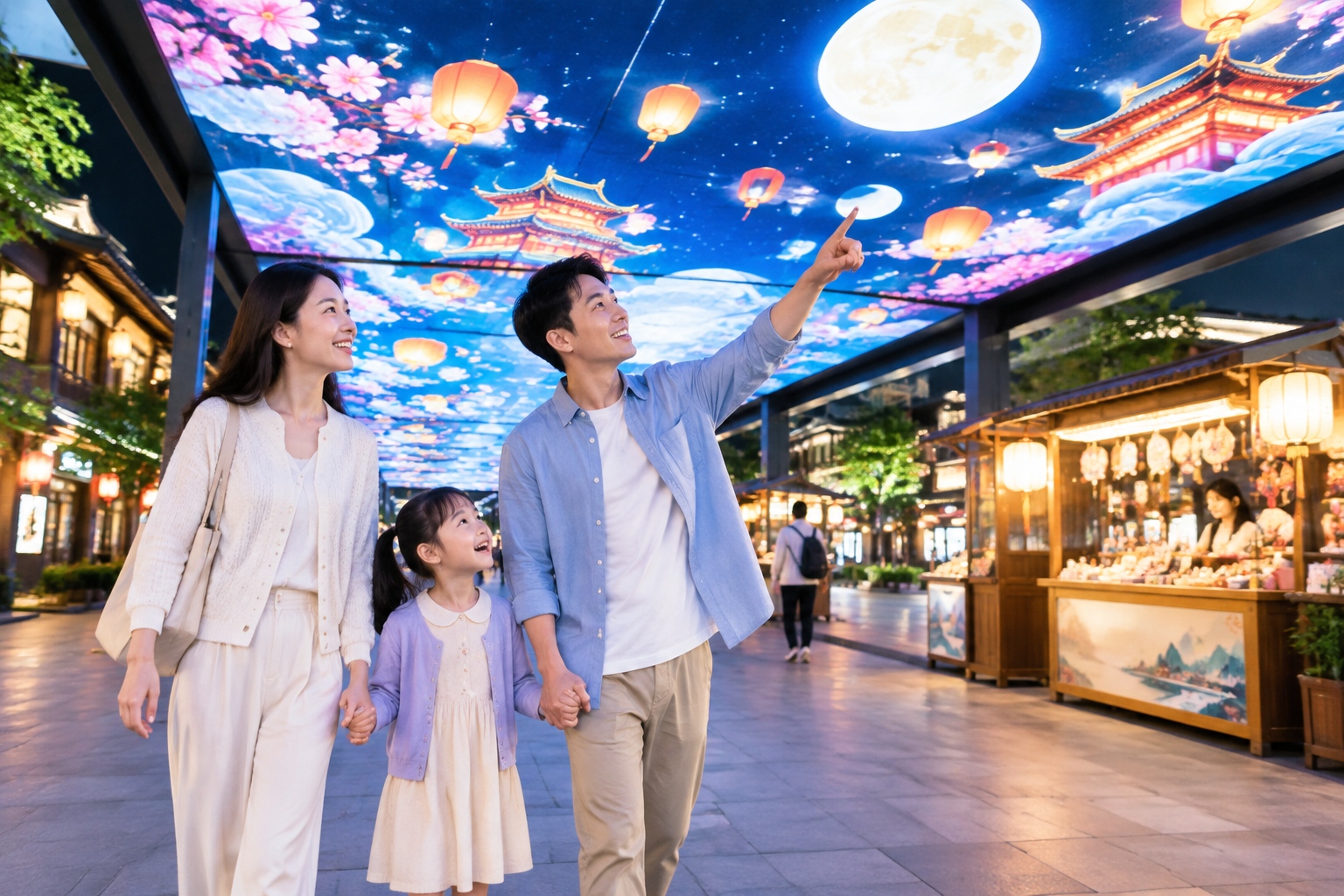
For local residents, the canopy has become an ambient information layer. On rainy days, the screens display real-time precipitation maps and gentle rain soundscapes to help commuters prepare for the wet weather. During cultural festivals, such as the Lantern Festival or Mid-Autumn Festival, the sky transforms into a digital canvas featuring traditional motifs: glowing lanterns, moon phases, and historical narratives relevant to Suzhou’s 2,500-year history.
“It feels less like walking under wires and more like walking through a living room,” says Zhang Min, a graphic designer who lives nearby. “Sometimes I check the screen just to see what theme is being displayed. It makes the commute feel less isolating.”
This integration of technology into public space reflects a broader trend in Chinese urban planning: the democratization of high-tech infrastructure. The goal is not merely to impress, but to enhance the quality of daily life through better lighting, information accessibility, and emotional resonance.
The Human Rhythm Beneath the Light
Walking under the canopy reveals a different social texture. The soft, even illumination eliminates the harsh shadows typical of traditional streetlights, making sidewalks safer and more inviting for evening strollers.
Families with young children are common here. Parents point up at changing animations—sometimes educational content about astronomy or local flora—to distract their kids from the journey home. Street vendors selling roasted chestnuts and hot tea operate under brighter, clearer light, allowing them to stay open later without relying on bulky, energy-intensive floodlights.
Beyond the Hype: Practical Benefits
Skeptics might ask: Is this just a “white elephant” project—a costly vanity experiment that serves no practical purpose? After all, maintaining 80,000 screens sounds expensive and energy-intensive.
The reality is more nuanced. The LED panels used are highly energy-efficient, consuming significantly less power than traditional high-mast lighting. Furthermore, the system is modular; if a section fails, it can be repaired without shutting down the entire street. Smart sensors allow the brightness to dim automatically when streets are empty, optimizing energy use.
More importantly, the canopy has acted as an economic catalyst. Data from local management committees indicate a noticeable increase in foot traffic and retail spending along these corridors compared to five years ago. The “night-time economy”—a key driver of China’s domestic consumption—thrives in environments that feel safe, modern, and pleasant.
Cafes and small businesses report higher evening turnover. The aesthetic appeal draws not just locals but also tourists who come specifically to experience the digital atmosphere, supporting local hospitality industries.
A New Urban Aesthetic
Suzhou’s LED canopy is not about replacing tradition with technology; it is about layering them. As you walk past modern glass towers on one side and traditional garden walls on the other, the sky above unifies the contrast.
For visitors from abroad, this might look like science fiction. For residents, it is simply the new normal—a testament to how urban infrastructure can evolve from mere function to experience. It shows a China that is not just building faster, but thinking deeper about how its cities feel to live in.
Start the discussion at forum.chinacomes.com