

Waking Up in Wuhan: The Second Meal
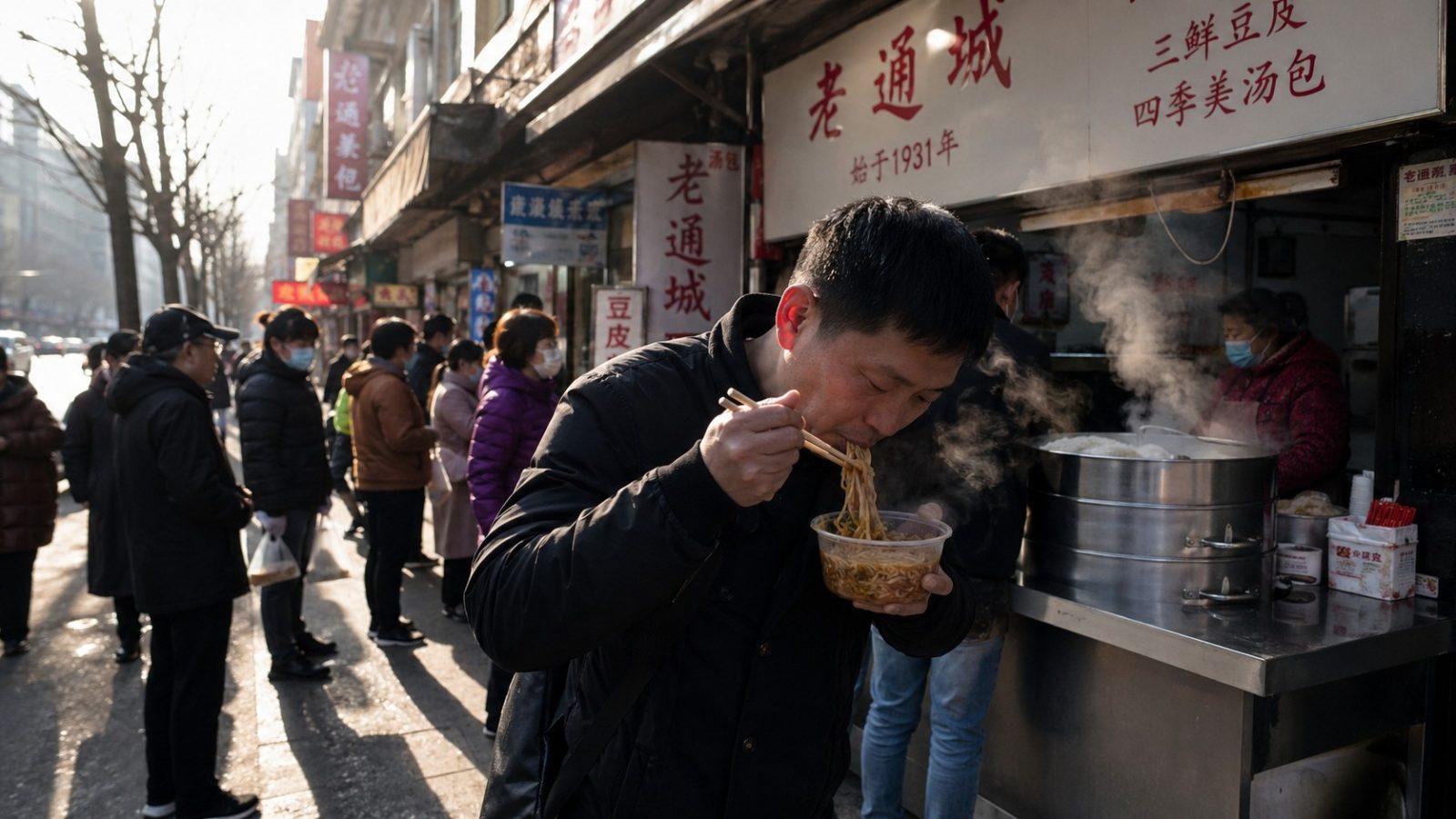
The alarm goes off at 6:30 AM. By 7:15, the air above Jianghan Road is already thick with steam and the sharp scent of sesame paste. This isn’t a quiet coffee break for remote workers; it’s the start of the day’s most important meal. In Wuhan, breakfast—known locally as guo zao or “passing the dawn”—is treated with the same seriousness as lunch.
I watch Mr. Li, a retired teacher in his late sixties, step out of his apartment building. He doesn’t check his phone. Instead, he adjusts his collar and joins a queue forming on the sidewalk. The line is short but dense, a testament to how deeply this ritual is woven into the city’s fabric. In Wuhan, food isn’t just fuel; it’s the social glue that holds the neighborhood together before the rush hour traffic begins.
The Star Ingredient: Beyond the Sauce
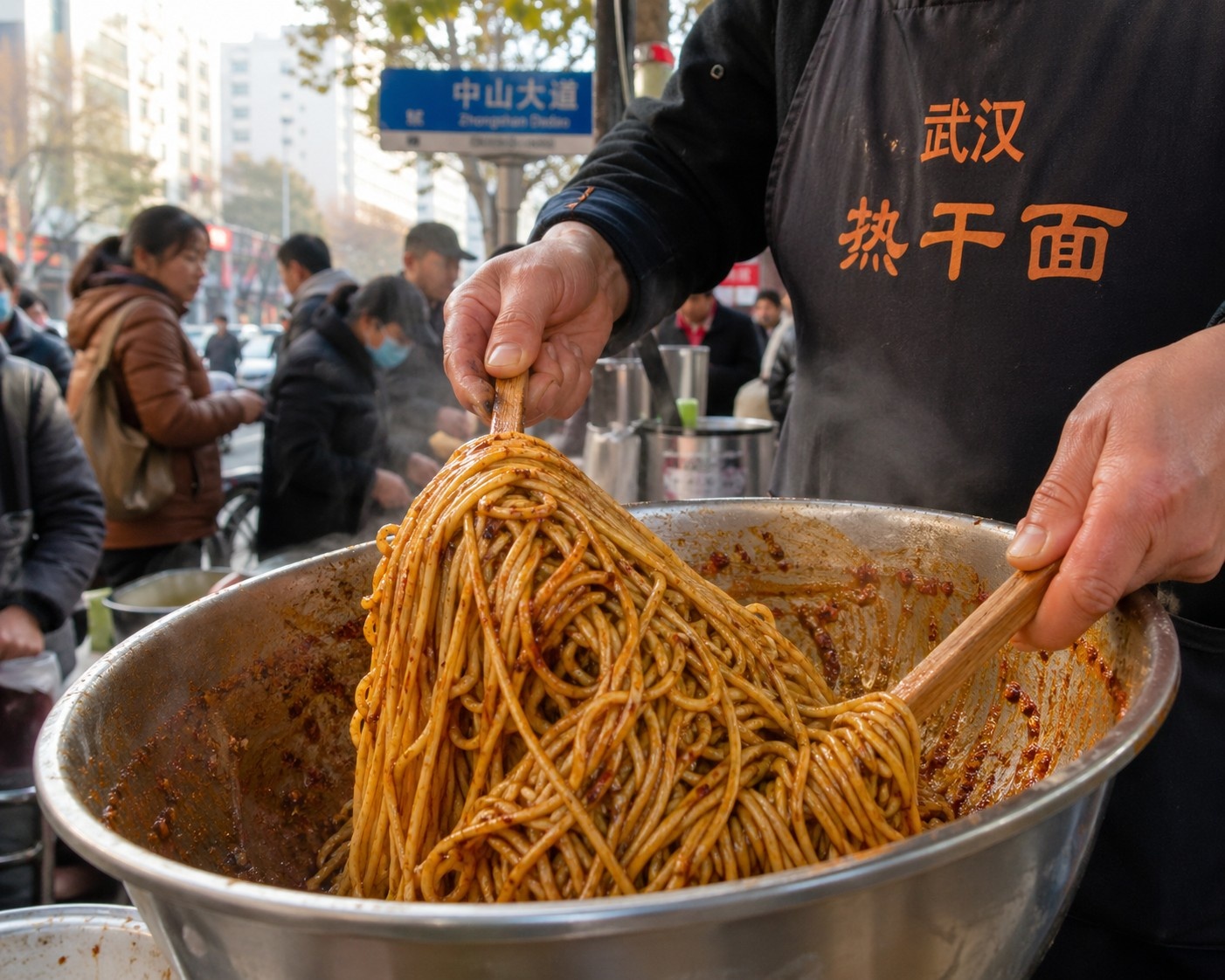
When Mr. Li reaches the stall, he doesn’t ask for a menu. He simply taps his fingers on the counter twice and says, “One portion, extra garlic.” The vendor, a woman in her forties with flour-dusted hands, scoops up a handful of yellow noodles from a steaming basket. These aren’t soft, slippery noodles served in broth like many expect. They are boiled, drained, and tossed vigorously with sesame paste.
The secret to Hot Dry Noodles (Re Gan Mian) lies in the texture and the sauce. The noodles are pre-boiled and dried slightly to give them a firm bite, then coated in a rich mixture of toasted sesame paste, soy sauce, chili oil, and pickled beans. When Mr. Li takes his first bite, he doesn’t eat slowly; he chews with purpose. The noodles are sticky enough to hold the sauce but chewy enough to provide a satisfying resistance. It is a meal designed for speed and flavor.
For many Wuhan residents, the dish represents the city’s character: direct, hearty, and unapologetically bold. There is no pretense here. Just a bowl of noodles that demands your full attention before you head to work.
The Hidden Gem: What Is Egg Wine?
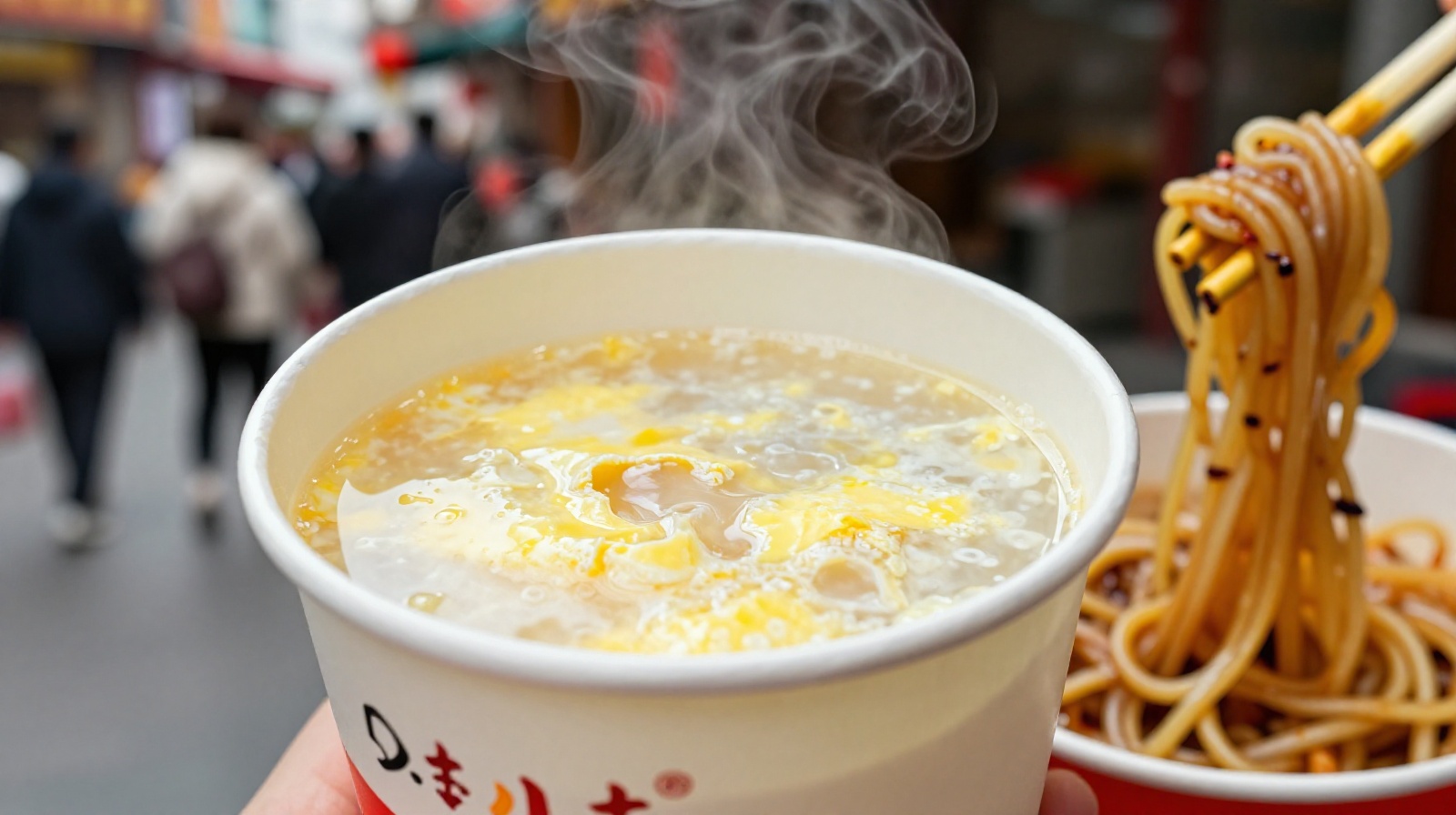
While the noodles grab the headlines, the true companion to this meal sits in a small paper cup: Dan Jiu, or egg rice wine. To an outsider, the name sounds contradictory—egg and alcohol? But this is not the strong spirits found elsewhere.
This drink is made by whisking raw eggs into hot, slightly fermented glutinous rice wine (huangjiu). The result is a creamy, custard-like liquid with a subtle sweetness and a faint, comforting warmth. It tastes like a cross between warm eggnog and sweet porridge, but with the distinct tang of fermentation.
“It wakes you up without making you sleepy,” says Ms. Zhang, a university student sitting next to Mr. Li. She holds her cup with both hands, sipping slowly as she finishes her noodles. For locals, Dan Jiu is an energy booster. It provides carbohydrates and protein in one warm sip, perfectly balancing the dry, salty heat of the noodles.
The Ritual of Street Dining
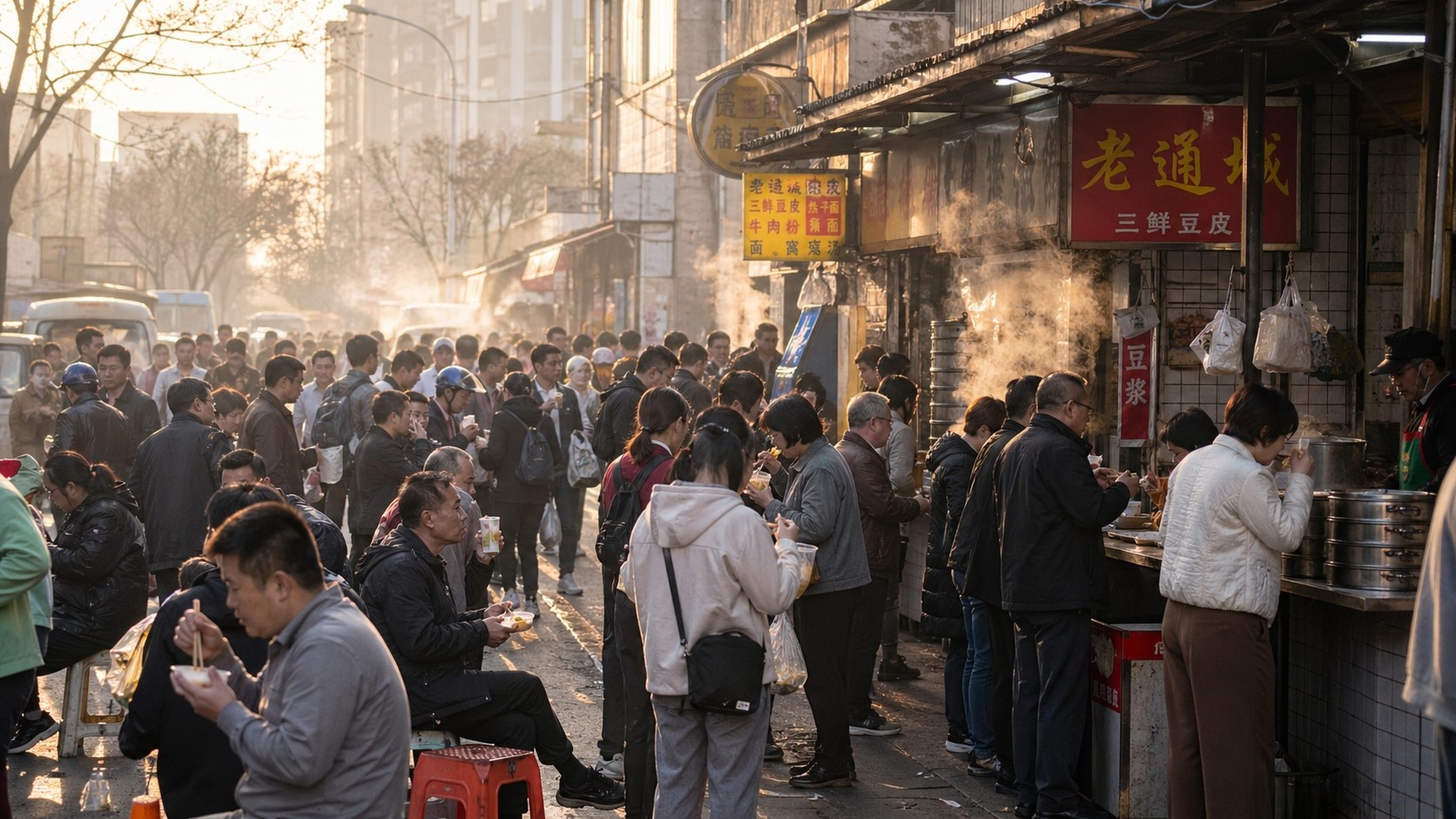
There is no private booth here. Mr. Li and dozens of others stand on the sidewalk, their backs to the bustling street, heads down over small plastic tables or even just the stall counter. The atmosphere is a chaotic symphony: the clatter of bowls, the hiss of steam, the rapid-fire dialect of vendors shouting orders in Wuhan Mandarin.
For tourists, this scene can be overwhelming. How do you pay? Do you need to sit? What if the table is full? The answer lies in observation. Most people hand cash directly to the vendor or scan a QR code on the wall. Sitting is optional; standing is the norm. You eat as quickly as you can because the city moves fast, and so must you.
More Than Food: A Glimpse into Daily Life
This breakfast ritual reveals something profound about Wuhan. The city has faced floods, pandemics, and economic shifts. Yet, every morning, the steam rises from these same stalls. The consistency of this meal is a sign of resilience.
The people lining up are a cross-section of society: factory workers in worn uniforms, students with backpacks, elderly residents in traditional vests. They eat side by side, sharing space and silence. In a world where digital screens often isolate us, the Wuhan breakfast stall offers a moment of shared humanity. It is a reminder that despite the rapid modernization and high-tech growth, the rhythm of life here still beats to the sound of noodles being tossed and soup ladling.