

The First Whiff
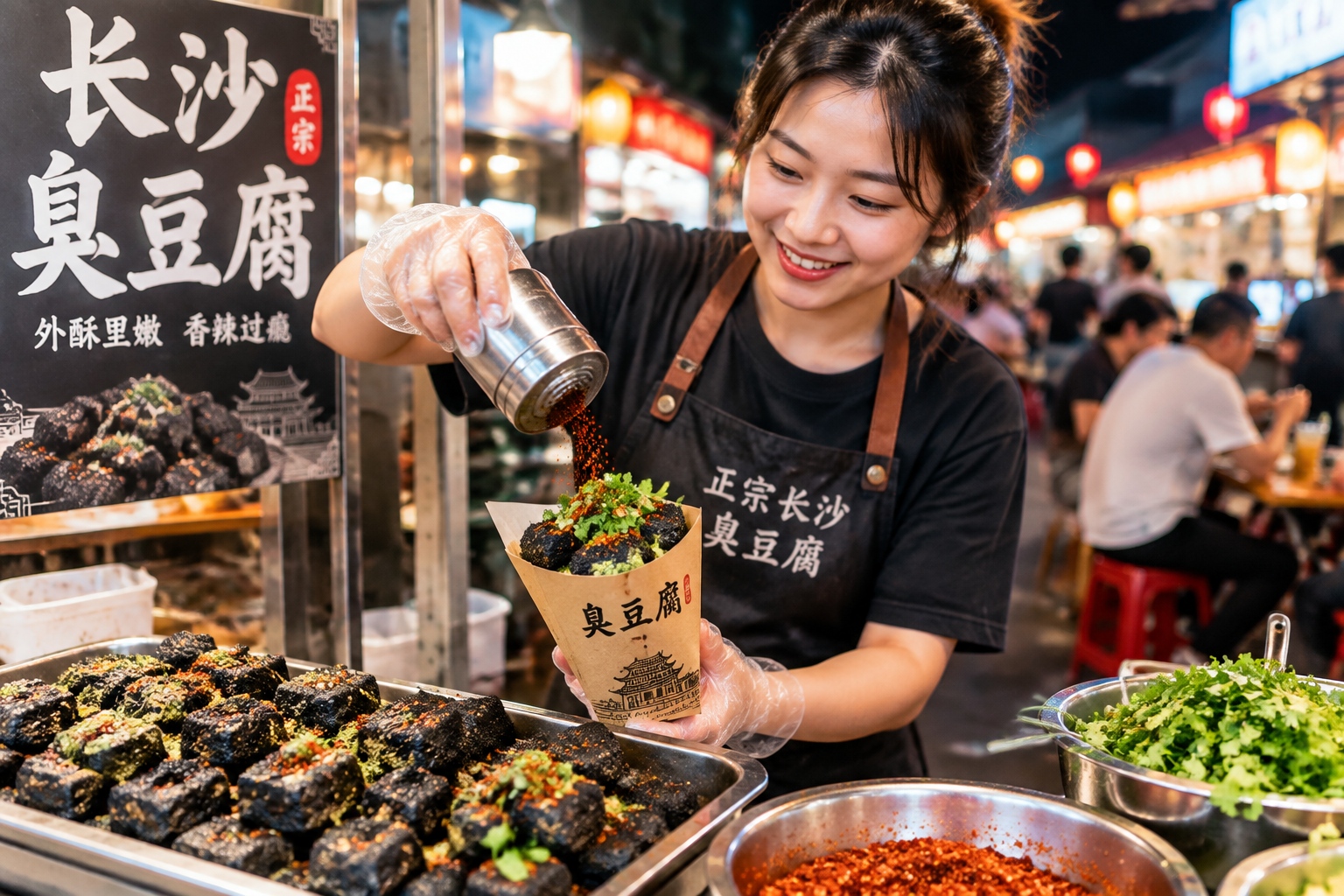
Imagine walking through a bustling night market in Changsha or Taipei. The air is thick with the scent of grilling skewers and frying dough sticks. Then, you catch it: a pungent, fermented odor that hits you like a physical wall. It’s sharp, complex, and undeniably intense. For many first-time visitors to China, this smell triggers an immediate instinct to retreat.
Yet, right in front of them stands a small stall, lined with locals waiting patiently. The vendor ladles dark, almost black cubes from a vat into a paper cone, sprinkling them with chili powder and cilantro. “Stinky Tofu,” they say with a smile. This is not a prank; it is one of China’s most beloved culinary paradoxes.
The Science Behind the Stench
Why does something so foul-smelling exist? The answer lies in fermentation, a process similar to how blue cheese or durian develops its character. Traditional stinky tofu uses a “fermented brine” made from vegetables like bamboo shoots, winter melon, and sometimes shrimp.
Over weeks or months, this mixture breaks down into amino acids. When the tofu is fried, these compounds react with heat, creating volatile organic compounds that produce that distinctive aroma. To the uninitiated, it smells like decay. To those who know, it signals umami—the savory fifth taste—that promises a rich, deep flavor profile.
From Horror to Addiction
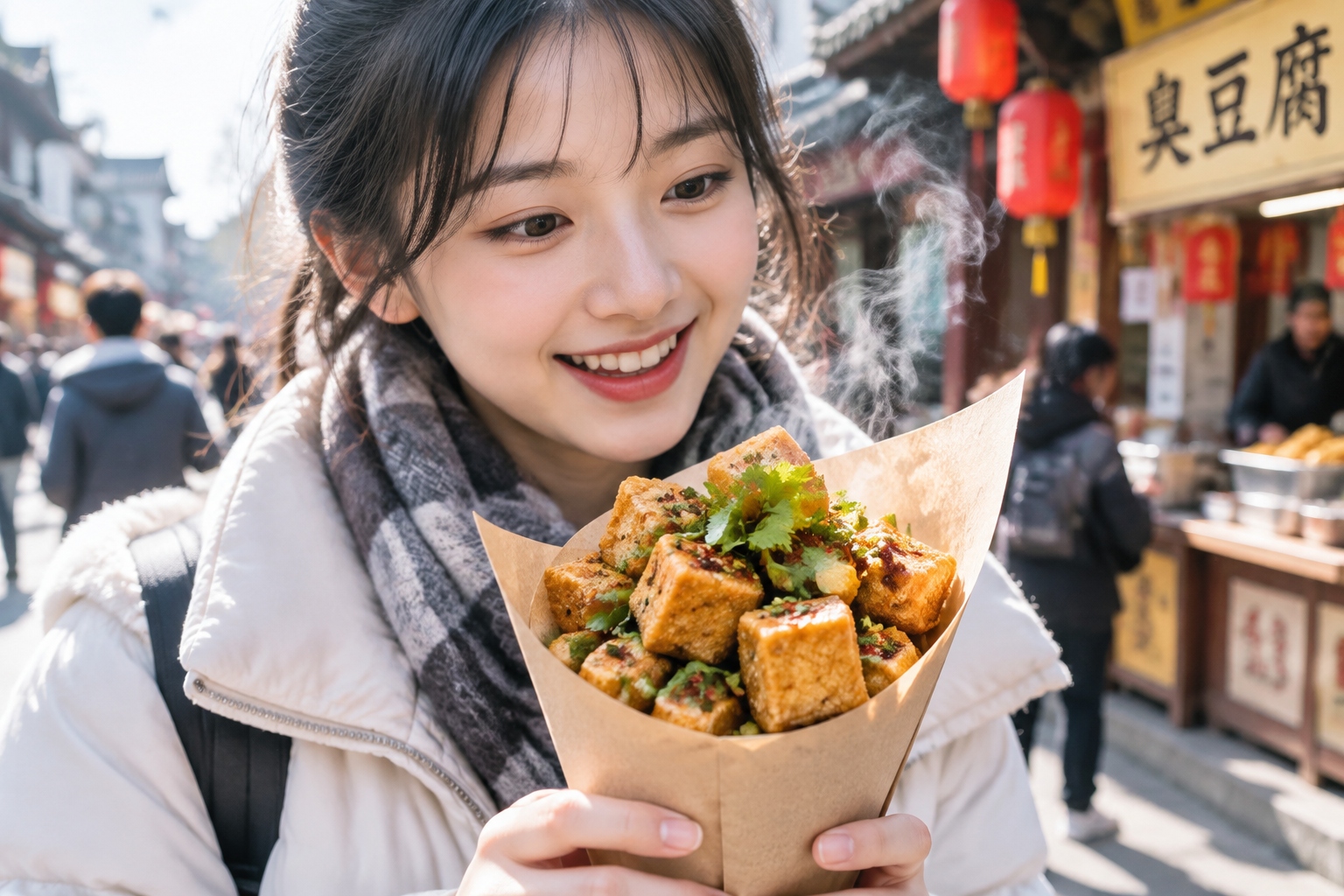
The experience of eating stinky tofu is a journey for the senses. The exterior must be crispy enough to crack under your teeth, while the inside remains soft and custard-like. When you take that first bite, the smell vanishes instantly, replaced by a burst of savory, slightly spicy, and incredibly tender flavor.
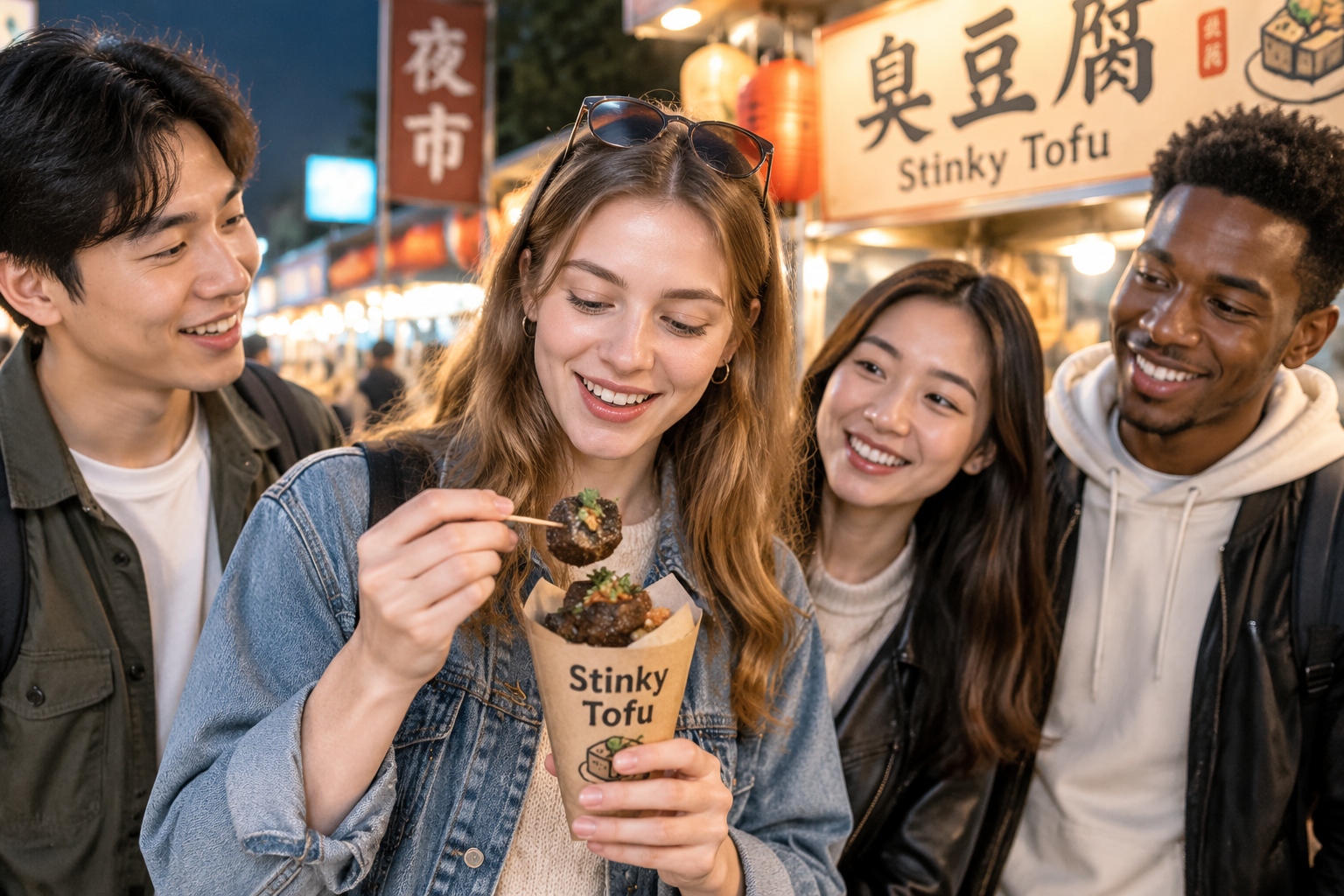
Most tourists approach it with hesitation. “Are you sure?” they ask their friends. But within minutes, the initial disgust is often replaced by curiosity, then delight. It’s a classic case of sensory dissonance: your nose says “stop,” but your palate screams “more.” This contrast is exactly why it has become an internet sensation and a staple of Chinese street food culture.
A Cultural Staple
Stinky tofu is not just a snack; it’s a social equalizer. You’ll see students, office workers, and elderly residents eating it from the same stalls. In cities like Shanghai and Guangzhou, it’s available 24/7, often served late at night after bars close or during late-night study sessions.
The preparation varies by region. In Hunan, it’s typically black and heavily spiced with chili. In Taiwan, it’s often white and milder, served with a sweet plum sauce. Despite these differences, the core experience remains: a daring leap of faith that rewards you with comfort food at its finest.
Why You Should Try It
If you are in China, ignoring stinky tofu is like visiting Paris and skipping the croissant. It’s an essential part of the local fabric. Don’t let your nose decide for you. Let curiosity lead. Find a busy stall with high turnover—the freshest ingredients move fast—and watch how the locals eat it. You might just find yourself coming back for seconds.
Start the discussion at forum.chinacomes.com