
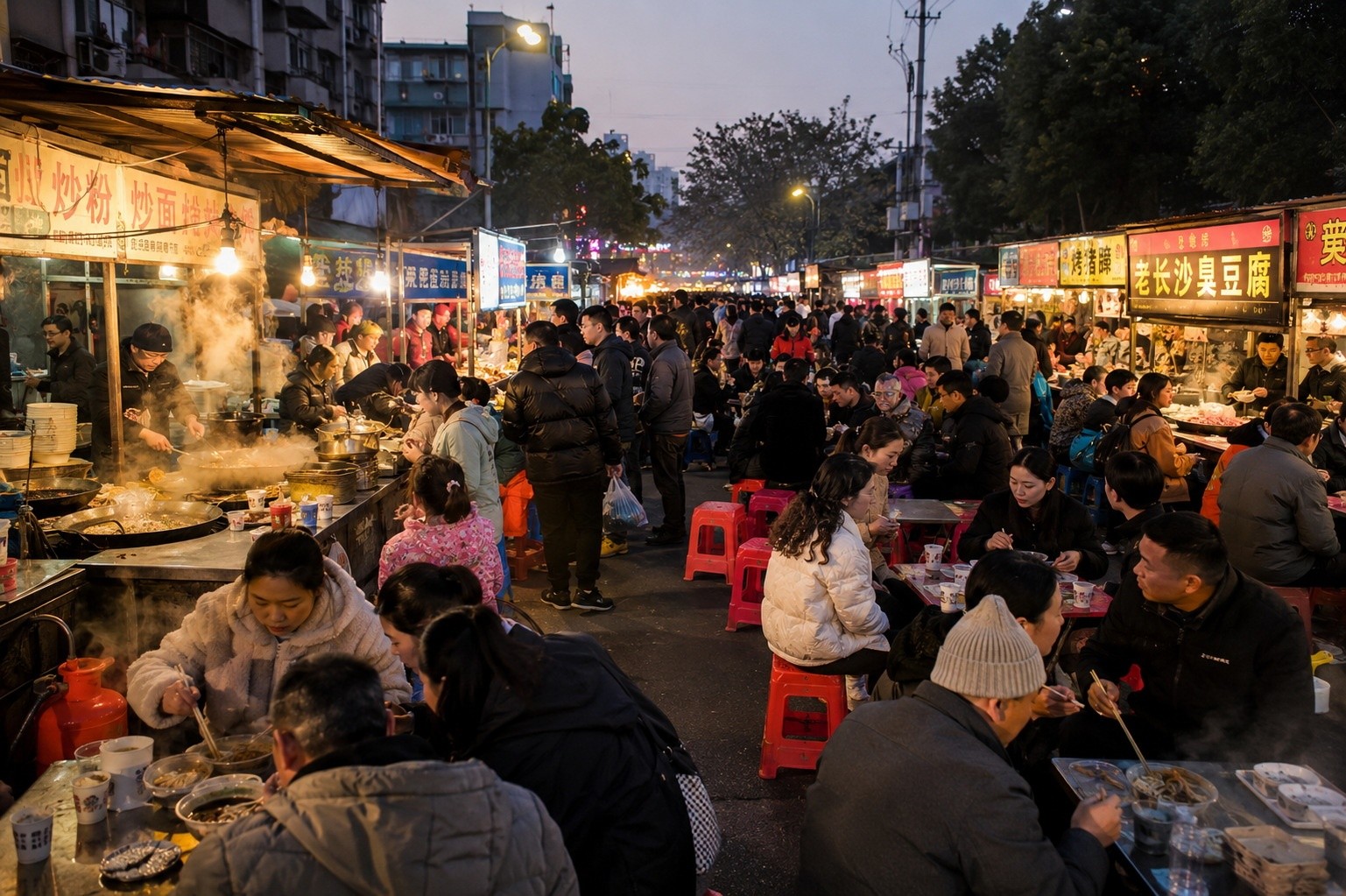

It was 8:00 PM in Chengdu, and the air hung heavy with the scent of chili oil and cumin. I stood before a stall where a grandmother-like vendor was tossing skewers over a roaring charcoal fire. The grill sizzled violently. Next to her, another stall sat empty, its gas burner cold, offering identical skewers at a slightly lower price. I didn’t need to ask the locals for advice; their behavior already answered the question.
For many visitors from Europe or North America, the idea of eating street food in China triggers immediate anxiety about hygiene. Is the water clean? Are the ingredients fresh? How is the utensil cleaned? These are valid concerns. However, relying on abstract notions of “cleanliness” often leads to missing out on the best culinary experiences. In China, street food safety is not determined by sterile white uniforms or plastic gloves, but by simple, observable physics and economics.
The Crowd is Your First Metric
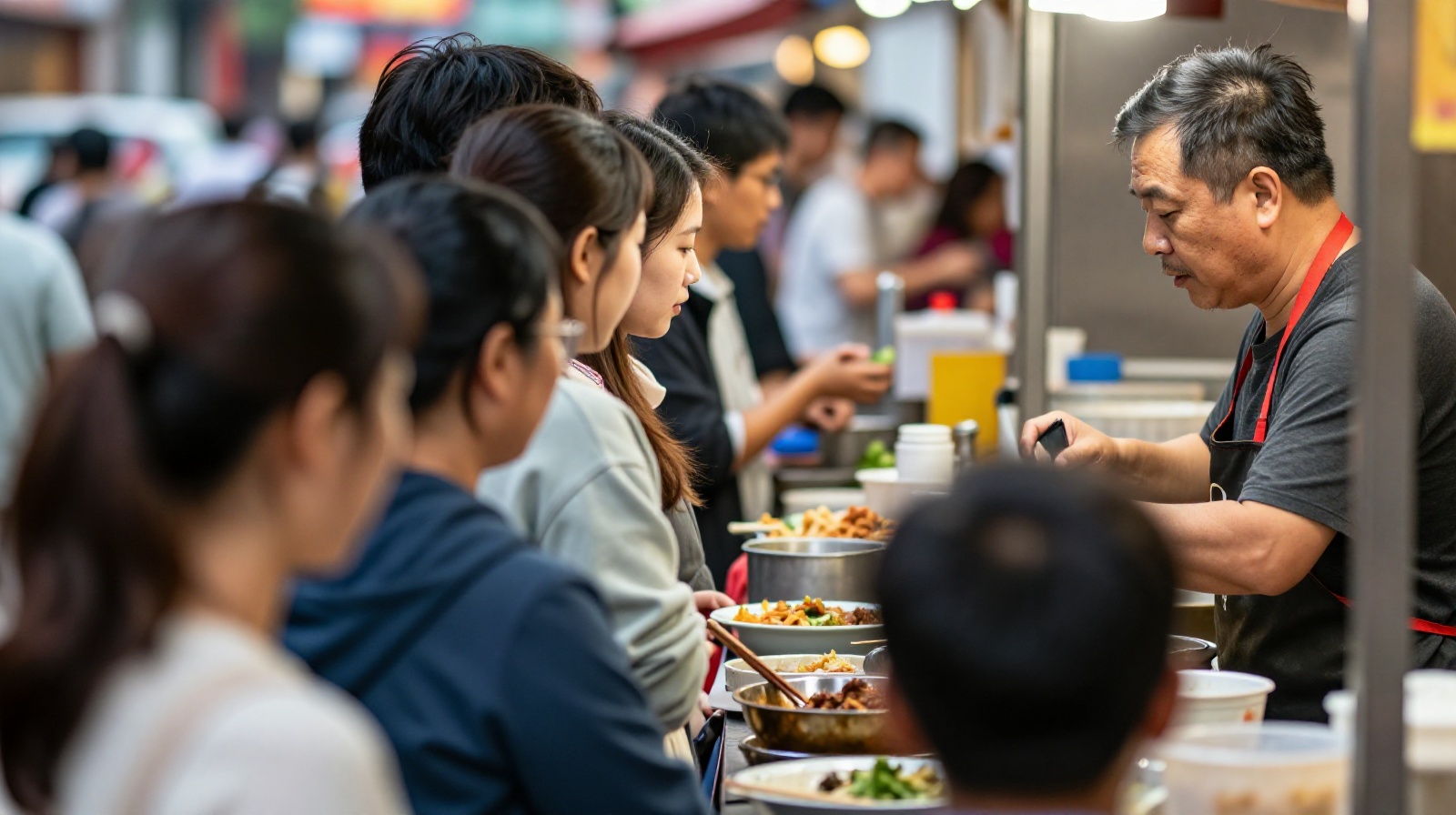
The most reliable indicator of food safety in a Chinese night market is not the cleanliness of the counter, but the length of the queue. This might seem counterintuitive if you are used to fast-food franchises that prioritize speed over social proof, but in street food culture, high turnover is synonymous with freshness.
When a stall is crowded, it means the ingredients have been purchased recently and consumed quickly. There is no time for bacteria to multiply because the supply chain from fridge to plate takes minutes, not hours. A busy stall also implies that regulars—locals who eat there daily or weekly—approve of the hygiene standards. If people get sick frequently, word spreads instantly in WeChat groups, and the business collapses within days.
Watch the Oil Turnover
If you enjoy fried foods, which are ubiquitous from deep-fried dough sticks (youtiao) to skewers, observe the oil. In many traditional setups, vendors use large pots of oil for frying. The key is not whether they change the oil every single day—though good ones do—but how fast the oil moves through the pot.
High-volume frying introduces fresh ingredients constantly into the hot oil, which dilutes the breakdown products and keeps the oil relatively stable. Conversely, a stall with slow turnover often has old, darkened oil that has been sitting for hours or even days, reusing the same batch for multiple customers. This is why you should avoid stalls where the fried items look soggy or absorb excessive grease; they are likely sitting in oil that has degraded.
Visual Checks: The “Three Zones” Rule
Beyond popularity and turnover, there are three visual zones you can scan quickly to assess hygiene without getting too close:
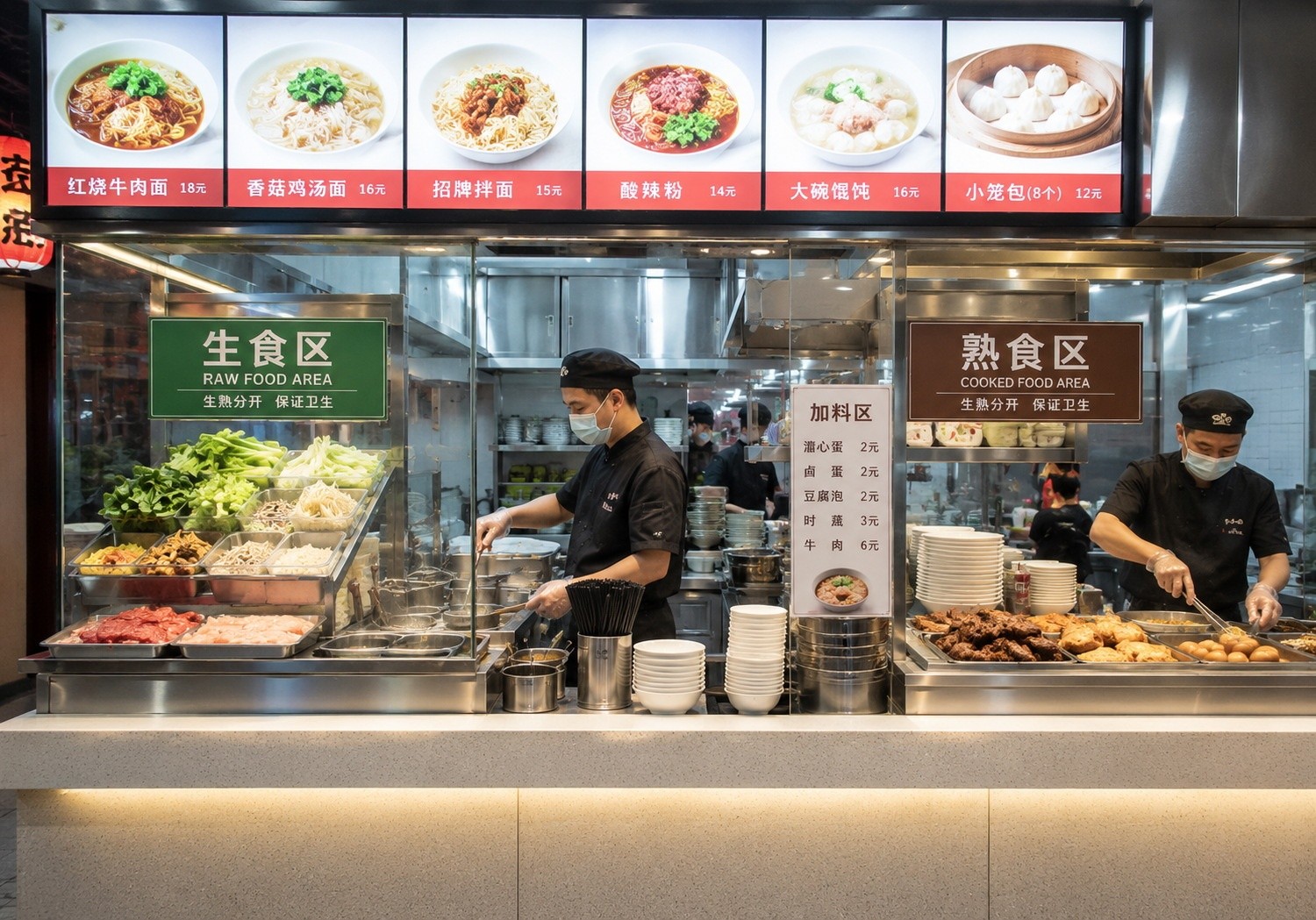
- The Prep Area: Look at the raw ingredients. Are vegetables piled in dirty water? Is raw meat stored separately from cooked food? Cross-contamination is a real risk. In well-managed stalls, you will see clear separation between raw and cooked items.
- The Cooking Zone: This is where the heat happens. High-heat cooking (frying, grilling, boiling) kills most pathogens. If you see a vendor handling ready-to-eat food with bare hands after touching raw meat or uncooked dough without washing, that is a red flag.
- The Serving Zone: This includes the chopsticks, tongs, and cash handling area. Many modern stalls now use separate tongs for picking up food versus handling money. If you see vendors using the same pair of tongs to pick skewers and then place them on your plate, it is better to move on.
Start with High-Heat Cooking
If you are new to street food in China, a practical rule of thumb is to stick to foods that undergo high-temperature cooking. Deep-fried items, grilled meats, and boiling soups or noodles are generally safer bets because the heat process sanitizes the surface of the food.
Be more cautious with cold dishes (liangcai), salads, or marinated snacks that do not receive a final heating step. While many traditional vendors have impeccable hygiene habits for these items, the margin for error is smaller. If you must try them, choose stalls that are busy and where the food is covered or displayed in sealed containers.
Conclusion
Navigating China’s street food scene does not require a fear of germs; it requires a shift in perspective. You are not looking for a sterile laboratory environment. You are looking for evidence of rapid consumption, high heat, and local trust. By observing these practical metrics, you can enjoy the incredible diversity of Chinese street cuisine with confidence.