

The Takeout Misconception
When you think of Chinese food in the West, a bottle of thick, sugary sweet and sour sauce often comes to mind. It’s red, glossy, and coats everything from fried pork to egg rolls. But if you walked into a kitchen in Suzhou or Xi’an today, that bottle would likely be missing entirely.
Real Chinese vinegar is not about making things taste like fruit candy. It is the backbone of balance. In a single meal, it cuts through grease, brightens stale ingredients, and deepens savory notes without overpowering them. It is as essential to the Chinese palate as wine is to a French one, yet far more diverse.
More Than Just Sour: A Regional Tour
Vinegar in China isn’t a single ingredient; it is a map of local history and agriculture. The flavors change every few hundred miles.
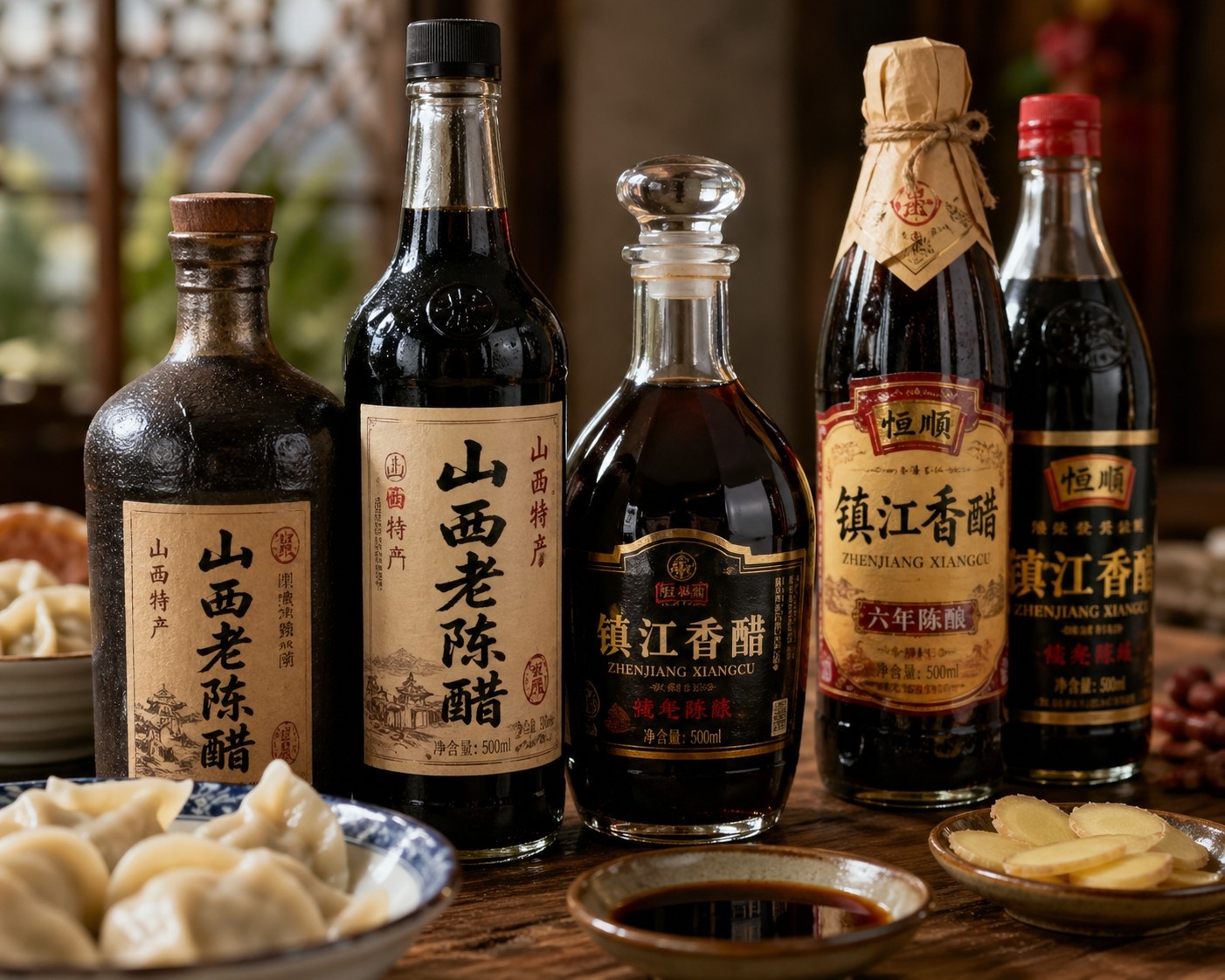
In Shanxi province, the air often smells faintly of fermentation. Here, they make Shanxi Mature Vinegar (Laocuan). Made from sorghum and aged in clay pots for years, it is deep brown, slightly sweet, and has a complex, mellow acidity that lingers on the tongue. It is the soul of noodle soups and braised dishes in northern China.
The Smoky Secret: Zhenjiang Vinegar
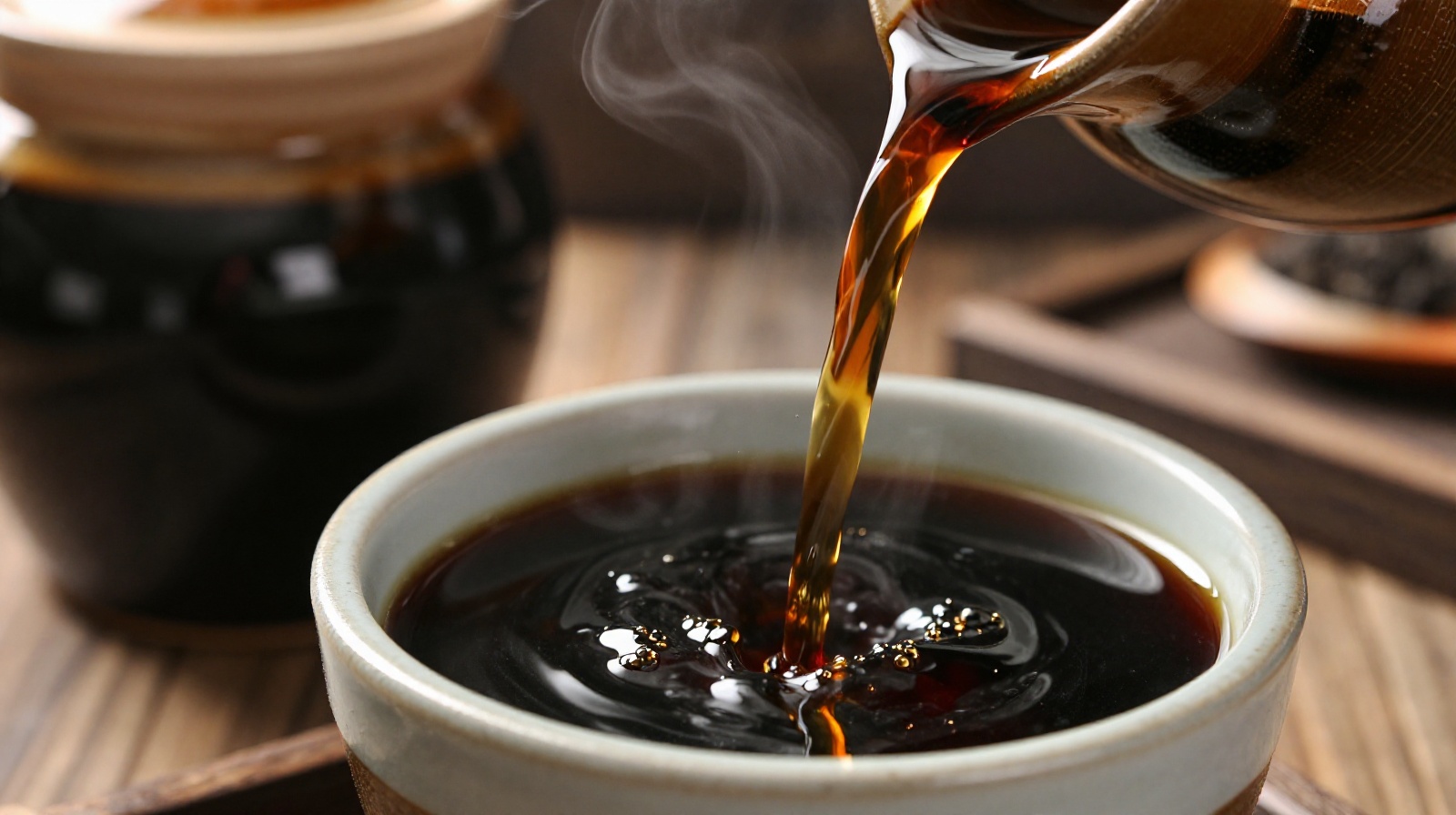
Travel east to Jiangsu province, and the profile shifts again. The city of Zhenjiang produces Zhenjiang Black Vinegar (Chinkiang). Unlike its northern cousin, this vinegar often involves roasting the grain before fermentation. This gives it a distinct smoky aroma reminiscent of dried wood or roasted coffee.
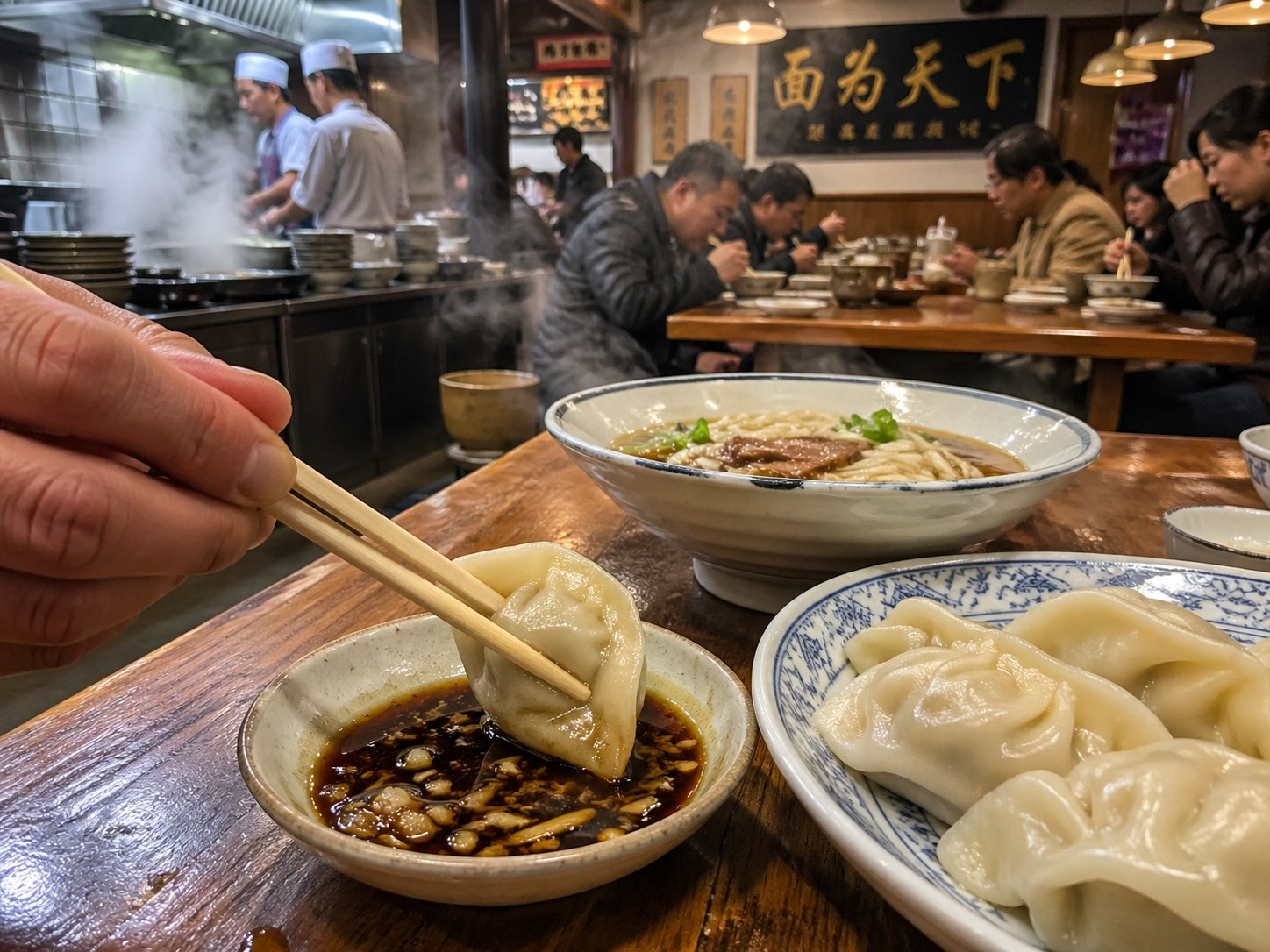
It is less sharp than Western wine vinegars. Instead, it has a rounded, umami-rich body. You will find it sitting on tables in high-end restaurants and humble noodle shops alike, usually served with ginger strips and sometimes chili oil for dipping dumplings (jiaozi). It transforms the simple act of dipping into a multi-layered experience.
How Ordinary People Use It Daily
In Western cooking, vinegar is often an afterthought—a splash of lemon juice or red wine to finish a dish. In China, it is a primary ingredient that shapes the meal before it even reaches the stove.
Consider a simple bowl of Guo Bao Rou (Double-fried Pork). The traditional version in Northeast China isn’t drenched in sugar syrup. It uses a vinegar-heavy sauce where the sourness hits first, followed immediately by the savory pork fat and a hint of sweetness. The balance is precise.
In summer, families make cold cucumber salads with rice vinegar (like Shanxi Rice Vinegar). The sharp acidity wakes up the palate against the heat. In noodle shops across the country, a dash of vinegar in the broth changes the entire character of the soup from heavy to refreshing.
The Dipping Sauce Ritual
Perhaps the most visible daily use is at the dinner table. When eating hot pot or dumplings, the small dipping bowl is rarely just soy sauce. For black vinegar lovers, it is a mix of Zhenjiang vinegar, minced garlic, and fresh ginger. This combination enhances the meat’s umami while cutting through the richness of boiled broth.
It is a habit built over generations. A child in Xi’an grows up learning that without vinegar, a bowl of Biangbiang noodles feels incomplete. The sourness is not an add-on; it is part of the ingredient list.
Why This Matters
Understanding Chinese vinegar changes how you see Chinese cuisine. It moves beyond the stereotype of “sweet and sticky” to reveal a sophisticated system of flavor engineering where acidity is used to create harmony, not just to shock the tongue.
The next time you visit an Asian grocery store or a local market in China, skip the red bottles on the bottom shelf. Look for the dark brown glass jars with handwritten labels from Shanxi or Zhenjiang. Taste them straight if you dare; they are complex, earthy, and entirely different from anything in a typical Western pantry.
This is the real flavor of China—balanced, regional, and deeply rooted in daily life.