
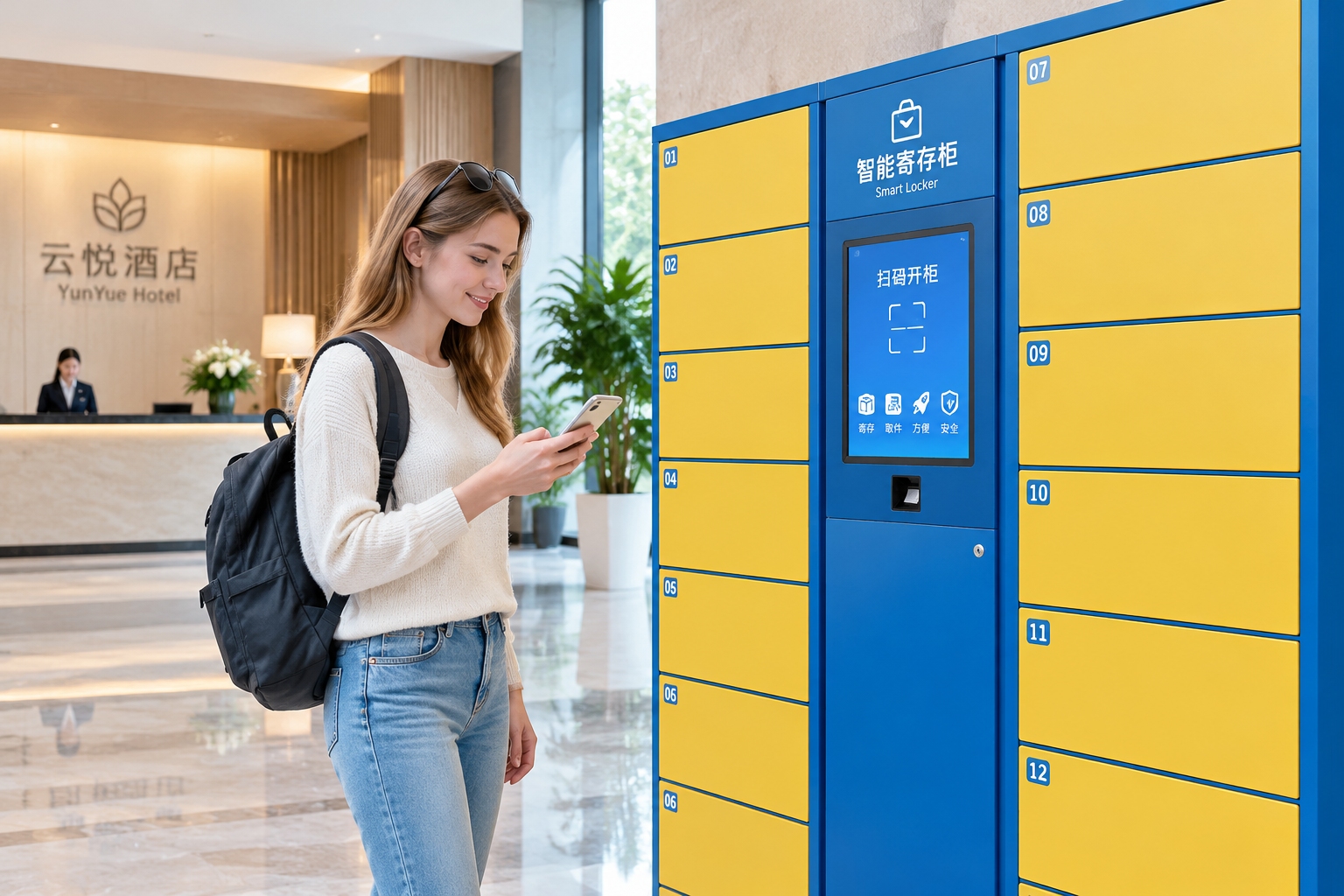

The Mystery of the Locked Door
If you’ve ever ordered a hot meal to your hotel room in China, you might have experienced a sudden moment of panic. You check your phone: “Delivery arrived.” But when you rush to the lobby, there’s no rider waiting with your bags. Instead, you find rows of yellow or blue metal boxes covering an entire wall.
This is not a glitch. It is a feature. In most mid-to-high-end hotels and residential complexes in China, delivery riders are strictly prohibited from entering elevator banks to protect guest privacy and security. The food has been placed inside these smart lockers, waiting for you.
Don’t worry. Retrieving your order is actually quite simple once you understand the system. Think of it as a game with clear rules.
Step 1: Find Your Locker
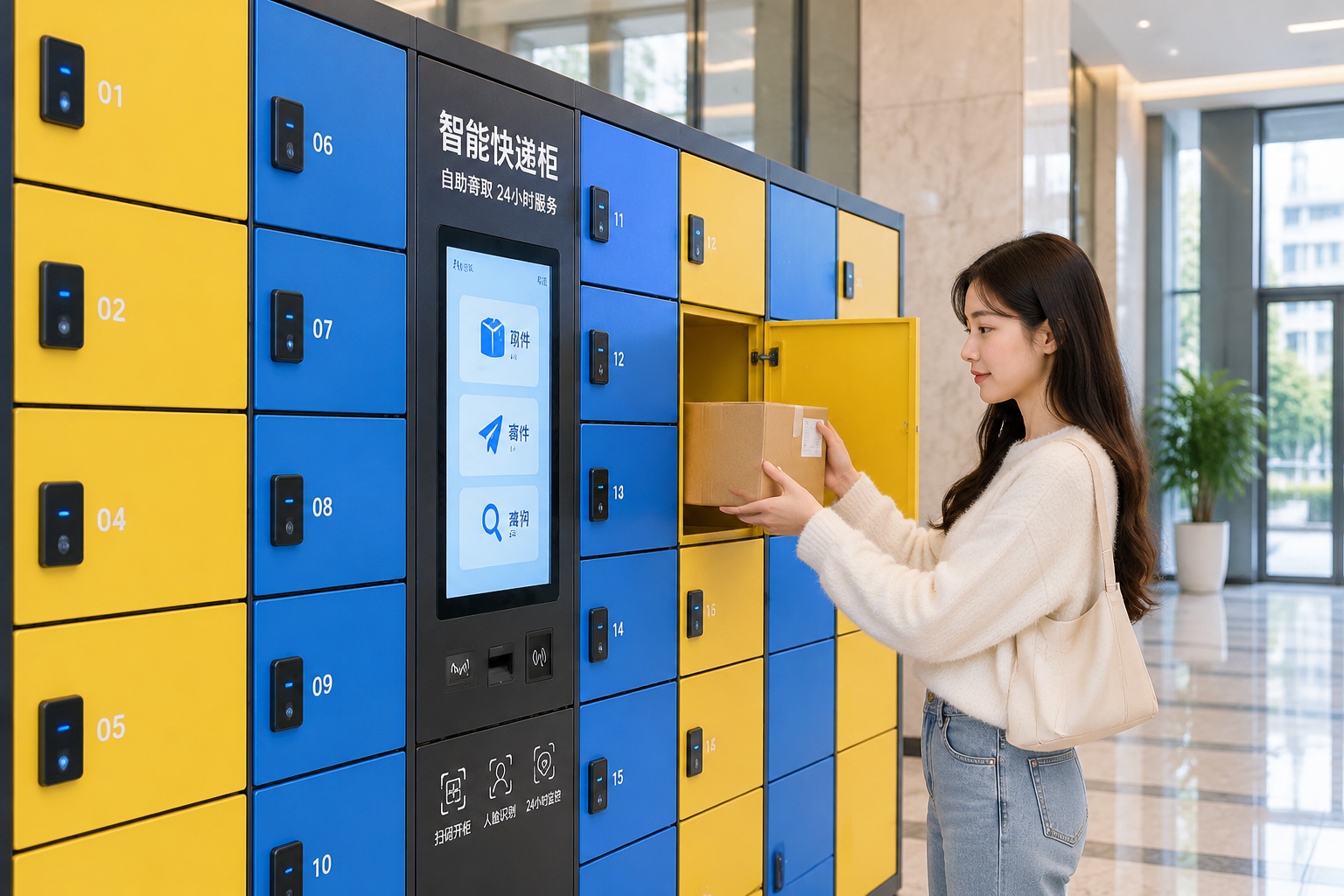
Head to the lobby or the designated service area of your building. You will likely see large, grid-like structures made of metal doors. These are the “Waimai Lockers” (外卖柜). They are usually managed by third-party companies like Hive Box (Fengchao) or specific hotel brands.
The lockers are often color-coded. Yellow might mean they are open, while blue indicates a different system, but for you, the most important thing is looking at your phone screen. You will receive two types of notifications:
- A push notification from the delivery app (Meituan or Ele.me).
- An SMS text message containing a 6-digit pickup code.
Step 2: The Two Ways to Open
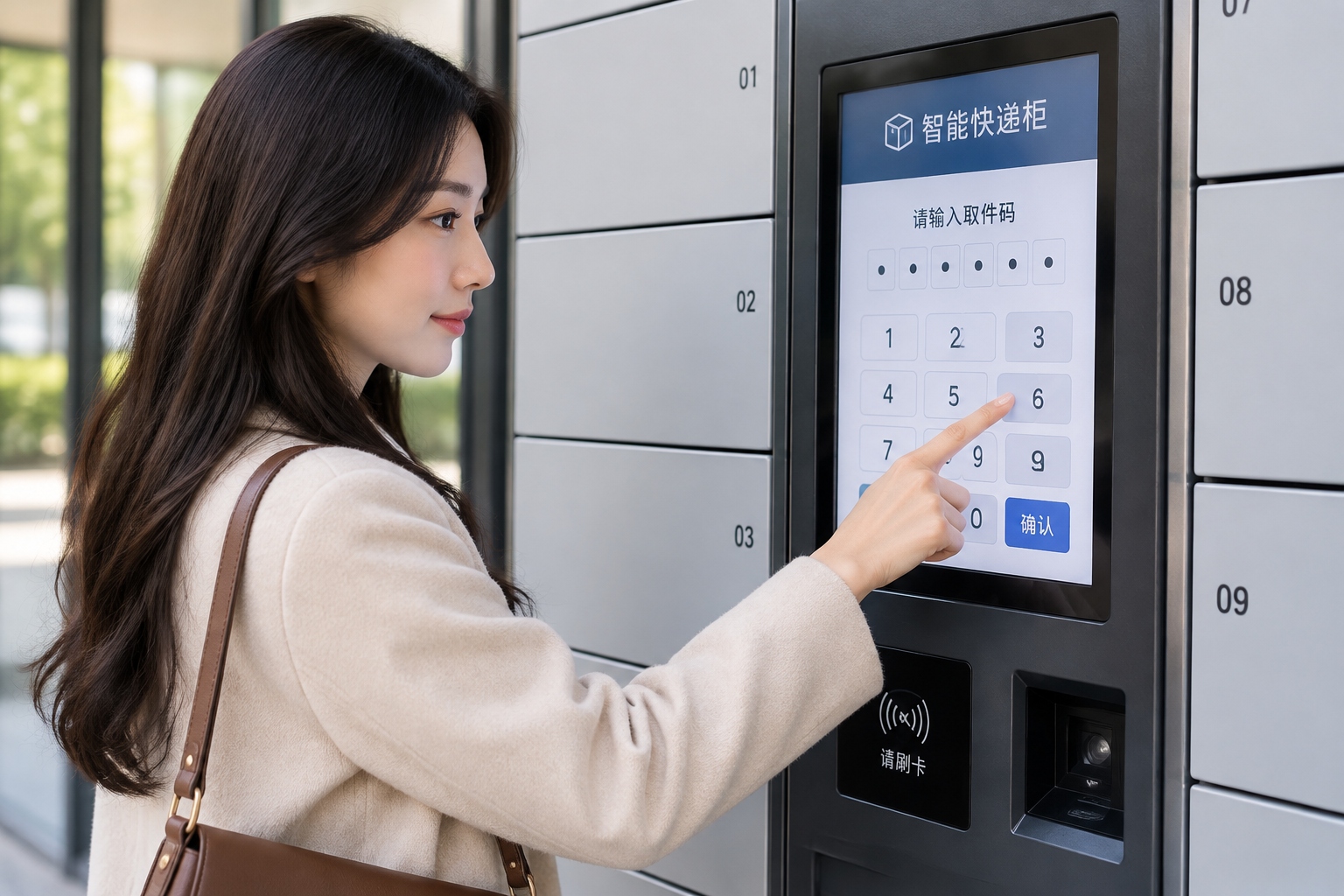
Once you locate the correct locker, you have two primary ways to open it. Choose whichever feels easier:
Method A: The Pickup Code (Easiest for Tourists)
This is the most universal method. Look at your phone for the 6-digit number in the SMS or app notification. On the locker’s digital screen, you will see a keypad with numbers and usually an “Enter” button.
- Enter the 6-digit code.
- Press “Enter” (often marked as Que Ren or just an arrow icon).
- The specific door corresponding to your order will pop open automatically.
Method B: Scanning a QR Code
If you have WeChat or Alipay installed, many modern lockers allow you to scan a large QR code on the machine. This links directly to your account and opens the door instantly without typing any numbers. Note: If you haven’t set up these apps with a Chinese phone number, stick to Method A.
Step 3: Grab Your Food and Leave
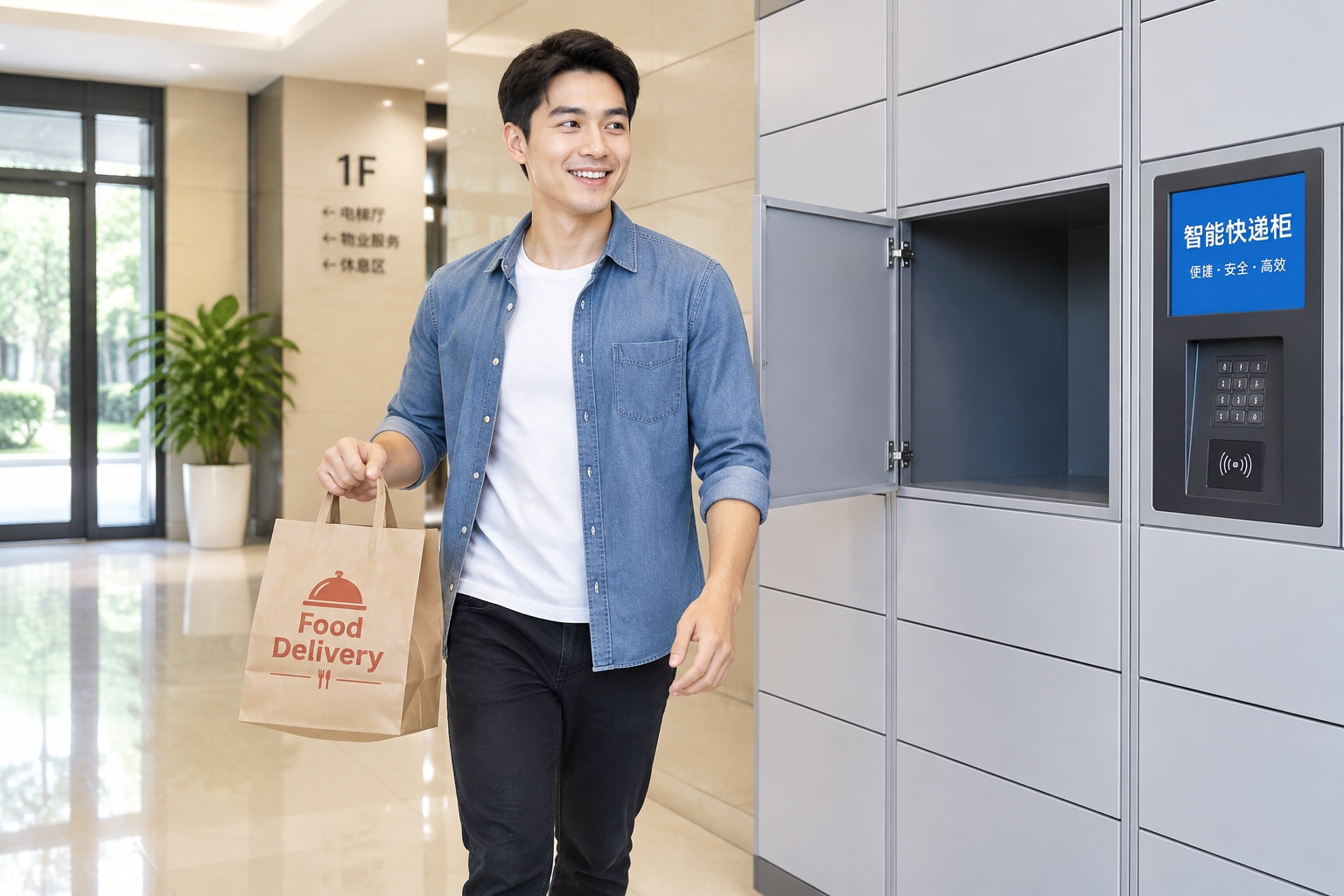
Once the door opens, grab your bag quickly. The locker system is designed for speed; it won’t keep the door open forever. After you close the empty compartment, the system confirms delivery, and the rider gets paid.
A few tips to avoid frustration:
- Check the Phone Number: Sometimes, if multiple people in your hotel room order separately, they might use different phone numbers. Make sure you are looking at the right code for your specific bag.
- Act Fast: If the door doesn’t open after entering the code, double-check that you selected the right locker bank. Sometimes, riders place items in the “wrong” box due to a system lag, but this is rare. Just try the next adjacent code if you have one.
- No Contact: Remember, this is a contactless process. You don’t need to talk to anyone unless something goes wrong.
Why Do Chinese Hotels Do This?
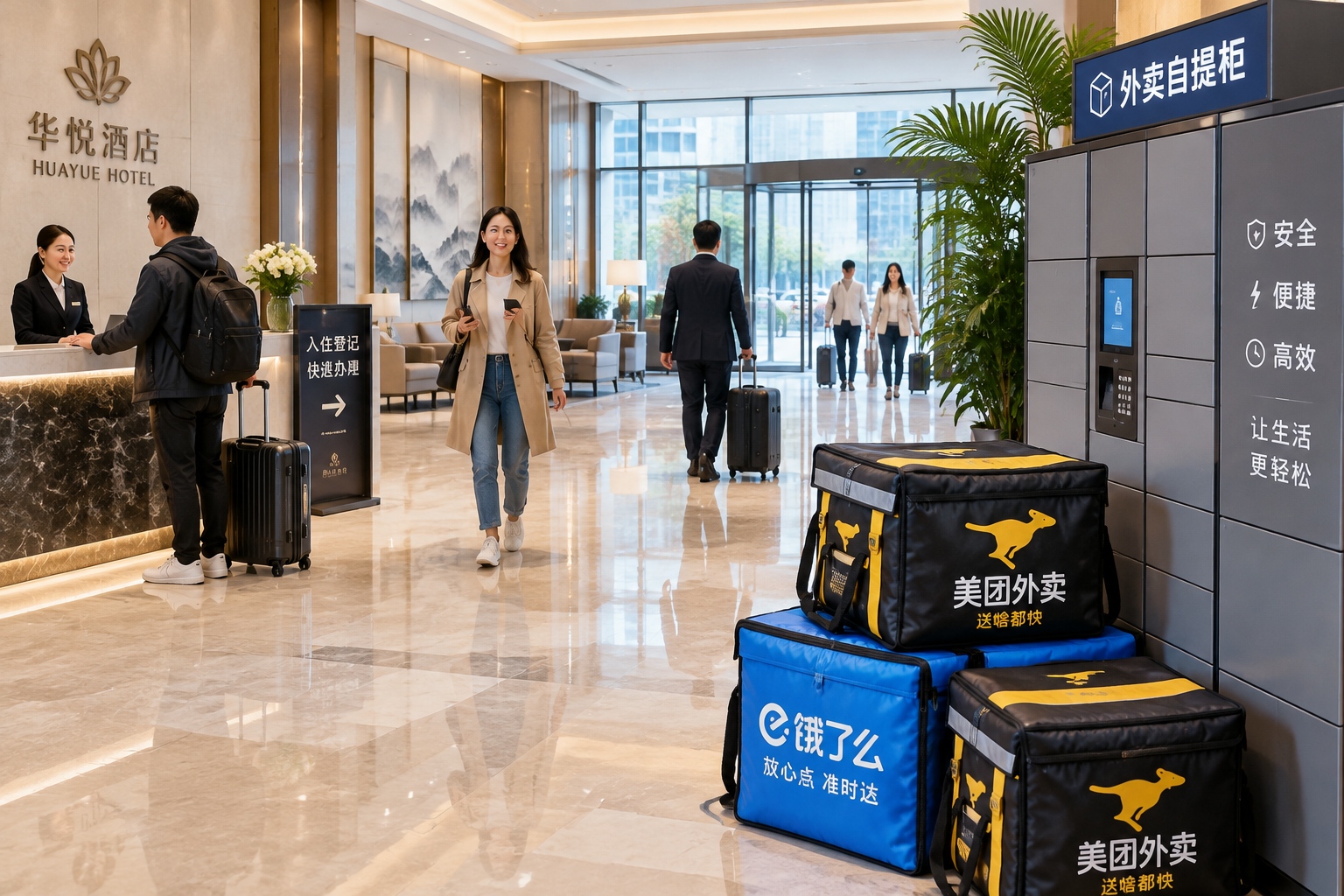
You might wonder why hotels go through the trouble of installing these massive walls of lockers. It boils down to efficiency and privacy.
In bustling Chinese cities, delivery riders are the arteries of urban life. They zip through traffic on electric scooters, delivering everything from medicine to milk tea. Allowing hundreds of strangers into hotel elevators every day creates security concerns for guests and congestion in lobbies. By pushing deliveries to the lobby level, hotels maintain a quiet, secure environment upstairs while still offering guests the convenience of doorstep service.
It’s a pragmatic solution that balances modern technology with traditional hospitality values. For travelers, it might feel like an extra step at first, but once you get the hang of it, it becomes just another part of the smooth, digital rhythm of daily life in China.
Start the discussion at forum.chinacomes.com