
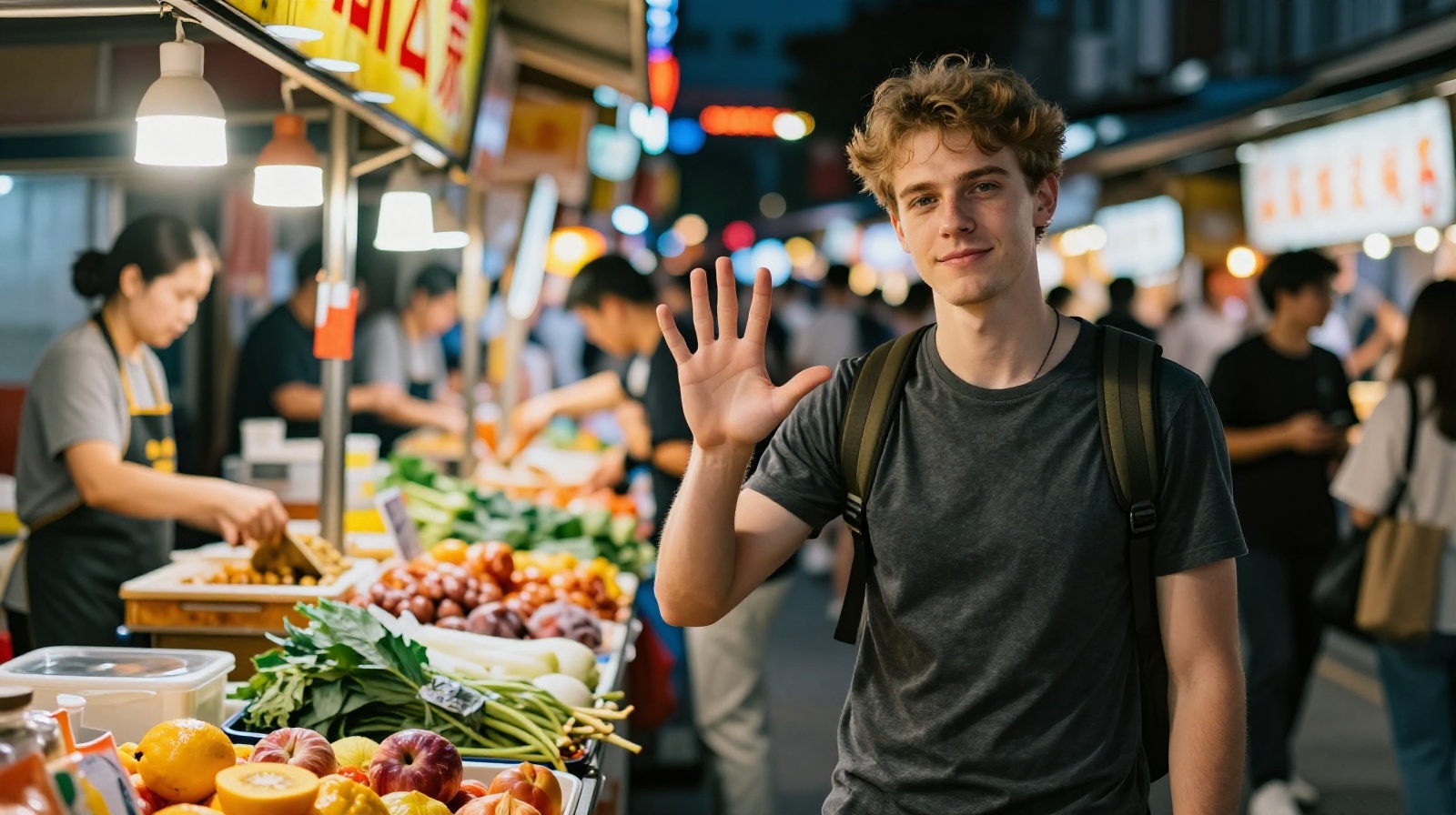

The Silent Bargain
You are standing in a bustling wet market in Chengdu. The air is thick with the smell of cumin and chili. A vendor points to a pile of bright red chilies and asks, “How much?” You want five jin (roughly 2.5 kilograms). You raise your hand, extending two fingers for ‘two’ and three for ‘five,’ expecting her to understand.
She looks confused. She might even laugh politely. In the West, holding up five fingers is universal. In China, especially in informal settings like markets, it can signal something entirely different—or nothing at all.
This is where the one-hand number gesture system comes in. It is a quiet, efficient code used by millions of Chinese people every day. Mastering it doesn’t just help you buy vegetables; it signals respect for local culture and opens doors to smoother interactions.
Why One Hand? The Logic Behind the Fingers
For centuries, China has been a land of bustling street commerce. In noisy environments—where shouting over crowds is difficult—a silent, visual language became essential. Using both hands for every transaction would be slow and cumbersome. The one-hand system allows for rapid communication with a single gesture.
The most critical rule to remember is this: Don’t show your palm.
In Chinese culture, showing an open palm (especially the left hand) can be interpreted as aggressive or dismissive, similar to “stop” or “get away.” The gesture system relies on specific configurations of fingers, often with the thumb playing a key role, while the back of the hand usually faces outward.
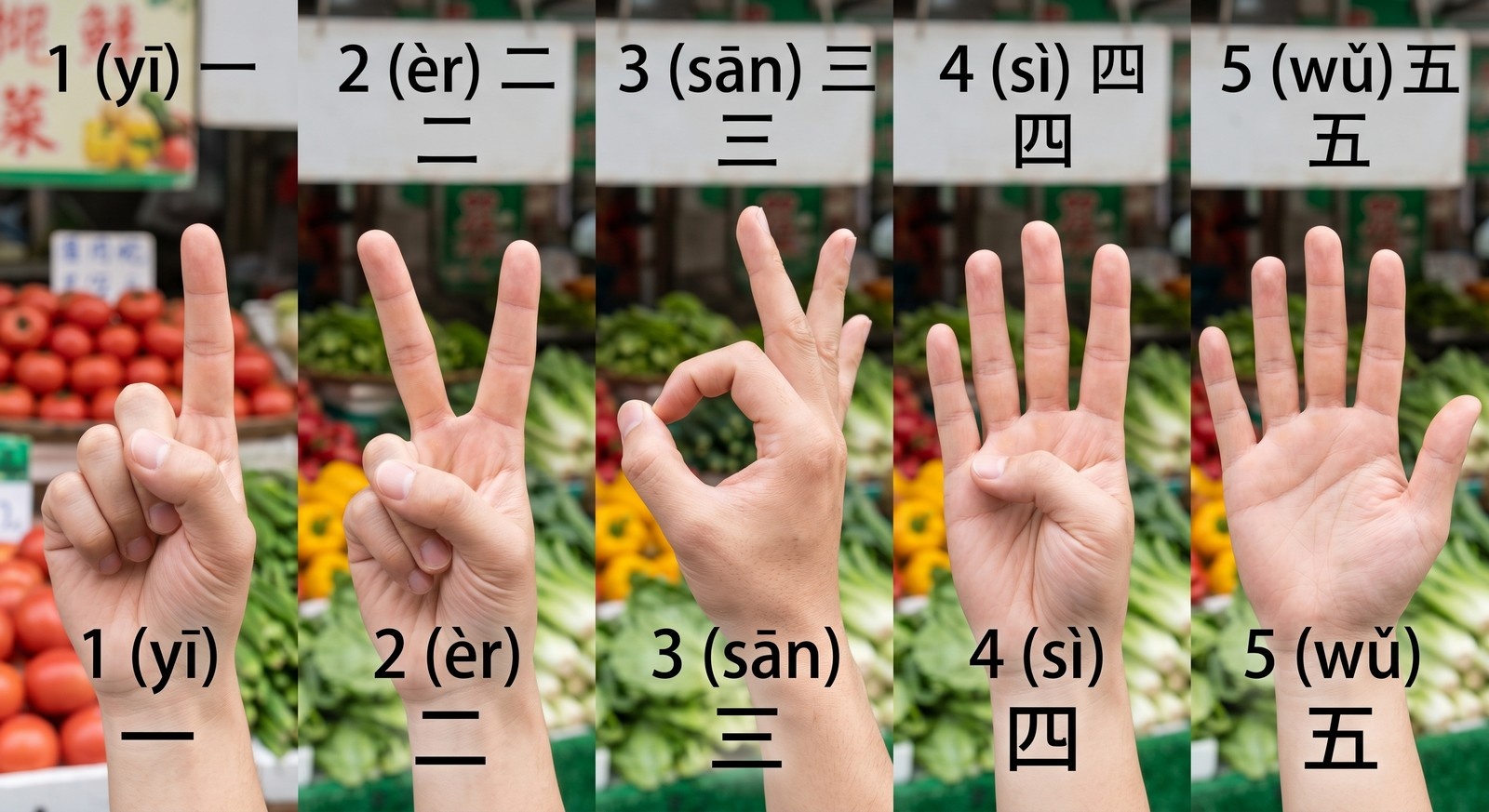
1 to 5: The Basics
Numbers one through five are straightforward, though they differ slightly from the Western way:
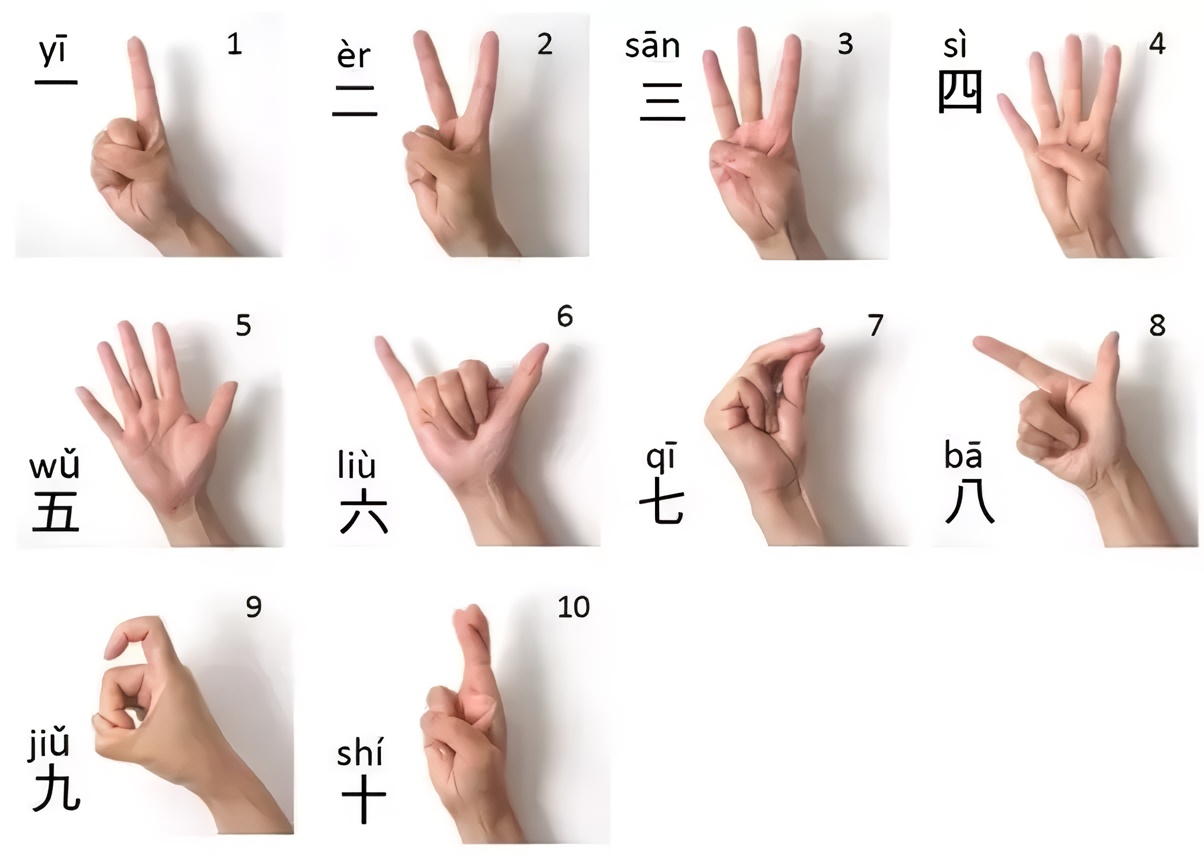
- One (Yī): Extend just your index finger. Simple and clear.
- Two (Èr): Extend your index and middle fingers in a “V” shape. This is the universal peace sign, but here it simply means two.
- Three (Sān): Pinch your thumb, index, and middle fingers together to form a triangle or circle. The ring and pinky fingers fold down. This looks like the “OK” sign in Western culture, but remember: do not show your palm directly to the vendor.
- Four (Sì): Extend all four fingers straight out, keeping the thumb tucked inside or slightly apart. Do not spread them too wide; keep the hand relatively closed.
- Five (Wǔ): This is where it gets tricky. While some people use an open palm with fingers together, the traditional market gesture involves curling all five fingers into a fist, often with the thumb pressing against the side of the index finger or tucked in tightly. An open hand can sometimes be mistaken for “ten” if not careful.
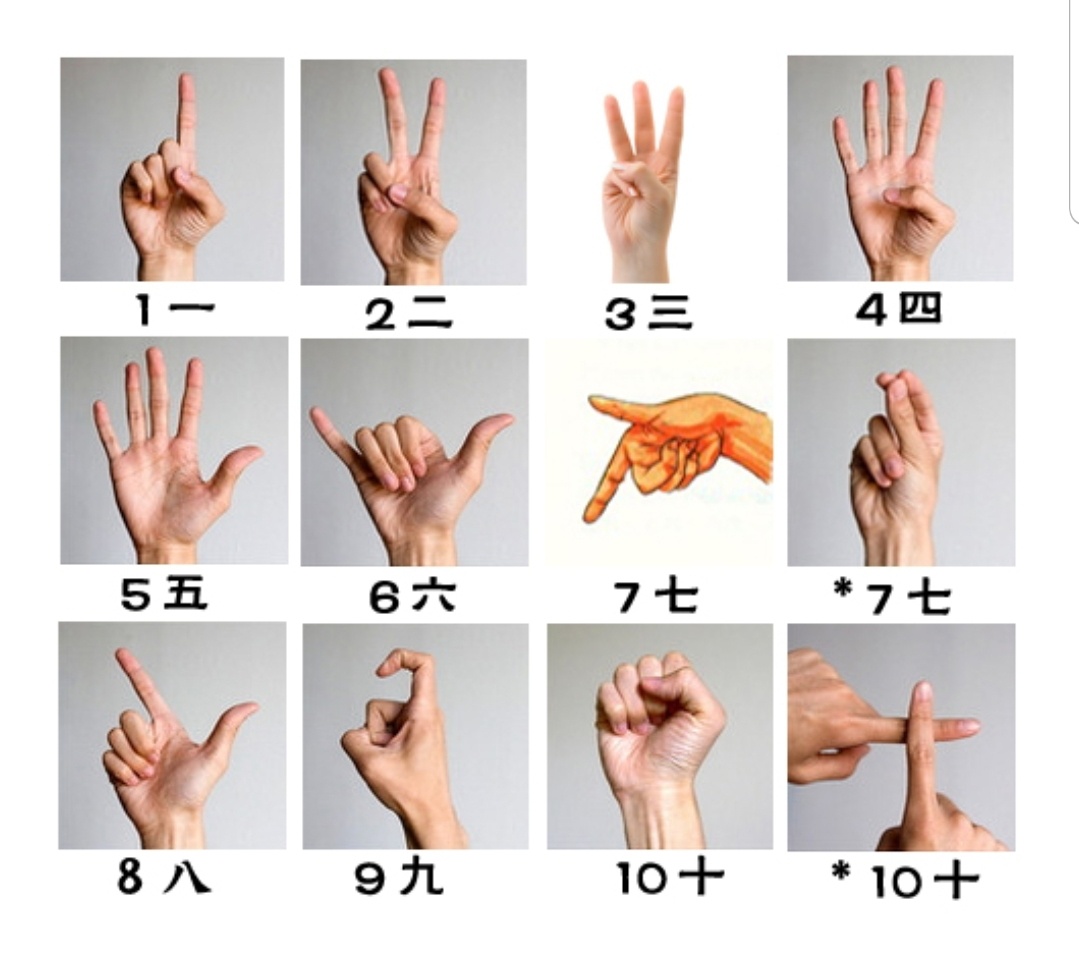
6 to 10: Where It Gets Interesting
This is where most foreigners get stuck. The gestures become more complex, relying on the interaction between the thumb and other fingers.
- Six (Liù): Pinch your thumb and index finger together to form a circle (like a “ring” shape). The other three middle fingers point upward but are slightly spread. It looks like you are holding an invisible ring or making a camera shutter gesture.
- Seven (Qī): Pinch the tip of your thumb against the tips of your index, middle, and ring fingers. Your pinky finger remains extended straight up. From the side, it looks like a claw or a small bird’s beak.
- Eight (Bā): Extend your index and middle fingers in a “V” shape again, but this time keep them vertical. Tuck your thumb, ring, and pinky fingers into your palm. It resembles the number 7 sign in some cultures, but here it is distinctly eight.
- Nine (Jiǔ): Extend only your index finger. Curl your thumb under the index finger to form a hook shape. The other three fingers are curled into the palm. This looks like the letter “J” or a question mark without the dot.
- Ten (Shí): Cross your index and middle fingers to form a plus sign (+). This is the only gesture in this system that typically requires both hands or a very specific crossing of two fingers on one hand. However, in rapid market conversations, if you need to say “ten,” you often just tap the table or use the crossed-finger gesture with one hand.
Practice Makes Perfect: A Market Scenario
Let’s put this into practice. Imagine you are at a night market in Xi’an, buying grilled skewers (chuan’r).
Vendor: “How many?” (Taoshu?)
You: You want six skewers. Instead of saying the number, you raise your right hand. Your thumb and index finger touch in a circle; three fingers point up.
Vendor: She nods immediately, understanding perfectly. “Six? Okay.”
You: Now you ask for the price. You want to know if it’s 20 yuan or 30 yuan. You extend your index and middle fingers in a ‘V’ (two) and then make the triangle with three fingers (three). She clarifies, “Twenty.”
This small exchange takes less than two seconds. No words are needed. The vendor sees you as someone who knows the ropes.
Why This Matters Beyond Bargaining
These gestures are not just about avoiding confusion; they are a form of social lubrication. When you use them correctly, you signal that you are aware of local customs. It breaks down barriers between “tourist” and “local.”
In an era where we rely heavily on smartphones for everything, these physical gestures remain stubbornly alive. They remind us that human connection often happens faster without words. Next time you visit China, leave your calculator at home. Use your hand.