
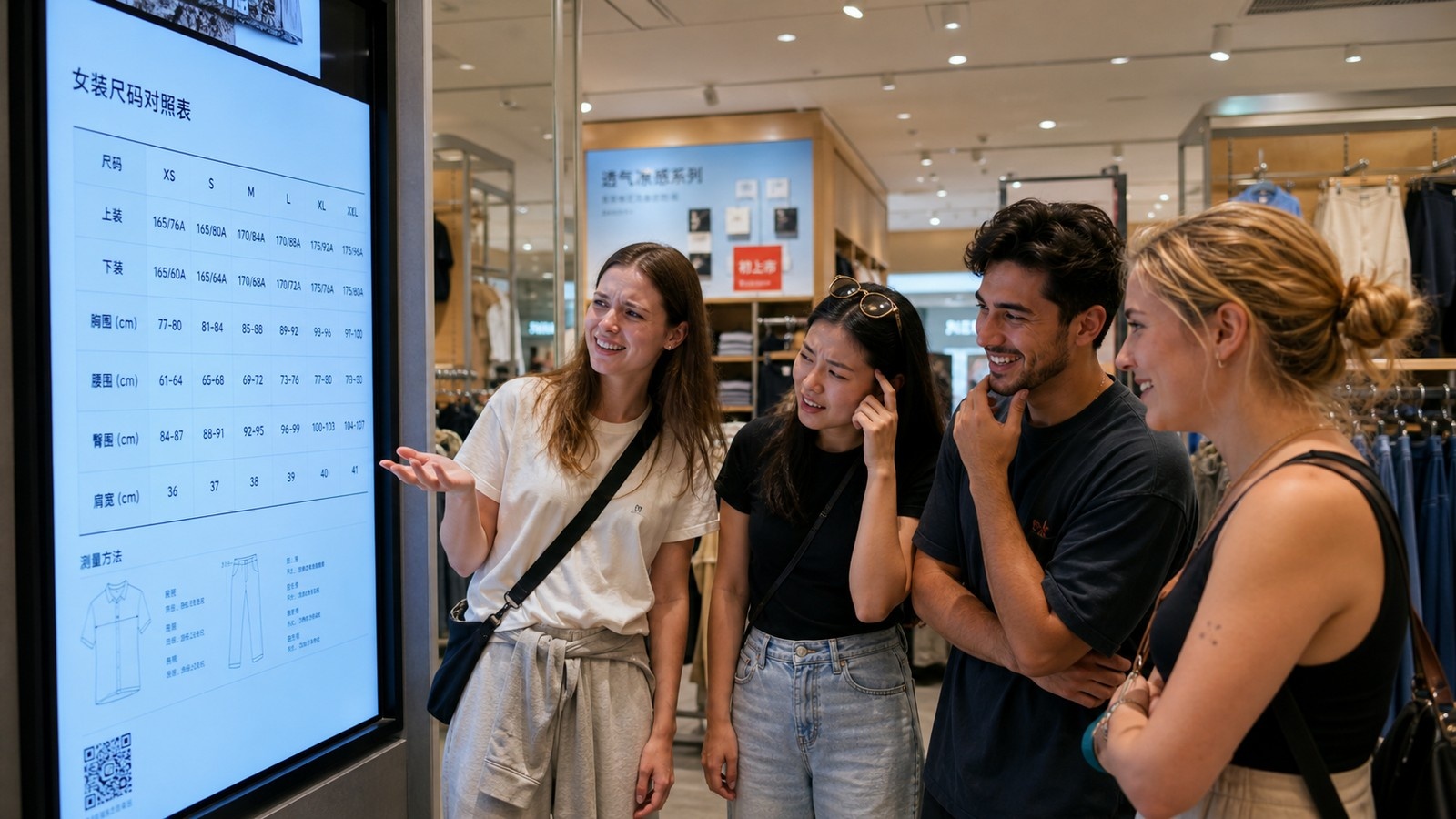

The “XXL” Shock
Imagine this: You are browsing Taobao or JD.com, looking for a simple cotton t-shirt. Your usual size in the US or Europe is Medium. Confidently, you type “M” into the search filter. The results pop up, and you pick a shirt that looks perfect. Two weeks later, the package arrives.
You open the box and try it on. It doesn’t just fit tightly; it feels like you are wearing a child’s clothes. Or worse, if you ordered an “XL,” it might still be too short in the shoulders or sleeves. This is a common rite of passage for foreigners shopping in China. The label says “M,” but the reality is closer to an “XXL” or even smaller in Western terms.
Why Asian Sizes Run Small
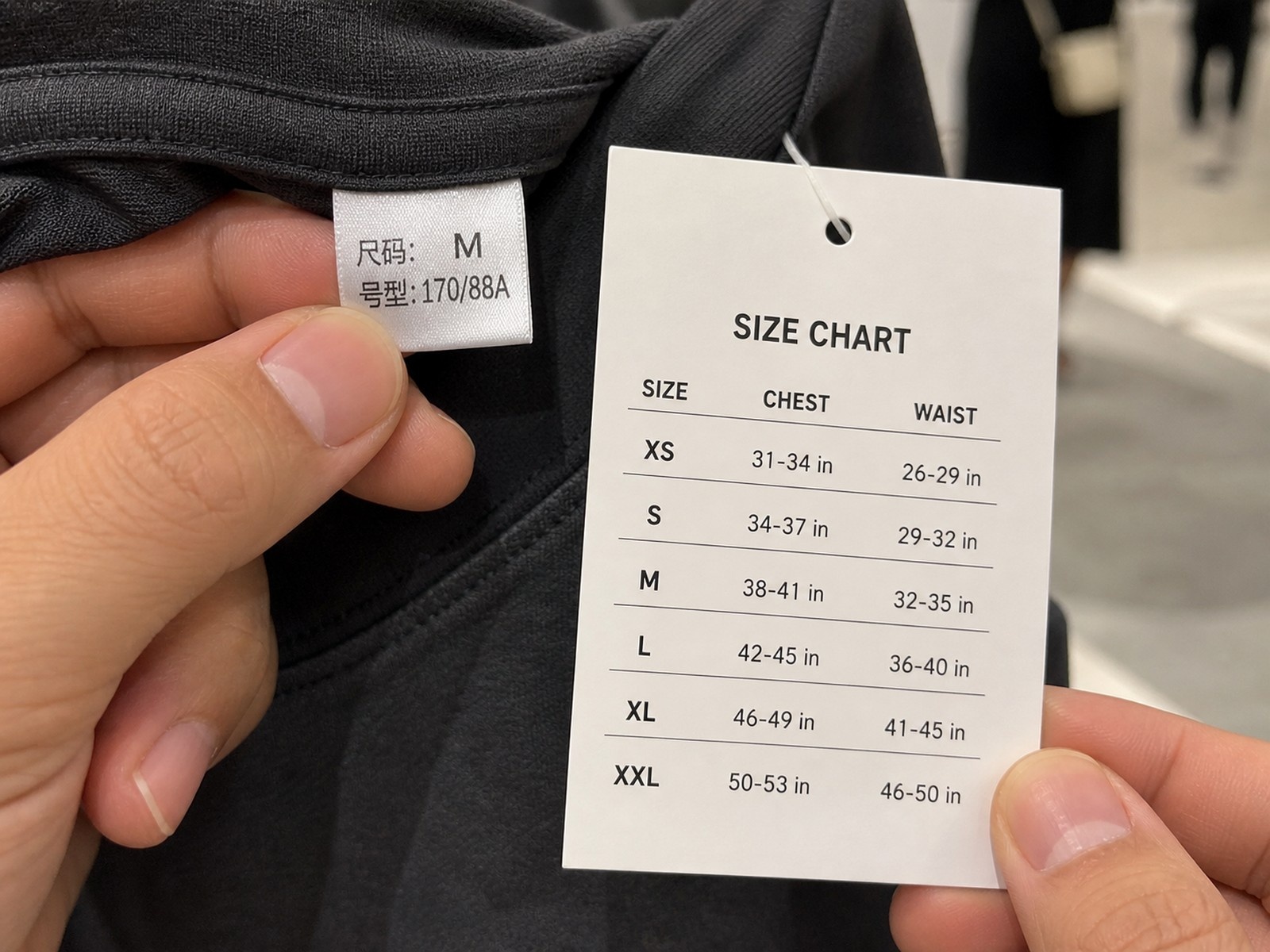
To understand why this happens, you need to look at the standards behind the labels. In China, clothing sizes are largely based on the national standard GB/T 1335. This standard was developed primarily for the average Chinese body type, which historically has been slightly shorter and narrower in the shoulders compared to the global average.
While this is changing as younger generations grow taller, the manufacturing infrastructure remains rooted in these dimensions. A “Medium” in China typically corresponds to a height of 165-170 cm (approx. 5’5″-5’7″) and a chest circumference that is significantly smaller than an American or European Medium.
Furthermore, there is often no strict enforcement of labeling consistency across all brands. Some domestic fast-fashion brands might label their largest sizes as “L” or “XL” to appeal to vanity, while others stick strictly to the physical measurements. This inconsistency is what creates the confusion for international buyers.
The Golden Rule: Ditch S/M/L
The most effective way to shop in China is to ignore the letters (S, M, L) almost entirely. Instead, rely on two concrete numbers: your height and your weight. In Chinese e-commerce, you will often see weights listed in “jin” (斤), where 1 jin equals 0.5 kg (or 1.1 lbs).
Here is a quick mental map for T-shirts and casual tops:
- Your Height & Weight: If you are 175 cm tall and weigh 70-75 kg, you are likely looking at sizes labeled “XL” or “XXL” on Chinese sites.
- The “One Size Up” Strategy: For a relaxed fit, always add one size to your usual Western size. If you wear US Medium, start your search with Chinese XL.
Reading the Data: The Size Chart
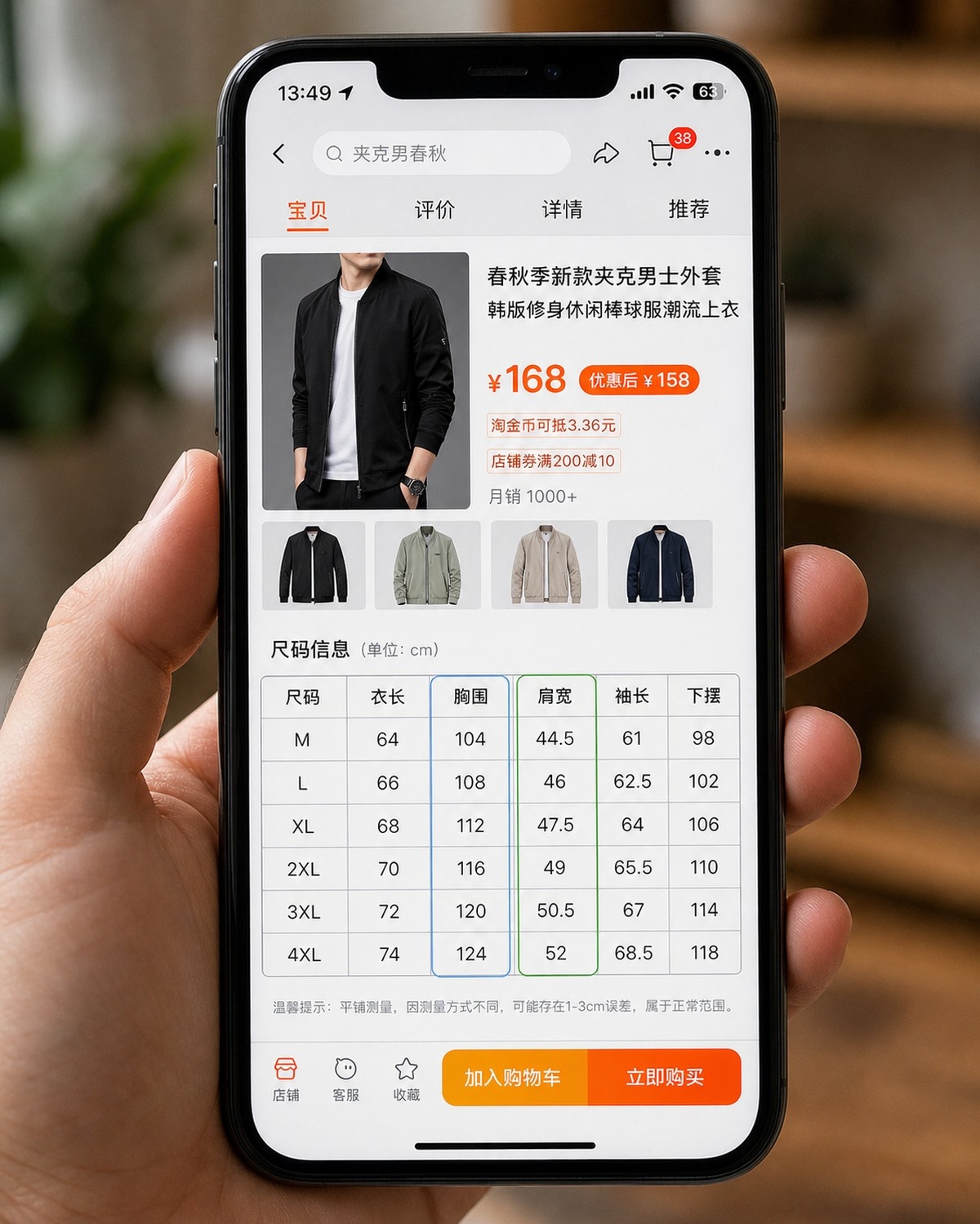
The most reliable tool on any product page is not the dropdown menu, but the “Size Chart” (尺码表). Scroll down to the bottom of the product description. You will see a table with specific measurements in centimeters.
Focus on these three key metrics:
- Chest Width (胸围): This is usually measured flat across the chest. Multiply by two to get the full circumference. Ensure this number is at least 10-15 cm larger than your actual body measurement for comfort.
- Shoulder Width (肩宽): Crucial for jackets and structured shirts. If the shoulder seam sits too far in, the garment will feel restrictive.
- Total Length (衣长): Chinese cuts are often shorter in length to accommodate average heights. Check this if you have a longer torso.

Pro Tips for Smoother Shopping
If the math feels tedious, there are shortcuts. First, look for keywords like “International Size” (国际码) or brands that explicitly state they follow US/EU sizing. Many Chinese export-focused brands will label their items as “US M” which actually fits a true Medium.
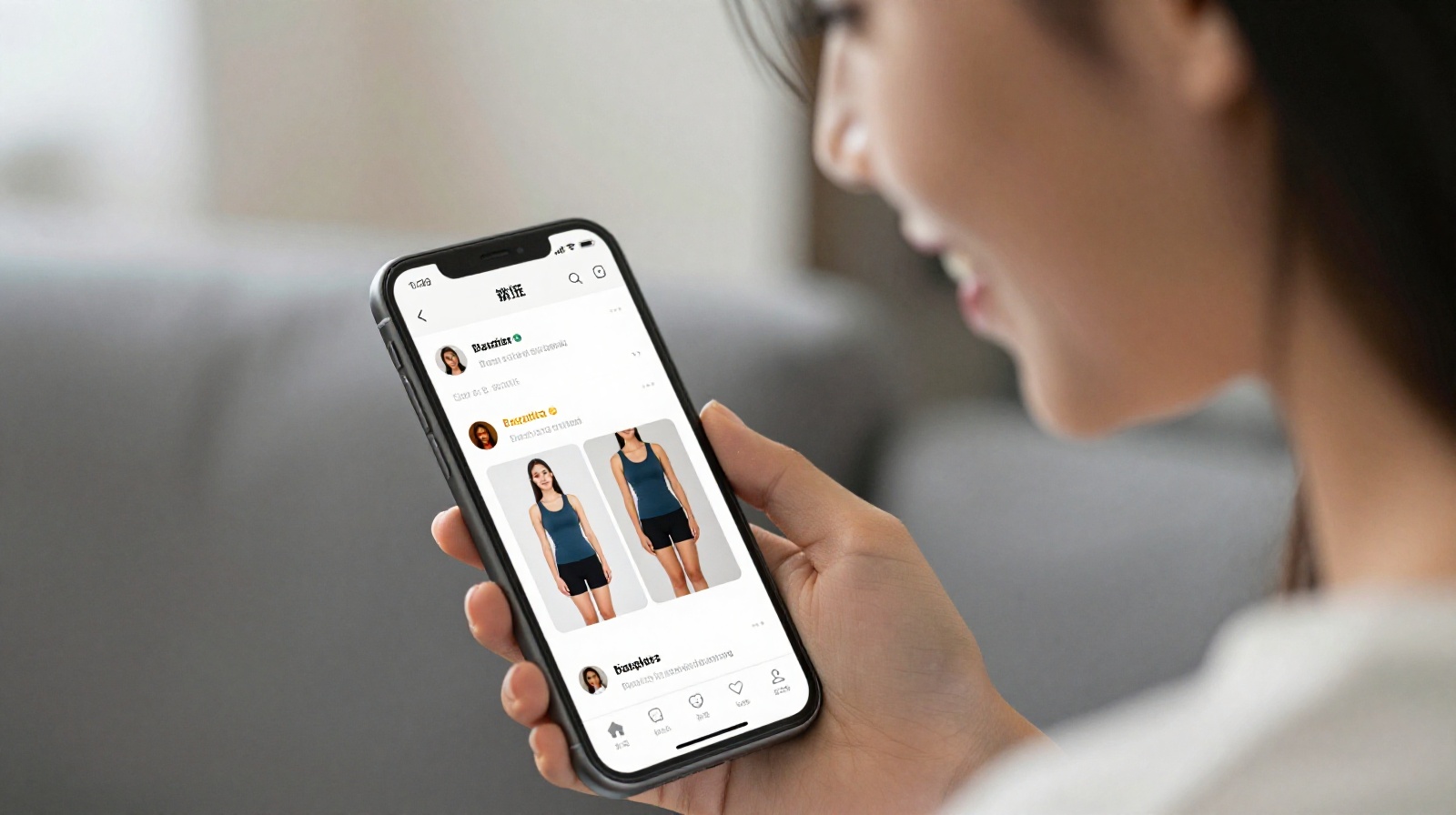
Second, use the customer reviews. Search the review section for users who mention being taller or heavier. Often, buyers will post photos of themselves and note, “I am 180 cm and this L fits well.” This real-world feedback is more valuable than any standard chart.
Conclusion
Shopping for clothes in China doesn’t have to be a guessing game. By shifting your focus from abstract letters to concrete measurements, you can navigate the market with confidence. Remember: when in doubt, size up. The next time you see an “XXL” on a Chinese site, don’t panic—it might just be the perfect fit for you.