
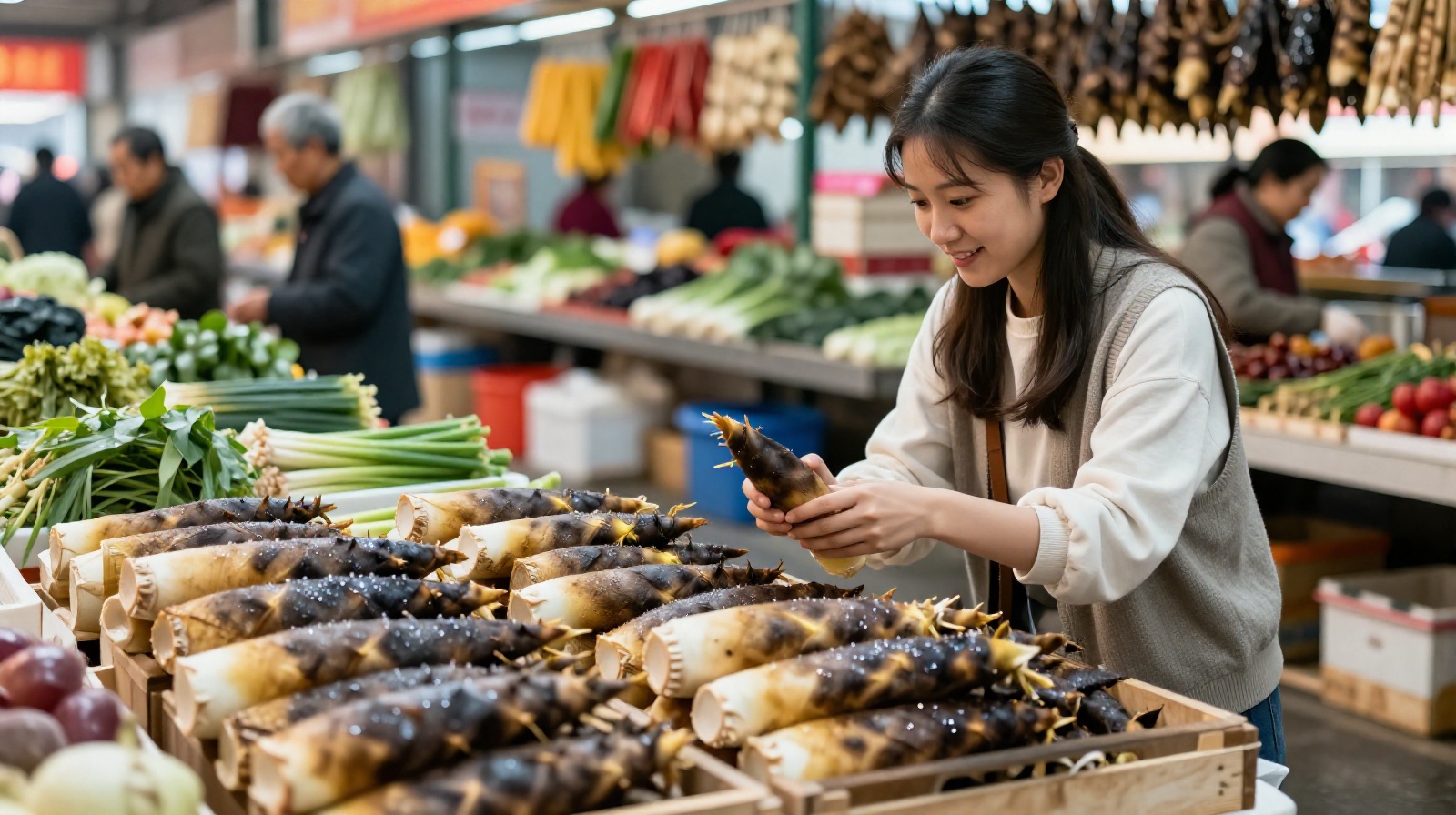

The Ubiquitous ‘Spring’: The Most Misunderstood Vegetable
If you grew up eating canned bamboo shoots in a bland soup, your impression of this ingredient is likely stuck in the last century. But walk into any wet market in Hangzhou, Shanghai, or Chengdu right now, and you will see something entirely different.
Bamboo shoots, often called “spring” in Chinese culinary poetry because they are best harvested in early spring, are not just a vegetable; they are a texture experience. They possess a unique crunch that holds up to intense heat without turning mushy—a quality that has made them indispensable in Chinese stir-fries for millennia.
Yet, what surprises foreign visitors most is the sheer variety. We aren’t talking about one type of shoot. In Zhejiang, the white shoots are tender and sweet, best eaten raw in salads or lightly blanched. In Sichuan, the bitter mountain shoots require days of fermentation to remove their astringency, resulting in a complex, umami-rich flavor that drives the local cuisine.
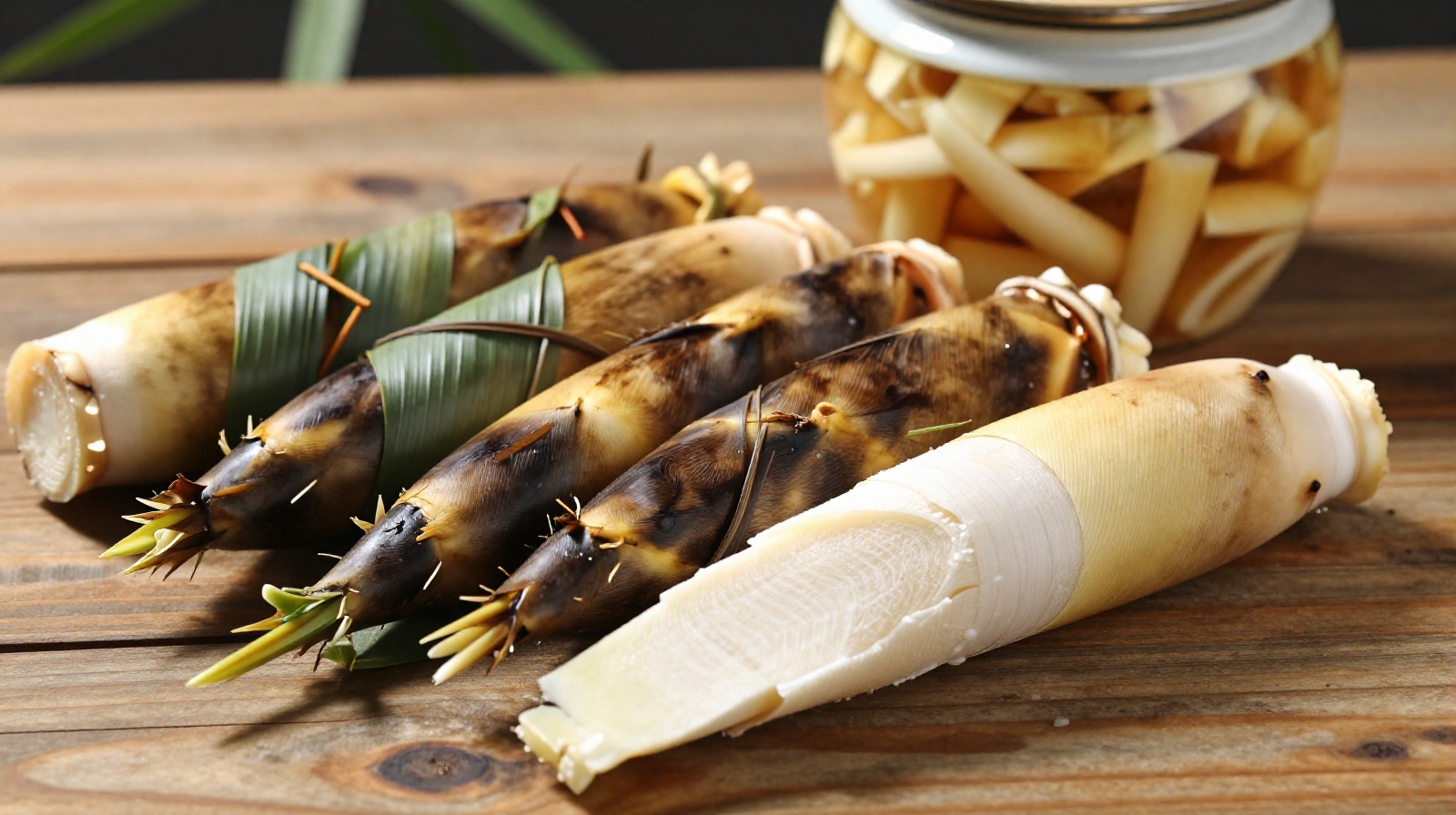
The Home Kitchen Reality: Regional Comfort Food
For most Chinese families, bamboo shoots are not an exotic luxury; they are the heartbeat of regional comfort food. The way a household prepares them reveals their geographic identity instantly.
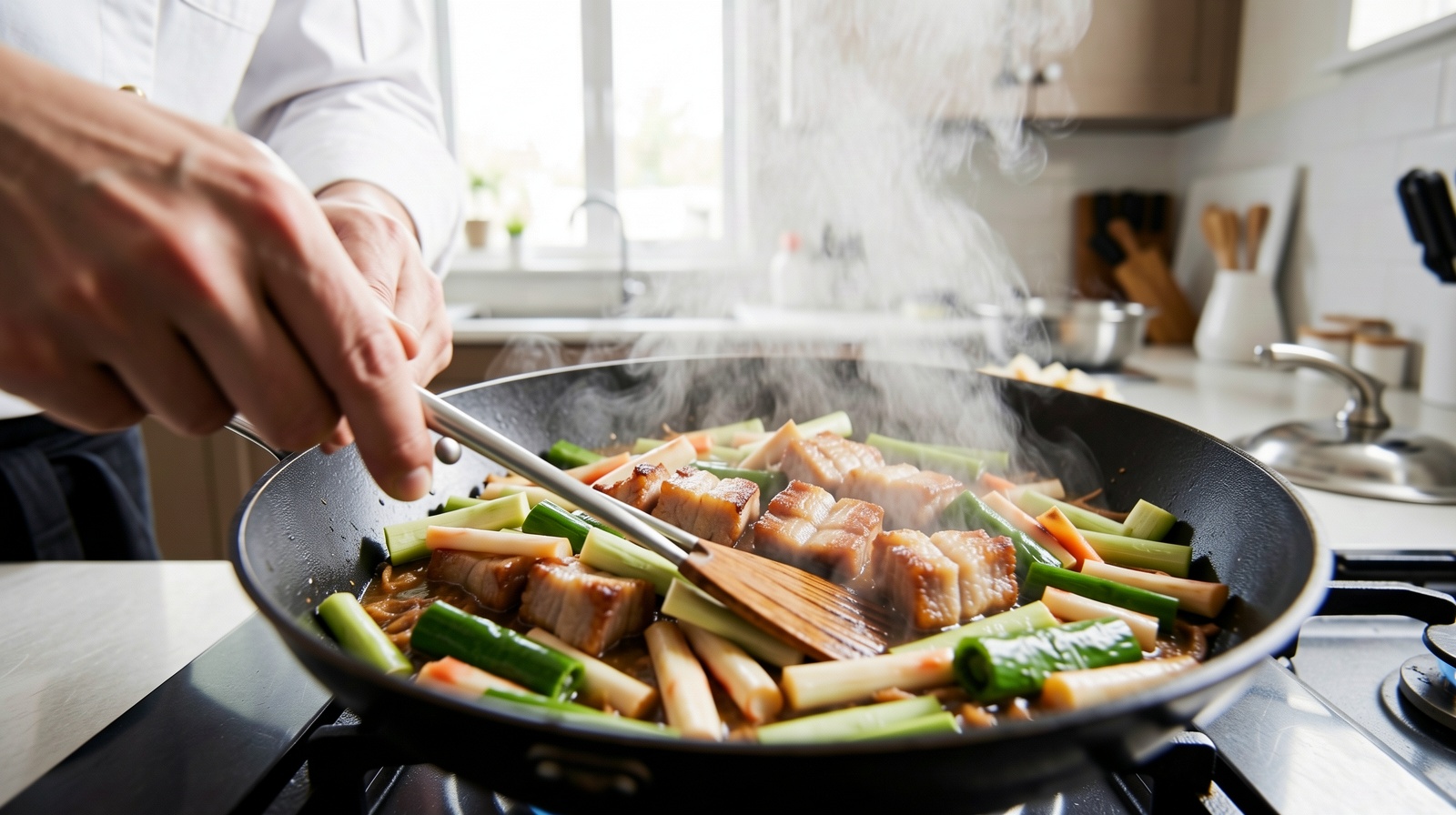
In Zhejiang province, specifically around Hangzhou and Shaoxing, Suan Sun (sour bamboo shoots) is a non-negotiable ingredient in noodle soups and stir-fries with pork belly. The process involves natural fermentation during the off-season, capturing the essence of winter to break up the grease of fatty meats. It’s a technique born out of necessity but perfected into an art form.
Move south to Fujian, where bamboo shoots are often braised in soy sauce and rock sugar until they absorb the savory sweetness, serving as a vegetarian staple that mimics the texture of meat. In Yunnan, wild mountain shoots are quickly stir-fried with chili peppers and garlic, preserving their wild, earthy aroma.
The difference between these regional styles isn’t just taste; it’s a reflection of climate and history. The fermentation techniques developed centuries ago to preserve food through long winters have evolved into signature flavors that define local pride. Today, even young professionals in tier-one cities crave these specific regional tastes, ordering them via apps for lunch after work.
Farm-to-Table Evolution: The 24-Hour Supply Chain
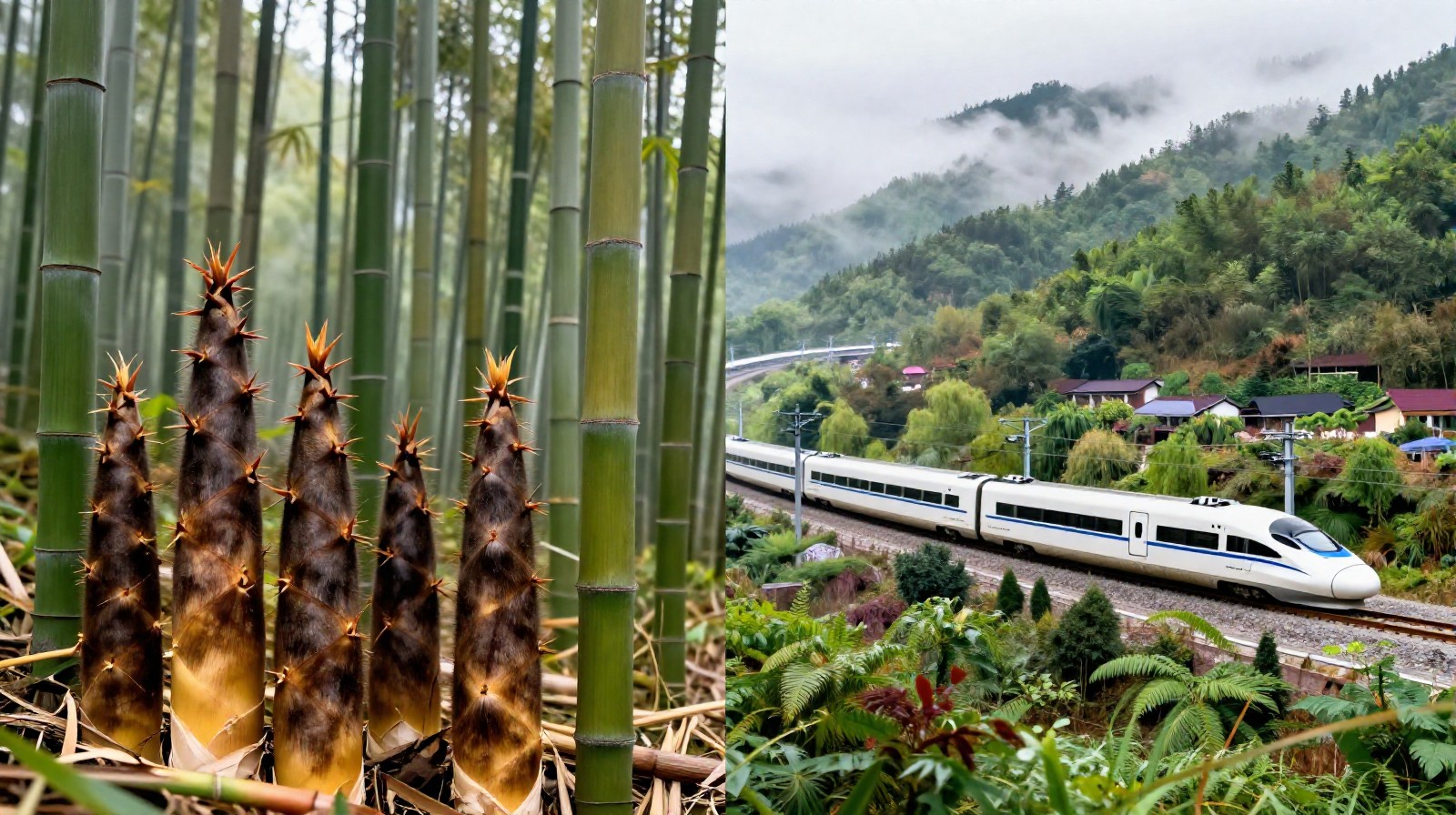
How does a fresh, delicate shoot from a Yunnan mountain reach a dinner plate in Shanghai without losing its crispness? The answer lies in China’s hyper-efficient logistics network.
Fifty years ago, bamboo shoots were strictly seasonal and local. You ate them when they sprouted, or you pickled them for months. Today, high-speed rail and cold-chain logistics have collapsed geography. Fresh shoots harvested at dawn in Yunnan can be vacuum-packed and on a train within hours, arriving in Shanghai by evening.
This shift has changed consumer expectations. Urban dwellers now expect “spring” to taste like spring, regardless of the month. It has also created economic opportunities for rural farmers who previously struggled with perishable goods. The supply chain has become a direct link between the mountain village and the urban apartment, allowing quality produce to command premium prices.
The Michelin Connection: Elevating “Peasant Food”
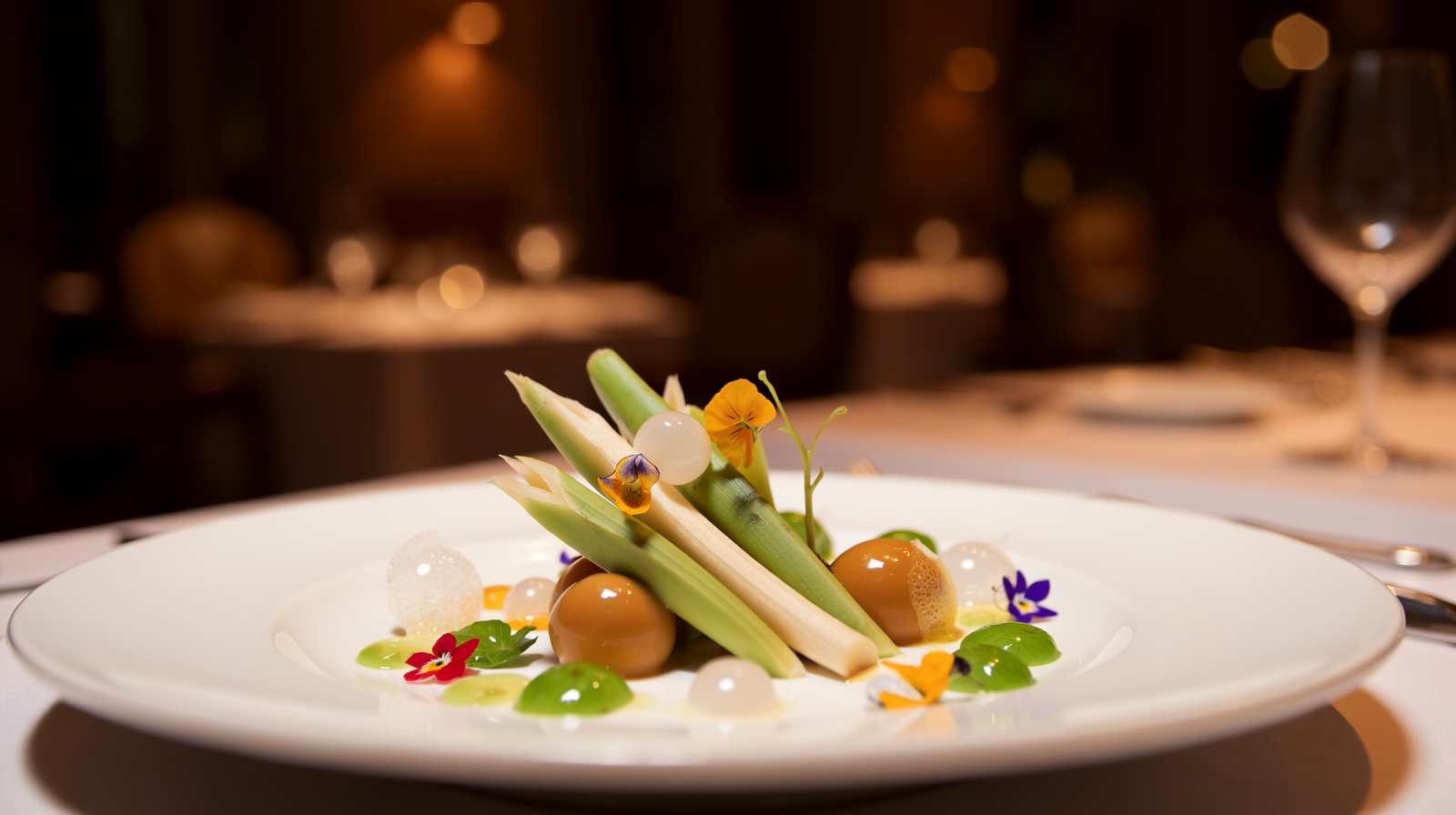
In recent years, a quiet revolution has taken place in China’s high-end dining scene. Chefs at Michelin-starred restaurants are no longer just using bamboo shoots as filler; they are making them the star.
Top chefs are re-evaluating these humble ingredients through precision cooking. Imagine a dish where the bitterness of the shoot is carefully balanced with aged vinegar, or where the texture is manipulated through sous-vide techniques to achieve a perfect bite. Some restaurants now serve “bamboo shoot caviar,” using molecular gastronomy to encapsulate the flavor in tiny spheres.
This isn’t about abandoning tradition; it’s about respecting it enough to refine it. Chefs are collaborating with rural elders to learn traditional fermentation methods, then applying modern science to stabilize and elevate those flavors. The result is a new category of “modern Chinese dining” that feels both ancestral and futuristic.
Global Palate & Sustainability: Why It Can’t Be Replaced
As the world grapples with climate change, plant-based diets are gaining traction. However, many global meat alternatives fail to capture the specific textural joy of bamboo shoots. The crunch is not just a sensory detail; it’s a structural element that defines the dish.
In China, bamboo shoots represent a sustainable dietary shift. Bamboo is one of the fastest-growing plants on Earth, requiring no pesticides and minimal water. It absorbs carbon dioxide at a rate significantly higher than many trees. By integrating more bamboo into their diets, Chinese consumers are supporting an eco-friendly agricultural model that doesn’t sacrifice flavor.
For international palates, this offers a new perspective. Bamboo shoots are not just “vegetables”; they are a bridge to understanding how China balances rapid modernization with deep-rooted culinary traditions. Whether it’s a quick stir-fry for dinner or a carefully plated course at a fine dining restaurant, the bamboo shoot remains a testament to Chinese ingenuity: turning something simple and wild into something sophisticated and essential.