


The Panic and the First Rule: Don’t Move Yet
It’s Tuesday evening, and you’re sitting in a teahouse in Chengdu. You reach for your bag to pay the bill, but it’s not there. Or worse—it is there, but empty. The moment your fingers brush against fabric where your passport should be, your heart drops. That cold spike of adrenaline is universal.
Before you spiral into panic, take a breath. Losing a passport in China sounds terrifying, but the process to fix it is highly structured and bureaucratic—meaning it’s predictable if you follow the steps. I’ve walked friends through this exact scenario multiple times. The key isn’t speed; it’s calm.
First, retrace your physical steps. Did you leave it on a high-speed train? Was it in a taxi that has already left? Call the driver or station staff immediately if possible. Once you confirm it’s gone, stop looking. Your job now shifts from “searching” to “managing the crisis.” Here is exactly how to handle it.
Step 1: The Police Report (Baojing)
Your first official move is to go to your nearest local police station, known in China as a PaiChuSuo (派出所). This sounds intimidating, but locals do this daily for everything from lost bicycles to neighborhood disputes. You are just another person seeking help.
Tell the officer: “Wǒ diūle hùzhào.” (I lost my passport.) They will ask where and when it happened. Be precise. If you don’t speak Mandarin, show them this written Chinese text on your phone or a paper slip:
你好,我的护照在中国丢失了。我需要开具一份《报警回执》或丢失证明。
This document is critical. In English, it’s called a Police Report or Baojing Hui Zhi. It proves you didn’t steal your own passport and that the loss was accidental. Without this paper, no embassy will help you.
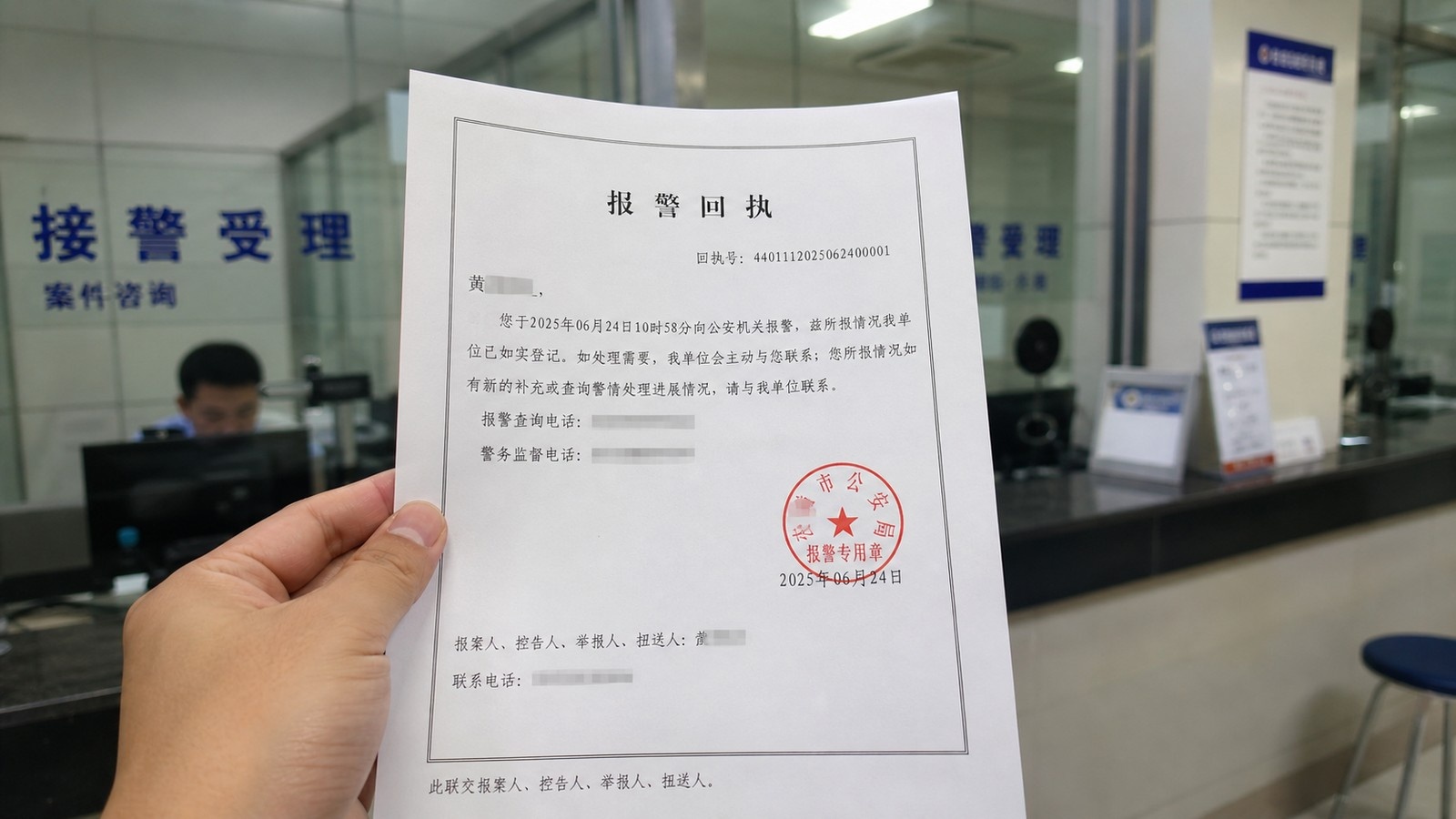
Step 2: Register with the Exit-Entry Administration Bureau
Once you have the police report, don’t rush to the airport or your hotel yet. You need to visit the local Exit-Entry Administration Bureau (出入境管理局). This is a government office that manages visas and residence permits for foreigners.
In many Chinese cities, this is now done through an automated kiosk system rather than long queues. You’ll scan your police report and your remaining ID documents (like your visa sticker or digital registration form from your hotel). The goal here is to officially cancel the lost passport in the national database so it can’t be misused.
You will receive a Report of Loss of Passport. Keep this safe. It’s your bridge to the next step.
Step 3: Contact Your Embassy for an Emergency Travel Document
This is the most time-consuming part, but also the most straightforward if you’re prepared. Every country has different rules, but the general flow is similar:
- Find the nearest consulate or embassy. Use Google Maps or Baidu Maps to locate them. Call ahead if possible; many embassies require appointments for emergency documents.
- Gather your documents. You’ll typically need: the Police Report from Step 1, the Loss Report from Step 2, a few passport-sized photos (most Chinese photo booths take these instantly), and any photocopies of your lost passport you might have made earlier.
- Apply for an Emergency Travel Document (ETD). Most embassies won’t issue a full new passport overnight. Instead, they issue an ETD—a single-page document valid only for one direct flight home or to your next destination.

The “Pro Move”: How to Prepare Before It Happens
If you’re reading this before traveling, take five minutes today to save a digital copy of your passport. Upload it to your email cloud, WhatsApp, or WeChat (send it to yourself as a file). Keep a physical photocopy in your luggage.
This small habit cuts the “Step 3” process from days to hours because you can prove your citizenship without waiting for mail calls from home. In China, where digital verification is king, having that scanned PDF ready often saves you from filling out endless forms manually.
Final Thoughts: It’s Uncomfortable, But Manageable
Losing your passport in China will feel like a disaster in the moment. You’ll worry about flights, hotels, and whether local authorities think you’re doing something wrong. They aren’t. This happens to thousands of foreigners every year. The system is designed to handle it.
Stay calm, get the police report, visit the bureau, call your embassy. Drink some tea while you wait. Eventually, you’ll be on a plane home with a new booklet in your hand. And next time? Keep that photocopy handy.