

A Different Kind of Dental Visit
When I first moved to Beijing, the thought of seeing a dentist made me anxious. Back home, a routine cleaning could cost $100, and scheduling an appointment often felt like navigating a bureaucratic maze. But in China, my experience was completely different.
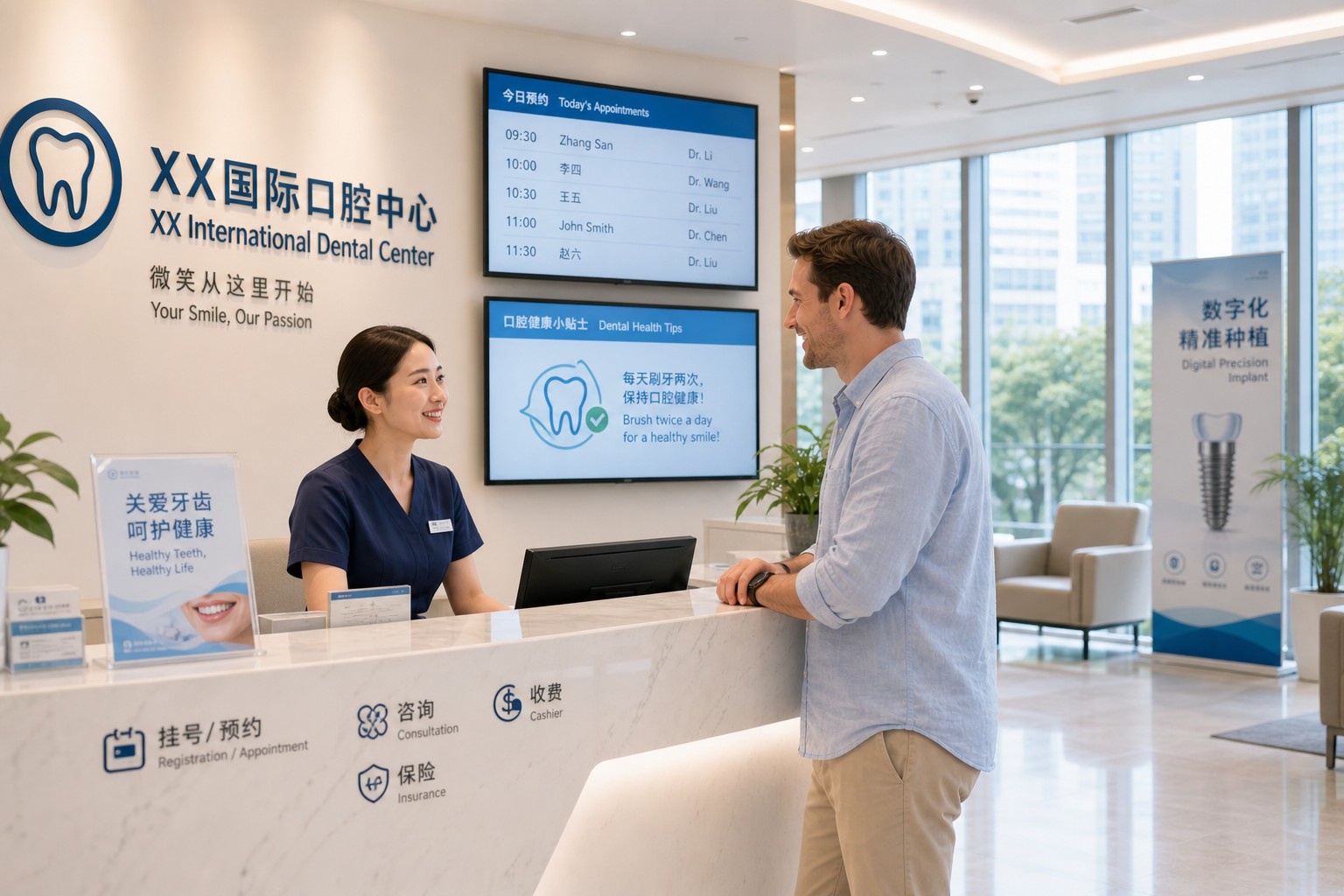
Last month, I walked into a small, bright dental clinic near my apartment in Haidian District. The receptionist smiled, asked about my insurance (I didn’t have it), quoted a price for a cleaning and check-up, and had me sitting in the chair within 20 minutes. Total cost: less than $15 USD.
This is not an exception; it is the norm. For foreigners living in China, understanding how dental care works here can save you time, money, and stress.
Public Hospitals vs. Private Clinics
To navigate the Chinese healthcare system, you need to understand the two main players: public hospitals and private clinics.
Public Hospital Stomatology Departments: These are attached to large general hospitals. They are reputable and covered by basic social insurance for locals. However, they are often overcrowded, noisy, and impersonal. Appointments can be hard to secure, especially for specialists. The waiting times are long, and the service style is efficient but not always warm.
Private Dental Chains: This is where most expats and young professionals go. Chains like Arrail (Jiakou) or Meikou have locations in almost every major shopping mall and residential area. They operate more like high-end salons than hospitals.
The advantages are clear: convenience, comfort, and cost-effectiveness. Without the need for complex insurance pre-authorizations, you pay out-of-pocket with transparent pricing. A professional cleaning (scaling), which might take an hour in a public hospital, is often done quickly here with minimal discomfort.
How to Find a Reliable Clinic
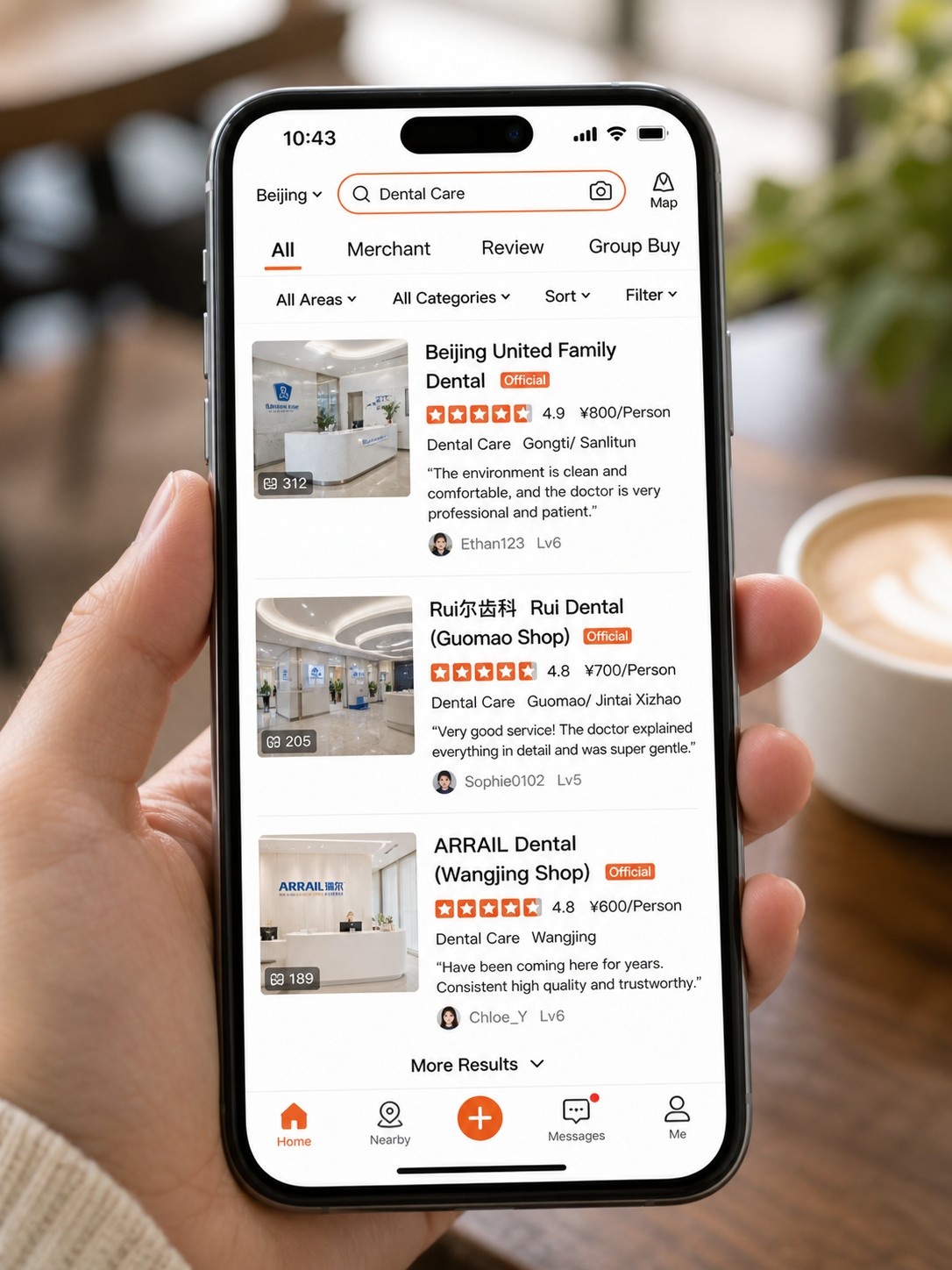
You don’t need to rely on word-of-mouth alone. The secret weapon for finding good services in China is the app Dianping (similar to Yelp or TripAdvisor).
- Download Dianping and search for “Dental” or “Yashe” (dental care) in your area.
- Look for clinics with high ratings (4.5 stars or above).
- Read the reviews, especially those with photos. Users often post before-and-after shots of their teeth or comments on whether the doctor rushed through the procedure.
Most reputable private clinics have English-speaking staff or at least managers who can handle basic communication. When booking, simply mention you are a foreigner; they will often assign a dentist comfortable with international patients.
The Process: From Booking to Treatment
The workflow in Chinese private dental clinics is streamlined and digital-first.
- Booking: You can book via WeChat mini-programs, Dianping, or by calling directly. Many clinics offer online discounts for first-time visitors, such as a discounted cleaning package.
- Arrival: Check in at the front desk. They will take your temperature (standard health protocol) and ask you to fill out a simple form about your medical history.
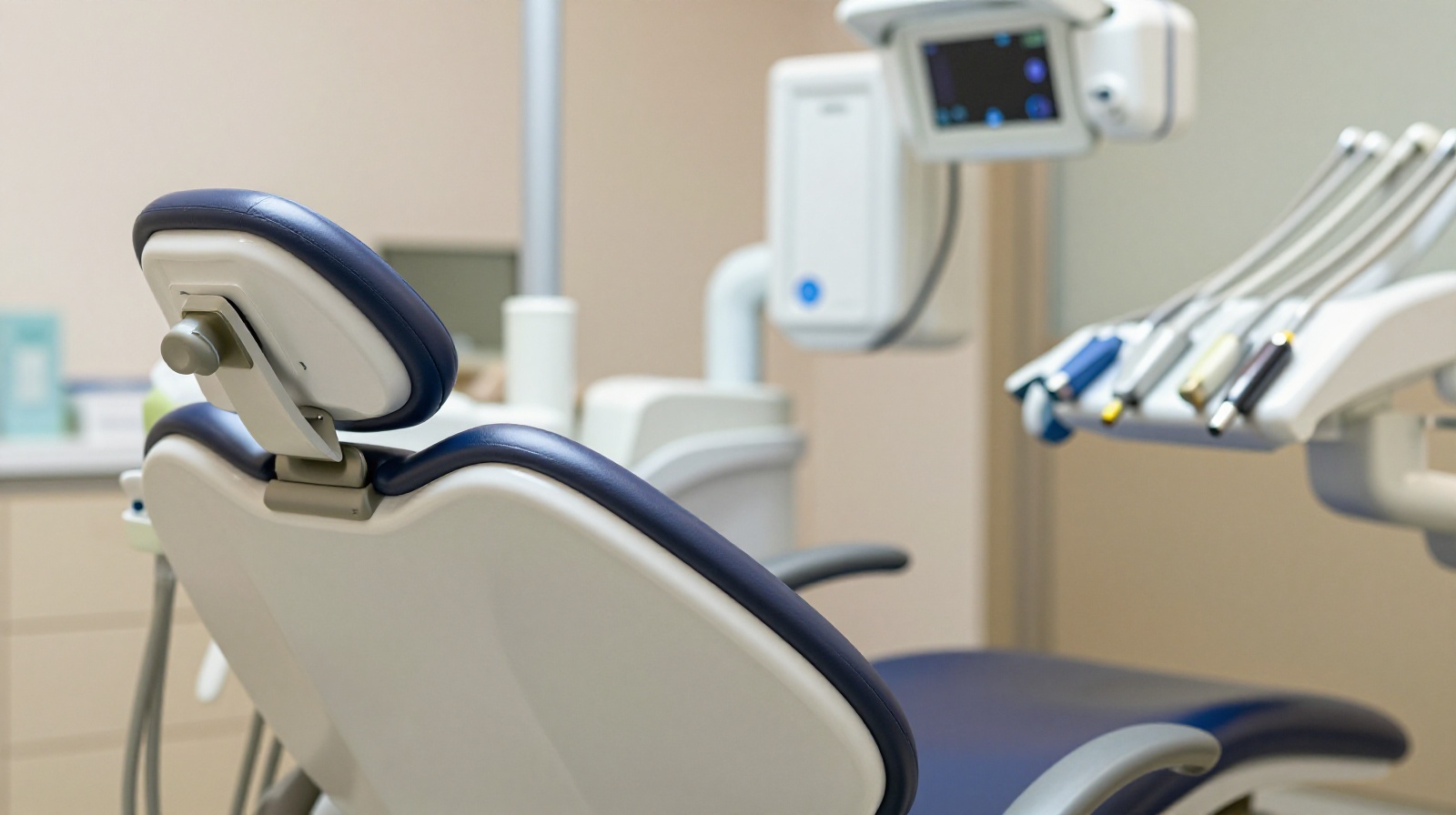
- Examination: The dentist will use a small mirror and probe, but more importantly, they will likely take digital X-rays or 3D scans. These images appear instantly on screens in the treatment room, allowing for precise diagnosis.
- Treatment & Payment: After the exam, the doctor will propose a plan. Prices are usually posted publicly in the clinic or provided in writing before any work begins. You pay via WeChat Pay, Alipay, or credit card at the end of the visit. There are rarely hidden fees.
A Note on Cost and Transparency
One of the biggest fears for foreigners is “dental shock”—the fear of unexpected bills. In China’s private sector, transparency is a competitive advantage. Clinics know that trust drives repeat business.
A routine cleaning typically costs between 100-300 RMB ($14-$42). Fillings usually range from 200-500 RMB depending on the material (composite resin is common). Even root canals or implants are significantly cheaper than in Western countries, often at a fraction of the cost.
While public hospitals might accept foreign insurance directly through complex reimbursement processes, private clinics offer a simpler route: you pay upfront and keep the receipts to claim reimbursement from your own international health insurance if applicable. Many expat insurance plans have partnerships with specific high-end dental networks (like MDM or BUPA partners), so it’s worth checking your policy.
Final Thoughts
Dental care in China has evolved rapidly. It is no longer just about fixing a tooth; it is part of a broader lifestyle trend where oral health is valued alongside fitness and skincare. The environment is clean, the technology is state-of-the-art (many clinics use imported European or Japanese equipment), and the attitude towards patient comfort has improved dramatically.
If you are living in China, don’t let language barriers or fear of high costs stop you from maintaining your smile. Book a cleaning on Dianping, walk in, and experience it for yourself.