


The End of Paper Bills
Imagine this: It’s Tuesday evening. You walk into your apartment in Shanghai, turn on the kitchen light, and nothing happens. The fridge hums silently. You check your phone—no water pressure when you open the tap. Panic sets in. Did someone steal your electricity? Is there a global outage?
It’s not a cyberattack or a natural disaster. It’s likely just one thing: you forgot to pay your utility bill.
In many countries, this would mean hunting for a physical envelope mailed weeks ago, finding the exact amount owed, and driving to a government office or bank during business hours. But in China, that world has largely disappeared. For over half a decade, almost all residents have switched to digital payments. Paying for water, electricity, gas, and even trash collection is now as simple as opening an app on your smartphone.
Two Apps, One Ecosystem
To pay bills in China, you don’t need a specific utility company’s website. You mainly rely on two super-apps: WeChat (owned by Tencent) and Alipay (owned by Ant Group).
Think of them as digital wallets combined with social networks. While foreigners often use them for transactions, locals use them for literally everything—from hailing a taxi to scanning QR codes at street food stalls.
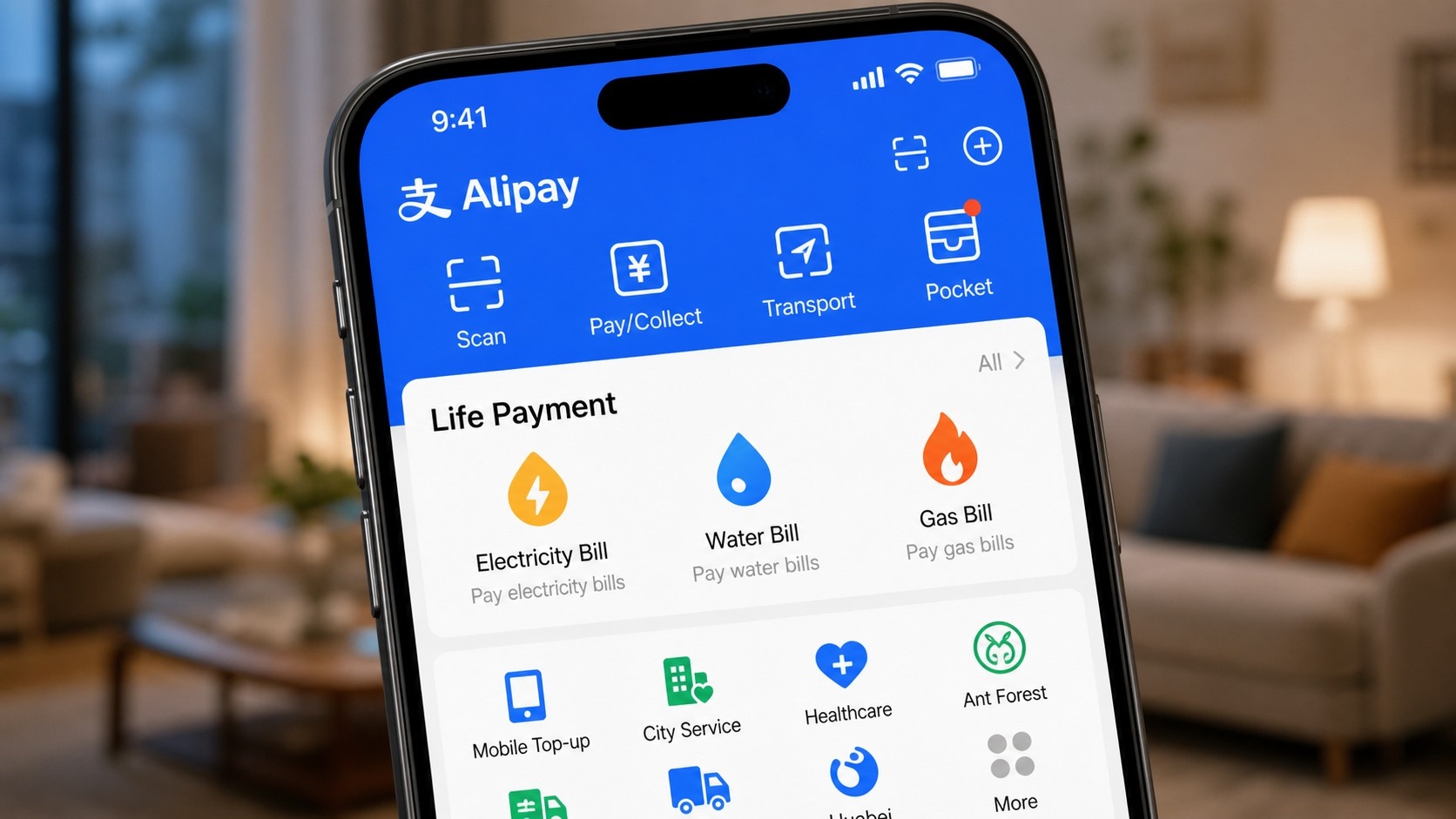
For paying utilities, Alipay is slightly more popular due to its dedicated “Life Payment” section, but WeChat’s mini-programs work just as well. The interface is surprisingly intuitive, even for non-Chinese speakers with a little help from translation tools.
How It Works: A Step-by-Step Guide
If you are renting an apartment in China, paying utilities involves three simple steps. No paper forms. No visits to the bank.
- Find Your Account Number: When you move in, your landlord or property management office will give you a unique “Household Number” (户号) for each utility type (electricity, water, gas). This is your digital ID for payments.
- Bind the Account: Open Alipay or WeChat. Go to Utilities or Life Payment. Select your city and the type of bill (e.g., Electricity). Enter the Household Number provided by your landlord.
- Pay: The app will pull up your current balance instantly. You can see exactly how much you owe, when it was last paid, and even view a digital receipt. Tap “Pay,” verify with your fingerprint or face ID, and you are done.
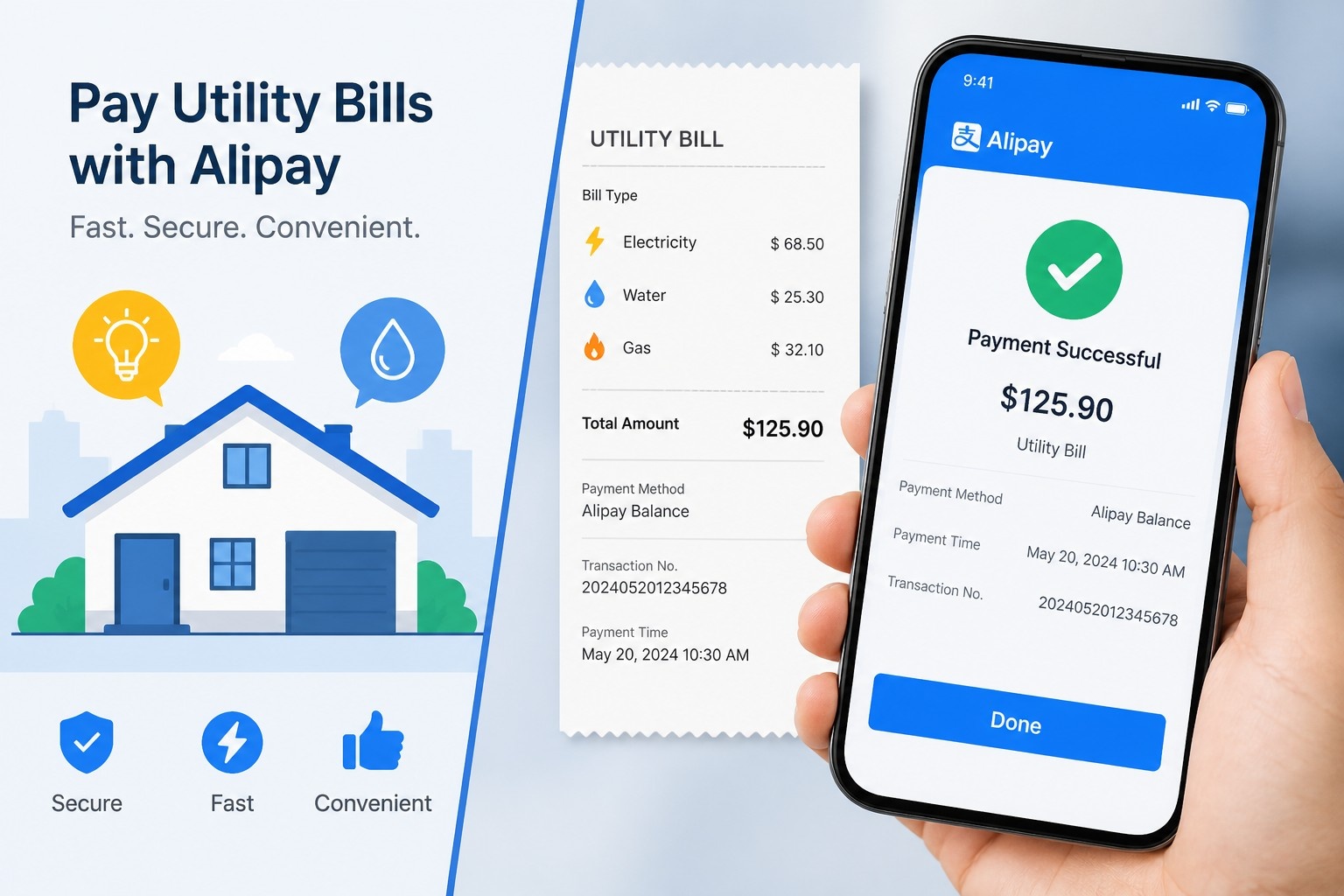
Paying utilities is now instant: enter your household number, check the balance, and confirm with a fingerprint.
The entire process takes less than 30 seconds. If you forget to pay one month, the app will send you a push notification reminder a few days before the due date. It is rare to accidentally go without power today.
Is It Safe?
Safety is the first question many foreigners ask. “Will my money disappear?”
The answer is generally no. Both Alipay and WeChat are backed by some of the largest tech companies in the world. They use bank-grade encryption and fraud detection systems. In China, credit cards are still less common for daily spending; instead, almost everyone uses mobile payments linked directly to their bank accounts.
According to recent data, over 90% of urban residents in China use mobile payments for daily transactions. The system is deeply integrated into public infrastructure. Even small vendors who sell vegetables on the street have QR codes printed on plastic cards hanging around their necks. This widespread adoption has created a highly efficient digital ecosystem where money moves instantly and records are kept automatically.
More Than Just Convenience
This shift isn’t just about saving time. It represents a fundamental change in how public services operate in China.
In the past, utility companies had to maintain large networks of physical offices and employ thousands of staff to collect cash. Today, those resources are redirected toward improving service quality—like faster response times for repairs or better grid management.
For expats and travelers, learning to use these apps is one of the biggest hurdles in adapting to life in China. But once you master it, a major source of daily stress vanishes. You no longer need to keep track of due dates or carry change for meters.
The next time your light flickers on, remember: it’s not magic. It’s just the efficiency of a society that has moved online.