


More Than Just Anime
If you ask a Chinese university student what they watch on their phone during the subway commute, they probably won’t say Netflix. They’ll likely show you Bilibili (often called “B-Zhan” by locals). While Western audiences might recognize it as China’s answer to YouTube or Twitch, reducing it to just a video host misses its soul.
Founded in 2010, Bilibili started as a niche community for fans of Japanese anime and comics (ACG). Today, it has evolved into a massive cultural hub with over 300 million monthly active users. But unlike YouTube’s algorithm-driven feed, which often feels like an endless scroll of isolation, Bilibili is built on shared experience. The secret sauce? A feature called “danmaku” (bullet comments).
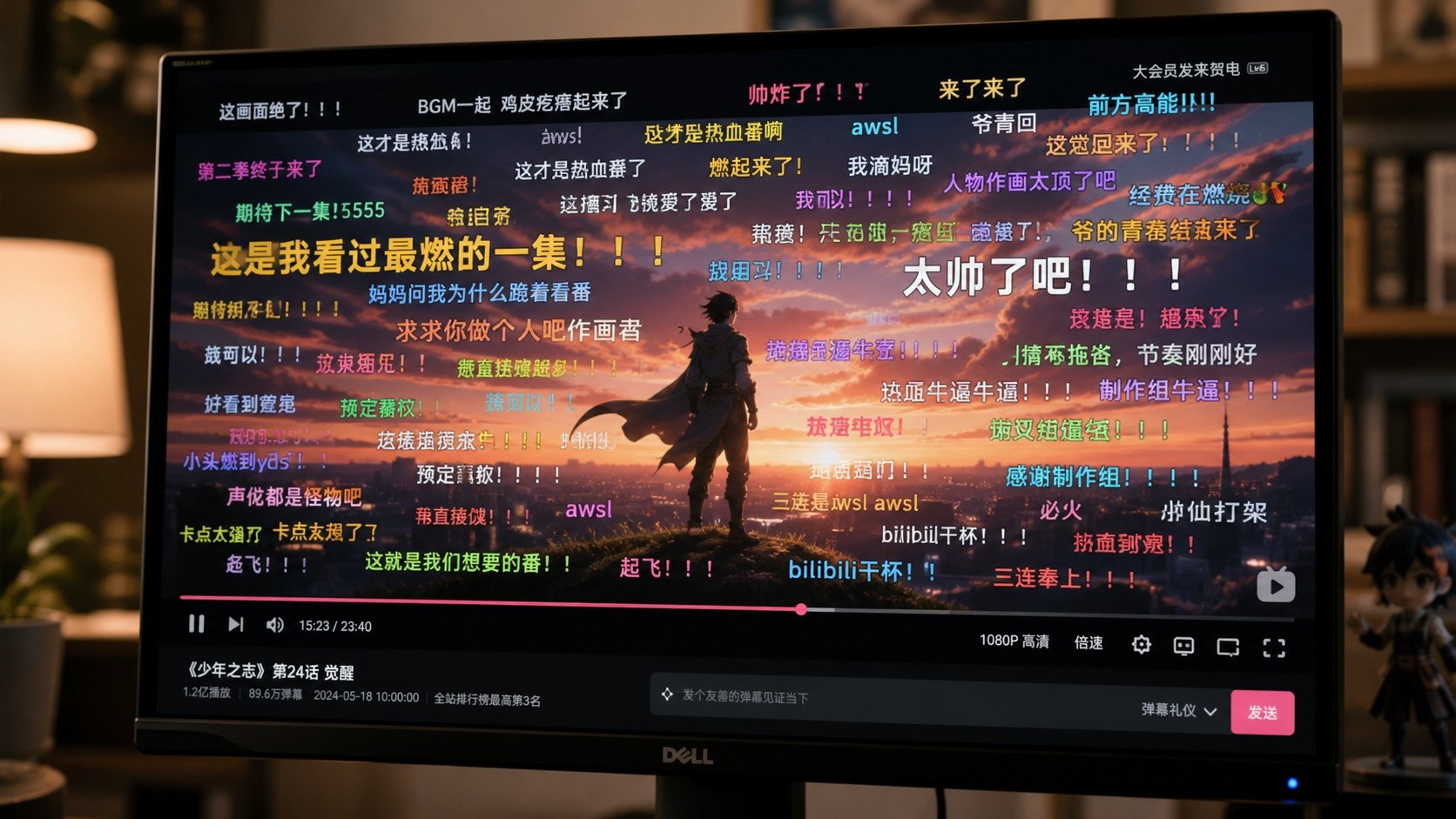
The Magic of Danmaku: Watching Together
Imagine watching a video, but instead of reading static text in a comment section below, colorful text scrolls across the screen at the exact moment something funny or shocking happens. This is danmaku.
When I first opened a cooking tutorial on Bilibili, I was startled. The screen was filled with flying text: “Oil temperature looks perfect!” and “I burned mine three times.” As you watch, your own comments join the stream, disappearing after a few seconds. It creates a sense of co-presence. You aren’t just watching a video; you are sitting in a virtual theater with thousands of others, laughing or gasping at the same time.
This isn’t just decoration. Danmaku has become a language itself. Users develop inside jokes, memes, and specific etiquette. If someone posts something particularly insightful, the chat might flood with “666” (slang for ‘awesome’) or hearts. It transforms passive consumption into active participation.

Learning Is Cool: The Rise of Knowledge Content
Here is where Bilibili diverges sharply from Western platforms. In the West, video sites are often divided between entertainment (vlogs, gaming) and education (tutorials). On Bilibili, this line has blurred.
You will find high-quality documentaries on history, physics lectures by top professors, and coding tutorials competing for attention with celebrity gossip or dance covers. Why? Because for China’s Gen Z, learning is a form of entertainment. The platform calls itself “the best learning site for young people in China.”
I recently watched a 45-minute video breaking down the economic history of the Song Dynasty. It had more views than many pop-star music videos. The comments weren’t just jokes; users were debating historical facts, sharing academic papers, and asking follow-up questions. For young people in China who face intense academic and work pressure (known as “involution” or neijuan), Bilibili offers a space where curiosity is celebrated, not punished.
Navigating the Culture: A Guide for Outsiders
If you want to explore Bilibili, here are three tips to help you navigate its unique social norms:
1. You Can’t Comment Immediately
To join the conversation (send danmaku), new users must pass a quiz. It tests your knowledge of community rules and basic cultural context. This isn’t just bureaucracy; it’s a filter to keep the chat quality high and reduce toxicity. Once you pass, you’re part of the club.
2. Respect the “Don’t Spoil” Rule
In danmaku culture, spoiling the end of a movie or game is a major sin. If you see someone typing a spoiler, they will be quickly downvoted and mocked by the community. Always wait for the video to finish before discussing plot twists.
3. Embrace the Memes
Bilibili has its own vocabulary. Words like “GG” (good game), “YYDS” (eternal god/GOAT), and specific emoji faces have deep roots here. Don’t be afraid to use them, but observe first. The community is welcoming to genuine curiosity but quick to spot pretenders.

Why It Matters
Bilibili offers a window into how China’s young generation processes information. They are digitally native, globally connected through the internet (despite the Great Firewall), and deeply engaged with both local traditions and global pop culture.
The platform is not perfect. There are commercial pressures, algorithmic bubbles, and occasional controversies over content moderation. But its core identity remains distinct: a place where people come to learn, laugh, and feel less alone in their digital lives. For anyone trying to understand modern China beyond the news headlines, Bilibili is an essential portal.