


The “Invisible” Paperwork of Traveling in China
Imagine this scenario: You have just landed in Shanghai after a long flight. Instead of checking into a standard hotel, you head to an Airbnb apartment hosted by a local friend who lives near the Bund. The host hands you the keys, and you settle in, ready to explore.
Two days later, your trip is unexpectedly interrupted. A uniformed officer knocks on your door. They are not there for an arrest or an interrogation. They are there because, under Chinese law, they need to verify where you are sleeping. This is the reality of China’s Temporary Accommodation Registration system.
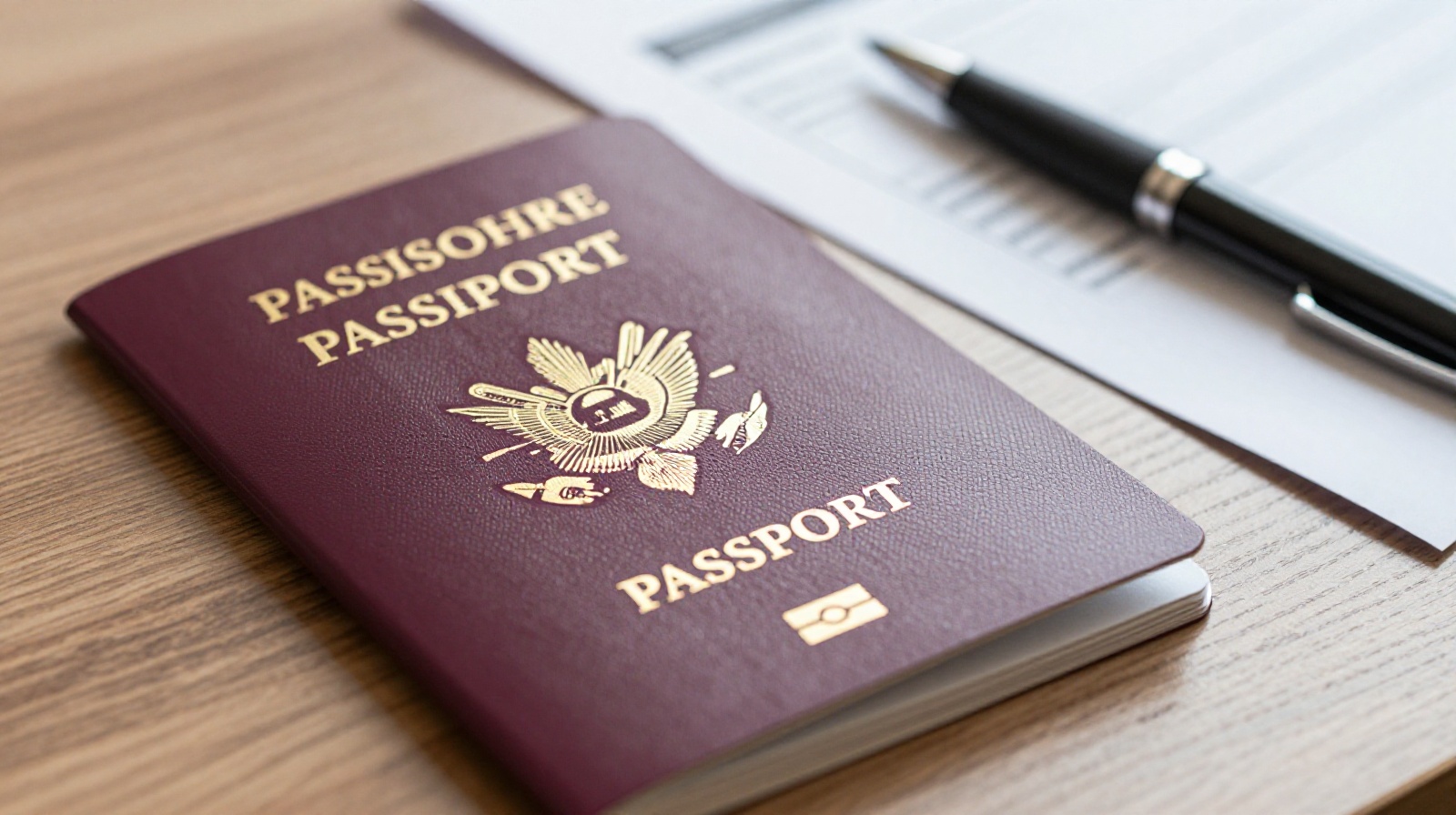
For many Western travelers, the mention of “police” and “registration” triggers anxiety. It sounds like surveillance. In reality, it is one of the most routine administrative procedures in China. Think of it not as a security check, but as a public health and safety record-keeping requirement—similar to how hotels in other countries register your passport upon check-in.
Who Has to Register?
The rule applies to all foreign nationals staying in China for less than 180 days (tourists, business visitors, students on short-term visas). However, the process differs significantly depending on where you stay.
Scenario A: You Stay in a Hotel
If you book a licensed hotel, hostel, or guesthouse, you generally do not need to do anything. By law, hotels are required to scan your passport and visa information directly into the local public security network within 24 hours of your check-in. The system automatically generates your registration record. You can simply ask for a “Registration Form of Temporary Residence” (临时住宿登记表) from the front desk if you need it for bank accounts or other formalities.
Scenario B: You Stay in Private Accommodation
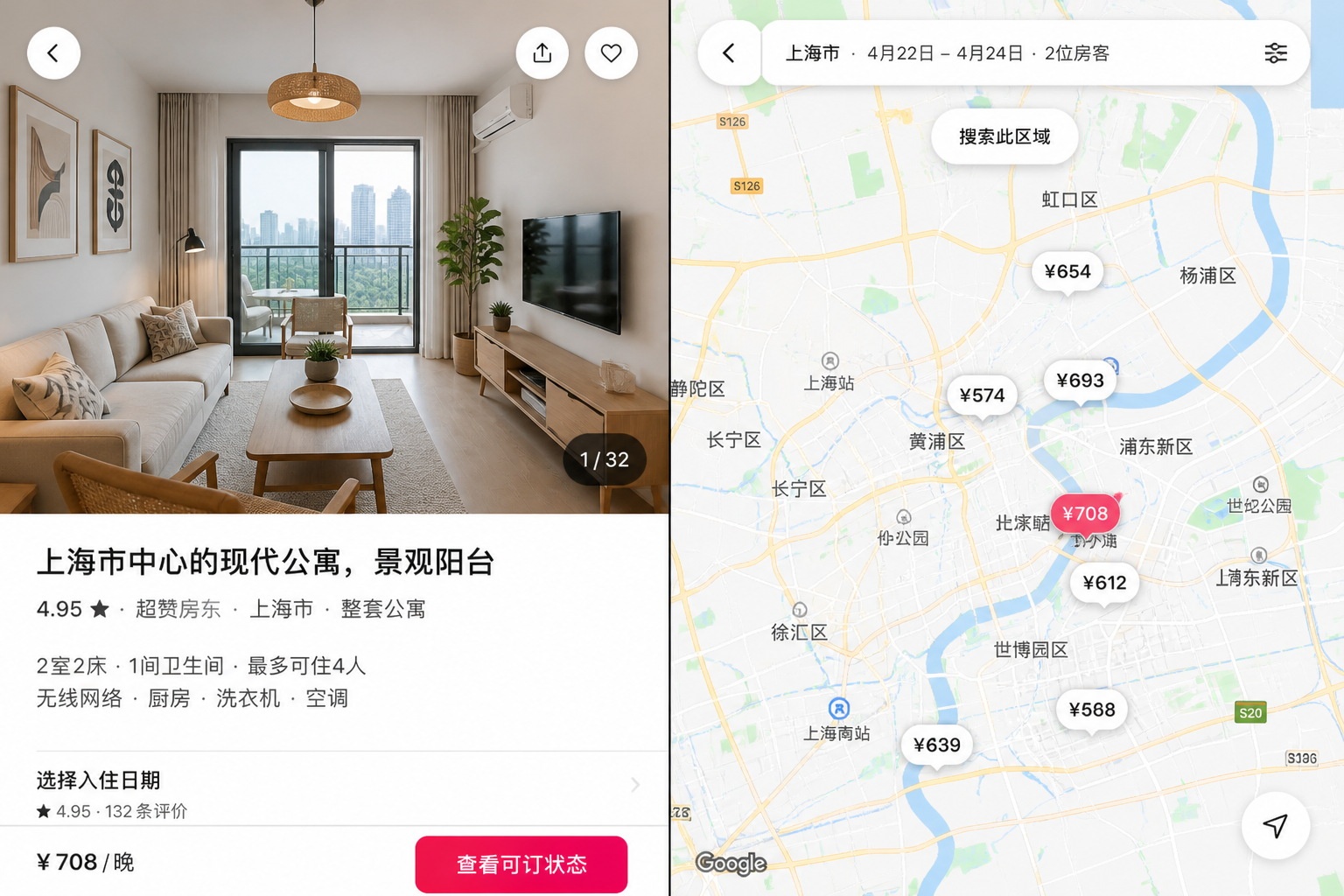
This is where most travelers get confused. If you stay in an Airbnb, a private homestay (Minsu), or at a friend’s house, the hotel-style automatic registration does not happen. The responsibility falls on you and your host.
You must report to the local police station (Paichusuo) or community service center within 24 hours of arrival. Failure to do so can result in fines ranging from 500 to 2,000 RMB ($70-$300 USD), and in severe cases, it can complicate your visa extension or even lead to deportation.
How to Navigate the Process Without Stress
The process is straightforward if you are prepared. Here is a step-by-step guide to handling this requirement smoothly.
1. Gather Your Documents
You will need physical copies of several documents. Do not rely solely on your phone screen; police stations often require photocopies for their files.
- Your Passport: The original document and a photocopy of the page with your photo, visa, and entry stamp.
- Proof of Residence: If you are in an Airbnb or renting short-term, bring a copy of the rental contract. If staying with a friend, they may need to provide a copy of their property ownership certificate (房产证) or their own household registration book (户口本).
2. Find the Right Police Station
You do not need to go to the main municipal bureau. You need the local police station (Paichusuo) that has jurisdiction over your specific neighborhood or “community” (Shequ).
How to find it:
- Ask your host. They should know exactly which local office handles foreigners in their area.
- Use a map app like Baidu Maps or Amap (Gaode). Search for “Police Station” (派出所) near your address. Note that some small community police offices (警务室) may not have staff who speak English, so the main Paichusuo is often a safer bet for non-Chinese speakers.
Check their working hours. Most government offices close on weekends and during lunch breaks (12:00 PM – 1:30 PM). Plan your visit during weekday mornings or early afternoons.
3. The Registration Process
Once you arrive at the station, follow these steps:
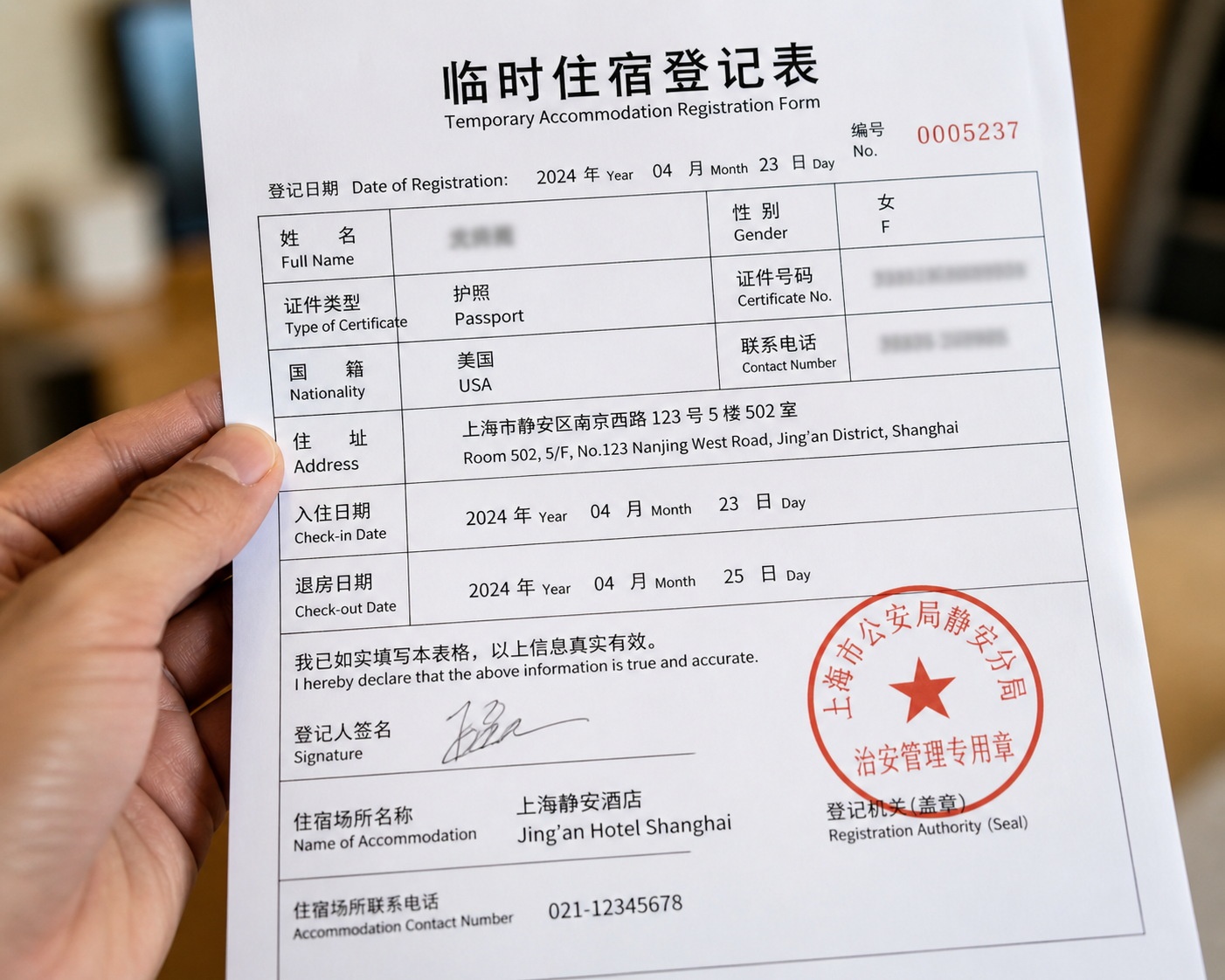
- Fill out the Form: You will be given a “Temporary Accommodation Registration Form” (临时住宿登记表). It asks for your name, nationality, passport number, address in China, and purpose of visit. If you cannot read Chinese, bring a translated version or have your host fill it out for you beforehand.
- Submit Documents: Hand over the form and your photocopies. The officer will verify everything against your original passport.
- Get the Receipt: This is the most important part. Once processed, the police station will stamp and sign the form. This stamped paper is your legal proof of residence.
Why Keep That Piece of Paper?
You might wonder why this piece of stamped paper matters so much. In China, your police registration receipt is effectively your “ID card” for the duration of your stay.
- Banks: Most Chinese banks will not open an account without it.
- Mobile Phones: Activating a local SIM card often requires showing this registration form.
- Train/Flight Tickets: In some cases, buying tickets for high-speed trains or domestic flights requires matching your police registration address with your ticket name.
Always keep the original stamped form in a safe place. Do not laminate it, as this can invalidate the official seal.
The Bottom Line
The 24-hour rule is not about restricting movement; it is about maintaining a precise record of who is living where. For the modern traveler, it feels like an extra step in an era of digital convenience. But once you do it, it becomes a non-issue.
Treat it as a standard part of settling into your new temporary home. Prepare your documents, make a quick trip to the local station, and then enjoy China with peace of mind. The police are not looking for trouble; they are just doing their job to keep the city’s records accurate.