


The Digital Living Room
Imagine a place where your boss, your mother, your college roommate, and that one ex-colleague from five years ago all exist in the same digital space. This is WeChat Moments (Pengyouquan) for over a billion Chinese users. It is not just an app; it is the country’s primary social stage.
Unlike Facebook or Instagram, which often feel like curated galleries or public squares, Moments feels more intimate—a “semi-private” living room. You see updates from people you actually know, but because your audience spans generations and professional hierarchies, every post carries a weight that doesn’t exist in Western social media.
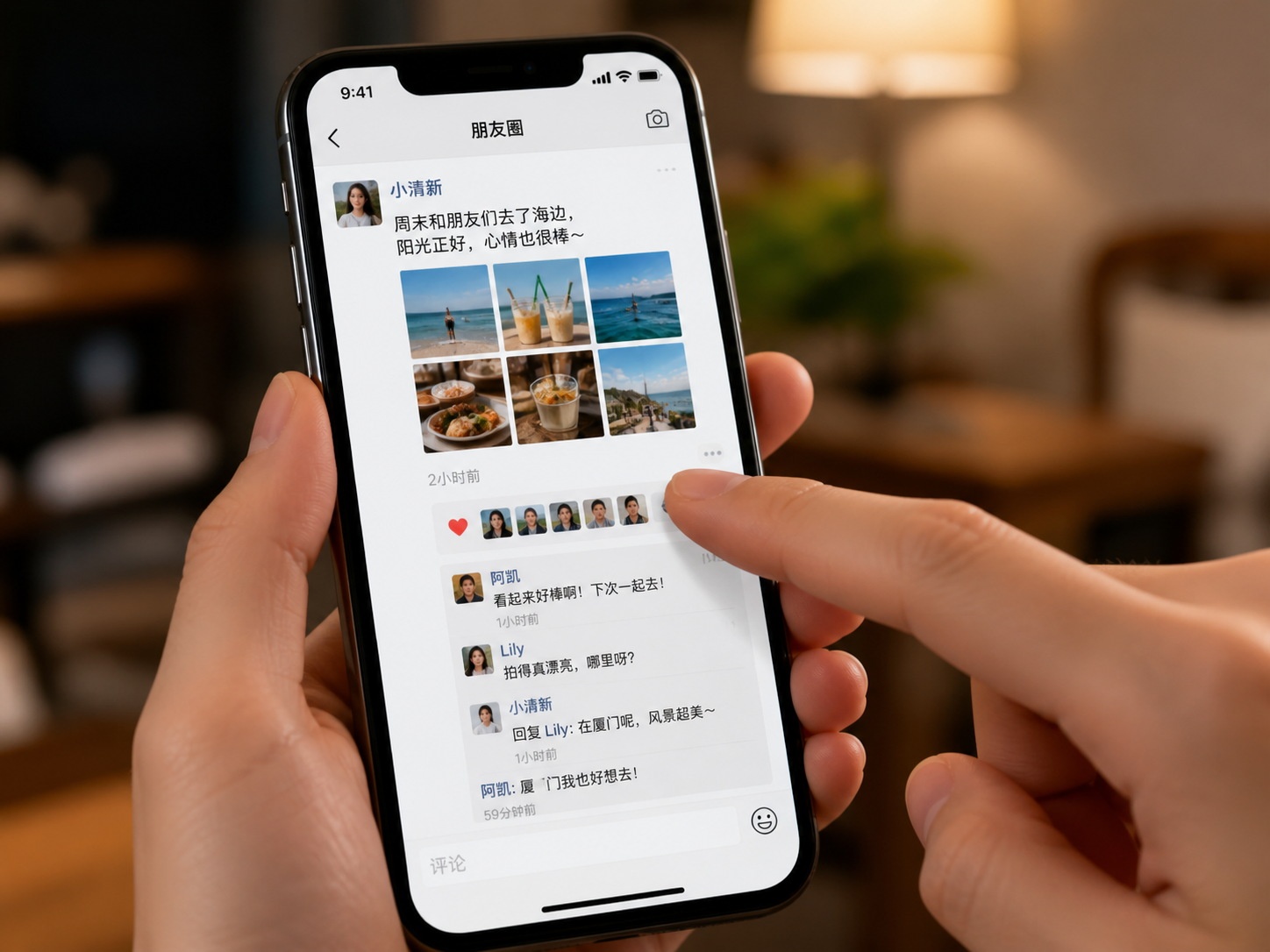
The Art of the Like: Timing is Everything
In China, a “like” (or heart icon) is not just a passive acknowledgment; it is a digital nod. It signals, “I see you, and I support you.” But doing it wrong can be awkward.
Consider the workplace dynamic. If your boss posts about a team achievement or a company milestone, liking it quickly is often expected as a form of professional solidarity. Delaying too long might look like indifference. However, liking every single post can make you appear overly eager to please—what we call “sucking up.” The sweet spot? Like the significant ones within an hour or two, but let smaller daily updates slide.
For elders and relatives, the rules are different. They often appreciate comments more than silent likes. A simple “Stay healthy” or “Great view” goes a long way. It shows you care beyond the algorithmic notification.
The Mystery of “Three-Day Visibility”
If you visit someone’s Moments and see only three recent posts, with older history completely hidden, you have encountered one of China’s most popular privacy settings: “Only visible for three days.”
For many foreign users, this might seem like a glitch or extreme secrecy. But psychologically, it is a protective mechanism against social fatigue.

In the fast-paced Chinese internet culture, people feel pressured to constantly reinvent themselves. A post from three years ago—perhaps a rant about a bad breakup, an overly emotional poem, or a controversial political opinion—can suddenly resurface in someone’s memory, leading to unwanted judgment today. By hiding history, users create a clean slate. It says, “Judge me by who I am right now, not by who I was then.”\p>
It is less about hiding secrets and more about controlling the narrative. It reduces the anxiety of being “archived” forever.
Navigating Ads and Micro-Business
Not all content on Moments is personal. China has a unique ecosystem of “WeChat Business” (Wei Shang), where friends sell products, from cosmetics to local fruits. These posts can clutter your feed.
The etiquette here relies on subtle boundaries. If someone frequently posts ads that feel too aggressive, the socially acceptable move is not to confront them publicly. Instead, users quietly use the “Mute Moments” feature for that specific person. You remain friends in chat, but their promotional noise disappears from your view.
Interestingly, most Chinese users have developed a high tolerance for these ads if they are relevant and not posted every hour. It is seen as part of the digital economy’s texture. The key is balance: if a friend only posts sales pitches without any personal life updates, the mutual connection often fades naturally, either through unfollowing or mutual silence.
The Psychology of Self-Presentation
Why does this matter? Because WeChat Moments reflects how Chinese people navigate identity in the digital age. It is a space where “Guanxi” (relationships) are maintained with precision.

The anxiety of posting—”Will my boss think I’m working too hard? Will my friends think I’m showing off?”—is real. This has led to sophisticated content strategies: sharing a book cover instead of a selfie, or posting a scenic landscape without tagging the location to avoid jealousy.
Understanding these unspoken rules helps demystify Chinese social behavior. It’s not about being fake; it’s about maintaining harmony in a hyper-connected world where everyone is always watching.