
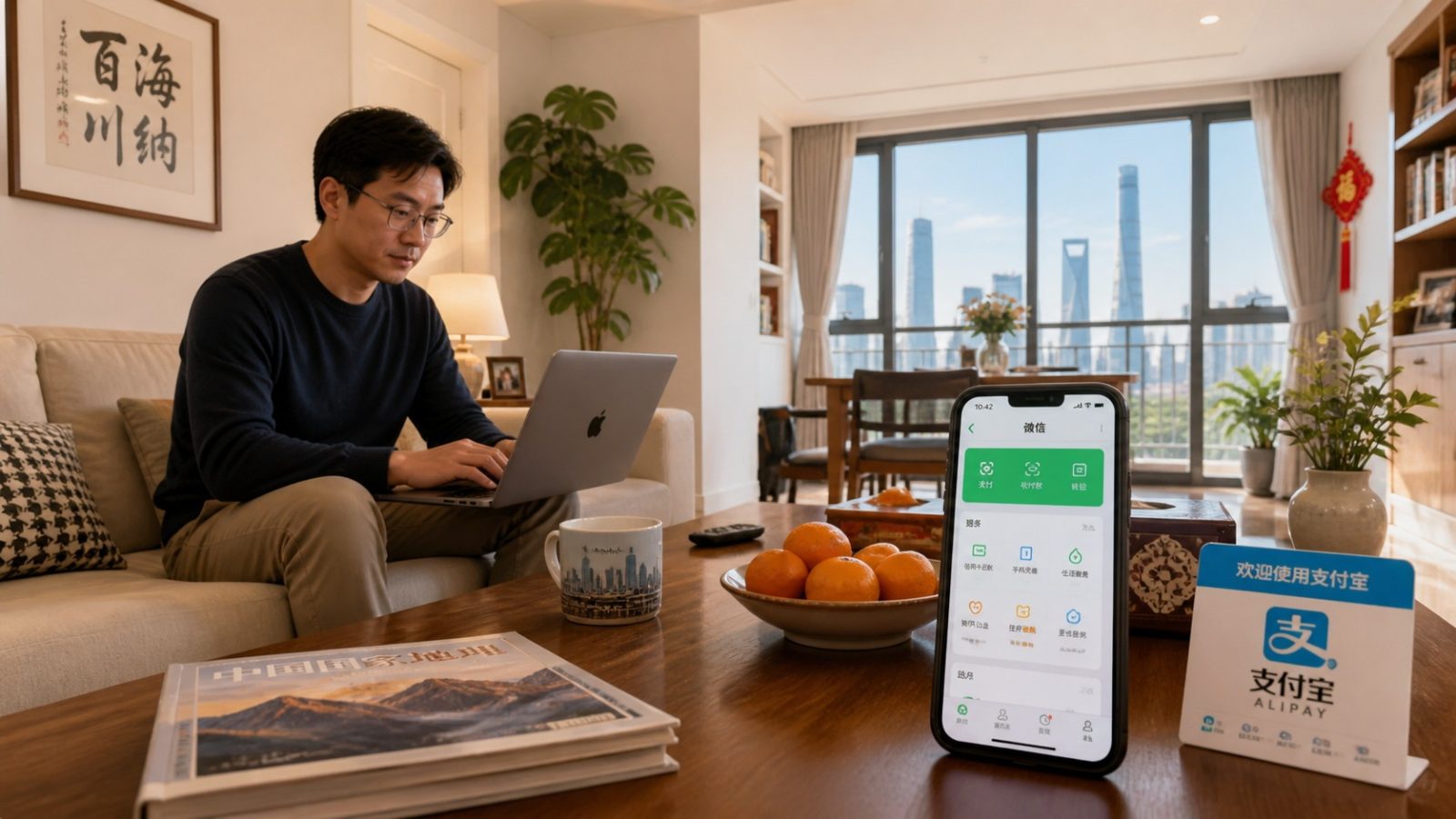

The Digital Lifeline in a Paperless Society
Imagine trying to order food, pay for groceries, or even board a subway train without your phone. In China, this is nearly impossible. The country runs on a hyper-connected digital ecosystem where high-speed internet isn’t just a luxury; it’s the backbone of daily survival and convenience.
If you are an expat or a long-term visitor looking to settle into an apartment, getting reliable home Wi-Fi is your first priority. While the process can feel overwhelming due to language barriers and complex tariff plans, it is straightforward once you know who to call and what to ask for.
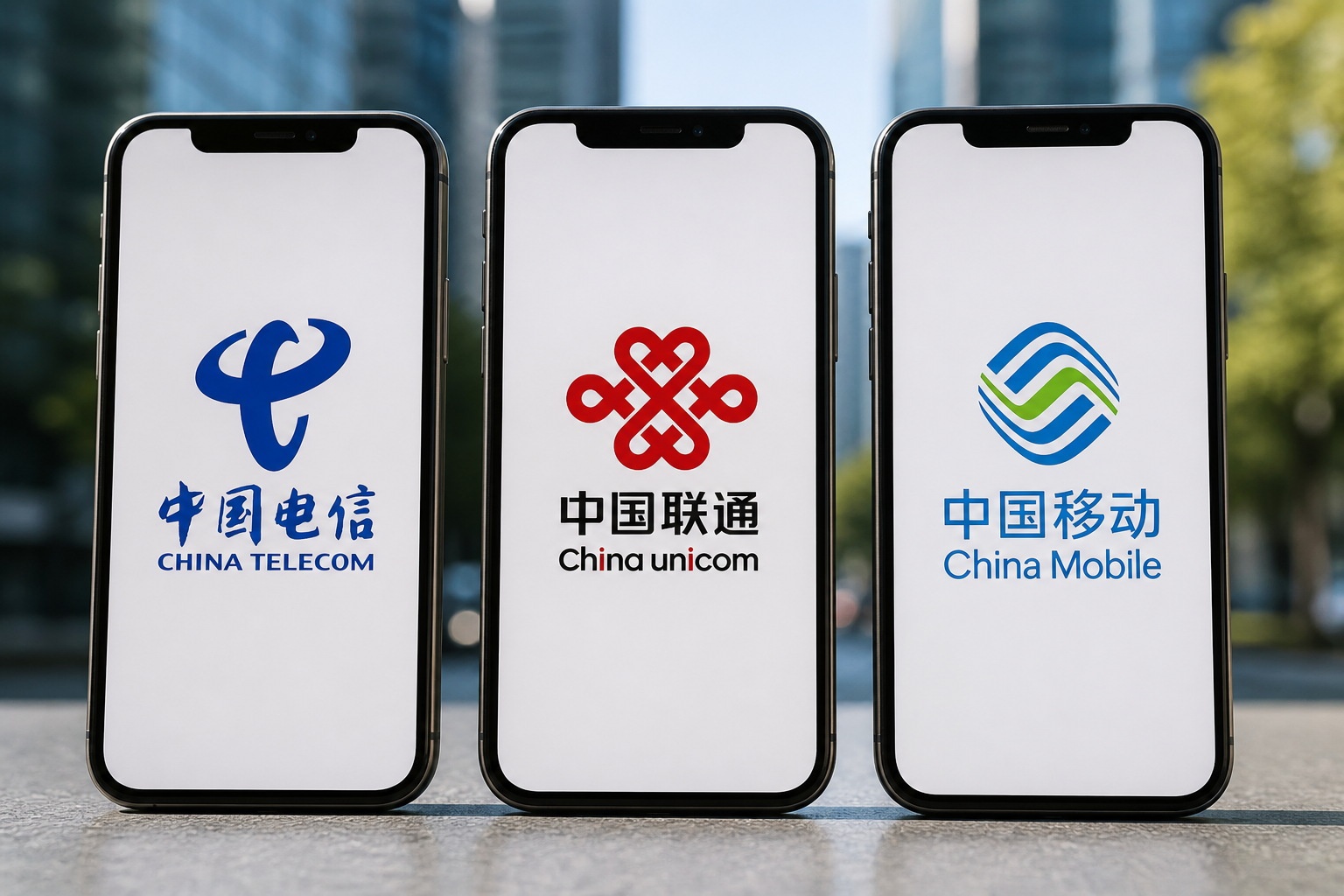
Choosing Your Provider: The Big Three
In China, the residential broadband market is dominated by three state-owned giants. Choosing between them often comes down to where you live and how much you value stability versus cost.
1. China Telecom (Dianxin)
The Premium Choice. Historically, China Telecom has been the gold standard for internet speed and stability, particularly in Southern China. If you work from home, stream 4K content, or play online games, this is usually the safest bet. Their infrastructure is robust, and customer service tends to be more responsive. However, it is also typically the most expensive option.
2. China Unicom (Liantong)
The Balanced Option. Unicom is strong in Northern China and offers a middle ground between price and performance. For most general users—browsing, video calls, and standard streaming—the difference between Unicom and Telecom is barely noticeable. It is often the best value for money if you are not a hardcore gamer.
3. China Mobile (Yidong)
The Budget King. Thanks to its massive mobile user base, China Mobile aggressively pushes broadband as an add-on. If you already use a China Mobile SIM card, they often offer “free” or heavily discounted broadband when you bundle your plans. While the raw internet speed might be slightly less stable during peak hours in older neighborhoods, for 90% of households, it is more than sufficient and incredibly cheap.

Packages: Bundles vs. Standalone
When you visit a store or browse online, you will encounter confusing terminology. Here is how to decode them:
- Single Broadband (Dan Kuan): You pay only for the internet connection. This is rare now and usually more expensive per megabit than bundles.
- Fusion Package (Ronghe Tao Can): This is what you will likely be sold. It bundles your home broadband with one or two mobile phone SIM cards and a TV service. Pro Tip: As a foreigner, you might not need Chinese phone numbers immediately. Ask if they offer “Data-Only” plans for the SIMs so you can use them in Wi-Fi routers or keep them for emergency local calls.
- Short-Term/Rental Plans: If you are staying in an Airbnb or a temporary apartment for less than six months, do not sign a one-year contract. Look for “flexible” broadband options, though availability varies by city. Sometimes, simply using your mobile phone as a hotspot with a high-data plan is easier and cheaper.
The Setup Process: What You Need to Bring
Unlike in some Western countries where you can order online and install it yourself with a plug-and-play box, China relies on physical installation. A technician must come to your home to pull the fiber optic cable into your apartment.
Step 1: Gather Your Documents
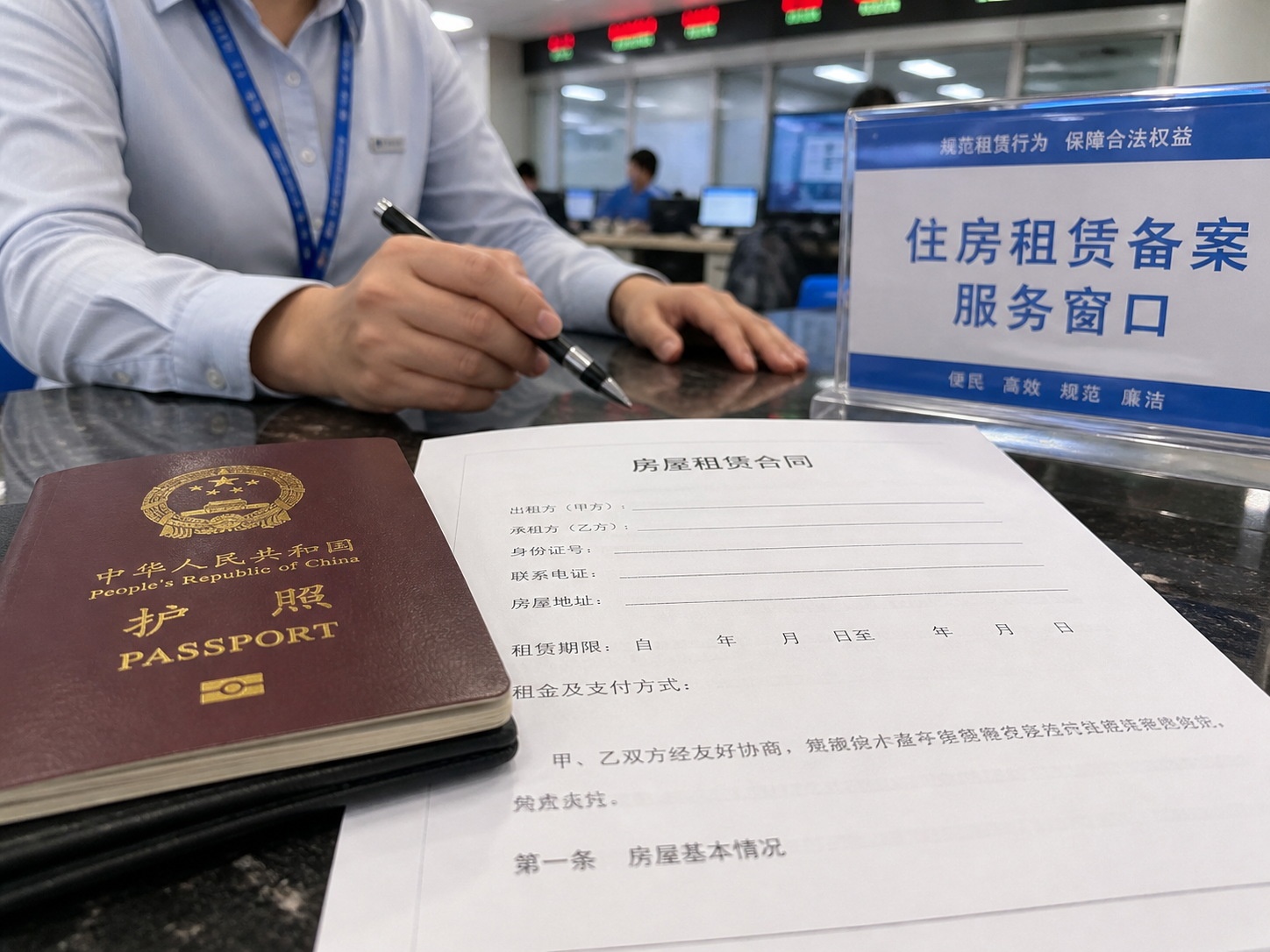
The most important document is your Passport. Unlike Chinese citizens who use their National ID card, foreigners almost always need to present their passport. Some smaller branch offices might hesitate because they are not used to processing foreign documents quickly, so be prepared for extra scrutiny.
You will also need:
- Your Rental Contract (or Property Ownership Certificate).
- Your Chinese Residential Registration Form (Zhu Pei Deng Ji Biao), often stamped by the local police station or your landlord. This proves you legally live at that address.
Step 2: Visit the Official Store
Avoid small third-party kiosks in malls; they may push high-commission, low-value bundles. Go to an official flagship store of the provider (look for the blue Telecom logo, red Unicom logo, or green Mobile logo). Bring a translator app on your phone if you do not speak Mandarin.
Installation Day: Fiber Optics and Router Placement
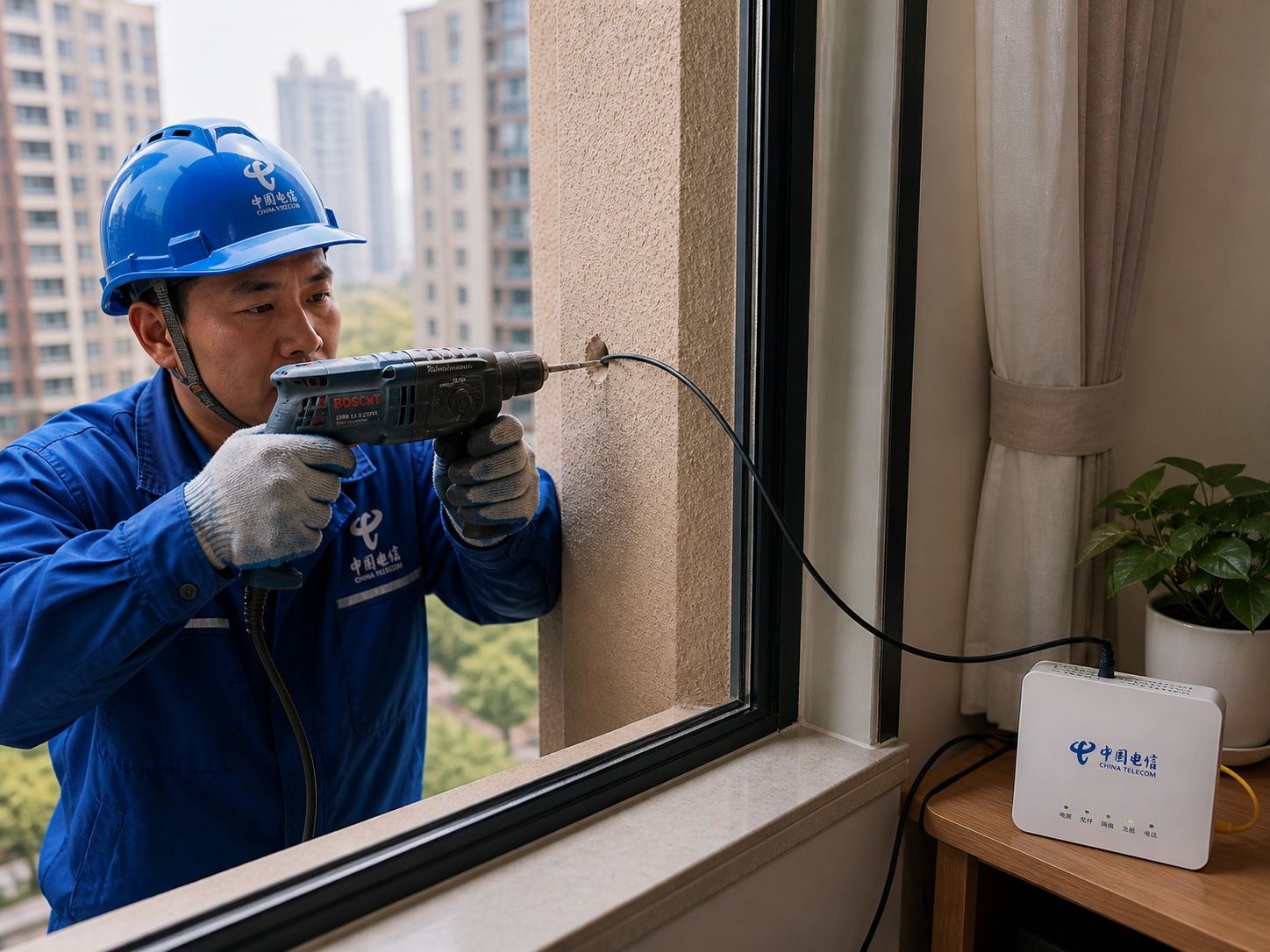
Once you pay (usually via Alipay or WeChat Pay), the technician will schedule a visit within 1-3 days. They will drill a small hole through your wall to bring the fiber optic cable in.
A Note on Wi-Fi Coverage: The provider usually gives you a “Gateway” box that combines the modem and router functions. In modern Chinese apartments with thick concrete walls, this single box often struggles to cover every corner.
Recommendation: Ask the technician if their gateway supports “Wi-Fi 6.” If not, consider buying your own high-quality router (brands like TP-Link, Huawei, or Xiaomi are everywhere and affordable). Place it in a central location, ideally on a table rather than hidden in a TV cabinet or behind electronics.
Avoiding Traps: Hidden Fees and Contracts
Chinese telecom sales can be aggressive. Here is how to protect yourself:
- The Contract Length: Most standard plans are 12 or 24 months. Ensure you understand the penalty for early cancellation. If you think you might move soon, ask explicitly if there is a “break clause” or a fee to transfer the contract.
- Equipment Deposits: Sometimes they charge a deposit for the modem/router. Ask if this is refundable when you cancel the service.
- Auto-Renewal: Confirm whether the plan auto-renews at a higher rate after the initial discount period ends. Many “cheap” broadband deals are only cheap for the first year.
Final Thoughts
Setting up internet in China is a rite of passage for anyone living here. It feels bureaucratic at times, but once that green light blinks on your router, you unlock the full experience of modern Chinese life. With the right provider and a bit of patience, you will have high-speed connectivity that rivals any home in the West.