

The Noise That Sounds Like Innovation
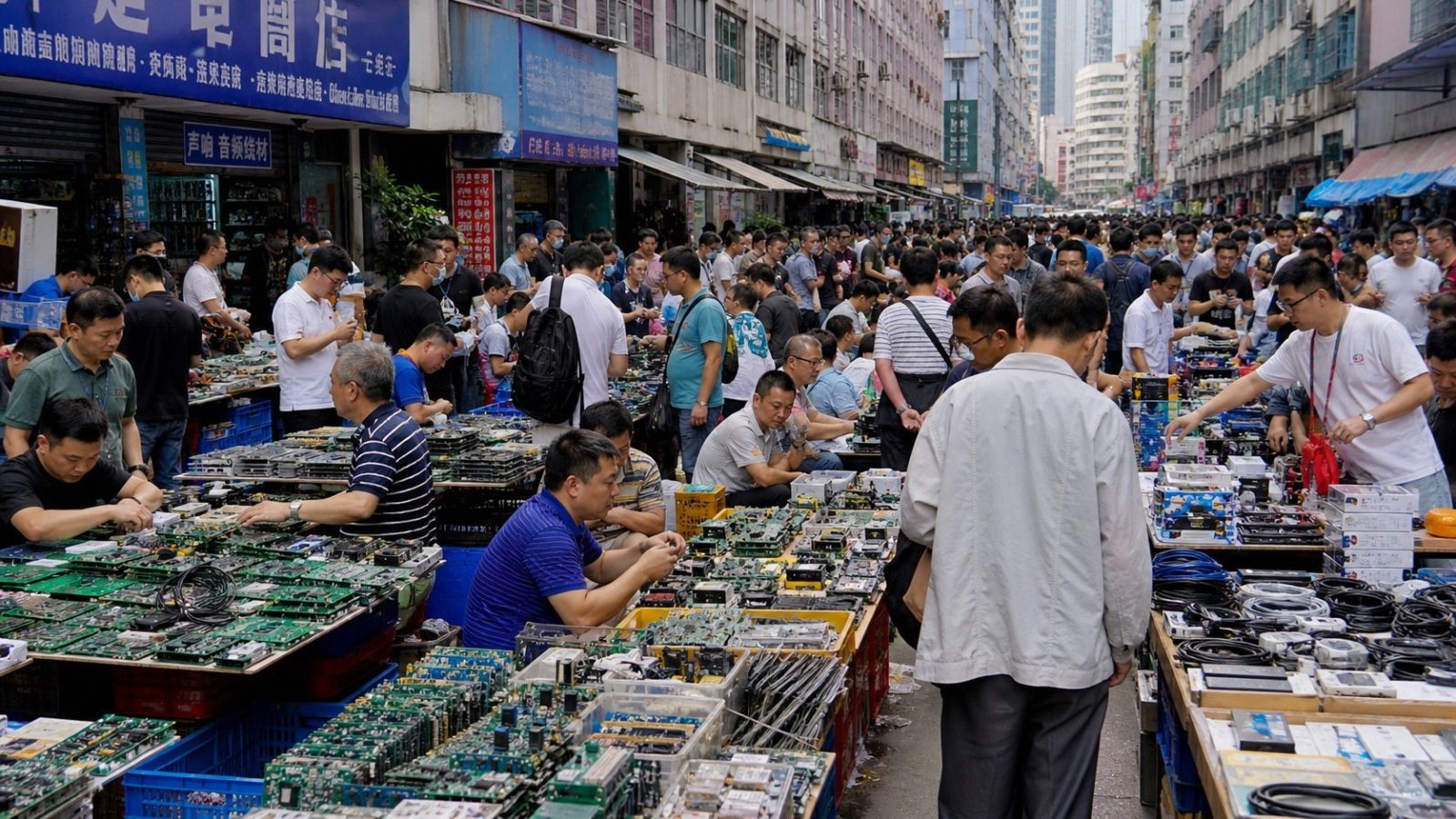
If you walk into Huaqiangbei in Shenzhen at 9 AM, the first thing that hits you isn’t a sleek showroom or a quiet library. It’s the noise. Hundreds of vendors shouting prices over intercoms, the clatter of soldering irons from open workshops, and the frantic energy of people rushing with boxes.
For years, Western tech YouTubers visited Huaqiangbei expecting one thing: a place to buy cheap phone cases or knock-off cables. They were wrong. Today, when creators like MKBHD or Linus Tech Tips mention this district, they aren’t talking about shopping. They are talking about learning.
The “Three-Day Miracle” of Hardware
Imagine you have an idea for a new smart device. In Silicon Valley or Berlin, getting the first prototype would take weeks of waiting for parts to ship from suppliers, design iterations, and factory MOQs (Minimum Order Quantities) that are too high for a solo creator.
In Huaqiangbei, the timeline collapses.
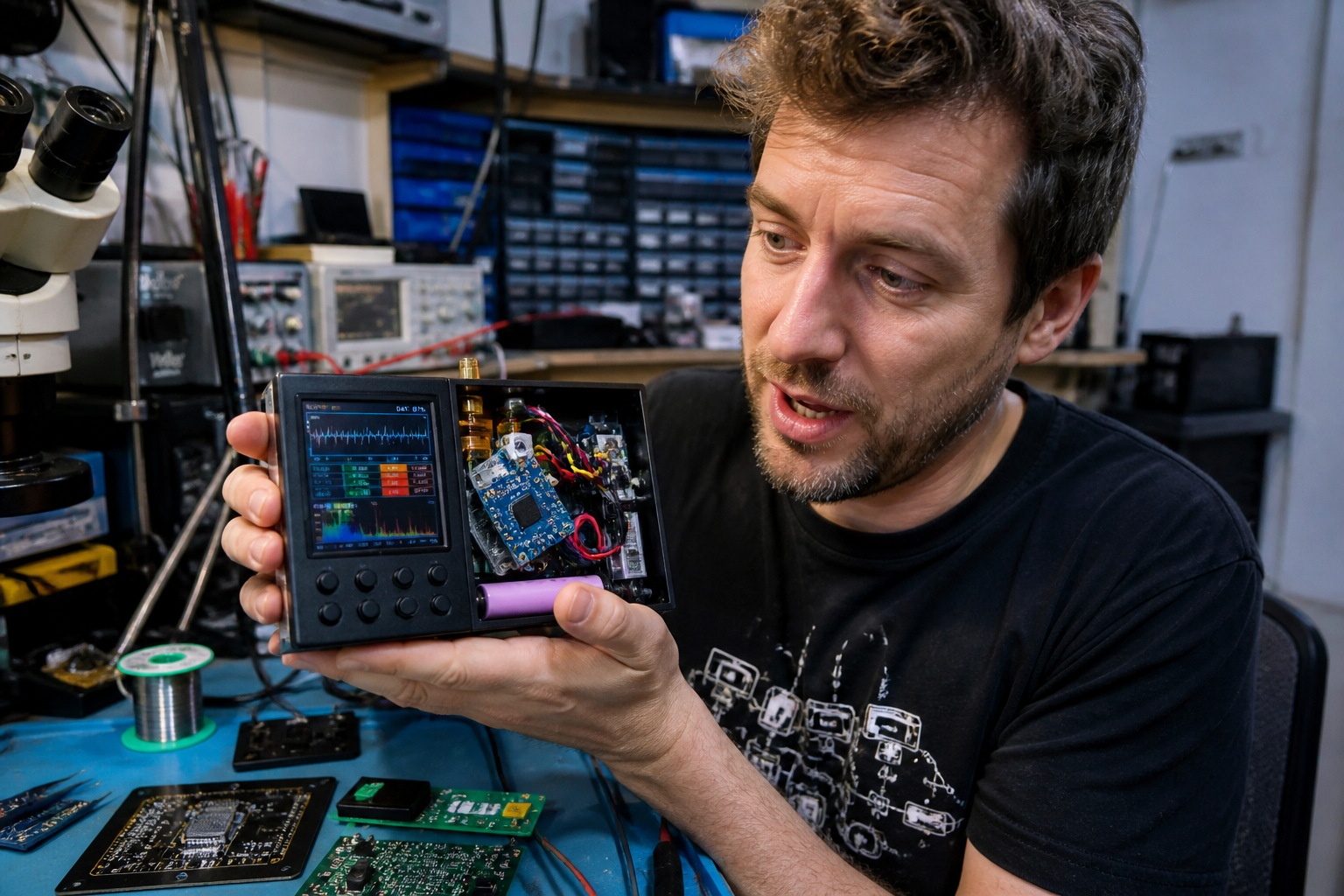
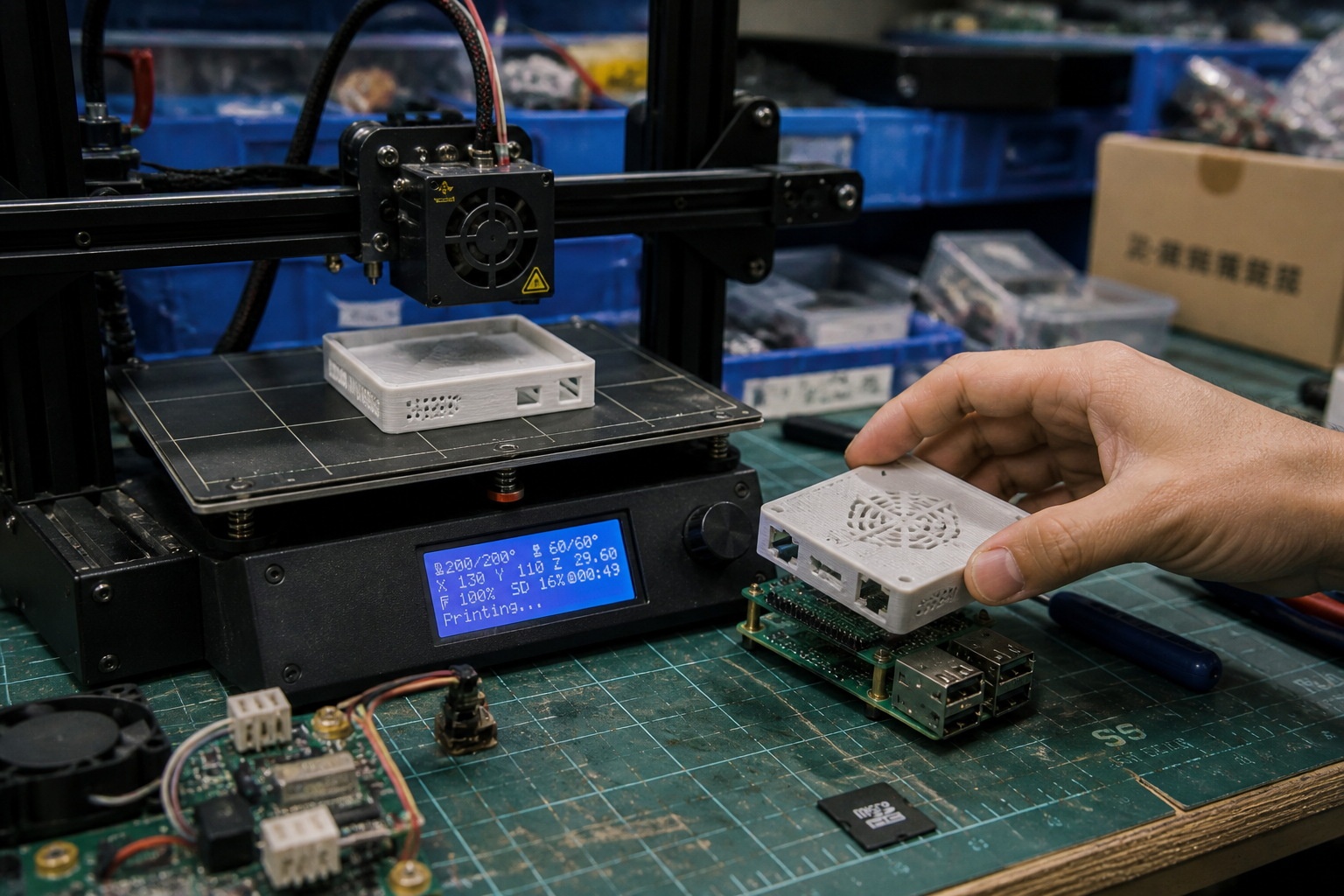
“I went there with a sketch on my phone,” says David Chen, a UK-based hardware engineer who documents his China trips. “By lunch, I had sourced every component from four different stalls just down the hall. By dinner, a local workshop was 3D printing the casing. The next morning, we soldered it together. We had a working prototype before my flight back to London.”
This is the core lesson Western tech creators are here to learn: Radical Speed and Iteration.
In Huaqiangbei, failure is cheap. If a circuit board design doesn’t work, you walk two floors up, buy a new one for $2, try again, and fix it immediately. You don’t wait three weeks for a shipment from overseas to realize your mistake. This “fail fast” culture allows independent developers to test dozens of ideas in the time it takes others to finish one.
More Than Just Parts: The Knowledge Economy
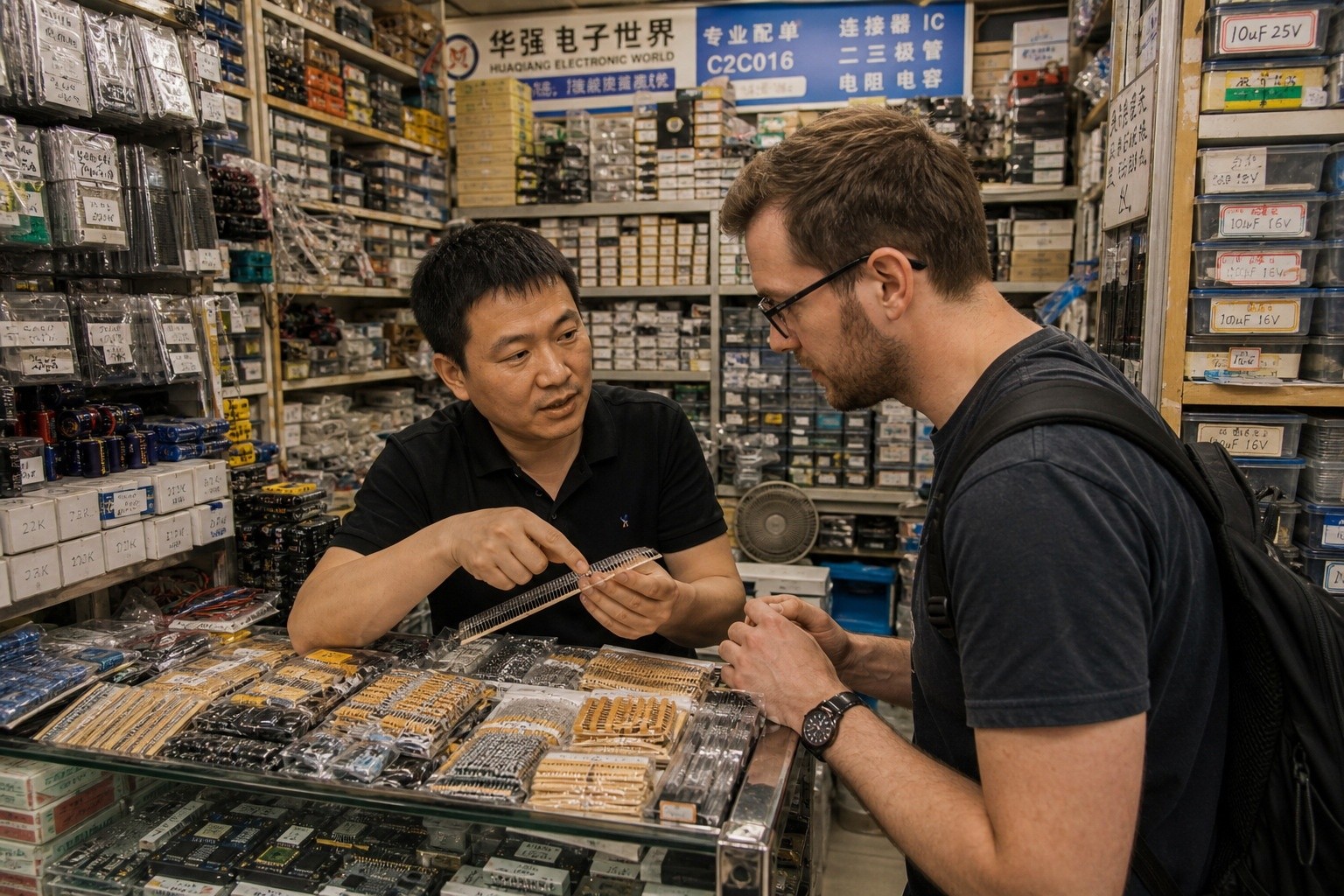
The real value isn’t just the components sitting on the shelves; it’s the human capital. In these narrow aisles, you can find engineers who have been soldering since they were teenagers.
When a Western creator asks for a specific custom sensor or a weird form factor that doesn’t exist in any catalog, local vendors don’t just say “no.” They often pull out their own drawings and ask, “Can we make this?”
This is the shift from being a “factory of the world” to an “innovation incubator.” A creator might come looking for a battery, but leave with a team that can reverse-engineer a solution they didn’t know existed. They learn how to navigate a supply chain where flexibility beats rigid corporate structures.
One US YouTuber recently shared his experience trying to build a custom drone controller. He couldn’t find the specific joystick he needed. Instead of giving up, he spent two days in Huaqiangbei talking to vendors. By the end, they had modified an existing part and printed a new adapter on-site. “I didn’t buy a product,” he told his audience. “I bought a process.”
Why This Matters for Global Tech
The lesson Western tech enthusiasts take back home is not about buying cheap goods. It’s about understanding the ecosystem of possibility.
In many Western markets, regulations and high labor costs mean that small-batch manufacturing is often impossible. Huaqiangbei proves that when a supply chain is this dense and agile, individual creativity can scale instantly.
For the average person wondering what China’s tech scene looks like beyond giant corporations, Huaqiangbei offers a different picture. It’s not just about massive factories; it’s about the small shop owner who knows exactly how to modify a motherboard for a specific project in 24 hours.
This flexibility is why startups from all over the world are now treating Shenzhen as their R&D department. They come here to learn that technology isn’t just code or circuits; it’s the speed at which you can turn a thought into reality.