

The ‘Last Mile’ Reality: Navigating the Maze
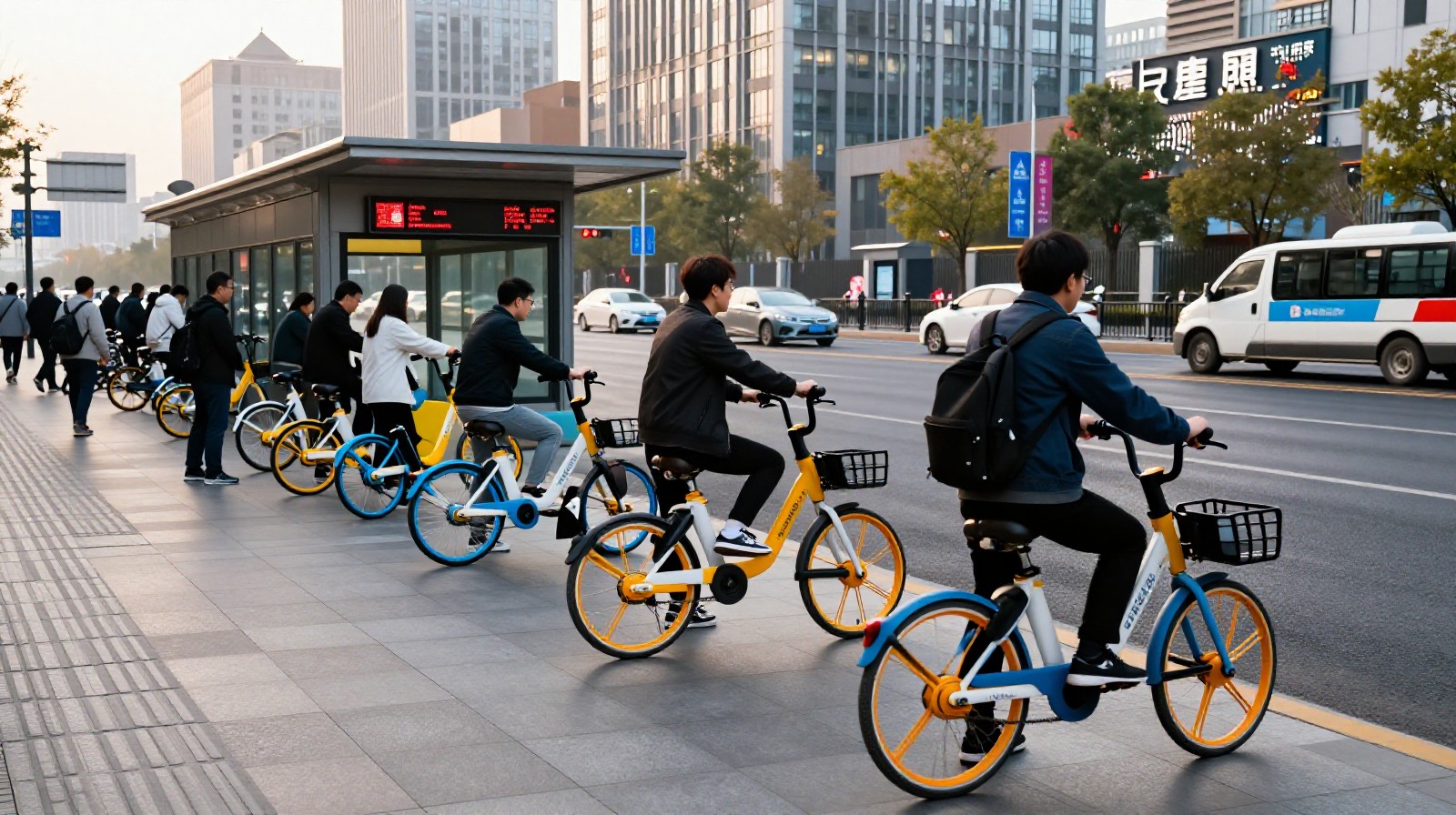
It is 7:45 AM in Beijing. The air is crisp, carrying the faint scent of roasted sweet potatoes from a street corner vendor. At the exit of Line 10 of the subway, a sea of commuters spills out onto the pavement. They aren’t walking toward their offices; they are moving toward rows of blue and yellow bikes.
For many young professionals in China, the journey to work is not a single leg but a relay race. The subway handles the heavy lifting across the sprawling city, but it rarely stops right outside your office door. This gap—often 1 to 3 kilometers—is what locals call the “last mile.” Walking feels too long under the scorching summer sun or freezing winter wind. Driving is a logistical nightmare: traffic jams are predictable, and finding parking in dense urban centers like Shanghai or Shenzhen can cost more than the taxi fare.
More Than Just a Ride: Tech in Daily Life
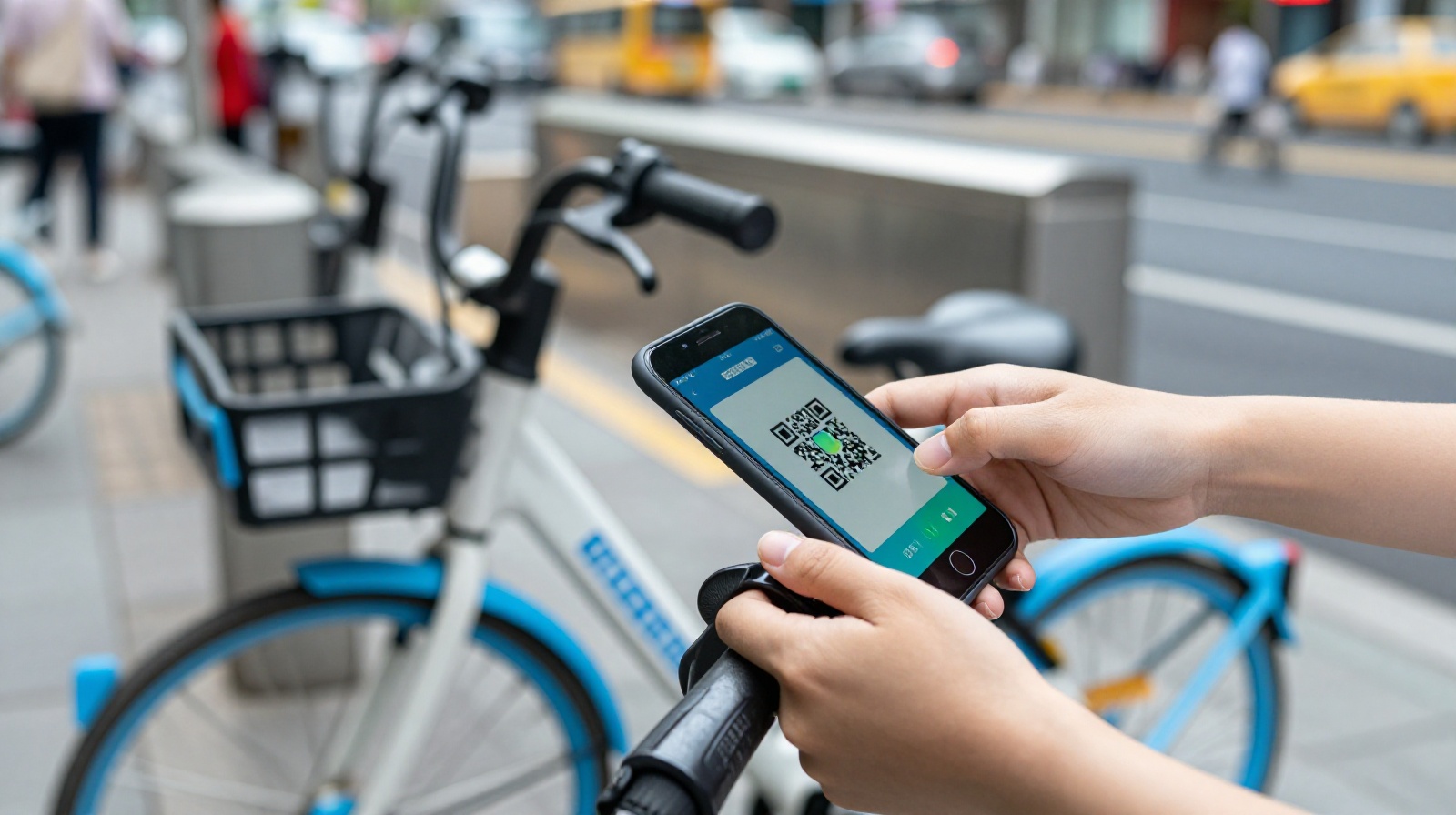
The solution to this mobility puzzle is almost entirely digital. Pulling out a smartphone feels as natural as breathing for China’s youth. The interface is deceptively simple. You scan a QR code on the bike’s lock, and within seconds, the mechanical latch clicks open. GPS tracking ensures you can find your bike even in a chaotic parking zone.
This seamless experience stands in stark contrast to the past. Just two decades ago, public transport relied on cash coins or paper tickets. Today, the entire transaction happens invisibly in the background. The app deducts the fee automatically after you park and lock the bike at a designated “e-bike zone.” There are no receipts, no change, and no awkward conversations with drivers about fares.
The Cultural Shift: Sustainability Meets Status
Riding a shared e-bike has also become a subtle marker of modern identity. In cities like Hangzhou and Chengdu, which are known for their green initiatives, choosing to ride is seen as smart, eco-friendly, and socially responsible. It aligns with a broader cultural shift where young people prioritize efficiency and sustainability over owning assets they barely use.
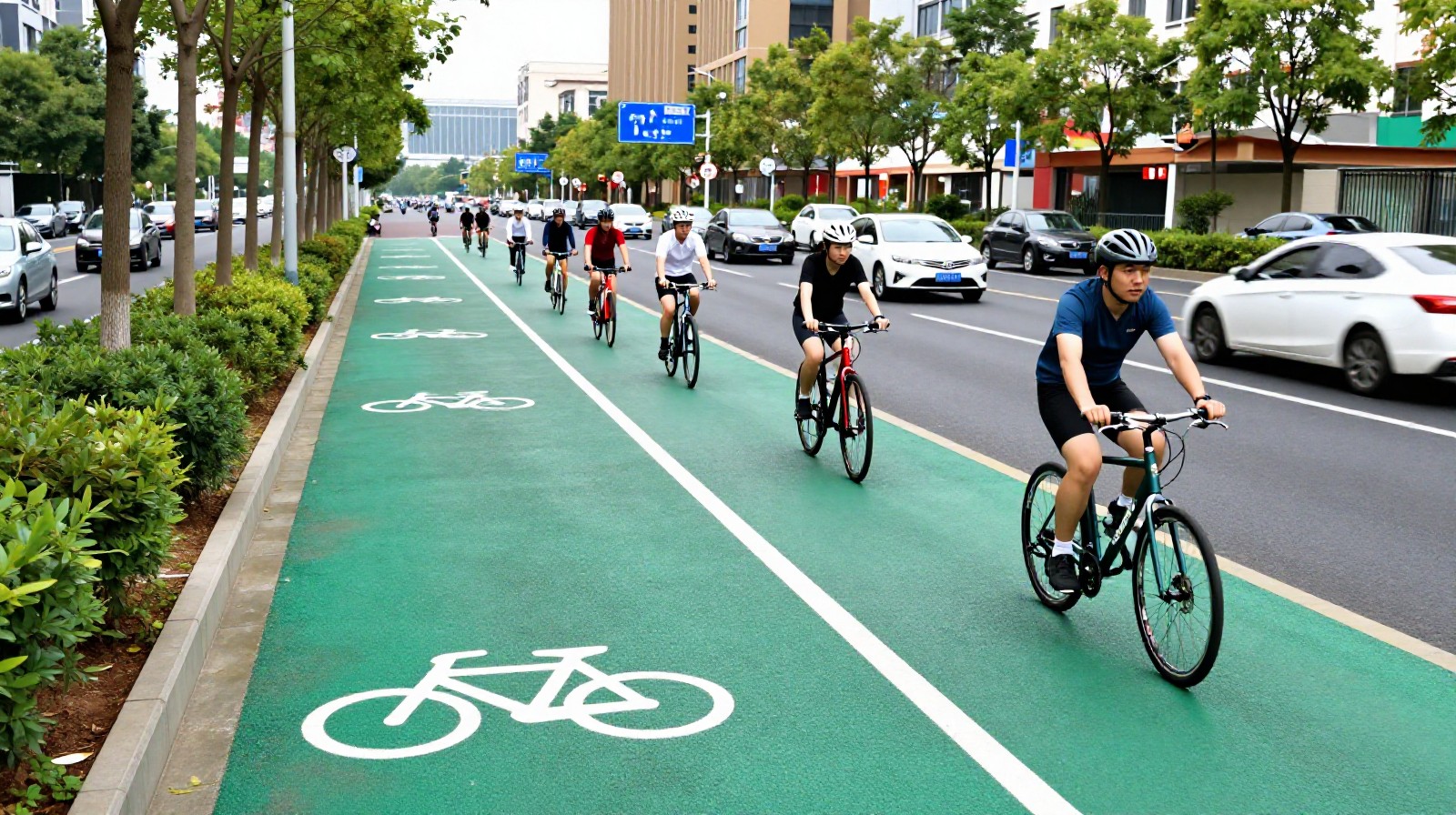
However, the infrastructure has had to evolve quickly to support this habit. City planners have responded by painting bright green bike lanes on major roads, separating cyclists from cars and pedestrians. While safety concerns still exist—especially regarding electric bikes that can reach speeds of 25 km/h—the dedicated lanes provide a sense of order in what could otherwise be chaotic street interactions.
A Day in the Life: From Office to Night Market
Consider Lin, a 28-year-old software engineer in Shenzhen. Her day ends at 8 PM. Instead of waiting for an Uber that might take 45 minutes due to traffic, she unlocks a shared bike near her office building. The ride takes ten minutes.
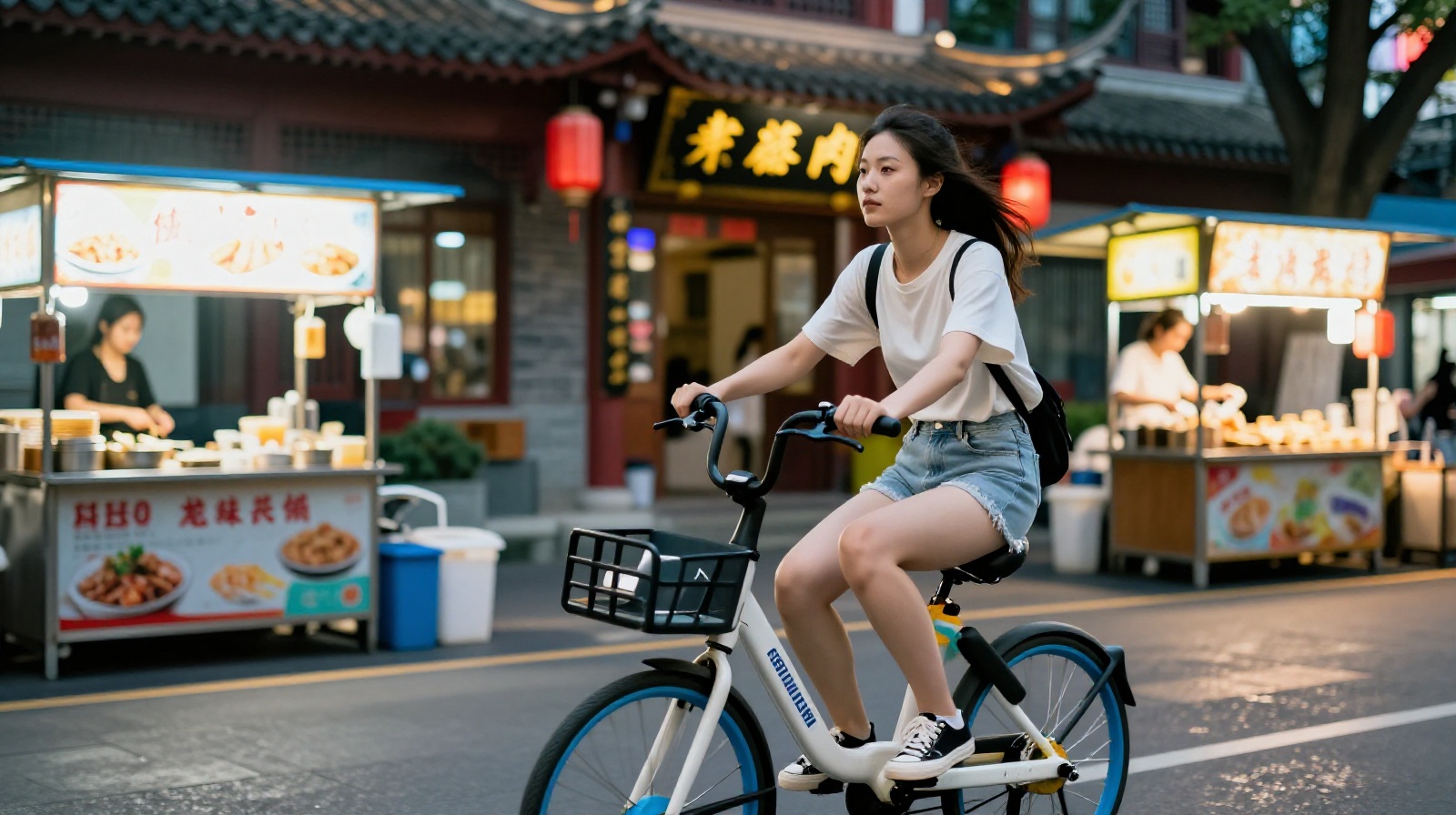
She pedals through the humid night air, passing neon-lit restaurants and bustling street markets. This isn’t just a commute; it’s an extension of her leisure time. Shared bikes allow for spontaneous stops—grabbing a coffee, picking up dry cleaning, or meeting friends for dinner without the hassle of car logistics.
Contrary to early Western media reports that painted pictures of “bike graveyards,” major Chinese cities have learned to manage this clutter. Algorithms now predict demand hotspots, and city workers use electric trucks to redistribute bikes from overcrowded areas to those in need. The system is not perfect, but it is dynamic.
What This Means for Global Urbanism
The shared mobility model in China offers a lesson for other megacities struggling with congestion. It demonstrates that technology can solve physical infrastructure gaps without requiring massive new construction. By integrating digital payment systems with physical bike networks, cities can create a flexible “micro-transit” layer.
For the average Chinese youth, the shared e-bike is not a novelty or a tourist attraction. It is as essential as the subway itself—a reliable, affordable, and surprisingly liberating way to move through the modern world.