
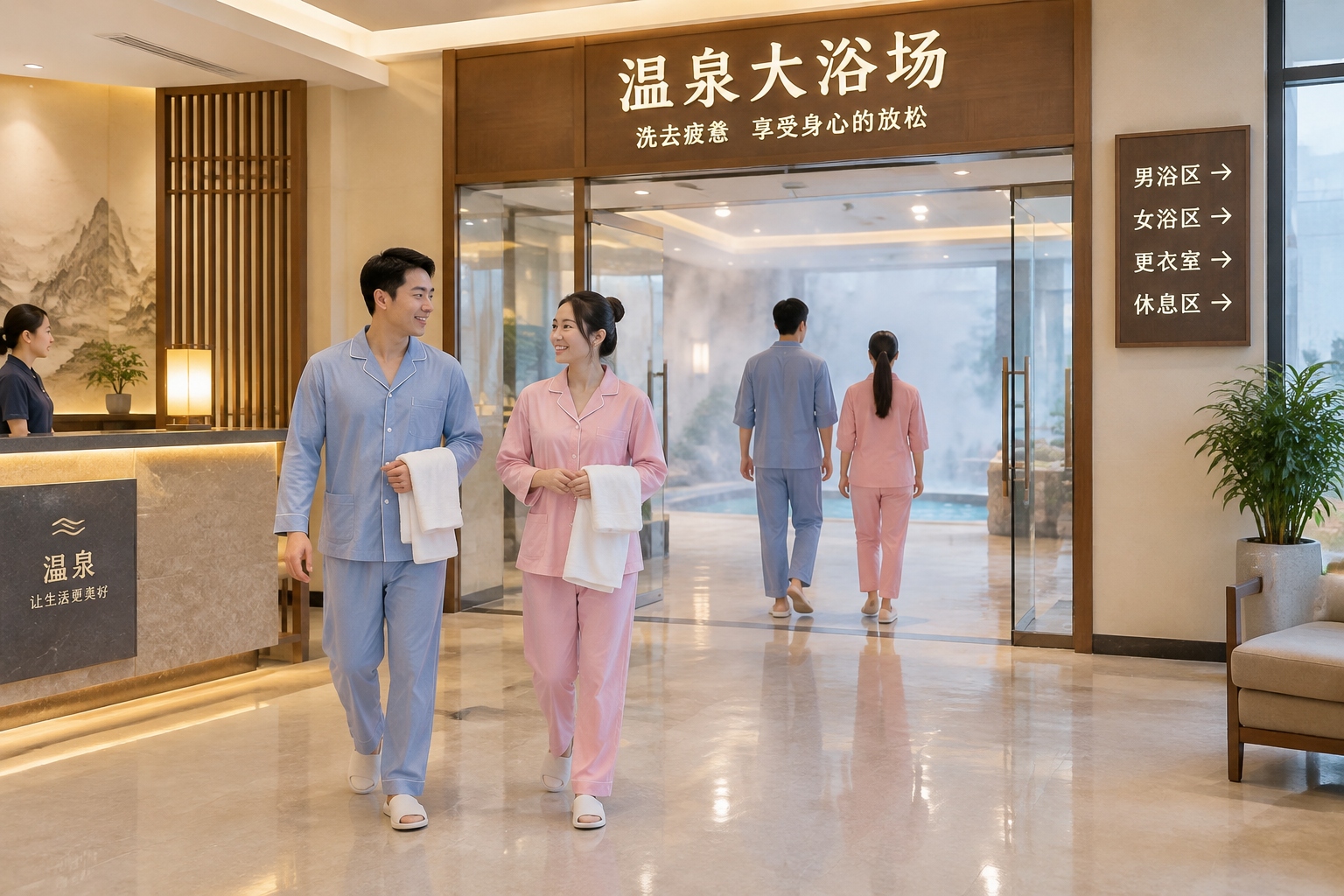

Step One: The Ritual of Entry
The air hits you first. As the heavy glass doors slide open, a wave of humid, mineral-scented warmth washes over you, instantly masking the chill outside. This is not a quiet spa where whispering is mandatory; this is a bustling social ecosystem.
In major Chinese cities like Harbin or Shenyang, bathhouses are often enormous complexes covering thousands of square meters. The entry process is orderly but requires attention to detail. Upon arrival, you receive a wristband that acts as your wallet and locker key. You change into provided pajamas—usually loose cotton sets in distinct colors for men (often blue) and women (often pink)—and leave your street clothes and valuables in lockers.
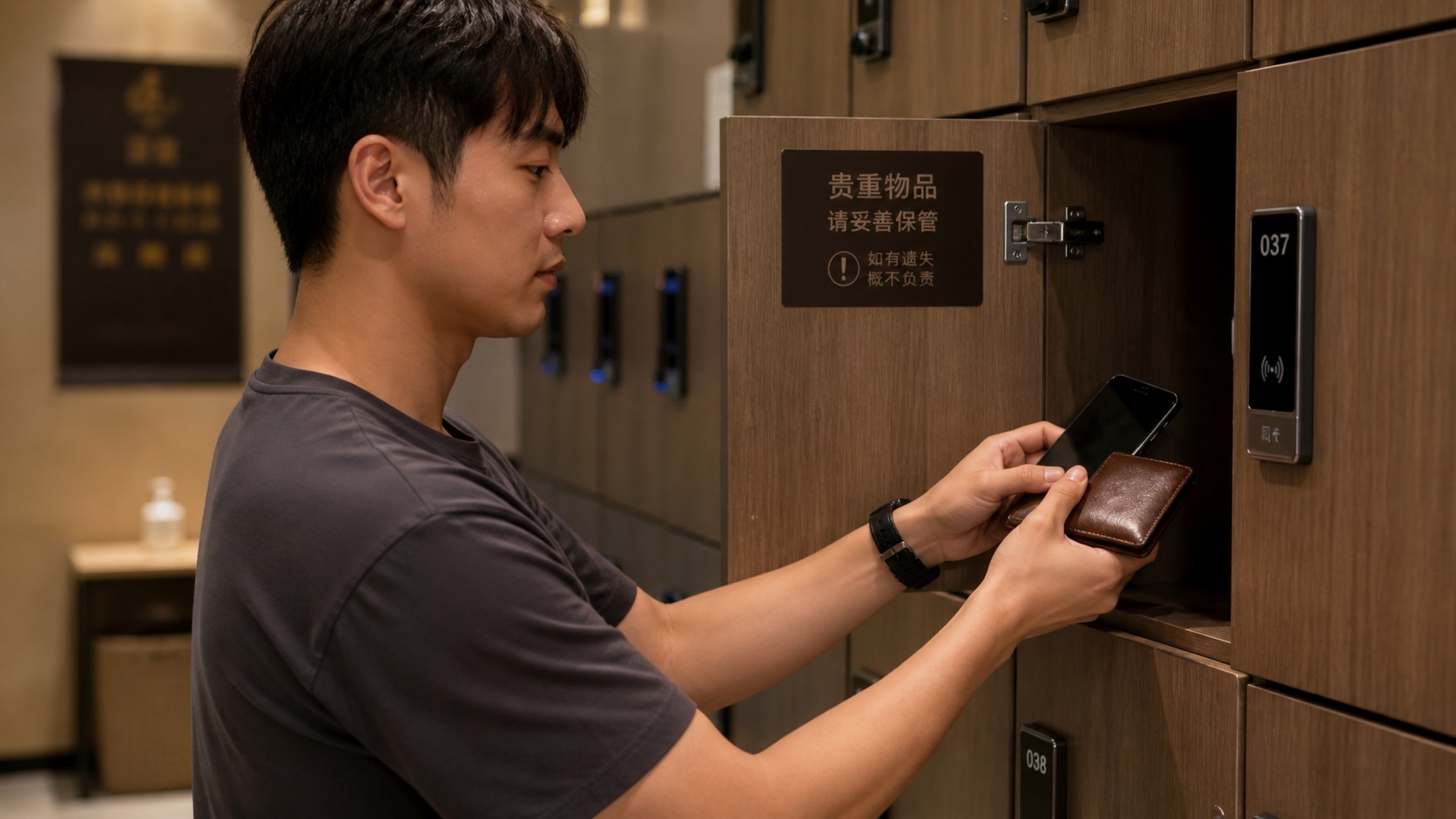
Etiquette Note
The most important rule? No phones, no cameras, and absolutely no underwear inside the wet areas. The logic is hygienic: street clothes carry dirt, and underwear fibers shed into the water. You will feel exposed at first, but within minutes, everyone else is equally casual. It is a place of radical equality.
The Core Experience: Soaking and Scrubbing
Once past the changing rooms, you enter the wet zone. This area typically features pools of varying temperatures—hot, cold, and medicinal baths infused with minerals like sulfur or eucalyptus. The water is communal, but because of strict filtration systems and a cultural emphasis on pre-showering before entering, it remains remarkably clean.
But the real event in Northern China is the cuo zao (搓澡), or dry scrubbing. This is not merely cleaning; it is an exfoliation ritual that many locals believe clears out bad energy and revitalizes the body.
You lie face down on a heated stone bed or wooden plank. A staff member, often wearing thick gloves, applies a specialized abrasive cloth and vigorous rubbing motion to remove dead skin cells. It can feel intense—almost painful—and you might hear the wet slap of the cloth against your back.
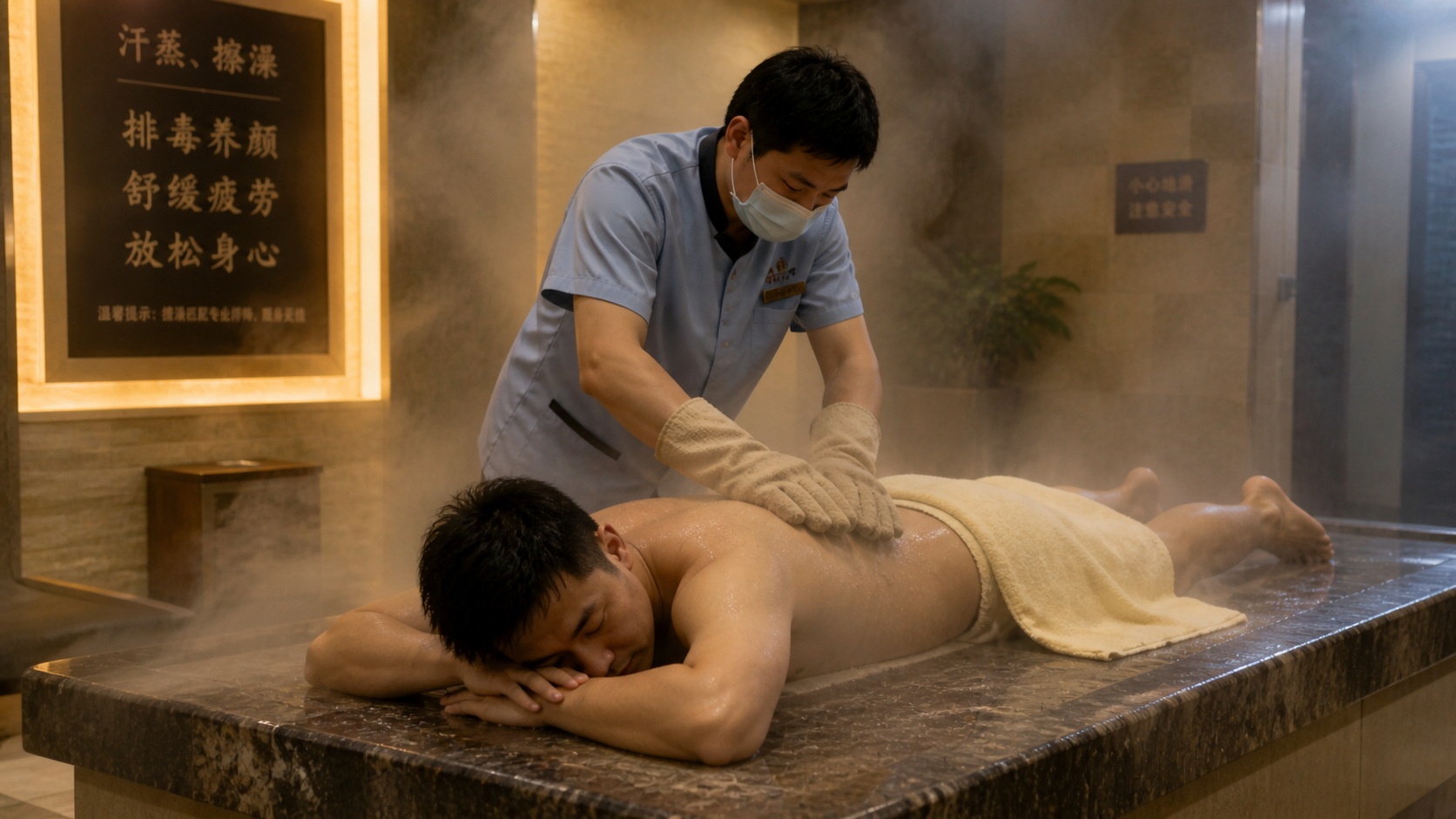
Understanding the Cultural Boundary
For foreigners, this part can be awkward due to bodily privacy norms. However, in China, this is strictly professional and clinical. The staff are trained technicians, not personal attendants. They focus solely on hygiene and skin texture. If you feel pain, say “qing shou dianr” (gently). Most importantly, maintain a neutral expression or nod politely; complaining disrupts the flow of their work.
The Aftermath: Resting in Style
After the scrub and a quick rinse, you are transformed. Your skin feels impossibly smooth. Now comes the “lying flat” (tang ping) culture. You move to the dry zone, which resembles a massive airport lounge mixed with a library.
Rows of cushioned recliners or heated stone beds fill the space. Some people read books, others nap, and many chat quietly in booths. In Northeast China, this is where business deals are struck and family bonds are mended over tea.
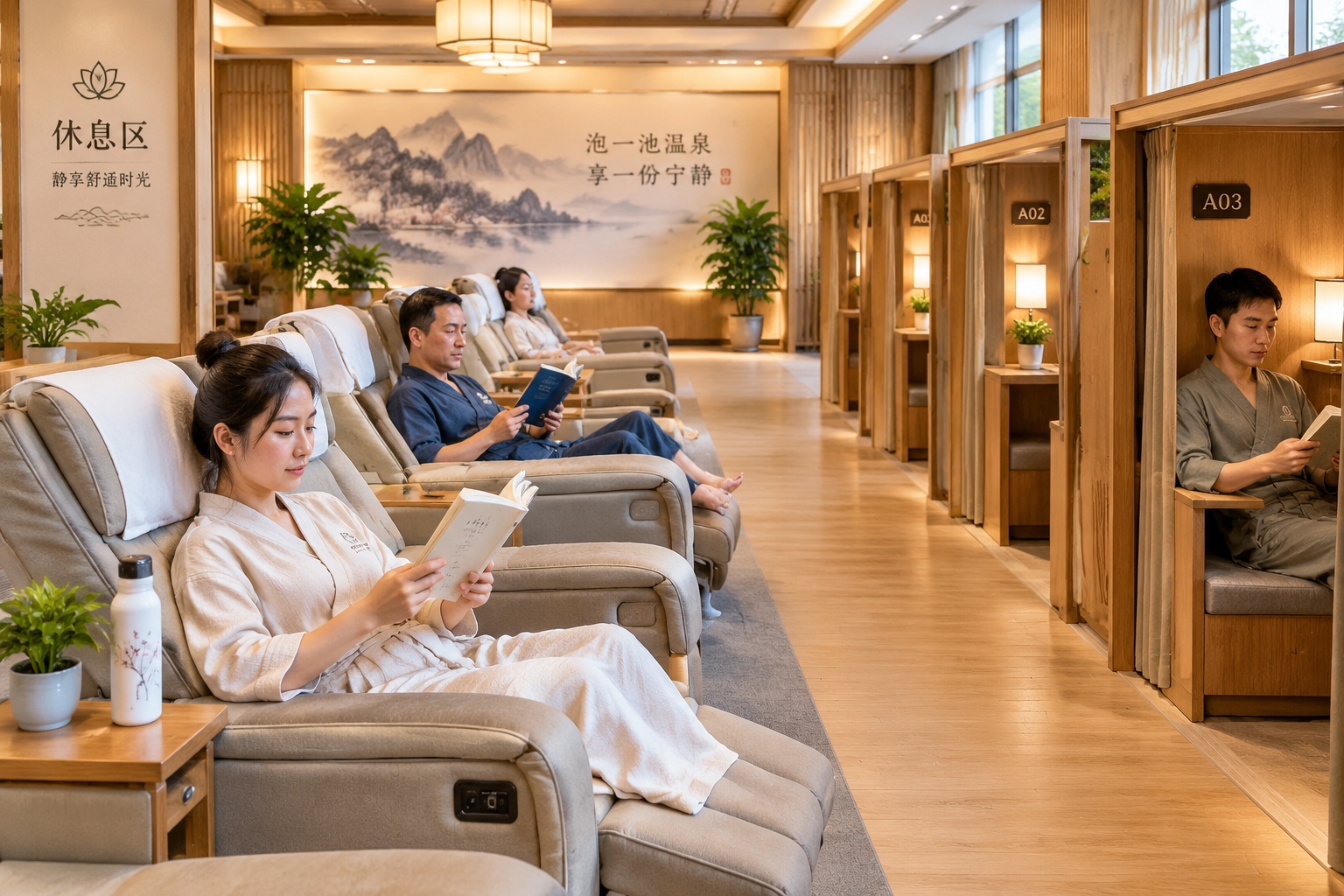
The Digital Detox
While Wi-Fi is available, the atmosphere encourages unplugging. You can rent a private room for an hour or two to sleep in silence. The cost is usually included in your entry ticket, making it one of the most affordable ways to rest in a busy city.
The Surprise: The Buffet Kingdom
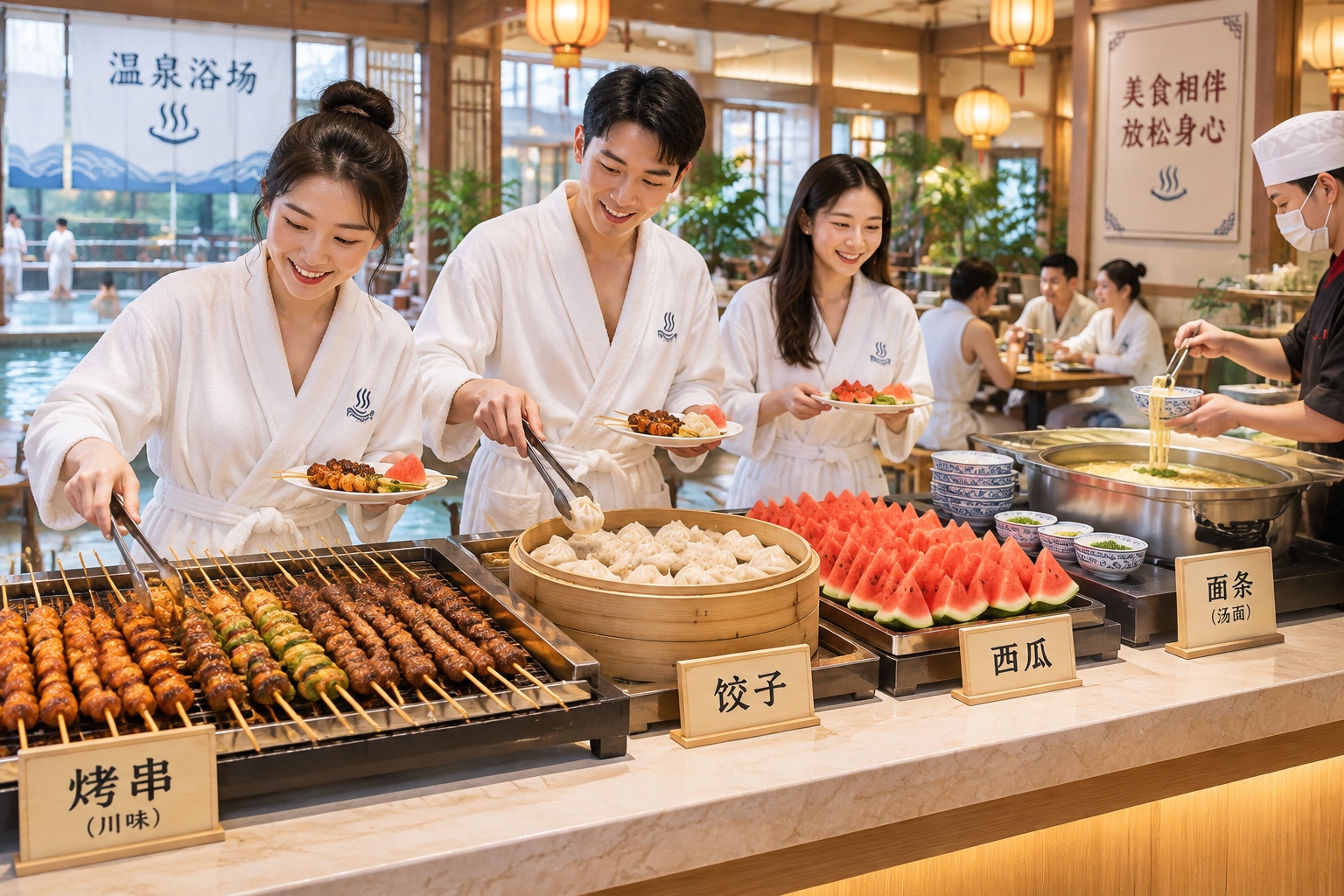
Here lies the secret weapon of Chinese bathhouses: the food. Many visitors come primarily for the buffet, which rivals high-end hotel dining but costs a fraction of the price.
In Northeast China, the spread includes skewers (chuanr), dumplings, hot pot ingredients, and endless fresh fruits like watermelon in winter. The quality is often surprisingly high, with dedicated stations for grilled meats and noodle soups.
Why Eat Here?
The economics are simple: the bathhouse makes profit on volume and add-ons (like massages), while using the buffet as a loss leader to keep customers inside for hours. For locals, it is the perfect Friday night dinner after a long week of work.
Practical Tips for Visitors
- Bring Your Own Towel: While towels are provided, many regulars bring their own thick bath towels for comfort and hygiene preference. You can also buy high-quality ones at the front desk if needed.
- Slippers Are Mandatory: Wear the provided slippers in wet areas to prevent slipping and maintain hygiene. Bring socks for the dry lounge area.
- Cashless Everything: Use WeChat Pay or Alipay. Even small items like drinks or snacks are scanned from your wristband.
- Time Limits: Entry tickets usually cover 4-6 hours. If you stay longer, there is a per-hour fee. Plan your meal and nap accordingly.
The Chinese bathhouse is more than hygiene; it is a social sanctuary. It offers a rare space where status dissolves under steam, replaced by the simple pleasure of clean skin, full belly, and quiet rest.
Start the discussion at forum.chinacomes.com