


The Digital Compass of Urban China
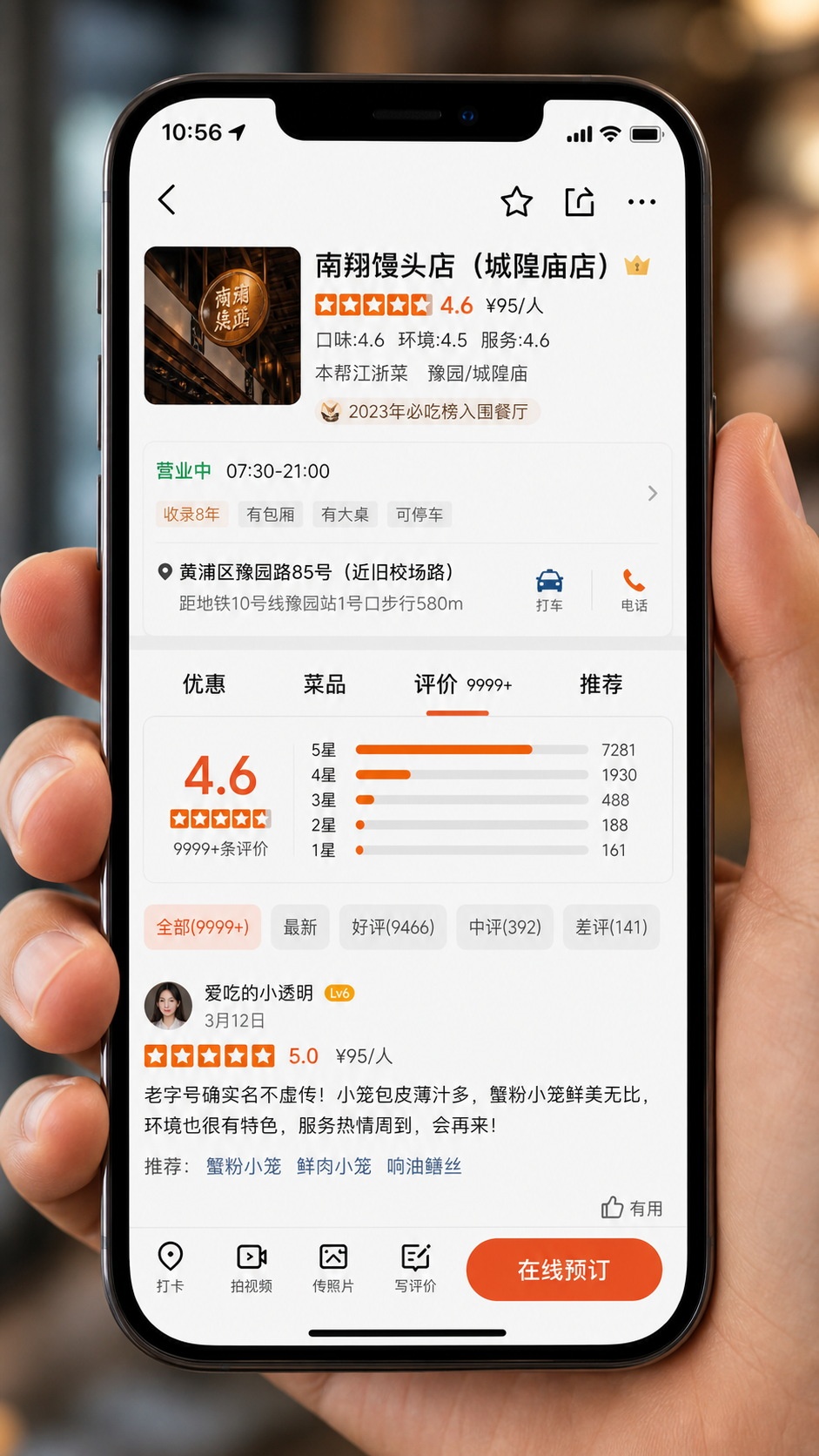
If you have never been to China, the concept might sound strange: before entering a restaurant, you check an app. Not just for the menu, but for the verdict. For over 15 years, Dianping (大众点评) has been the undisputed king of local life services in China. It is often described as a hybrid of Yelp, TripAdvisor, and Instagram.
In cities like Shanghai, Beijing, or Chengdu, Dianping does more than recommend food. It dictates social life. Where to date? Check Dianping. Which hair salon actually understands your request for “natural layers”? Check Dianping. Even choosing which gym to join involves analyzing the reviews of equipment maintenance and instructor attitude on the platform.
The Shadow Side: The Rise of “Brushing”
However, this digital utopia has a flaw. Because reputation is directly linked to revenue in China’s hyper-competitive market, a new industry was born: review brushing (刷单).
Imagine opening a new noodle shop. You have no customers, so you have no reviews. Without reviews, you get no customers. To break this cycle, many businesses hire “water armies” (shuijun)—professional reviewers paid to post glowing comments and upload staged photos. Some shops even offer free dishes or small gifts in exchange for a 5-star rating.
For an outsider, the result is often confusion. You see a restaurant with perfect stars, but when you walk in, it feels empty, or the food arrives lukewarm. How do you distinguish between a genuine gem and a marketing illusion?
The Detective’s Guide to Authentic Reviews
Learning to read Dianping is like learning a new language. You are not just reading words; you are analyzing data patterns. Here is how to spot the fakes.
1. The “Perfect” Photo Trap
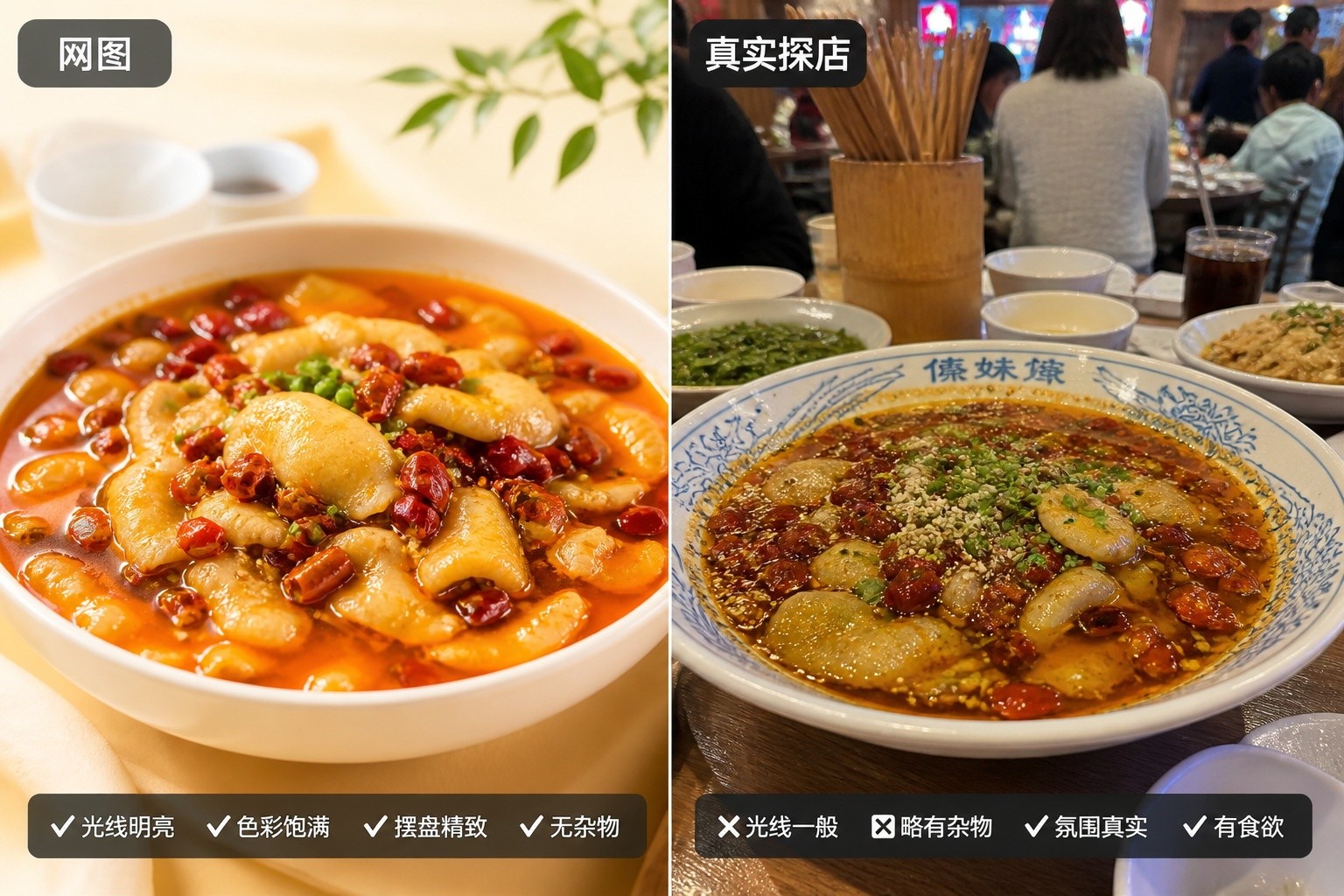
Fake reviews often come with photos that look too good to be true. If every photo of a dish is professionally lit, perfectly centered, and features no background clutter (no other diners, no messy tables), it is likely a promotional image reposted by the owner or a paid reviewer.
Authentic user reviews tend to be messier. Look for photos taken in natural light, perhaps with a slight blur, showing the actual portion size relative to a hand or a common object like a phone. These “imperfections” are the hallmark of truth.
2. Analyze the Reviewer’s History
Click on the avatar of a reviewer. A genuine food lover usually has a diverse history: they have reviewed hotpot places, bubble tea shops, cinemas, and maybe even a dentist. They write in different styles—sometimes enthusiastic, sometimes critical.
If you see five 5-star reviews posted within two days for entirely different types of restaurants (e.g., a luxury steakhouse one day and a street-side snack stall the next), be suspicious. This is a common pattern of “brushing” accounts that are rented out by marketing agencies.
3. Read the Negative Reviews First
Many tourists look at the star rating (usually out of 5) as the final verdict. Do not do this. A 4.8-star rating is often more suspicious than a 4.2-star rating with hundreds of reviews.
A perfect score suggests filtered feedback. Instead, scroll directly to the 1-star and 2-star reviews. This is where the truth lives. Are people complaining about slow service? Is the food actually bland? Or are they just upset because a table was not cleaned instantly?
If you see repeated complaints about specific issues—such as “hidden fees” or “hard to find entrance”—you can decide if those deal-breakers matter to you. Ignore one-off rants; look for patterns.
Decoding the Platform’s Logic
Dianping is not just a passive database; it is an active marketplace with its own hierarchy.
The “Gold V” (金V) Users
You will often see certain reviewers marked with a Gold V icon. These are top-tier contributors who have been verified by the platform based on their activity and quality of content. Their reviews carry significant weight. If a Gold V user gives a mixed review, take it seriously. They are less likely to be paid shills and more likely to represent the refined taste of local urbanites.
The Power of “Avoiding Thunder” (避雷)
In Chinese internet slang, “bi lei” (avoid thunder/pitfalls) is a crucial search term. When looking for recommendations, do not just search for “best steak in Shanghai.” Search for “Shanghai steak pitfalls” or “Shanghai steak bad reviews.”
This flips the script. Instead of reading what people love (which can be bought), you read what they hate (which is harder to fake because it requires specific, negative details that are tedious for bots to generate). You will find real warnings like: “The portion size is tiny,” or “The waiter ignores you if you don’t order drinks.”
Your Practical Playbook
So, how do you use this knowledge? Here is a step-by-step approach for your next meal in China.
- Buy the Set Meal: Once you have identified a restaurant with a solid 4.0+ rating and consistent negative feedback that doesn’t bother you (e.g., “noisy” but “delicious food”), look at the Dianping Deals section. You can often buy a two-person set meal for 50-70% off the menu price through the app.
- Check the Recent Photos: Before you go, filter the photos by “Most Recent.” This shows you what the food looks like today, not six months ago when the chef might have changed.
- Trust Your Eyes (and Nose): When you arrive, look at the dining room. Is it full of locals? Are they scrolling through their own Dianping to check in? Or is the place empty despite having 100 online reviews? If there is a disconnect between the digital hype and the physical reality, walk away.

The Verdict
Navigating Dianping requires a shift in mindset. You are no longer just a consumer; you are an investigator. The platform is imperfect, but by ignoring the star rating and digging into the details—the messy photos, the critical reviews, and the reviewer’s history—you unlock the real China.
The best restaurants in China are rarely the ones with the perfect score. They are the ones where the locals line up around the block, indifferent to online stars, focused only on the taste in their bowls. Learning to read between the lines of Dianping is your ticket to joining them.